
CORE Sudan: Influx from South Sudan - 31 August 2026
Countries: Sudan, South Sudan Source: UN High Commissioner for Refugees Please refer to the attached Infographic.
 ReliefWeb•UN High Commissioner for Refugees15 Sept
Countries: Sudan, South Sudan Source: UN High Commissioner for Refugees Please refer to the attached Infographic.
ReliefWeb•UN High Commissioner for Refugees15 Sept
Countries: Sudan, Central African Republic, Chad, Democratic Republic of the Congo, Ethiopia, Libya, South Sudan, Uganda Source: UN High Commissioner for Refugees Please refer to the attached Infographic.
ReliefWeb•UN High Commissioner for Refugees15 Sept
Countries: South Sudan, Central African Republic, Democratic Republic of the Congo, Ethiopia, Sudan Source: UN High Commissioner for Refugees Please refer to the attached file. Key messages The Multi dimensional Poverty Index (MPI) measures deprivation in education, health, and living conditions and provides a comprehensive picture of well-being. Newdataon refugees in South Sudan allows comparison with host communities, and in turn enables policy discussions to address the drivers of poverty. Refugees in South Sudan are characterized by a high level of multi dimensional poverty. Refugees in the Northern part of the country are slightly better off than their hosts. The results show that almost the entire population–both refugees and hosts–is either poor or vulnerable to falling into poverty. The three dimensions—education, health, and living conditions—equally contribute to the multi dimensional poverty. Vulnerable groups such as children, women and girls as well as households with children under 5 years old are more likely to face multidimensional poverty. There is a strong statistical association between multi dimensional poverty and mental health problems among refugees, along side reduced self-efficacy (belief in one’s ability to achieve goals).This suggests the possible existence of a psychological poverty trap. Deprivation fuels poor mental health and low self-confidence, which in turn limit resilience, livelihood engagement, and the capacity to escape from poverty. Evidence from other contexts shows that combining economic and psychological support can produce stronger results than either approach alone. The alarming situation reflects the conditions that prevailed before the outbreak of war in Sudan, which has significantly increased the number of refugees and exacerbated an already fragile humanitarian context. With ongoing reductions in humanitarian aid, the situation is deteriorating further, and there is a high risk that conditions will continue to worsen. As a matter of fact, humanitarian aid plays a crucial role in sustaining refugees. The recent humanitarian cuts will lead to decreased food assistance and compromised health care and education services. Consequently, this is likely to exacerbate poverty among refugees as more than 75 percent of refugees in the South and 50 percent of those in the North rely on humanitarian assistance. The international community needs to step up support for refugees and their communities. Sustainable responses require partnerships, financing, and national leadership. South Sudan’s Global Refugee Forum commitments prioritize socioeconomic inclusion, responsibility-sharing, and regulatory reforms, supporting a shift from short-term aid to long-term development to reduce poverty and foster self-reliance. This shift advocates for development interventions from the onset of crisis to enhance integrative approaches and services for both refugees and host communities, promoting resilience and self-reliance.
ReliefWeb•UN High Commissioner for Refugees15 Sept
Countries: Chad, Sudan Source: UN High Commissioner for Refugees Please refer to the attached Infographic.
ReliefWeb•UN High Commissioner for Refugees14 Sept
Countries: Chad, Sudan Source: UN High Commissioner for Refugees Please refer to the attached Infographic.
ReliefWeb•UN High Commissioner for Refugees14 Sept
Countries: Chad, Sudan Source: UN High Commissioner for Refugees Please refer to the attached Infographic.
ReliefWeb•UN High Commissioner for Refugees14 Sept
Without immediate donations, shelter and aid relief supplies could be depleted by the end of the month, says IOM.
 Al Jazeera14 Sept
Country: Sudan Source: International Organization for Migration Port Sudan/Geneva, 14 September 2026 – As hundreds of thousands of displaced people across Sudan continue to face severe shelter shortages and heightened risks from ongoing fighting and heavy rains, the International Organization for Migration (IOM) is warning of an imminent end to Sudan’s emergency relief supply via the IOM Common Humanitarian Pipeline. "We simply can't turn our back on the people of Sudan when they need us most amid raging conflict, increased displacement and the impact of heavy rain," said Amy Pope, IOM Director General. "The entire humanitarian system could collapse within weeks if we don't act now. Without new funding, we won't be able to get help where it's needed most." IOM’s warning comes as needs remain acute amid heightened displacement in conflict and crisis-affected communities across Sudan, leaving vulnerable families exposed and the humanitarian system on the edge of collapse. To date, 8.6 million people remain internally displaced and 4.9 million returnees have been recorded by IOM's Displacement Tracking Matrix. Nearly 70 per cent of internally displaced people are living with host families or in informal settlements. Ongoing violence, floods and heavy rains continue to damage shelters forcing people to move. Managed by IOM, the Common Humanitarian Pipeline system has reached 2.84 million people since July 2023. Yet its reach is shrinking even as needs remain all-time high: more than 1 million people were assisted through the Pipeline in 2024, falling to 804,000 in 2025, while so far in 2026, IOM has provided shelter and emergency support kits to 330,000 people. Without immediate donor support, current shelter, sanitation and emergency household relief items are expected to be depleted by the end of September 2026. The warehousing and operational capacity that keeps the Pipeline functioning can only be sustained until December 2026. As a shared logistics system for the UN and its partners and one of the key enablers of the humanitarian response in Sudan, the Common Pipeline enables timely, coordinated and efficient dispatch of emergency relief items to people in need. The disruption of the Pipeline would significantly weaken the humanitarian community’s ability to rapidly deliver and mobilise lifesaving-assistance through a network of more than 100 registered partners. Rebuilding the system after any interruption would be a complex, costly and time-consuming process, requiring substantive resources to reestablish supply chains, operational systems and partner coordination networks. IOM requires USD 15 million to maintain the Common Pipeline at its 2026 minimum capacity for 12 months, supporting 305,000 people. USD 27 million would restore assistance to approximately 2025 levels and reach 570,000 people, while USD 42 million would enable a scale-up to provide immediate lifesaving support for up to one million people. For displaced families, inadequate shelter carries wider risks. Prolonged exposure to weather, disease and insecurity can heighten risks of gender-based violence, family separation and eviction in overcrowded sites. Continued underfunding also raises the risk of shelter failure and flood-related secondary displacement in sites already at or beyond capacity. With relief item stocks expected to run out by the end of September and operational capacity at risk thereafter, funding will now determine whether this established emergency supply mechanism remains ready to respond amid ongoing conflict-related displacement and the current rainy season. For more information, please contact IOM Media Center .
ReliefWeb•International Organization for Migration14 Sept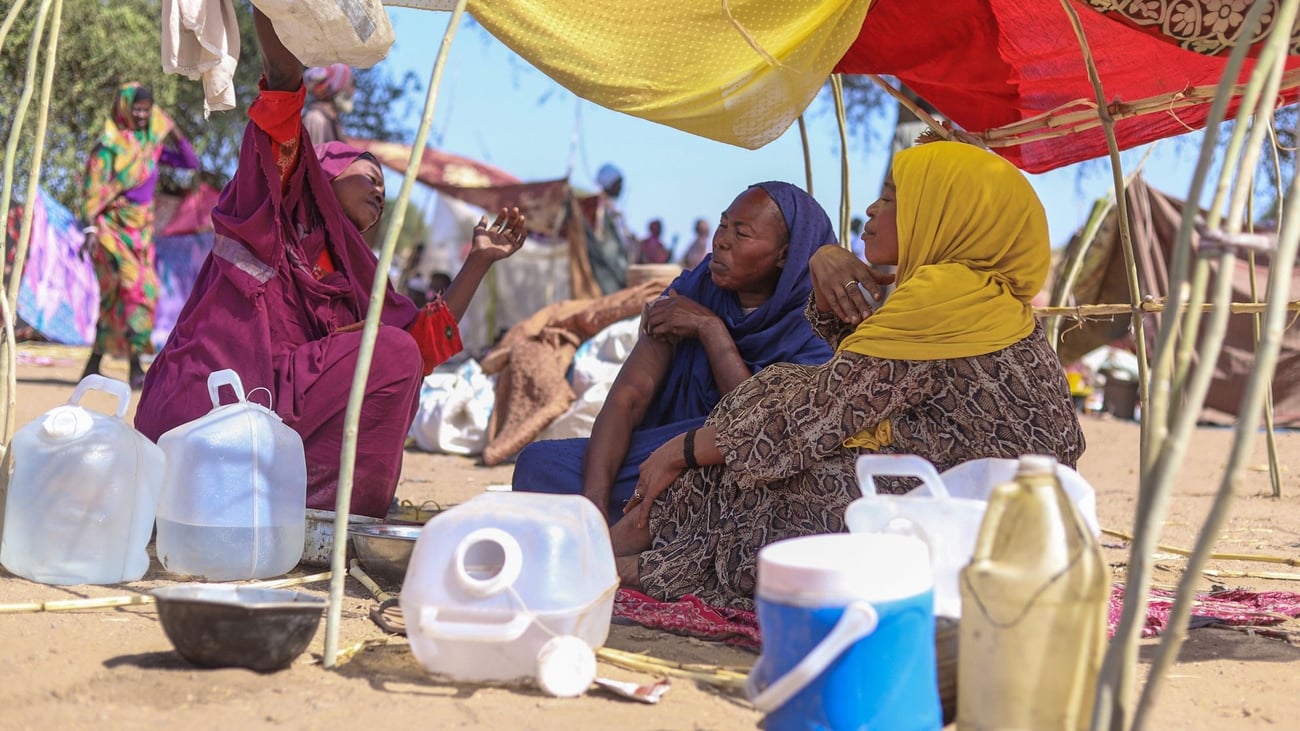
The war between Sudan's regular army and the paramilitary Rapid Support Forces has created the world's largest hunger and displacement crisis.

Country: Sudan Source: World Food Programme Remarks as delivered by Carl Skau, Acting Executive Director of the World Food Programme (WFP), to the press following his mission to Sudan. Thanks for this opportunity, and thanks for those of you in the room listening. I'm speaking to you actually from Oman, from Muscat, but all the same. I just wrapped up an eight-days visit to Sudan. I visited Khartoum, I visited El Obeid, El Fasher, Tawila, and I really had a chance on those front lines to see what this terrible conflict and its aftermath in some places do to people, to access and to hunger. If I start with people, I met people across the country. I met people who had been displaced three years ago when the war started, but I also met people who had been displaced the same day that I spoke to them, or some that had walked for four or five days to get to an IDP camp when their houses, their villages had been destroyed. You know, I sat down with women in camps. I had a chance to speak to one, you know, former university student who is now sitting in that hut. All she wanted was to work but there was no opportunity. She had lost family members, her mother depressed, her father sick. And you know, I also spoke to women who were waiting in the queue to get water from a water tank. About noon that water tank ran out of water so they had to return with their empty cans back home, obviously extremely distressed. So I'm just sharing with you illustrating a few examples of what hundreds of thousands of people now in Sudan are going through and the kind of human dimension behind all these numbers that we see. On access, the journey between El Obeidin and El Fasher, which before the war used to take around six hours by car, now that took me three days. I had to take three different flights, an eight-hour all-together flight from Khartoum to Addis, to N'Djamena, to Adra, then about a 30-hour car ride through the Jebel Mara mountains to get to al-Fasher. And this is, of course, because of the conflict, because we are not able to go cross-line, across the fighting lines. And finally on hunger, I mean, it's important to underline here that Sudan is still the world's largest hunger and displacement crisis. 20 million people in acute hunger, 14 million people displaced, some 5 million of those acutely hunger in emergency level, IPC4, and you know, still 200,000 in IPC5 levels of starvation. This is the largest hunger crisis that we are facing right now. And given that, Sudan does, in my view, not get by far the attention it deserves. You know, humanitarians are attacked. We had a hit two weeks ago only on one of our convoys trying to get to dealing in the Kordofan. Access is difficult, as I explained, partly due to security, partly due to not getting the clearances necessary. But it's also possible to work there. WFP reaches between 4 and 5 million people every month. 2 million or 2.5 million of those are in the hardest to reach areas. So it is possible to make a difference. Now what is really our main challenge is funding. Our operations are completely underfunded and there is a risk that we will have to scale back quite significantly in the next few weeks unless more funding is being provided. I will walk you through the trip I took just to kind of illustrate what this looks like. So I'll start with El Fasher because, you know, I'm one of the few who have visited El Fasher following the events of last year. And I must say that this was a very heavy experience. It's a daunting city. You know, it's the city that was under siege for 18 months. The people suffered through famine. They suffered through these unspeakable atrocities. It's a city that once was, you know, home to a million people, the sprawling kind of capital of Darfur. Now there are only a few tens of thousands of people still. You know, we were driving through street after street with homes riddled with bullets. You know, there were burned cars basically everywhere in every street corner. I didn't see any economic activity, no markets, maybe a couple of stands with women selling something. And you know, some families I spoke to had returned because frankly where they had fled to, they had nothing. But they also weren't staying at home. Their homes were burned, so they had decided to be in maybe some other empty house they had found and everyone trying to also, the few who are left, staying more closer to each other. So really a daunting city, a harrowing experience. The largest crowd of people I saw in El Fasher was only where we were doing our WFP distributions. You know, we are reaching some 20,000 people now with life-saving food assistance, but that's the only assistance, frankly, that gets into El Fasher. It's the only thing that the people who are still there rely on. Driving out of El Fasher we went through the Zam-zam camp, you know, this IDP camp that was already there when this besiegement began. And this, if anything, is even worse than El Fasher. It's a completely abandoned place, and with huts and small houses completely destroyed. There was no one there, a complete ghost town. Then moving on from Zam-zam, we took the road, or it's basically driving on the savannah, from El Fasher to Tawila. It's about a 60 km drive. It took us now an hour. But you know, driving through the bush there, you know, it was hard to imagine that only less than a year ago, some 700,000 people had moved through that space, had done that journey. You know, this exodus of people that made it out of and through the atrocities of El-Fasher to seek safety in Tawila, where we also know that many of these atrocities took place on that journey. So arriving in Tawila, it's my second time I mean, Tawila, I was there in April, as some of you may know. It's an endless ocean of grasshuts. It's now close to a million people. When I was there in April, there were 700,000. Now some 250,000 more have arrived. If I compare to back in April, though, despite the fact that there are many more people now and that the area has expanded even more, some now the shelter is better. I then called for the need for better shelter because the women had told me they want plastic heating tarps for the roofing. Because of the rains, there was some of that now. There was nothing when I was there last time. And of course, also we, since then, as WFP, have been able to scale up. And we are now delivering to the entire population, to some 950,000 people every month. But we're only providing a half ration. We are only providing them the food that lasts them for two weeks and that is done every month. And so, you know, it is not enough. And there are many, many women-headed households there. Many have lost their husbands, many have lost their sons. And you know, the women I sat down to speak with, you know, they are really struggling to make it last, given that they're only receiving this half ration. And of course there is not enough education or space for kids to play, not enough shelter and health care. It's just a massive city now of one million people without the basics. On top of that, driving through Darfur, everywhere I stopped what people wanted to talk about was the drought. Darfur hasn't been this dry since 1984 and right now is the rainy season. And so, you know, everyone is frightened that this will have a serious hit on agriculture and the agriculture outcome. And then, of course, also for livestock further down the road. And like some told me, you know, we rely on that agriculture and we rely on the WFP food. And if, you know, the agriculture is now hit by the drought and WFP's food is hit by funding cuts, how will we survive? And I think that is really the concern in Darfur for the next few months. Then I actually started off my trip in the Kordofan, well in Khartoum but then in the Kordofan and the Blue Nile is where the fighting is now escalating. If the epicenter a year ago of the fighting was in Darfur, now it's in the Kordofan in the Blue Nile. And I visited the city of El Obeid, which was under risk of being besieged a few weeks ago with heavy fighting in the surroundings. It's a huge city that had a million people before the war, and it's now kind of doubled in size. It's a city that used to be really the meeting place of Sudan. It's kind of like Rome, all roads in Sudan lead to El Obeid. And so it's become kind of a safe haven where people from across the country have been arriving and now like a melting pot with displaced from all over. There are eight camps there for internally displaced. Many also live in host communities. But these camps are absolutely overstretched. And when I was there, as I said, people kept arriving. I mean, I was at the registration place where people had arrived that morning. The women had been walking for five days in the west Kordofan, in the south of Kordofan. Their houses, their villages had been destroyed. Our challenge there is also funding. So we are providing less and less, but we're also having to cut off assistance to those who arrived three years ago. So we are prioritizing those who are newly arrived, but of course to the detriment of those who have been there longer, which frankly people who have nothing to turn to either, not possible for them to get any jobs. They have been through terrible atrocities, they cannot return home. So it's a very tense and difficult place where we now have to so tightly prioritize. I mean, in terms of challenges, access remains a challenge. There's no doubt, like I explained, you know, we are not able to do the cross-line that we wish we were, but we are being able to, in Darfur, bring food from Cameroon or through Cameroon and Chad into the Darfur. In the Kordofan we are bringing food from from Port Sudan and from Khartoum. So you know we are being able to deliver, we are getting it done. It's very dangerous as we saw when our trucks were hit a couple of weeks ago but we're trying our best. Of course we would like to have more staff permanently on the ground in those difficult places. We would like to have better deconfliction and we would like to be able to drive across lines which would be much cheaper and faster in order to reach more people much faster. We would also like to expand our air service. We are now providing an air service into Khartoum but of course it would be great if we could do that also in Darfur and into El Obeid. Now the big issue though is funding. We now have have the capacity, we have the presence, but we are not fully using that space because of the lack of funding. And in the next few weeks, as I said, the risk is that we will have to scale back even further and then that will be very difficult for us to regain that space. I mean, in concluding, what we see playing out in Sudan is really what we also see at the global level. And it's all hitting at once. So it's the conflict that is driving displacement, disrupting markets and trade. It is the maritime disruptions in Bab el-Mandeb and Hormuz that is really hitting Sudan as well, with its ports on the Red Sea. And thirdly, it's the El Nino and the climate shocks with the drought we now see in the Darfur. And all this is coming together, really putting pressure on the already suffering people in in Sudan. So what's needed clearly is an end to this conflict and I can't underline that enough heading into this year's UN High Level Week General Assembly. I really hope that there will be political investment, political energy in to bring an end to this conflict. That is my number one appeal. But short of that, people deserve to be supported with basic humanitarian assistance. I feel that we are really failing to protect the civilians now in the Kordofan, in the Blue Nile. We certainly failed to protect and prevent the atrocities in El Fasher last year and we have not done enough for those IDPs who have ended up in camps. But we need to do more. We need to step up. We cannot keep failing these people. We need to provide them the basics. We feel that we now have the capacity on the ground. We have the access together with with the UN agencies under the leadership of Denise Brown, the RC. And we just want to get that work done. And we hope that donors will step up and provide us the funding to do so. Note to editors: Broadcast quality video footage from the Acting Executive Director's Mission to Sudan can be downloaded here .
ReliefWeb•World Food Programme14 Sept
Countries: World, Algeria, Bangladesh, Eritrea, Somalia, Sudan Source: UN High Commissioner for Refugees Please refer to the attached file. Highlights The integration of quarterly land movement estimates provides a more complete understanding of route dynamics. The figures highlight the importance of overland movements along the South and South-East Asia route and improve visibility of the land segment of both Western and Eastern Mediterranean Routes. The indicator should support comparison of how movements are distributed across each route, rather than direct comparison between maritime and land movements totals. Routes recorded lower arrival figures in July, although the scale of the decline varied. Arrivals decreased by 22% on both the Central and Eastern Mediterranean Routes, while recorded movements on the South and South-East Asia Route fell more sharply, from 518 in June to 65 in July. Disembarkation patterns shifted towards the Western Mediterranean Route in July. Disembarkations in the Western Mediterranean increased from 96 in June to 1,320 in July, while Central Mediterranean disembarkations rose by 8% to 2,769. By contrast, Western Africa Atlantic Route disembarkations declined by 52% to 385. Dead or missing people at sea: Most reported deaths and disappearances at sea were recorded along the Western Africa Atlantic Route in July, highlighting the continued risks associated with movements across the Atlantic corridor and the importance of sustained protection monitoring. Nationality patterns shifted across the Mediterranean routes in July 2026. Sudanese and Bangladeshi nationals’ movements on the Eastern Mediterranean Route declined compared with June, largely reflecting lower movements from Libya to Greece. Afghans became relatively more prominent on the Eastern Mediterranean Route, while the Central Mediterranean profile shifted towards Algerians, Bangladeshis, Somalis and Eritreans, with a marked reduction in Sudanese movements.
ReliefWeb•UN High Commissioner for Refugees14 Sept
Countries: World, Democratic Republic of the Congo, Gambia, Haiti, India, Sudan Source: Insecurity Insight Please refer to the attached file. This News Brief bears testimony to the brave survivors who speak about sexual violence by state bodies or conflict actors. Most events of violence are never reported. This compilation is neither complete nor representative of the extent or nature of sexual violence in general. It brings together dispersed accounts about survivors from around the world who broke the silence. Since the start of Insecurity Insight’s Reporting Sexual Violence monitoring in January 2020 and July 2026, at least 2,398 publicly reported incidents of conflict-related sexual violence have been recorded. So far in 2026, incidents have increased in Cameroon, from 14 cases in 2025 to 16 between January and April 2026, with high numbers recorded in the South West region. This reflects the continued volatility in the region, where ongoing armed conflict between government forces and Ambazonian separatist groups has contributed to repeated exposure of civilians to insecurity, including reported attacks, abductions, and sexual violence, alongside persistent gaps in civilian protection and limited accountability in contested areas. Download the data (updated every Monday). Contact us for data enquiries. Developments in August 2026 Democratic Republic of the Congo: During August 2026, reports documented sexual violence against women and girls across North Kivu and Kwilu provinces, including rape allegedly committed by FARDC personnel and suspected Wazalendo members. In North Kivu, a 15-year-old girl was repeatedly raped by a FARDC soldier, while a 10-year-old girl was raped by two suspected Wazalendo members. Reports also documented rape during land-related violence in Kwilu, while RDF and AFC/M23 forces were accused of sexual violence and other serious human rights violations in areas under their control. See DRC section below for more details. Data collected by Insecurity Insight shows that since the escalation in conflict in eastern DRC in January 2025 and 31 July 2026, at least 18 publicly reported incidents of conflict-related sexual violence were recorded. Named perpetrators included state and non-state armed groups, including the Convention for the Popular Revolution, FARDC, M23, Rwanda Defence Forces, Union of Patriots for the Liberation of Congo and Wazalendo. More than two-thirds of incidents involved multiple perpetrators and survivors who were women and children. More than two-thirds of incidents involved multiple perpetrators, with women and children among those subjected to sexual violence.
ReliefWeb•Insecurity Insight14 SeptCountry: Sudan Source: International Organization for Migration Port Sudán/Ginebra, 14 de septiembre de 2026 – Mientras cientos de miles de personas desplazadas en todo Sudán continúan enfrentando graves carencias de alojamiento y riesgos crecientes derivados de los combates en curso y las intensas lluvias, la Organización Internacional para las Migraciones (OIM) advierte sobre el inminente fin del suministro de socorro de emergencia a Sudán a través de la Plataforma Humanitaria Común de Suministro de la OIM. "Sencillamente no podemos darle la espalda al pueblo de Sudán cuando más nos necesita, en medio de un conflicto devastador, un mayor desplazamiento y los efectos de las lluvias intensas", declaró Amy Pope, Directora General de la OIM. "Todo el sistema humanitario podría colapsar en cuestión de semanas si no actuamos ahora. Sin nuevos fondos, no podremos llevar ayuda donde más se necesita". La advertencia de la OIM llega en un momento en que las necesidades siguen siendo críticas ante el intensificado desplazamiento en las comunidades afectadas por el conflicto y la crisis en todo Sudán, dejando a familias vulnerables expuestas y al sistema humanitario al borde del colapso. Hasta la fecha, 8,6 millones de personas permanecen desplazadas internas y la Matriz de Seguimiento del Desplazamiento (DTM) de la OIM ha registrado 4,9 millones de retornados. Casi el 70 por ciento de las personas desplazadas internas vive con familias de acogida o en asentamientos informales. La violencia continua, las inundaciones y las lluvias intensas siguen dañando los alojamientos y obligando a las personas a desplazarse. Administrada por la OIM, la Plataforma Humanitaria Común de Suministro ha llegado a 2,84 millones de personas desde julio de 2023. Sin embargo, su cobertura se está reduciendo aun cuando las necesidades se mantienen en niveles históricamente altos: más de 1 millón de personas recibieron asistencia a través de la Plataforma en 2024; esa cifra descendió a 804 000 en 2025 y, en lo que va de 2026, la OIM ha proporcionado alojamiento de emergencia y kits de apoyo de emergencia a 330 000 personas. Sin apoyo inmediato de los donantes, se prevé que las existencias de artículos de socorro básicos para alojamiento, saneamiento y apoyo doméstico de emergencia se agoten a finales de septiembre de 2026. La capacidad de almacenamiento y operativa que mantiene el funcionamiento de la Plataforma solo podrá sostenerse hasta diciembre de 2026. Como sistema logístico compartido para las Naciones Unidas y sus asociados, y uno de los principales facilitadores de la respuesta humanitaria en Sudán, la Plataforma Humanitaria Común de Suministro permite el envío oportuno, coordinado y eficiente de artículos de socorro básicos a las personas que los necesitan. La interrupción de la Plataforma debilitaría significativamente la capacidad de la comunidad humanitaria para entregar y movilizar rápidamente asistencia humanitaria que salva vidas a través de una red de más de 100 asociados registrados. Reconstruir el sistema tras cualquier interrupción sería un proceso complejo, costoso y prolongado que requeriría recursos sustanciales para restablecer las cadenas de suministro, los sistemas operativos y las redes de coordinación con los asociados. La OIM requiere 15 millones de dólares para mantener la Plataforma Humanitaria Común de Suministro en su capacidad mínima de 2026 durante 12 meses, prestando apoyo a 305 000 personas. Con 27 millones de dólares se restablecería la asistencia a niveles similares a los de 2025 y se alcanzaría a 570 000 personas, mientras que 42 millones de dólares permitirían ampliar la respuesta para proporcionar apoyo inmediato que salve vidas a hasta 1 millón de personas. Para las familias desplazadas, un alojamiento inadecuado conlleva riesgos adicionales. La exposición prolongada a las inclemencias del tiempo, las enfermedades y la inseguridad puede aumentar los riesgos de violencia de género, separación familiar y desalojo en sitios hacinados. La continua insuficiencia de fondos también incrementa el riesgo de deterioro de los alojamientos y de desplazamiento secundario relacionado con inundaciones en sitios que ya se encuentran al límite de su capacidad o por encima de ella. Con las existencias de artículos de socorro que se espera se agoten a finales de septiembre y la capacidad operativa en riesgo a partir de entonces, la disponibilidad de financiación determinará ahora si este consolidado mecanismo de suministro de emergencia puede permanecer operativo y preparado para responder al desplazamiento continuo relacionado con el conflicto y a los efectos de la actual temporada de lluvias. Para más información, sírvase ponerse en contacto con el Centro de Medios de la OIM .
ReliefWeb•International Organization for Migration14 SeptCountry: Sudan Source: International Organization for Migration Port-Soudan/Genève, 14 septembre 2026 – Alors que des centaines de milliers de personnes déplacées à travers le Soudan continuent de faire face à de graves pénuries d'abris et à des risques accrus liés aux combats en cours et aux fortes pluies, l'Organisation internationale pour les migrations (OIM) avertit de l'imminente interruption de l'approvisionnement en secours d'urgence au Soudan via le Pipeline humanitaire commun de l'OIM. « Nous ne pouvons tout simplement pas tourner le dos au peuple soudanais au moment où il a le plus besoin de nous, en plein conflit armé, face à un déplacement croissant et aux effets des fortes pluies », a déclaré Amy Pope, Directrice générale de l'OIM. « L'ensemble du système humanitaire pourrait s'effondrer d'ici quelques semaines si nous n'agissons pas maintenant. Sans financements supplémentaires, nous ne serons pas en mesure d'acheminer l'aide là où elle est le plus nécessaire. » L'avertissement de l'OIM intervient alors que les besoins demeurent aigus face à un déplacement accru dans les communautés touchées par les conflits et les crises à travers le Soudan, laissant des familles vulnérables exposées et le système humanitaire au bord de l'effondrement. À ce jour, 8,6 millions de personnes demeurent déplacées à l'intérieur de leur propre pays (PDI) et 4,9 millions de personnes retournées ont été recensées par la Matrice de suivi des déplacements (DTM) de l'OIM. Près de 70 pour cent des personnes déplacées à l'intérieur de leur propre pays vivent chez des familles d'accueil ou dans des sites informels. La violence persistante, les inondations et les fortes pluies continuent d'endommager les abris, contraignant les populations à se déplacer. Géré par l'OIM, le Pipeline humanitaire commun a atteint 2,84 millions de personnes depuis juillet 2023. Sa portée se réduit pourtant alors même que les besoins n'ont jamais été aussi élevés : plus d'un million de personnes ont bénéficié d'une assistance via le Pipeline en 2024, un chiffre tombé à 804 000 en 2025, tandis qu'en 2026, l'OIM a jusqu'à présent fourni des abris d'urgence et des kits de secours d'urgence à 330 000 personnes. Sans soutien immédiat des donateurs, les articles de secours essentiels actuels, abris, fournitures d'assainissement et kits ménagers d'urgence, devraient être épuisés d'ici fin septembre 2026. Les capacités d'entreposage et opérationnelles qui maintiennent le Pipeline en fonctionnement ne pourront être assurées que jusqu'en décembre 2026. En tant que système logistique partagé par les Nations Unies et leurs partenaires, et l'un des principaux piliers de la réponse humanitaire au Soudan, le Pipeline commun permet un acheminement rapide, coordonné et efficace des articles de secours essentiels aux personnes dans le besoin. L'interruption du Pipeline affaiblirait considérablement la capacité de la communauté humanitaire à fournir rapidement une assistance vitale et à la mobiliser par le biais d'un réseau de plus de 100 partenaires enregistrés. La reconstruction du système après toute interruption constituerait un processus complexe, coûteux et long, nécessitant des ressources substantielles pour rétablir les chaînes d'approvisionnement, les systèmes opérationnels et les réseaux de coordination entre partenaires. L'OIM a besoin de 15 millions de dollars É.-U. pour maintenir le Pipeline commun à sa capacité minimale de 2026 pendant 12 mois et venir en aide à 305 000 personnes. Une contribution de 27 millions de dollars É.-U. permettrait de rétablir l'assistance à un niveau proche de celui de 2025 et de fournir une assistance à 570 000 personnes, tandis que 42 millions de dollars É.-U. permettraient d'élargir l'intervention afin d'apporter un soutien vital immédiat à jusqu'à un million de personnes. Pour les familles déplacées, l'inadéquation des abris entraîne des risques plus larges. Une exposition prolongée aux intempéries, aux maladies et à l'insécurité peut accroître les risques de violence fondée sur le genre, de séparation familiale et d'expulsion dans des sites surpeuplés. Le sous-financement persistant augmente également le risque d'effondrement des abris et de déplacement secondaire lié aux inondations dans des sites déjà saturés ou au-delà de leurs capacités. Les stocks d'articles de secours essentiels devant s'épuiser d'ici fin septembre et les capacités opérationnelles étant menacées par la suite, les financements détermineront désormais si ce mécanisme d'approvisionnement d'urgence éprouvé demeurera en mesure de répondre aux besoins dans le contexte du déplacement lié au conflit en cours et de la saison des pluies actuelle. Pour plus d'informations, veuillez contacter le Centre des médias de l'OIM .
ReliefWeb•International Organization for Migration14 Sept
Country: Sudan Sources: CCCM Cluster, Shelter Cluster Please refer to the attached file. The Shelter/ NFI Cluster Prioritization Tool ranks localities from 1 (least priority) to 5 (highest priority) using current displacement, returns, and response data, updated as new data comes in. Use it to direct response where needs are greatest and to inform donor advocacy on funding gaps.
ReliefWeb•Shelter Cluster14 Sept
Country: Sudan Sources: Gender Based Violence Area of Responsibility, Protection Cluster, United Nations Population Fund Please refer to the attached file. The Gender-Based Violence (GBV) Safety Audit for Tawila locality , North Darfur , was conducted in June 2026 under the technical guidance of UNFPA and in collaboration with GBV Area of Responsibility (AoR) partners. The assessment aimed to identify GBV and protection risks affecting displaced populations, particularly women, adolescent girls, female-headed households, children and persons with disabilities, and to inform safer and more gender-responsive humanitarian programming. The audit identified significant protection concerns, including inadequate night lighting, overcrowded and unsafe shelters, risks during humanitarian distributions, insufficient and unsafe WASH facilities, limited access to health services, lack of safe spaces, and gaps in confidential GBV and PSEA reporting mechanisms. These challenges continue to affect the safety, dignity and access to essential services of women and girls in Tawila. The report calls for coordinated, gender-responsive and multi-sectoral action across GBV, Protection, WASH, Health, Shelter/NFI and other relevant sectors. Key recommendations include strengthening confidential reporting and referral mechanisms, expanding women- and child-friendly spaces, improving lighting and shelter conditions, ensuring safer and gender-sensitive distributions, improving access to health and WASH services, and strengthening the meaningful participation of women and girls in humanitarian planning and decision-making. The Safety Audit provides an evidence base to support coordinated follow-up, protection mainstreaming and implementation of GBV risk-mitigation measures across the humanitarian response in Tawila, North Darfur.
ReliefWeb•United Nations Population Fund14 Sept
Countries: Sudan, Ethiopia Source: UN High Commissioner for Refugees Please refer to the attached Infographic.
ReliefWeb•UN High Commissioner for Refugees14 Sept
Countries: Sudan, Eritrea Source: UN High Commissioner for Refugees Please refer to the attached Infographic.
ReliefWeb•UN High Commissioner for Refugees14 Sept
Countries: Sudan, South Sudan Source: UN High Commissioner for Refugees Please refer to the attached Infographic.
ReliefWeb•UN High Commissioner for Refugees14 Sept
Countries: Italy, Algeria, Bangladesh, Libya, Somalia, Sudan, Tunisia, Türkiye Source: UN High Commissioner for Refugees Please refer to the attached Infographic.
ReliefWeb•UN High Commissioner for Refugees14 Sept