

Missouri congressional redistricting battle goes to Supreme Court for the third time
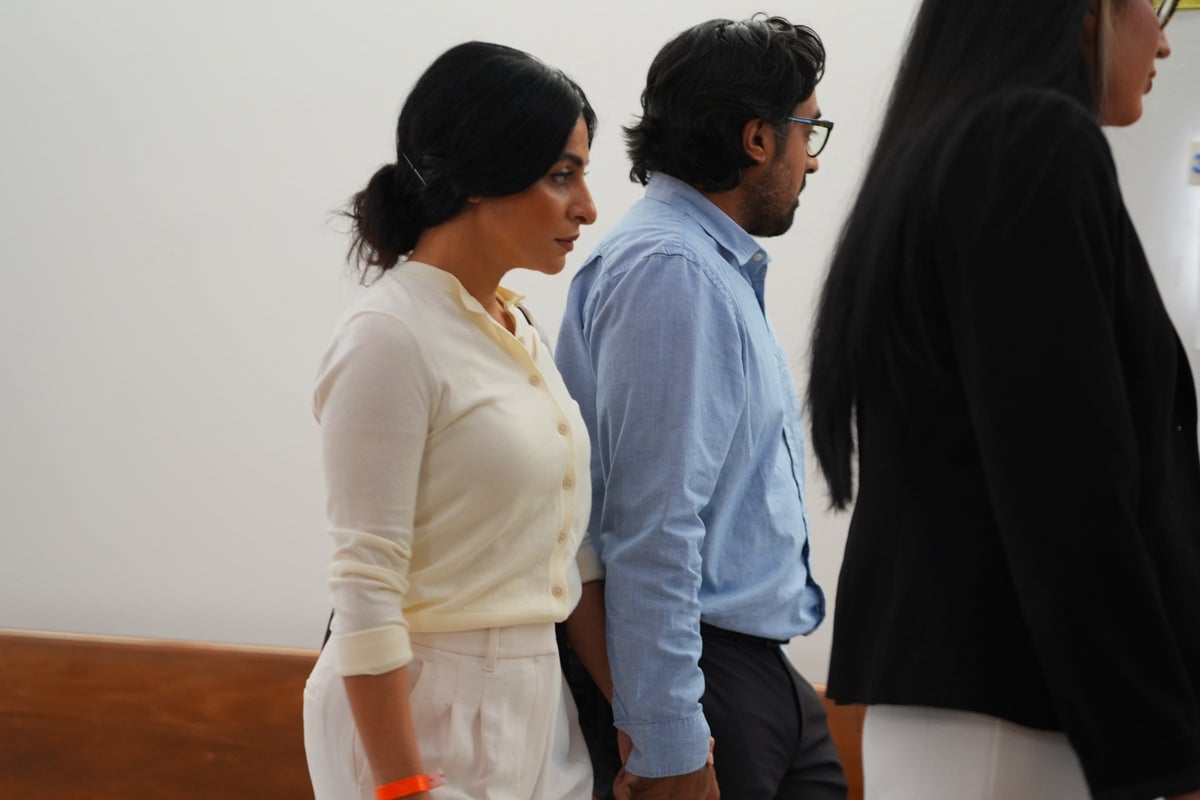
Less than two weeks after the Supreme Court paused a ruling by a federal judge in Missouri that would have cleared the way for the state to use a new congressional map intended to give Republicans an additional seat in the U.S. House of Representatives in the November 2026 elections, the opponents of that map once again asked the justices to intervene in the dispute over the state’s congressional districts. On Tuesday night, challengers to the new map asked the justices to block a decision by a federal appeals court in St. Louis that instructed the state to use it in the November elections. Lawyer Abha Khanna, who represents the challengers, told the court that its orders “are not invitations for a lower court to repackage the same relief and try again.” Justice Brett Kavanaugh, who initially handles emergency appeals from the U.S. Court of Appeals for the 8th Circuit, directed the state and the supporters of the new map to respond by 2 p.m. EDT on Wednesday. The challengers’ 39-page filing was the latest chapter in a labyrinthine saga that has already been to the U.S. Supreme Court twice, from two separate – state and federal – court systems. The dispute began last year, when – with President Donald Trump’s encouragement – Missouri adopted a new map. In December, opponents of the state’s new map – including the group People Not Politicians and its executive director, Richard von Glahn – submitted more than 300,000 signatures in support of a petition to put the new map up for a vote in November 2026. Missouri’s top election official, Secretary of State Denny Hoskins, rejected the petition on Aug. 4, 2026 – the last day to do so – and Missouri conducted its August primary with the new map. Von Glahn went immediately to state court, asking it to reverse Hoskins’ decision and block Missouri from using the new map. On Sept. 3, the Missouri Supreme Court unanimously granted that request. It concluded that, under the state’s constitution, the referendum petition “was legal, sufficient, and timely.” As a result, it wrote, the new map never went into effect and will not do so “unless and until approved by the voters at the November 2026 general election.” The Missouri Supreme Court rejected as “wholly unpersuasive” Hoskins’ argument that the failure to use the new map would lead to “confusion, expense, and practical difficulties.” “[T]hese arguments are particularly misplaced” when Hoskins failed to act on the petition until August, leading to the problems, the court suggested. Hoskins went to the Supreme Court on Sept. 4, asking the justices to intervene. Kavanaugh denied that request four days later without referring it to the full court. While Hoskins was seeking relief from the Missouri Supreme Court’s ruling in the U.S. Supreme Court, Rep. Robert Onder, a Republican who won the Republican nomination for the state’s 3rd congressional district in the August 2026 primary, as well as another congressional candidate and two individual voters, went to federal court, seeking to reinstate the 2025 map. Onder and the other candidate – Richard Brattin, who won the Republican nomination for the state’s 5th congressional district in August – contended that if the November elections go forward using the 2022 map, their districts would be significantly different from the districts in which they won the nominations in August. The individual voters contended that they would vote in a different district in November under the 2022 map than they had in August. Shortly after Kavanaugh’s order denying Hoskins’ request was released, Chief U.S. District Judge Stephen Clark issued a temporary restraining order that directed the state to use the 2025 map. Clark acknowledged that “[c]onducting state elections in accordance with the Missouri Constitution undoubtedly qualifies as an important interest.” But, he concluded, the challengers in the federal case “face irreparable harm” without a temporary restraining order “because many Missouri voters would have to cast their general-election votes for candidates whom they had no role in nominating.” After the U.S. Court of Appeals for the 8th Circuit declined to pause Clark’s order, von Glahn and People Not Politicians asked the justices to step in. They told the court that Clark’s order “requires Missouri to conduct its congressional election using a map that, under the authoritative decision of Missouri’s highest court, ‘is not the law and has never been the law.’” Moreover, they added, election officials in Missouri had indicated that the election in November could be conducted using the 2022 map. Hoskins urged the justices to leave Clark’s order in place, telling them that putting it on hold “would change Missouri’s congressional map for a third time in a week—and … would come after the state-law deadline to alter ballots and just nine days before the federal-law deadline to send out military and overseas ballots.” Indeed, he noted, “county election officials have already started printing ballots in compliance with” Clark’s order. But within minutes after Hoskins filed his brief opposing a stay on Sept. 10, the Supreme Court – in a brief, unsigned order – granted the request by von Glahn and People Not Politicians to block Clark’s order. It stated that Clark’s order would remain on hold “pending the disposition of the appeal in and disposition of a petition for a writ of certiorari in this Court, if such a writ is timely sought.” The 8th Circuit, which fast-tracked the proceedings, heard oral arguments on Sept. 17, and issued its decision on Monday. In an unsigned, 35-page opinion , the 8th Circuit held “that Missouri’s current plan to use the 2022 map in the November 2026 general election violates the Constitution. Only use of the 2025 map complies with the Constitution and federal law.” In particular, the court of appeals said, because the state used the 2025 map in the August primaries, using a different map in the November general election would violate Article I, § 2 of the Constitution, which provides that “[t]he House of Representatives shall be composed of Members chosen every second Year by the People of the several States”: among other things, voters who, as a result of the change in maps, did not have an opportunity “to vote for the nominees that will appear on their November 2026 general election ballot” are “deprive[d] … of their constitutional right of choice.” According to the court of appeals, the Purcell principle – the idea that federal courts should not change election rules too close to an election – “supports, not prevents” a ruling in favor of Onder and the other plaintiffs. “Using the 2025 map … will lead to the least amount of confusion for voters subjected to a string of changes this month,” the court of appeals wrote. And in any event, the court continued, “[a]ny confusion stems from the last-minute decision by a state court to switch the congressional map.” The 8th Circuit instructed the district court to enter a permanent order requiring the state to use the 2025 map, but also to put that order on hold until 5 p.m. CDT on Sept. 28 to give the Supreme Court time to weigh in. People Not Politicians and von Glahn returned to the court late Tuesday night, asking the justices either to “clarify” that their Sept. 10 order “means what it says” or pause the 8th Circuit’s Monday ruling. The Supreme Court’s Sept. 10 order, they wrote, froze Clark’s order – which had barred the state from using any map other than the 2025 map – “‘pending the disposition of the appeal in the United States Court of Appeals for the Eighth Circuit and disposition of a petition for a writ of certiorari in this Court , if such a writ is timely sought.’” That order, they said, is still in effect, because the court “has not adjudicated a petition for certiorari and the time for seeking certiorari has not yet expired.” They stressed that – as election officials across the state have stated – it is too late to return to the 2025 map. Ballots have already been sent to military and overseas voters, and Sept. 22 was the deadline for election officials to “print and make available absentee ballots.” Indeed, they noted, von Glahn himself had already “cast his ballot for the November general election” on Tuesday, “using a ballot issued under the 2022 map.” “That is the electoral disorder Purcell exists to prevent—on steroids,” they contended. Moreover, the challengers continued, the 8th Circuit’s ruling is doubly flawed. First, it “requires Missouri to conduct the election under a map its own Supreme Court has held ‘is not the law and has never been the law’” – thereby creating “conflicting judicial commands” for state officials. Second, it “identifies from whole cloth a right under Article I, Section II that no federal court has recognized: a right to vote for the same candidates within the same constituency at successive stages of an election, even when state law prohibits that result.” Voters like von Glahn, who have already cast their ballots or will do so before Sept. 28, the challengers wrote, will suffer permanent harm if the 8th Circuit’s decision is not put on hold. “At best, their already-cast votes would get thrown out and they would be forced to cast another ballot in the November general election under new district lines. At worst, those voters will be precluded from voting at all in the general election.”
 SCOTUSblog•Amy Howe27m ago
- neutral toward Supreme Court · 97%