
USDT Dominates, Sun Gives Prize, TRX Lands in Moscow: TRON News Roundup
USDT on TRON led CoinsBee payments, while MOEX launched TRX futures and a sponsored Justin Sun prize drew scrutiny over promotional claims.
USDT on TRON led CoinsBee payments, while MOEX launched TRX futures and a sponsored Justin Sun prize drew scrutiny over promotional claims.

The automatically rolling contracts track Bitcoin, Ether, Solana, XRP and Tron prices, but settle in rubles and never deliver cryptocurrency.
 CryptoSlate•Andjela Radmilac22 Sept
TL;DR CoinsBee says USDT on TRON generated about 1.8 times as many completed payments as Bitcoin over its measured 90-day window. USDT on TRON accounted for 16.23% of CoinsBee’s 2026 year-to-date payments, up from 9.92% in 2025. The figures describe CoinsBee activity only and should not be generalized to global crypto payments. USDT on TRON has overtaken Bitcoin in payment activity on CoinsBee, according to a new data release covering a 90-day period from June 4 through September 1. CoinsBee’s figures show TRC-20 USDT generated roughly 1.8 times as many completed payments as Bitcoin and around 1.9 times as many as Ethereum during the measurement window. Stablecoin Spending Gains Ground On CoinsBee The broader year-to-date numbers point in the same direction. USDT on TRON represented 16.23% of all CoinsBee payments in 2026 through the reporting period, compared with 9.92% in 2025. CoinsBee described that as a 64% increase in payment share. Within USDT activity on the platform, TRC-20 accounted for 44.6% of transaction count and 64.5% of total USDT turnover. Those numbers help explain why TRON remains closely associated with stablecoin transfer activity: low transaction costs and wide exchange support can matter more to payment users than the asset’s role in investment markets. The Data Is Platform-Specific There is an important limit to the story. CoinsBee’s data does not establish that USDT on TRON is the world’s most-used payment method, nor does it measure total global payment volume across every merchant, wallet or chain. It tells us what happened on CoinsBee. The company and TRON DAO are also running a 2% promotional discount using code USDT-TRC from September 21 through October 5, which may affect payment behavior during that campaign period. Within the scope that can be verified, however, the trend is clear: on CoinsBee, USDT on TRON has become a larger payment rail than Bitcoin by completed transaction count over the measured window. This article was written by the News Desk and edited by Samuel Rae. Source: Primary Source
 NewsBTC•NewsBTC Editorial Team22 Sept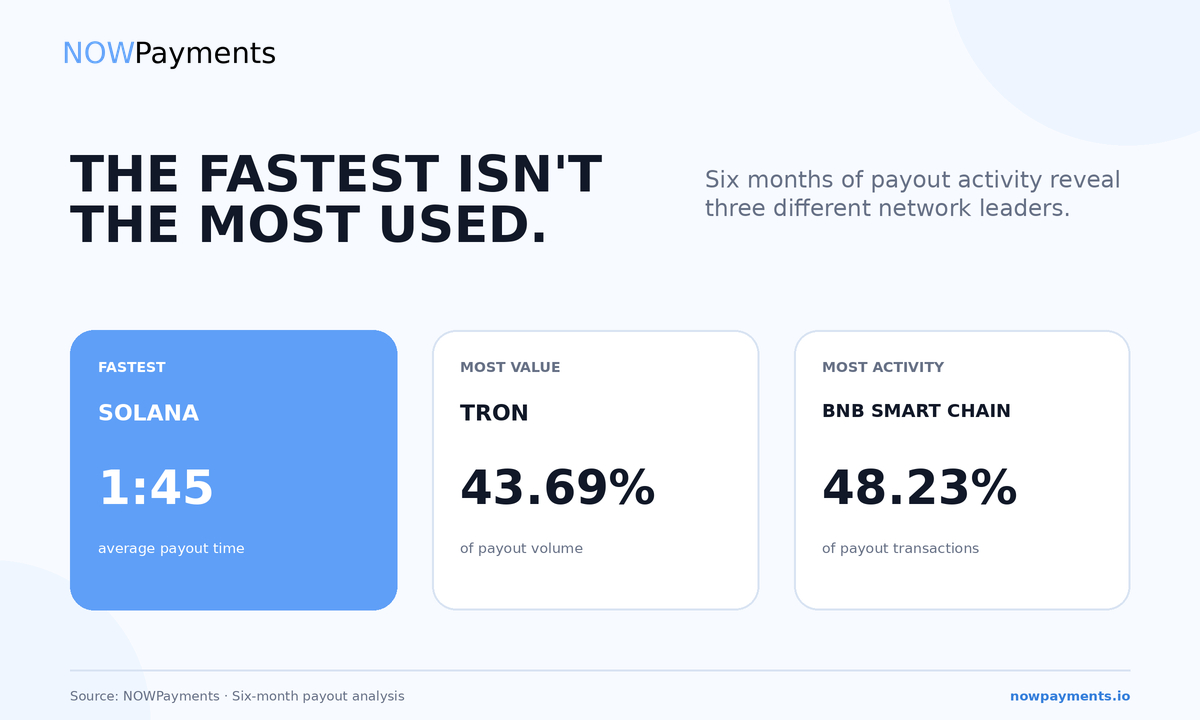
[PRESS RELEASE – Tallinn, Estonia, September 21st, 2026] NOWPayments today published new empirical data analyzing six months of enterprise payout activity, offering a comparative performance benchmark across TRON, BNB Smart Chain, Solana, Bitcoin, and Ethereum to help businesses select optimal blockchain rails based on speed, transaction volume, and cost efficiency. The dataset reveals distinct operational […]

Tallinn, Estonia, 21st September 2026, Chainwire
 The Daily Hodl•Chainwire21 Sept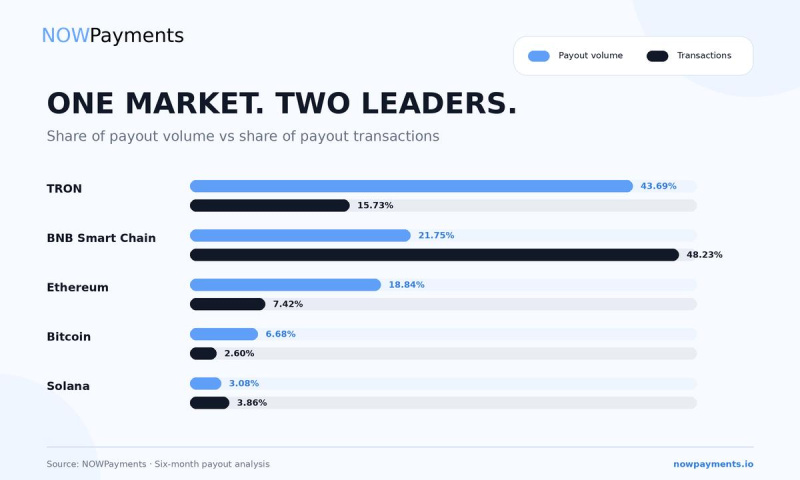
Tallinn, Estonia, 21st September 2026, Chainwire
 TheNewsCrypto•Chainwire21 Sept
CoinsBee payment data shows USDT on TRON recorded nearly twice as many payments as Bitcoin over the past 90 days, while its share of all payments on CoinsBee increased by 64% compared with 2025. Stuttgart, Germany, September 21, 2026 – CoinsBee, a global platform that makes it easy to use cryptocurrency for everyday purchases, today announced that USDT (TRC-20) on the TRON network has become the most-used onchain token and network payment option on CoinsBee, according to payment data from the global crypto gift card platform. Over the 90-day period ending September 1, 2026, USDT on TRON recorded approximately 1.8 times as many payments on CoinsBee as Bitcoin and 1.9 times as many as Ethereum. Its share of payment activity has also substantially increased. USDT on TRON accounted for 16.23% of all payments on CoinsBee in 2026 to date, compared with 9.92% in 2025. This represents a 64% increase in its share of total payments. The data provides insight into how cryptocurrency holders use digital assets for everyday retail purchases, in addition to trading and investing. CoinsBee allows customers in more than 180 countries to purchase gift cards, payment cards, gaming credits and mobile top-ups from more than 5,000 global and local brands using over 200 cryptocurrencies. USDT on TRON is also responsible for a large share of USDT spending on the platform. Over the past 90 days, TRC20 accounted for 44.6% of USDT payments on CoinsBee but 64.5% of USDT turnover. This indicates that the average value of USDT purchases made through TRON was higher than purchases made through other networks that support USDT. In the United States, the most purchased brands using USDT on TRON during the same period included Amazon, Apple, AT&T, PlayStation, Uber, Macy’s, T-Mobile, Walmart, Sephora and DoorDash. The purchases covered categories including retail, mobile connectivity, gaming, transport and food delivery. These findings are based on CoinsBee payment data. The 90-day analysis covers the period from June 4 through September 1, 2026, and includes successfully paid and delivered orders. It compares payments by cryptocurrency and blockchain network. Payment counts represent completed payments rather than transaction value, while turnover represents the value of the corresponding purchases on CoinsBee. The comparison of payment share uses 2026 data to date and full year 2025 data. Payment share represents each token and network combination as a percentage of total completed payments on CoinsBee during the respective period. With this momentum, CoinsBee and TRON DAO are launching a joint campaign focused on the use of USDT on TRON for everyday purchases. From September 21 through October 5, 2026, CoinsBee will offer eligible users of the CoinsBee mobile app a 2% discount on purchases paid with USDT on TRON. Users can enter the code USDT-TRC in the CoinsBee app and select USDT on TRON as their payment method to activate the discount. This offer is available once per user. Subject to conditions. Full campaign terms and eligibility requirements are available on the CoinsBee website. “USDT on TRON is already the most used onchain payment option on CoinsBee, and its share of payments has grown considerably over the past year,” said Iván Escamilla Rodriguez, Product and Growth Lead at CoinsBee. “What is particularly interesting for us is that this activity translates into purchases across categories such as retail, mobile services, gaming and food delivery. Our payment data gives us a direct view into how people use stablecoins when they want to spend their assets.” “Stablecoins become more useful when people can use them for products and services they already purchase,” said Sam Elfarra, Community Spokesperson at TRON DAO. “TRON provides infrastructure for USDT transactions at global scale, and the collaboration with CoinsBee gives users another way to use USDT for everyday purchases.” The campaign highlights the growing use of USDT on TRON with CoinsBee’s catalog of more than 5,000 global and local brands. CoinsBee serves more than 500,000 customers and supports cryptocurrency payments for gift cards and digital products across ecommerce, gaming, entertainment, travel, food, fashion, mobile services and other categories. About CoinsBee CoinsBee is a global platform that makes it easy to use cryptocurrency for everyday purchases. Founded in 2019, CoinsBee enables customers to buy gift cards, payment cards, gaming credits, and mobile top-ups using more than 200 cryptocurrencies. Available in over 180 countries, CoinsBee serves more than 500,000 customers and provides access to gift cards and digital products from more than 5,000 global and local brands across categories including e-commerce, gaming, entertainment, travel, food, fashion, and more. By connecting cryptocurrencies with products and services people use every day, CoinsBee helps make digital assets practical beyond trading and investing. The platform continues to expand its global reach, supported cryptocurrencies, and brand selection to make spending crypto simple, fast, and accessible. Media Contact Erik Rossol press@coinsbee.com About TRON DAO TRON DAO is a community-governed DAO dedicated to accelerating the decentralization of the internet via blockchain technology and dApps. Founded in September 2017, the TRON blockchain has experienced significant growth since its MainNet launch in May 2018. Today, TRON hosts the largest circulating supply of USD Tether (USDT) stablecoin, which currently exceeds $94 billion. As of September 2026, the TRON blockchain has recorded over 405 million in total user accounts, more than 15 billion in total transactions, and over $28 billion in total value locked (TVL), based on TRONSCAN. Recognized as the global settlement layer for stablecoin transactions and everyday purchases with proven success, TRON is “Moving Trillions, Empowering Billions.” TRONNetwork | TRONDAO | X | YouTube | Telegram | Discord | Reddit | GitHub | Medium | Forum Media Contact Yeweon Park press@tron.network
NewsBTC•BlockmanPR21 Sept
Stuttgart, Germany, September 21, 2026 – CoinsBee, a global platform that makes it easy to use cryptocurrency for everyday purchases, today announced that USDT (TRC-20) on the TRON network has become the most-used onchain token and network payment option on CoinsBee, according to payment data from the global crypto gift card platform. Over the 90-day […]
 Bitcoin.com News•Media21 Sept
CoinsBee payment data shows USDT on TRON recorded nearly twice as many payments as Bitcoin over the past 90 days, while its share of all payments on CoinsBee increased by 64% compared with 2025. CoinsBee, a global platform that makes it easy to use cryptocurrency for everyday purchases, today announced that USDT (TRC-20) on the
 BeInCrypto•Advertorial21 Sept
TRON's stablecoin growth highlights its role as a cost-effective settlement layer, but reliance on USDT poses significant concentration risks.
 CryptoBriefing•Editorial Team18 Sept
TRON Inc.'s TRX was sent from HTX wallets, despite BiT Global being the seller, until the HTX sanctions came down.
 Protos•Bennett Tomlin18 Sept
Chainalysis says North Korean operators use Tron, Aptos and BNB Smart Chain as redundant command paths, while suspected Iranian actors encode routing data in Bitcoin transactions.
 The Defiant•The Defiant Team18 Sept
Ducat's integration with TRON could significantly boost Bitcoin-backed stablecoin adoption, enhancing liquidity and stability in emerging markets.
CryptoBriefing•Editorial Team17 Sept
North Korea-linked hackers used Tron, Aptos and BNB Chain to maintain malware infrastructure, while suspected Iran-linked actors embedded directions in Bitcoin transactions.
 Cointelegraph•Cointelegraph by Ezra Reguerra17 Sept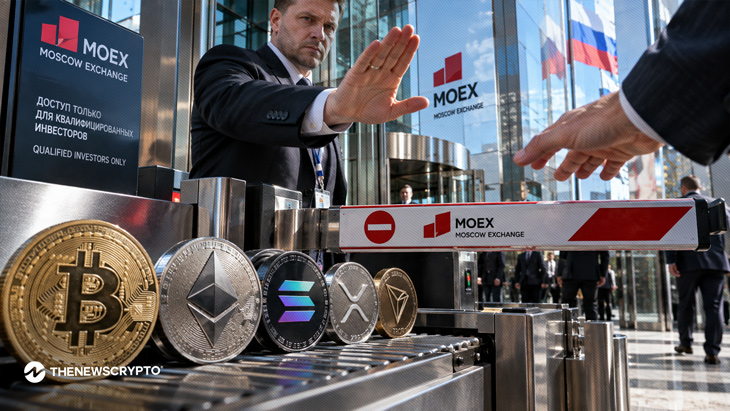
Moscow Exchange, Russia’s largest stock exchange, has announced the launch of perpetual futures contracts on five major cryptocurrency indices starting September 22, 2026. The new instruments cover Bitcoin (BTC), Ethereum (ETH), Solana (SOL), Ripple, and Tron. It is traded under contract codes BTCUSDF, ETHUSDF, SOLUSDF, XRPUSDF, and TRXUSDF, respectively. The
TheNewsCrypto•Sarayu Krishna17 Sept
Summary: Positioned squarely between foundation models and AI agents, B.AI is integrating compute routing, decentralized settlement, and full-stack agent infrastructure to establish itself as an undoubted spearhead in AI infrastructure. Just five months after its launch, B.AI has already set a new industry record with a daily throughput of over 1.51 trillion tokens—a 71,500x-plus increase since inception. B.AI achieved in just over 100 days what took OpenRouter, an early aggregation pioneer, roughly two years. Driven by the integration of settlement networks with core infrastructure, the exponential growth pulled off by B.AI highlights the viability of its full-stack commercial strategy while also demonstrating to the global market that the platform has risen to be the absolute leader in the next-generation AI infrastructure stack. B.AI has secured its leadership thanks largely to its ability to capture and cater to the global demand for cost-effective, high-performance Chinese LLMs. While offering homegrown LLM products a critical gateway for international adoption, the platform has also gained a head start by positioning itself as a global compute distribution hub. B.AI’s ability to rise in this tailwind is rooted in its unique ecosystem design. Co-incubated by TRON and YZi Labs, B.AI disrupts the market via a dual engine of settlement and distribution, plus its complete infrastructure for the emerging agent economy. The platform enables global access to top-tier LLM compute while equipping AI agents with native resource scheduling and execution capabilities—unlocking liquidity and value exchange across the global agent economy. Unprecedented Infrastructure Growth: B.AI Builds Global Distribution Hub for LLMs To reach 1.51 trillion tokens in its daily throughput, simply seizing the tailwind is far from enough. B.AI has also responded swiftly to two macro trends in the AI industry: the cost-performance advantage of leading Chinese LLMs and the surging demand for high-throughput, low-cost inference in the agentic era. Over the past year, Chinese LLM developers like DeepSeek, Kimi, Qwen, and GLM have matched top global benchmarks at a fraction of the API cost. This unbeatable cost efficiency makes adoption virtually inevitable for developers worldwide. As a global, next-generation infrastructure, B.AI aggregates top international models like GPT and Claude alongside rising Chinese LLMs. The platform has established close partnerships with Tencent, Alibaba, ByteDance, DeepSeek, Zhipu AI, Kimi, and MiniMax—all top LLM players in the Chinese market—to build a comprehensive model portfolio. This all-star model lineup has, in turn, made B.AI the default launchpad for Chinese LLMs seeking global expansion. Chinese LLMs, including DeepSeek-V4-Flash, Qwen3.8-Flash, and GLM-5.3 Flash, have stood out as top-performing models on B.AI with the highest usage. Building on the momentum, B.AI continues to drive adoption through model discounts, limited-time free access, tiered API pricing (with discounts up to 90%), and developer incentives, aiming to convert model cost efficiencies into usable throughput for developers worldwide. The traction from this strategic positioning is clearly backed by the numbers: B.AI’s daily token throughput has breached 1.51 trillion—a massive 71,500x-plus surge since its first day upon launch. Beyond its organic growth momentum, ecosystem partner YZi Labs serves as B.AI’s core distribution engine, continuously onboarding early-stage projects and developer communities. This ecosystem support enables B.AI to penetrate diverse real-world use cases, driving a steady influx of incremental traffic and commercial demand. For foundation model providers, B.AI’s multi-trillion, high-concurrency architecture provides a fast track to high-value global workloads. Within this massive pool of demand, B.AI has evolved from a simple distribution channel into a primary facilitator—scaling the commercial reach of leading LLMs while reshaping the global AI landscape. Beyond Aggregation and Routing: B.AI Builds Closed-Loop Infrastructure for the Agent Economy Yet for this super amplifier to truly sustain a trillion-dollar agent economy, front-end compute routing is nowhere near enough. Building on the API aggregation foundation pioneered by early movers like OpenRouter, B.AI recognized a critical insight: fully unlocking massive agent collaboration requires a closed financial loop at the foundational layer. To achieve this, B.AI bridges models and agents, creating a global settlement layer for intelligence. This core differentiator transforms the platform from a simple traffic conduit into the central master ledger for the entire agent economy, ensuring every cross-region call and task allocation is seamlessly routed, precisely metered, and automatically settled. To achieve this vision, B.AI embeds settlement directly into the infrastructure layer, creating a dual-track Web2 and Web3 payment network. Built on Web3 principles, the architecture maintains backward compatibility with traditional Web2 payment systems. On the Web3 front, B.AI leverages on-chain settlement channels to provide global developers with decentralized, verifiable, and low-friction options that enable fully automated transactions and micropayments between agents. On the Web2 front, it preserves legacy gateways like WeChat Pay, Alipay, UnionPay, and Visa, ensuring effortless integration into existing enterprise workflows. Together, this dual-track model delivers a single integration point for frictionless global capital flow. At the heart of this global liquidity is B.AI’s deep integration with TRON. As the world’s largest stablecoin transfer network, TRON offers B.AI a native payment rail through its massive USDT ecosystem, built for maximum liquidity and minimal friction. As of September 10, total TRC-20 USDT supply surpassed 94.2 billion, continuing to set record highs. Backed by TRON’s battle-tested on-chain capacity, B.AI provides the essential infrastructure required to scale cross-border compute scheduling and high-frequency automated agent micro-transactions. The true ambition of this architecture is to capture the emerging landscape of automated transactions in the agent economy ahead of the pack. The coming explosion in agent adoption will inevitably drive agent-to-agent (A2A) collaboration and autonomous commerce. Yet, fully unlocking this automated A2A synergy requires far more than just a foundational payment rail. B.AI builds beyond its Web3 smart settlement network by deploying a dedicated full-stack runtime environment for agents. This establishes an end-to-end, high-precision technical loop bridging compute scheduling, task execution, and financial settlement. At the scheduling layer, B.AI drives fine-grained compute allocation. Its tiered API system fundamentally reshapes compute procurement logic, offering structured invocation plans that allow developers to match specific business demands with optimal compute resources. At the execution layer, B.AI constructs a native agent collaboration ecosystem. It endows agents with direct operational capabilities to act across the digital world. Powered by embedded toolchains like Skills and Agent Wallet, alongside natively integrated AI assistants BAIclaw and BAI code, agents evolve into fully fledged digital workers capable of autonomous data acquisition and execution, laying a solid engineering foundation for multi-agent synergy. At the protocol layer, B.AI establishes foundational transaction standards for A2A commerce. This marks B.AI’s most strategically profound move. By natively integrating the x402 payment protocol and the 8004 identity authentication protocol, the platform paves a standardized path for mutual trust, identity verification, and high-frequency automated settlement between agents. From fine-grained model scheduling to intelligent collaboration systems and standardized transaction protocols, this architecture seamlessly fuses perception, reasoning, action, and settlement. This holistic infrastructure propels B.AI into a central hub for the agent economy, engineered to handle micro-transactions and compute settlement at scale. Crossing into the trillion-token era is merely a new starting point for B.AI. As next-generation AI infrastructure, its core value extends beyond distributing intelligence to powering transactions. By establishing foundational standards for high-frequency A2A collaboration, B.AI is reshaping the global flow of compute value, driving AI infrastructure into a new era built explicitly for agents and machine intelligence. B.AI Team Singapore support@b.ai
NewsBTC•BlockmanPR17 Sept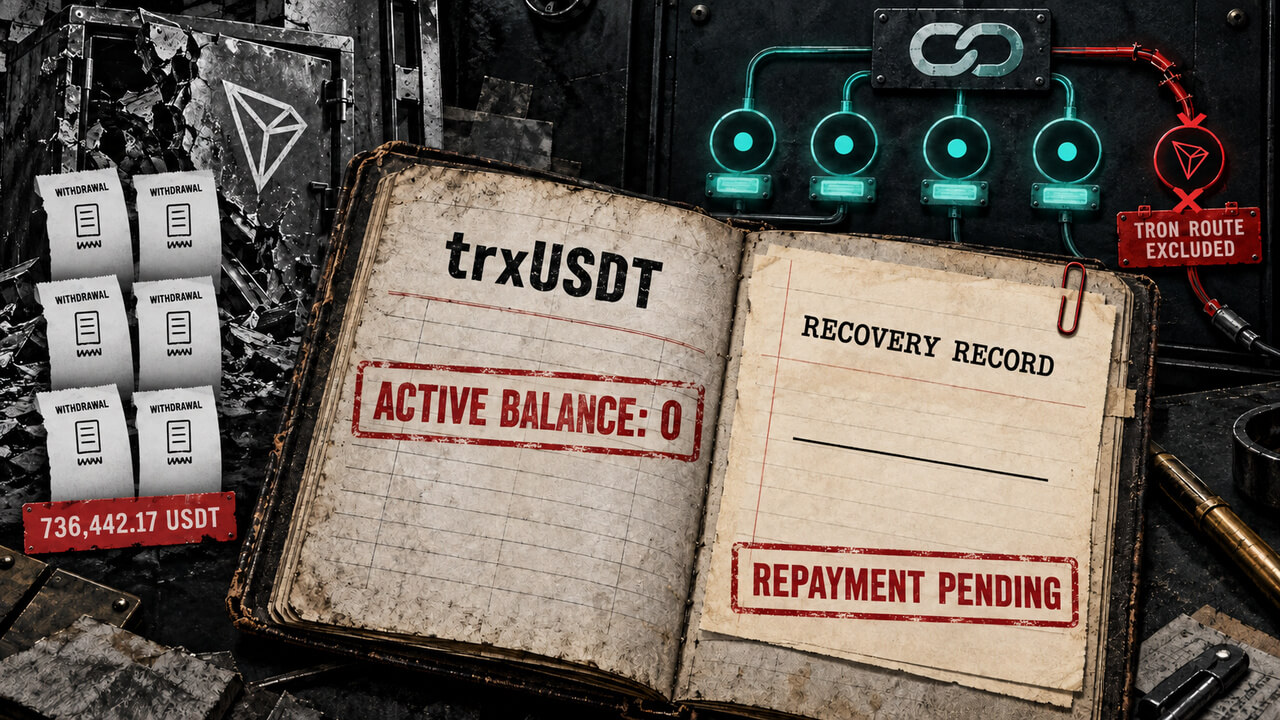
Providers retain a separate on-chain record of what they are owed, but Chainflip has not disclosed repayment timing.
CryptoSlate•Liam 'Akiba' Wright17 Sept
MOEX will launch perpetual futures tied to BTC, ETH, SOL, XRP and TRX indexes on Sept. 22 for qualified investors, settled in rubles.
Solana, XRP, Bitcoin and Tron are facing key technical levels as short-term momentum weakens across the market.
 U.Today•Arman Shirinyan17 Sept
Geneva, Switzerland — September 16, 2026 — The Office of Justin Sun today announced the establishment of the Justin Sun Prize, a zero-trust, decentralized academic bounty mechanism based on a “problem list,” with breakthroughs in fundamental disciplines and machine formal verification as the criteria for awarding prizes, and a top prize of up to US$1 million for a single problem. The prize seeks to redefine scientific rewards in the AI era and accelerate fundamental scientific research through collaboration between humans and AI. The first list of Justin Sun Prize winners was also announced, recognizing solutions and formalized proofs involving 66 mathematical problems. The top prize, worth US$1 million, was awarded to the OpenAI research team in recognition of its solution and formalized proof for the Existence and Smoothness of the Three-Dimensional Navier–Stokes Equations problem. According to information published by OpenAI, the relevant proof was produced by its internal model, and the Lean formalization and verification were completed by GPT‑6 Astra. This problem concerns the Navier–Stokes equations, which describe the motion of fluids and are commonly abbreviated as the N–S equations. The equations were developed in the 19th century by French physicist Claude-Louis Navier, Irish-born British mathematician George Gabriel Stokes, and others, and have a history of approximately two hundred years. In 2000, the Clay Mathematics Institute listed the Navier–Stokes Existence and Smoothness problem as one of the seven Millennium Prize Problems and offered a US$1 million reward for its solution. The Justin Sun Prize does not use traditional nominations or credential thresholds as barriers to entry, nor does it operate on a four-year cycle or the rhythm of lifetime achievement. Instead, it ties the prize directly to mathematical problems and machine-verifiable formalized proofs. Anyone can receive the prize as long as they are the first to achieve a qualifying breakthrough. The vision of the Justin Sun Prize is to become the “Nobel Prize of the AI Era,” responding to the profound transformation of scientific research and incentives in the new era in a more decentralized, formalized, and machine-driven way. The repository of mathematical problems and formalized code will be maintained and publicly updated on an ongoing basis. Once a problem is listed, it is locked in: problems can be added only, never removed; awarded prize funds do not need to be returned under any circumstances. The current problem list already includes formal verification of the Poincaré Conjecture, the Riemann Hypothesis, Goldbach’s Conjecture, and a large number of unsolved problems proposed during the lifetime of the late mathematician and Wolf Prize laureate Paul Erdős. In addition to the prize, winners will also receive a certificate and a medal. The edge of the medal is inscribed with the Latin phrase “Quod probatur, solvitur,” meaning “Proved, then paid.” The Justin Sun Prize adheres to three core principles: openness, public benefit, and open source. It is open to all eligible contributors, with no restrictions based on nationality, institution, or identity, and makes no distinction between humans and AI; funds are used exclusively for prize awards and open initiatives and are not intended for profit; the problem list, confirmation standards, proofs, and verification materials are all made available to the public through GitHub, while prize disbursement records are recorded on-chain for permanent traceability and immutability. “An award named after a person is the least political thing in the world,” said Sun. “More importantly, it gives me an answer to myself—my wealth is rooted in mathematics. It came from mathematics, and it will return to mathematics.” According to public records, Sun has donated more than US$45 million across technology, environmental protection, disaster relief, and other fields. The Justin Sun Prize will become a central focus of Sun’s philanthropic efforts, continuing to support breakthroughs in fundamental science through an open and verifiable model. The prize will be paid out in either USDT on TRON (TRC-20) or USDC on Ethereum (ERC-20) based on the recipient’s choice. For more information, please visit www.hejustinsun.com/prize. About the Office of Justin Sun The Office of Justin Sun supports Justin Sun’s global business, philanthropic and public initiatives across technology, blockchain, artificial intelligence, scientific research, investment, art and space exploration. Justin Sun is the Ambassador and former Permanent Representative of Grenada to the World Trade Organization and the Founder of TRON. TRON is the leading blockchain for the stablecoin revolution, processing over $13 trillion in volume since its inception. In the world’s emerging markets, people rely on USDT on TRON to access the global financial system. A protégé of Alibaba founder Jack Ma, Sun has been recognized internationally for his work in the digital asset industry, including a Forbes cover profile in April 2025 and multiple appearances on the Forbes 30 Under 30 list. In August 2025, he flew aboard Blue Origin’s NS-34 mission, becoming the 712th person in history to travel to space. His broader interests span technology, investment, philanthropy, art, gaming, and space exploration. Office of Justin Sun Contact: info@hejustinsun.com About Justin Sun Prize The Justin Sun Prize is an academic initiative established by Justin Sun to support advances in mathematics, formal verification, and AI-assisted scientific discovery. The prize is decentralized and built around the principle that mathematical work should be judged by the strength, rigor, and verifiability of the proof itself, not the prestige or reputation of those submitting it. Justin Sun established the prize in his own name as a long-term commitment to return wealth created through mathematics and technology back to mathematics itself. Its legacy is intended to be defined by the body of work it recognizes and the laureates whose discoveries stand the test of time. The prize links clearly defined mathematical challenges to machine-verifiable proof. Its guiding principles are openness, public benefit and open-source access. Visit https://www.hejustinsun.com/prize for more information. Contact: thejustinsunprize@hejustinsun.com
NewsBTC•BlockmanPR16 Sept