Ukrainepage 7

Place · 1471 articles
Share

Coverage, page 7

page 7 of 74

EU deadlocked on changes to Russia sanctions ahead of key Ukraine, Greenland talks - Europe live

Without an agreement sanctions on nearly 3,000 entities accused of supporting the war on Ukraine will lapse at the end of the day in Brussels The EU is deadlocked over a plan to remove two Russian billionaires, Alisher Usmanov and Mikhail Fridman, from its sanctions list as part of a bitterly disputed deal to keep broader restrictions in place on nearly 3,000 people and companies accused of enabling Vladimir Putin’s war on Ukraine. “Extending sanctions for 36 months would be the right step. However, the price for it must not be simply striking both individuals from the sanctions list. Latvia cannot accept SUCH an offer.” Continue reading...

The GuardianThe GuardianJakub Krupa22 Sept

Tuesday briefing: Europe thinks Russia is preparing to test Nato’s limits

In today’s newsletter: Intelligence chiefs warn that Russia’s appetite for risk is growing, as sabotage and other covert attacks target countries supporting Ukraine Good morning. As the UN general assembly kicks off in New York later today, we anticipate a heavy focus on the ongoing conflicts in Iran, Ukraine and the Gulf – as well as the inevitable body language analysis of Andy Burnham’s first in-person meeting with Donald Trump. But another related conflict is likely to dominate informal discussions: the intensifying acts of sabotage on European states that are believed to trace back to Russia but deliberately fall below the threshold for military response – a so-called hybrid or “shadow war” with the singular purpose of disrupting support for Ukraine. Yemen | The UK has agreed to provide defensive air support to Saudi Arabia to help counter Houthi fighters and restore stability in the Middle East while driving down the cost of living at home, Andy Burnham has said, ahead of his first meeting with Donald Trump. Environment | The “jaw-dropping” El Niño currently heating up the planet has burst through the highest temperature ever recorded for the phenomenon, several months before its expected peak. Gaza | Israeli and UK military commanders could be requested to give evidence to an inquest concerning three British aid workers killed in Gaza when aid vehicles they were travelling in were hit by an airstrike. US | After President Trump’s snap decision to ban CNN from the White House, the four other networks that comprise the White House’s TV pool decided they would cease their pooled coverage of the president. Slavery | Bones of the enslaver Edward Colston are likely to remain interred in a church in Bristol if and when the currently unused building is given a new lease of life as a community resource, it has emerged. Continue reading...

The GuardianThe GuardianLibby Brooks22 Sept
  • neutral toward North Atlantic Treaty Organization · 96%

'Macron has been trying to convince Trump to take a harder line on Putin'

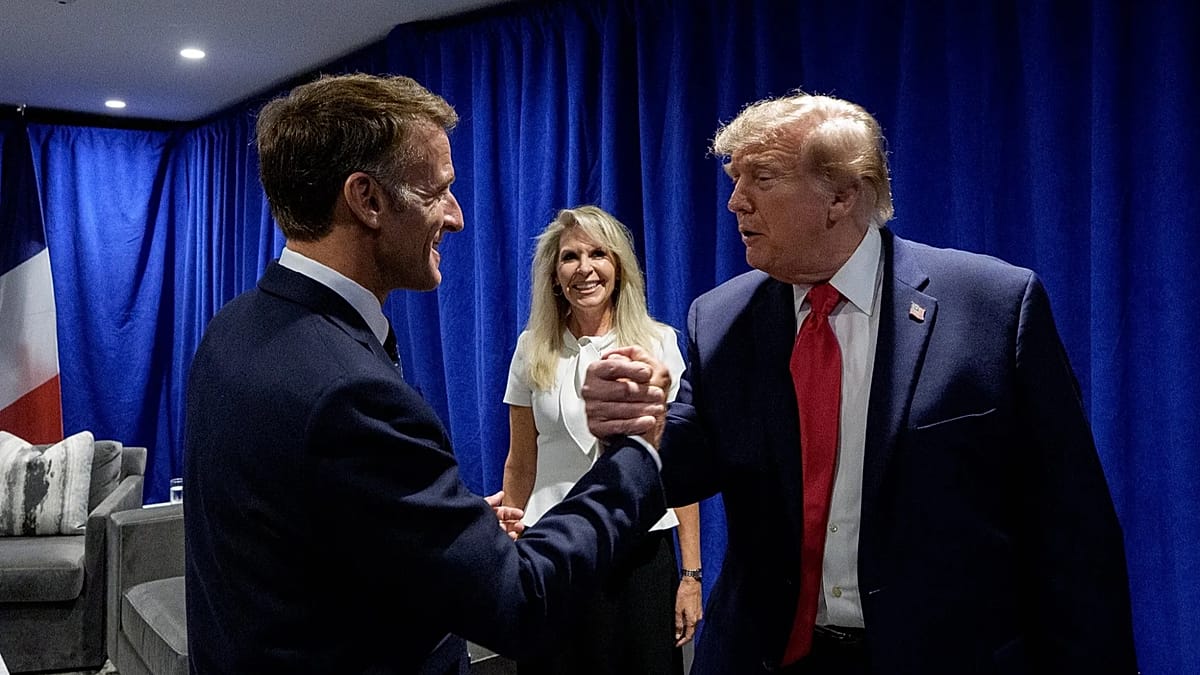
US President Donald Trump's first meeting with a foreign leader on the sidelines of the UN general assembly was with French President Emmanuel Macron. The French president said that the talks, which focused on Ukraine and the Middle East, were "quite constructive". Macron has been trying to convince Trump to take a harder line on Putin and support the sovereignty of Ukraine. Click on the video for more details.

France 24France 24FRANCE2422 Sept
  • neutral toward Donald Trump · 96%

ACT Plan: Managing Assessed Corruption Risks in the Field of International Assistance for EU Candidate Countries: Comparative Insights from Ukraine and Moldova

Countries: Ukraine, Moldova Source: Raoul Wallenberg Institute Please refer to the attached file. This policy brief was developed by the participants of the “ACT – Addressing Corruption Together” project, implemented by the Raoul Walenberg Institute of Human Rights and Humanitarian Law (RWI) in partnership with the Ukrainian Bar Association (UBA) and Action for Justice (A4J) and funded by the Swedish Institute. International assistance has become a critical pillar for supporting reforms, institutional resilience, humanitarian response, and EU integration processes in candidate countries such as Ukraine and Moldova [8][9]. However, the rapid expansion of external funding and emergency support mechanisms also increases exposure to corruption risks, particularly in fragile governance environments and during periods of crisis and accelerated reform. In the context of EU accession efforts, ensuring transparency, accountability, and effective oversight of international assistance is not only a priority of governance but also a strategic requirement for strengthening public trust and aligning with European standards. Both Ukraine and Moldova have undertaken significant anticorruption reforms in recent years, yet challenges persist regarding coordination, risk management, institutional capacity, monitoring mechanisms, and public accountability in the management of international aid and donor-funded programs. This policy brief builds on the outcomes of the ACT Mentorship Program organized by the Raoul Wallenberg Institute of Human Rights and Humanitarian Law, the Ukrainian Bar Association, and Action for Justice. Developed through collaboration between participants from Ukraine and Moldova under the mentorship of Ketevan Bolkvadze, the brief examines assessed corruption risks related to international assistance and identifies comparative lessons, existing gaps, and practical policy recommendations for EU candidate countries. The document aims to develop a substantiated and practically oriented Action Plan to eliminate and/or minimize corruption risks when receiving and managing international aid in Ukraine and Moldova in the outlined areas. The Action Plan contains recommendations based on an analysis of the regulatory framework and factual data, aimed at eliminating and reducing corruption risks while increasing trust in the use of international resources

ReliefWebReliefWebRaoul Wallenberg Institute22 Sept

World: Voices from the Frontlines: Messages for the Next UN Secretary General [EN/AR]

Country: World Source: Oxfam Please refer to the attached files. Overview This report, produced as part of Oxfam’s engagement for the UN General Assembly, brings together the personal testimonies of civil society leaders living and working on the frontlines of conflict. Their voices come from the Democratic Republic of Congo, Ukraine, Lebanon, the Occupied Palestinian Territory, Colombia, Yemen, Syria, South Sudan and Ethiopia. Through these testimonies, Oxfam’s partners call on the next UN Secretary-General to transform global peace and security systems to better protect civilians. The paper builds on Oxfam’s ongoing advocacy to reform the Peace and Security System, which began with the 2024 UNGA report Vetoing Humanity and continued through the 2025 report A (More) Feminist Approach to Principled Humanitarian Aid. Together, these reports envision a humanitarian system grounded in meaningful power sharing and the leadership of affected communities, creating a genuine and trusted local-to-global movement.

ReliefWebReliefWebOxfam21 Sept