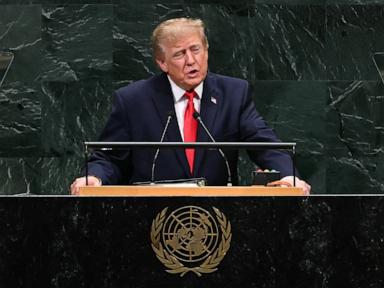
United Nations General Assembly

Organization · 9 articles
Share

All coverage

page 1 of 1
R

oPt: Her Majesty Queen Rania Al Abdullah of Jordan opens High Level Dialogue on Palestinian Children in Military detention with the Taoiseach, Palestinian and other World Representatives at the UN

Countries: occupied Palestinian territory, Ireland, Jordan, South Africa, Spain Source: Save the Children NEW YORK, 22 September 2026 – Her Majesty Queen Rania Al Abdullah of Jordan joined the Taoiseach (Irish Prime Minister) Micheál Martin, the State of Palestine and Save the Children at a United Nations General Assembly side event on Tuesday to call for urgent international action to protect Palestinian children subjected to military detention. The High-Level Dialogue on Palestinian Children in Military Detention, convened by Save the Children and co-sponsored by the governments of Jordan, Ireland, the State of Palestine, Spain, and South Africa, focused on the escalating risks facing Palestinian children who are arrested, detained and prosecuted under Israeli military law, and on the concrete steps governments can take to protect their rights. Save the Children’s latest research documents severe physical, psychological and sexual abuse of Palestinian children in Israeli military detention, including reports of torture and other ill-treatment, solitary confinement, deprivation of adequate food and medical care, and denial of basic legal protections. The humanitarian organisation has found that conditions for detained children have deteriorated significantly since October 2023. The dialogue came amid growing international concern over the treatment of Palestinian children in detention and called for greater diplomatic action. Her Majesty Queen Rania Al Abdullah of Jordan said: “Children’s accounts follow a grim, familiar pattern: Ripped from their homes in the middle of the night, not knowing where they are being taken or why. Brought alone, handcuffed and blindfolded, to interrogation sites; hauled before military courts; pressured to sign documents they don’t understand. Assaulted and threatened with rape… kept underfed, isolated, and afraid.” “I just don’t understand. What is so terrifying about Palestinian children? Before they have even come of age, Palestinians are cast as threats: demographic threats, security threats, presumed guilty of future crimes they haven’t committed. Their innocence stripped away, they are dehumanized so thoroughly that even a kid with roller skates, a soccer ball, or a kite can be seen as something menacing. And a child can be branded a terrorist – as if they were never a child at all.” Micheál Martin, Taoiseach (Prime Minister) of Ireland said: “The report on abuse of Palestinian children in Israeli military detention, and the testimonies we have heard today, are deeply shocking and describe experiences that no child should ever endure. “We all have a responsibility to ensure that the testimonies of these extraordinarily courageous children are not only listened to, but urgently acted upon. The military detention of children cannot be justified. “Ireland, together with international partners, continues to call for Israel to fully comply with international law, and for independent monitoring and accountability, and the protection of all children affected by conflict – of their rights, safety and dignity at all times.” Inger Ashing, CEO of Save the Children International, said: “Children should never be subjected to violence, abuse or degrading treatment. Yet for decades, Palestinian children have been arrested, prosecuted and detained through a military system that fails to guarantee the protections every child is entitled to. “The testimonies we have heard from children are deeply disturbing. They describe being taken from their families, subjected to violence and humiliation, denied adequate food and healthcare, and left with lasting physical and psychological harm. “Governments have both the responsibility and the influence to act. Expressions of concern are not enough. We need coordinated diplomatic action that delivers tangible protection for Palestinian children and ensures their rights are respected.” The event brought together representatives of governments, the United Nations, humanitarian and human rights organisations to examine both the immediate protection needs of detained Palestinian children and the broader international response. Discussions focused on steps governments can take to end violations against children, strengthen monitoring and accountability, secure independent access to children in detention, and ensure that international law and child rights standards are upheld. Save the Children is calling for an end to the detention of Palestinian children within the Israeli military detention system and the release of children currently held. The organisation is also calling on the international community to use its diplomatic influence to end systematic violations against Palestinian children and ensure independent investigation and accountability for alleged abuses. Notes to editors The High-Level Dialogue took place on Tuesday, 22 September 2026, from 3:00–4:15pm EDT in New York, on the sidelines of the UN General Assembly. The event was livestreamed on UNTV . Save the Children’s policy brief, “Tortured”: The Escalating Abuse of Palestinian Children in Israeli Military Detention , documents physical, psychological and sexual abuse, solitary confinement, inadequate food and medical care, and denial of legal protections reported by Palestinian children subjected to military detention. The research found a significant deterioration in detention conditions since October 2023, with serious long-term consequences for children’s mental health, education and wellbeing. Save the Children has called for children held in the military detention system to be released, for the system of military detention of Palestinian children to end, and for stronger international action to protect Palestinian children and uphold their rights.

ReliefWebReliefWebSave the Children7h ago

Loomer says she’s ‘pissed’ at Trump for meeting Mamdani

Far-right commentator Laura Loomer lashed out Monday after President Trump praised New York City Mayor Zohran Mamdani (D) during a cordial press conference at Gracie Mansion ahead of Tuesday’s United Nations General Assembly in the city. “I’m pissed off,” Loomer wrote on the social platform X shortly after Trump met with Mamdani, who is New…

The HillThe HillFinya Swai22 Sept
  • neutral toward Donald Trump · 96%

Trump says Mamdani has ‘great potential’ after Gracie Mansion visit

NEW YORK — President Trump offered rare praise for New York City Mayor Zohran Mamdani (D) Monday, saying he has “great potential.” The two leaders chatted inside Gracie Mansion before holding a press conference ahead of Tuesday’s United Nations General Assembly in the city. “No, I certainly hope he will be a great mayor,” Trump…

The HillThe HillMallory Wilson21 Sept
  • neutral toward Donald Trump · 93%

Florida Republican calls interim Venezuelan president ‘necessary evil’

Rep. Maria Elvira Salazar (R-Fla.) on Sunday called Venezuela’s interim president, Delcy Rodríguez, a “necessary evil” until the Latin American country can have free and fair elections. Salazar defended Trump’s decision to meet with Rodríguez in New York City, while Trump is present for the annual United Nations General Assembly. She told CBS News’s Margaret…

The HillThe HillRyan Mancini20 Sept
R

World: WHO at the United Nations General Assembly 2026

Country: World Source: World Health Organization The World Health Organization (WHO) and partners will raise global awareness during the 81st United Nations General Assembly (UNGA81) of the urgent actions needed to make the world healthier, safer and more resilient. Held under the theme "Restoring trust, managing transformation: A United Nations that delivers for all," this year's General Assembly comes at a pivotal moment for global health. Countries continue to navigate the impacts of ongoing health emergencies, economic pressures, climate-related threats and declining development assistance, while seeking new ways to strengthen health systems and protect populations from future risks. WHO will use UNGA81 to promote action across several priority areas, including pandemic prevention, preparedness and response (PPPR), sustainable financing for health and WHO, climate and health, digital innovation and artificial intelligence, global health security, and strengthening resilient health systems grounded in universal health coverage and primary health care. A central focus will be the Second United Nations General Assembly High-Level Meeting on Pandemic Prevention, Preparedness and Response , taking place on 25 September 2026 . The meeting represents a key opportunity for governments and partners to review progress made since the first High-Level Meeting in 2023 and renew political commitment to preventing future pandemics through science, solidarity and international cooperation. Since 2023, significant progress has been achieved, including adoption of the WHO Pandemic Agreement, strengthening of the International Health Regulations, establishment of the Pandemic Fund, creation of the WHO Hub for Pandemic and Epidemic Intelligence, the WHO BioHub System, and the Global Health Emergency Corps and expanded support for regional vaccine manufacturing. At the same time, recent Ebola, mpox, cholera and hantavirus outbreaks continue to demonstrate that preparedness remains an urgent global priority. Throughout UNGA81, WHO leaders will engage with heads of state and government, ministers, multilateral organizations, development banks, philanthropies, civil society and scientific partners to advance shared solutions to today's health challenges and strengthen collective action for the future. Key WHO moments during UNGA 81 21 September | PMNCH Annual Accountability Breakfast 2026: from pledges to progress Convened by the Partnership for Maternal, Newborn and Child Health (PMNCH), the event will focus on accountability for financing and commitments to improve the health and well-being of women, children and adolescents. Register 21 September | Crisis in preparedness: laboratories and frontline readiness in the time of Ebola The event brings together health leaders, funders and technical partners to identify practical solutions for strengthening laboratory systems as a foundation for both routine health services and pandemic prevention, preparedness and response. Register 21 September | Strategies for a sustainable NCD and mental health response: 5th Multistakeholder Gathering The event will bring together governments, civil society, philanthropy and global health partners to advance sustainable financing and effective multisectoral action for noncommunicable diseases and mental health. Register 22 September | High-Level Investment Initiative/multilateral development banks event Senior WHO leadership participation focused on investing in health systems, resilience and sustainable development. 22 September | Ending lead poisoning: a global call to action Hosted by Bloomberg Philanthropies, Coefficient Giving and the Partnership for a Lead-Free Future. The event will bring together governments, philanthropy and technical partners to accelerate action against one of the world's most preventable environmental health threats. 22 September | Launch of the Jameel Arts & Health Lab-Lancet Global Collection on Arts and Health Convened by the Jameel Arts and Health Lab, New York University and the WHO Regional Office for Europe, this event will explore the growing evidence on the role of arts and culture in improving health and well-being. Register 22 September | Two Regions, One Future: financing pandemic prevention, preparedness and response to build global health security Hosted by the Governments of Guyana and Burundi with support from regional and global partners, the event will examine sustainable financing approaches for health security and pandemic preparedness. Register 22 September | Financing for women's, children's and adolescents' health in a time of austerity Leaders and partners will explore innovative approaches to protecting and expanding investments in health during a period of fiscal constraint. Register 23 September | 7th Annual United Nations Group of Friends of Universal Health Coverage Ministerial Meeting Ministers and partners will discuss accelerating progress towards universal health coverage and preparations for the 2027 UN High-Level Meeting on UHC. 23 September | One SCD: a global partnership to advance equity and transform sickle cell care WHO and partners will highlight opportunities to improve access to prevention, diagnosis and treatment for people living with sickle cell disease. Register 24 September | Pandemic prevention, preparedness and response and human mobility: from global commitments to operational action Hosted by the Government of the Philippines and the International Organization for Migration, with WHO among the co-sponsors. Discussions will explore practical approaches to protecting populations in an increasingly mobile world. Register 25 September | Second United Nations General Assembly High-Level Meeting on Pandemic Prevention, Preparedness and Response Under the theme: "Fostering a multilateral and intergenerational approach to prevent, prepare for and respond to pandemics and public health emergencies, through the principles of equity and solidarity," the meeting will bring together heads of state and government, ministers, international organizations, civil society, academia and the private sector to review progress since the 2023 Political Declaration and agree on actions needed to strengthen global preparedness for future health emergencies. The meeting is expected to reinforce support for: implementation of the strengthened International Health Regulations; progress towards entry into force of the WHO Pandemic Agreement; conclusion of negotiations on the Pathogen Access and Benefit-Sharing (PABS) Annex; stronger surveillance and early-warning systems; equitable access to vaccines, diagnostics and therapeutics; sustainable financing for preparedness and response; and greater investment in resilient health systems and One Health approaches. More information: WHO | United Nations 25 September | Presidential dialogue on high-threat pathogens: from cross-border collaboration to AI-assisted preparedness intelligence in Africa Convened by the President of the Central African Republic, WHO Regional Office for Africa and partners, focusing on regional preparedness and emerging technologies for epidemic intelligence. Register 25 September | A healthier, safer world through science and solidarity Five years after COVID-19, the world has stronger tools, institutions and frameworks for preventing, preparing for and responding to health emergencies. Yet significant challenges remain. Global health security depends on sustained political commitment, investment in resilient health systems, trust in science and effective international cooperation. ---------- At UNGA81, WHO will continue to work with Member States and partners to ensure that the lessons of COVID-19 are translated into lasting action, helping create a world that is not only healthier, but also safer, fairer and more resilient for future generations. Hashtag: #UNGA81 For real time updates on WHO and global health activities during UNGA, follow WHO and the Director-General’s social media accounts: X: @WHO @DrTedros Facebook: World Health Organization (WHO) Tedros Adhanom Ghebreyesus LinkedIn: World Health Organization Tedros Adhanom Ghebreyesus Instagram: @who @drtedros BlueSky: @who.int @drtedros.who.int Threads: @who @drtedros Telegram: Tedros Adhanom Ghebreyesus

ReliefWebReliefWebWorld Health Organization14 Sept