US Treasury faces competition for investor dollars as AI hyperscalers borrow big
Increased borrowing by AI giants and the US Treasury may lead to higher yields, impacting investment strategies and economic stability.

Increased borrowing by AI giants and the US Treasury may lead to higher yields, impacting investment strategies and economic stability.

Increased borrowing by AI hyperscalers and US Treasury spending may lead to interest rate hikes, impacting commodity markets like gold.

Elevated Treasury yields from AI debt sales may suppress gold prices, affecting investment strategies and inflation hedging approaches.

The shift towards equitable wage growth may reduce income disparity, but persistent wealth gaps highlight ongoing economic inequality challenges.

Tokenized Treasury growth signals a shift in fixed-income investing, offering retail investors accessible, yield-bearing alternatives to stablecoins.

The oversubscription highlights strong demand for liquidity, suggesting potential for expanded buyback programs to stabilize bond markets.

The weakening of U.S. Treasury securities may signal economic uncertainty, potentially influencing future Federal Reserve interest rate policies.

Rising yields on US Treasury bills may shift investment from riskier assets to safer, cash-equivalent options, impacting broader market dynamics.

Yen stability is crucial to prevent global financial instability, as Japanese market turbulence can impact US Treasury yields and global liquidity.
The US Treasury sanctioned two Iranian digital asset exchanges, Shelbit and Aban Tether, along with network operator Siavash Kayvanpour, over crypto transfers tied to Iran’s Islamic Revolutionary Guard Corps (IRGC). The Office of Foreign Assets Control (OFAC) issued the designations on Friday. The designations mark the latest US strike on Iran’s crypto rails this year.

The new sanctions exacerbate regional tensions, diminishing prospects for a nuclear deal and impacting global economic and diplomatic dynamics.

The Treasury's steady auction sizes may lead to a significant funding gap, impacting fiscal stability and future borrowing strategies.

Sanctions on crypto exchanges may heighten geopolitical tensions, driving investors toward gold as a safe-haven asset amid financial instability.

The sanctions could hinder diplomatic efforts, reducing the likelihood of a U.S.-Iran nuclear deal and escalating economic tensions.

The sanctions could significantly weaken Iran's financial infrastructure, impacting its global oil revenue flow and regional influence.

The U.S. Treasury's actions could strain U.S.-Iran relations, complicating nuclear negotiations and altering regional geopolitical dynamics.

The Treasury's buyback strategy enhances market liquidity, potentially boosting risk appetite and indirectly benefiting digital assets.

The increased reliance on short-term T-bills could enhance stablecoin liquidity but heightens US fiscal vulnerability to interest rate shifts.

The Treasury's strategy may stabilize short-term funding but risks higher refinancing costs if interest rates rise, impacting fiscal sustainability.

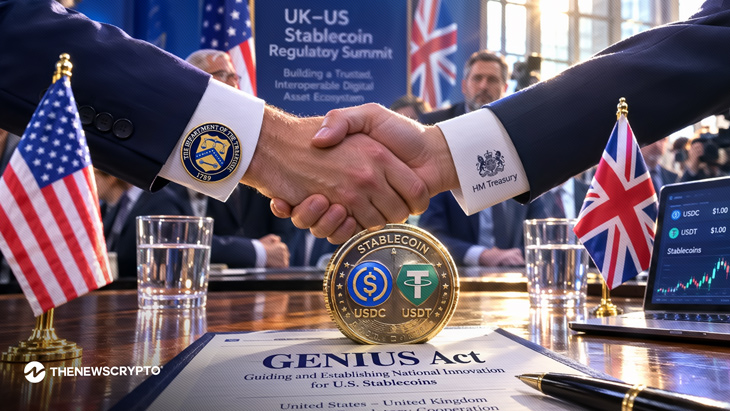
The two countries have been ramping up their efforts related to the regulation of stablecoins because both countries are in the process of refining their regulations concerning digital assets. A delegation from HM Treasury and US Treasury met in London on July 8 for the 13th session of the Financial