A new era of SCOTUSblog
Plus, the dispute over Missouri’s congressional redistricting is back at the Supreme Court.
 SCOTUSblog•Kelsey Dallas10 Sept
Plus, the dispute over Missouri’s congressional redistricting is back at the Supreme Court.
SCOTUSblog•Kelsey Dallas10 Sept
Just one day after Justice Brett Kavanaugh left in place a ruling by the Missouri Supreme Court that barred Missouri from using a new congressional map intended to give Republicans an additional seat in the U.S. House of Representatives in the November elections the opponents of that map returned to the Supreme Court. In a 25-page filing on Wednesday afternoon, Richard von Glahn and a group known as People Not Politicians asked the court to block a subsequent ruling by a federal judge that would require the state to use the new map. Abha Khanna, the lawyer representing the opponents of the map, told the justices that the order by Chief U.S. District Judge Stephen Clark “has been in place for mere hours, but the chaos it guarantees has already taken root.” The fast-moving dispute began last year, when – with the encouragement of President Donald Trump – Missouri redrew its congressional map. The new map, known as HB 1, was intended to give Republicans seven of the state’s eight seats in the U.S. House. Late last year, opponents of the state’s new map submitted more than 300,000 signatures in support of a petition to put the new map up for a statewide vote on the November 2026 ballot. Missouri Secretary of State Denny Hoskins rejected the petition on Aug. 4, 2026. In his view, the state’s constitution “does not authorize a referendum on congressional redistricting plans passed by the General Assembly.” Von Glahn went immediately to a state court, asking it to reverse Hoskins’ decision and block Missouri from using the new map. In a unanimous ruling on Sept. 3, the Missouri Supreme Court granted that request. It wrote that “the plain language of … the Missouri Constitution authorizes a referendum as to ‘any act of the general assembly’ and no exception applies.” Because the referendum petition “was legal, sufficient, and timely,” the court concluded, the new map was never in effect and will not go into effect “unless and until approved by the voters at the November 2026 general election.” The Missouri Supreme Court deemed “wholly unpersuasive” Hoskins’ argument that the failure to use the new map would lead to “confusion, expense, and practical difficulties.” “[T]hese arguments are particularly misplaced given the secretary’s delay created” the problems about which he is now complaining, the court wrote. On Friday night, Hoskins asked the Supreme Court to intervene, telling the justices that the state was “genuinely unsure whether it can switch its governing congressional map in time to run a timely federal election.” He argued that (among other things) the Missouri Supreme Court’s ruling violates the U.S. Constitution’s elections clause , which in his view gives state legislatures – rather than the voters who sign a petition – the power to prescribe the “Times, Places, and Manner” of federal elections. Moreover, he added, the state supreme court’s ruling unconstitutionally disenfranchised “hundreds of thousands” of voters by putting them in new districts where they will be “forced to vote on General Election candidates they had no role in choosing.” This violates the “fundamental right to vote” protected by the Constitution, he contended. Von Glahn countered that the Supreme Court lacks the power to weigh in because the Missouri Supreme Court’s ruling had rested only on state law – known as an “adequate and independent state-law” bar to Supreme Court review. The Missouri Supreme Court indicated that Hoskins could not make his arguments based on federal law because he had not originally made them in rejecting von Glahn’s petition. But even if the Supreme Court could review Hoskins’ appeal, von Glahn continued, he cannot prevail on the merits of his arguments. For example, he said, Hoskins’ “Elections Clause theory runs headlong into more than a century of precedent recognizing that state constitutional referendum procedures may constrain congressional-redistricting legislation.” Kavanaugh turned down Hoskins’ request on Tuesday afternoon without referring it to the full court. Less than an hour later, however, Clark issued a temporary restraining order that directed the state to use the 2025 map. The order came in a case filed on Sept. 4 by (among others) Rep. Robert Onder, a Republican who represents Missouri’s 3rd congressional district. Clark acknowledged that “[c]onducting state elections in accordance with the Missouri Constitution undoubtedly qualifies as an important interest.” But, he countered, the challengers in the federal case “face irreparable harm” without a temporary restraining order “because many Missouri voters would have to cast their general-election votes for candidates whom they had no role in nominating.” On Tuesday night, People Not Politicians and von Glahn – who had joined the federal case – went to the U.S. Court of Appeals for the 8th Circuit, asking that court to pause Clark’s order. But the court of appeals turned that request down. People Not Politicians and von Glahn then went to the Supreme Court on Wednesday afternoon, seeking a stay of Clark’s order. They told the justices that his order “requires Missouri to conduct its congressional election using a map that, under the authoritative decision of Missouri’s highest court, ‘is not the law and has never been the law.’ And,” he contended, “a stay will harm neither Plaintiffs nor the public. To the contrary, leaving the district court’s order in force will cause the very confusion and disruption that Purcell forbids by subjecting election officials to irreconcilable judicial commands on the eve of an election, with a federal court inserting itself to wreak havoc on the State’s elections.” If Clark’s order is put on hold, the map’s opponents continued, “both the public and election officials can proceed under a map that is not marred by legal uncertainty. Officials have confirmed that this outcome is feasible.” Indeed, they noted, immediately after the Missouri Supreme Court’s order on Tuesday, Hoskins “himself instructed elections administrators to implement the 2022 map in accordance with the Missouri Supreme Court’s ruling.” Kavanaugh has instructed Onder and Hoskins to respond by 10 a.m. EDT on Thursday. In a related proceeding, the Missouri Supreme Court ordered Hoskins to file a brief by noon on Wednesday to show why he should not be held in contempt of court for sending an email on Sept. 8 that instructed election officials to use the 2025 map. It instructed von Glahn to respond by 4 p.m. on Wednesday and scheduled oral arguments for 10 a.m. on Thursday. Hoskins has asked Clark to block the contempt proceeding in the state court.
SCOTUSblog•Amy Howe9 Sept
California, joined by a group of 22 states and the District of Columbia, urged the Supreme Court on Wednesday to leave in place a ruling by a federal judge in Boston that prohibits the Trump administration from implementing parts of a U.S. Postal Service rule on mail-in ballots. Ian Fein, California’s deputy solicitor general, told the justices that “USPS’ unprecedented experiment with our Nation’s most cherished franchise—the right to vote—is unlawful.” The 40-page filing was the latest chapter in an ongoing battle over the Trump administration’s efforts to put restrictions on mail-in voting in place before the November elections. The dispute began nearly six months ago, when President Donald Trump signed an executive order that instructed federal agencies to take a series of steps on mail-in voting. The first provision orders the Department of Homeland Security to create lists of the adult U.S. citizens in each state and to send those lists to states at least 60 days before a federal election. The second provision directs the U.S. attorney general to “prioritize the investigation and, as appropriate, the prosecution of State and local officials … who issue Federal ballots to individuals not eligible to vote in a Federal election.” And the third provision requires states to provide the U.S. Postal Service with a list of voters to whom the states intend to send mail ballots, and it bars the Postal Service from mailing ballots to voters who are not on the lists of “enrolled” voters that the USPS will create. A group of 23 states, led by California, and the District of Columbia went to federal court in Massachusetts, where they challenged the government’s implementation of the order. They contended that the order clashes with provisions in the Constitution that give states the power to determine voter eligibility and to set the “Times, Places, and Manner” of holding congressional elections. In an order on June 25, U.S. District Judge Indira Talwani temporarily barred the federal government from implementing the challenged restrictions on or before the upcoming November elections in California, the states joining the lawsuit, or D.C. The U.S. Court of Appeals for the 1st Circuit declined to put that order on hold to give the government time to appeal. That prompted the Trump administration to come to the Supreme Court on July 27, where – along with a group of 12 states, led by Alabama , that had joined the case on the Trump administration’s side – it asked the justices to pause Talwani’s order. On Aug. 24, the Supreme Court cleared the way for the Trump administration to begin implementing the executive order. Over the objections of the court’s three Democratic appointees, the majority explained that the states’ challenge was premature because the order had not yet been carried out – and, as a result, the states had not suffered the kind of injury that would allow their lawsuit to proceed. Three days later, Talwani issued a new order : a temporary restraining order that barred the Trump administration, for 14 days, from requiring states to comply with several provisions of the new Postal Service rule , such as ballot envelope design requirements and the submission of voter data into a USPS portal. The Trump administration went back to the Supreme Court on Thursday, where U.S. Solicitor General D. John Sauer asked the justices to pause Talwani’s temporary restraining order (and to issue an administrative stay, an even more temporary form of relief that would put the order on hold while they considered the government’s request). Thursday’s request proved to be short-lived. The very next day, Talwani issued a preliminary injunction , which replaced her Aug. 27 temporary restraining order and prohibited the Trump administration from requiring states to comply with provisions of the rule indefinitely while the litigation moves forward. Sauer then submitted a letter to Scott Harris, the clerk of the Supreme Court, withdrawing the Trump administration’s second application for relief in light of Talwani’s new order. Telling the court that Talwani’s “continuing prejudgment of the rule is baseless,” and her rationale is “simplistic,” Sauer returned to the court for a third time on Sunday, asking the justices to pause the Sept. 4 preliminary injunction. Sauer rejected any suggestion “that the Postal Service is trying to federalize the rules for mail-in voting.” Instead, he insisted, “the Postal Service’s final rule imposes only modest envelope-design and addressee-information requirements for federal-election ballots sent via U.S. Mail.” Moreover, Sauer continued, the Postal Service’s new rule “is plainly constitutional. While the States have primary authority to regulate the manner of elections, they cannot choose to use the federal mails to carry out their elections but then insist that their election-related mail is somehow exempt from the Postal Service’s rulemaking authority, conferred by Congress, to regulate envelope design and addressee information.” If Talwani’s order is not put on hold, Sauer said, the government will – as the Supreme Court has already recognized in earlier proceedings involving the rule – suffer permanent harm (a key factor in determining whether to award temporary relief) because the election is so soon. North Carolina has already started to mail out ballots, Alabama will do so on Sept. 9, and “at least five States” will do so the following week – all without being required to comply with the new rule. By contrast, Sauer contended, the states’ claims that complying with the rule will harm them are “overblown.” In their response on Wednesday, California and the other states told the court that Talwani’s preliminary injunction should remain in effect, warning of dire consequences if the Postal Service is allowed to implement the rule now. “In some States,” Fein wrote, “unrebutted evidence establishes that compliance with USPS’ rule would be impossible ahead of the midterms, meaning that millions of voters would be unable to vote by mail and some would not be able to vote at all. In the remaining States, there would be chaos—and a significant risk that millions more voters would be denied the ability to vote.” Moreover, Fein added, “even if state and local officials were somehow able to implement the new rule perfectly, there is a high risk of technical breakdown, ineptitude, and delay on the part of USPS.” Fein pointed in particular to reports that a whistleblower has indicated that the USPS online portal for the submission of voter data has been created in a “sloppy and rushed manner.” Fein suggested that the Supreme Court should be “skeptic[al]” of USPS’ efforts to regulate elections given that it has never done so before, “[a]nd nothing in federal law authorizes USPS to refuse to deliver ballots.” To the contrary, Fein noted, to the extent that Congress has addressed voting by mail, it has done so “only by requiring USPS to make mail voting easier for States and voters.” A brief filed on Wednesday by the League of Women Voters and other civic groups, which had filed their own challenge to one part of the rule, also asked the court to leave Talwani’s order in place. Lawyer Sophia Lin Lakin of the ACLU, which represents the groups, told the justices that “Congress charged the Postal Service with delivering the mail nationwide, subject to a scheme of narrow exceptions for specified categories of material that Congress itself—not USPS—has deemed ‘nonmailable’ and subject to rules of general application such as sufficient postage. Mail ballots fall outside those congressionally prescribed exceptions.” Lakin added that, in contrast with the chaos that would result from pausing Talwani’s order now, “maintaining the injunction imposes no comparable harm on USPS, where the agency concedes that, despite its asserted interest in ‘election integrity,’ it has no role in verifying whether mail voters are eligible.”
SCOTUSblog•Amy Howe9 Sept
It’s hard to believe, but SCOTUSblog has now been around for nearly a quarter-century – old enough to run for Congress! SCOTUSblog was originally launched to help promote a then-three-person law firm. As a business-development strategy, the blog was not particularly successful, but it was a lot of fun, and other people seemed to find it useful. And, incredibly, over the years, SCOTUSblog became the definitive source for comprehensive and independent coverage of the Supreme Court. Last year, SCOTUSblog began a new chapter when it became part of The Dispatch family. As part of its acquisition of SCOTUSblog, The Dispatch’s co-founder and CEO, Steve Hayes, promised both to “let SCOTUSblog be SCOTUSblog” and to “invest in” the blog “to ensure that it remains the go-to authority on the Supreme Court.” Just over 15 months later, we couldn’t be happier with how The Dispatch’s bet on us is paying off. We’ve launched a daily newsletter, brought on more than 20 recurring columnists, revived the popular Stat Pack (and even introduced a new one), expanded our coverage of the court to include all of the argued cases and live blogs of high-profile arguments, and given the site a complete redesign – with plenty more to come. Today, we are excited to announce our next chapter: SCOTUSblog Plus. Subscribe to Plus Here’s why we’re launching Plus: First, the Supreme Court plays a central role in the direction of our country, deciding legal issues that shape our future and affect our daily lives. But it is an institution that is both relatively opaque and often misunderstood, which calls for especially careful coverage of it. Second, and relatedly, many of you have asked for even more analysis, reporting, and breakdown of arguments, orders, and decisions – including of the circuit and district courts. We hear you. Third, and to be blunt, running a blog like this one costs money. Your purchase of Plus will give us the resources to thrive in an increasingly difficult and competitive media environment. It will also give us the ability to continue our expansion and maintain SCOTUSblog as the best resource on the Supreme Court out there. But what exactly will you get with Plus? Our daily newsletter, SCOTUStoday : All of the day’s Supreme Court news and commentary, presented in a smart, approachable, and entertaining way, delivered every weekday to your inbox (starting on Sept. 22, this will no longer be available to non-Plus members Monday through Thursday) Explainers & SCOTUS FOCUS : Deep dives on the court, the issues that it’s confronting, and what its decisions actually mean Expert briefings & AMAs : Live insight behind the coverage, from those reporters and experts most familiar with the court. This includes chats with, among others, Sarah Isgur, Amy, Zach, and the extended SCOTUSblog universe Enhanced SCOTUS Statistics & complete Stat Packs : Right now, our statistics on Supreme Court coalitions, voting patterns, and much else come out with our Stat Packs twice a year. With SCOTUSblog Plus, you get all this information and more, updated contemporaneously with each court decision Text alerts : Decisions, orders, and arguments after they’re announced Our expanded Petitions to Watch: The cert petitions most likely to shape the docket, which have been re-organized and more fully explained Live-blog commenting: The ability to weigh in alongside experts and other SCOTUS watchers With even more features and products to come For the next 30 days, we’re offering a limited-time founding membership – at a lower price – for those who want to join us on the ground floor. In addition to the above, as a founding member you’ll also get exclusive access to our first AMA (and some very cool merch). Just to be absolutely clear: our core reporting isn’t going anywhere. Our analyses of court news and cases, along with the docket, calendar, and other coverage, will remain free. But we do hope you’ll help sustain SCOTUSblog by joining Plus. *** Since its inception, we’ve always thought of SCOTUSblog as more than simply a news site. For us, it’s a community of people who are deeply interested in – and just maybe a little obsessive about – the Supreme Court. We are so grateful to all of you for your support of SCOTUSblog and your participation in this special community, and we can’t wait to enter SCOTUSblog’s next phase with you. Subscribe to Plus
SCOTUSblog•Amy Howe, Zachary Shemtob9 Sept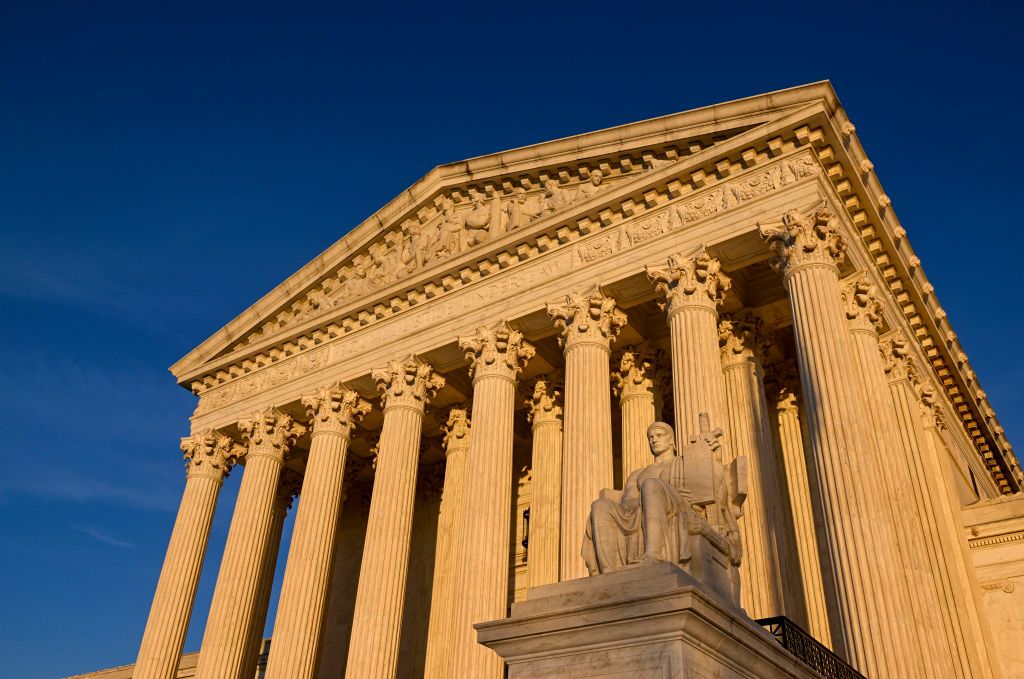
The Supreme Court’s decision to allow President Donald Trump to demolish the East Wing of the White House and build a huge ballroom is troubling enough. But it could also have long-term consequences by making it much harder for plaintiffs to sue to enforce something even more important: federal environmental laws. For over 50 years, the court has consistently allowed plaintiffs to have standing to sue in federal courts based on claims that they have suffered an aesthetic harm. In the ballroom case, the court rejected this claim as insufficient for standing. The court did not overrule its earlier decisions, but it left in doubt when claims of aesthetic injuries – which are pivotal to bringing some environmental harm claims against the federal government – will be sufficient to allow plaintiffs to sue. The precedents By way of background, a plaintiff must have what is known as standing to sue in federal court. Traditionally, there are three requirements that must be met to show that one has standing: the plaintiff must be injured or imminently likely to be injured; the injury must be caused by the defendant; and a favorable court decision must be likely to remedy the harm suffered. As for the first standing requirement, injury, the court has found many different kinds of harms sufficient to allow a person to sue in federal court. One of them is an aesthetic harm or injury. An initial case was 1972’s Sierra Club v. Morton . The Sierra Club challenged a proposed Walt Disney ski resort development in the Mineral King Valley of the Sequoia National Forest, alleging that the project would destroy the area’s scenic beauty. The court said that claims of aesthetic and environmental harm are sufficient for standing. It explained that “aesthetic and environmental well-being, like economic well-being, are important ingredients of the quality of life in our society, and the fact that particular environmental interests are shared by the many, rather than the few, does not make them less deserving of legal protection through the judicial process.” Nevertheless, the court denied standing because the plaintiffs in the case had not alleged that they actually used Mineral King Valley. A year later, in United States v. Students Challenging Regulatory Agency Proceedings , the Supreme Court upheld the standing of a group of students to seek review under the Administrative Procedure Act of an Interstate Commerce Commission decision to increase freight rates. Specifically, the group of law students at George Washington University Law School contended that the hike in railroad freight rates would discourage the use of recycled goods because of the extra cost of shipping them, and that a decrease in recycling would lead to more use of natural resources and thus more mining and pollution. The students maintained that their enjoyment of the forests, streams, and mountains in the Washington, D.C., area would be lessened as a result. The Supreme Court upheld the group’s standing, concluding that environmental and aesthetic injuries are sufficient for standing so long as the plaintiff claims to suffer the harm personally. In many subsequent cases the court reaffirmed that claims of aesthetic injuries are sufficient for standing. In 1986’s Japan Whaling Association v. American Cetacean Society , for instance, the court found that a whale conservation society had standing to challenge the secretary of commerce’s failure to certify Japan’s whaling practices because whale watching by the society's members would be adversely affected by continued whale harvesting. The court explained that aesthetic enjoyment of wildlife – including observing animals in their natural habitat – constitutes a cognizable interest for standing purposes. The court subsequently, and often, repeated that claims of aesthetic injuries are sufficient for standing. In 1992’s Lujan v. Defenders of Wildlife , the court, in an opinion written by Justice Antonin Scalia, declared: “Of course, the desire to use or observe an animal species, even for purely esthetic purposes, is undeniably a cognizable interest for purpose of standing.” In Friends of the Earth, Inc. v. Laidlaw , decided in 2000, the court also held that plaintiffs have standing based on claims of aesthetic injuries, even without proof of actual environmental harm. In 2009’s Summers v. Earth Island Institute , the court, in another opinion by Scalia, reaffirmed this and declared: “While generalized harm to the forest or the environment will not alone support standing, if that harm in fact affects the recreational or even the mere esthetic interests of the plaintiff, that will suffice.” National Park Service v. National Trust for Historic Preservation of the United States Without any congressional approval or congressional appropriation of funds, Trump demolished the East Wing of the White House, including to build a 90,000 square foot ballroom.The law is clear that Congress is in charge of federal property and needs to authorize this change. As the U.S. Court of Appeals for the D.C. Circuit explained : “Congress has not ceded unfettered authority to the Executive Branch to dramatically redesign, reshape, and reconstruct the White House—the People’s House—to fit a particular President’s desires.” Additionally, it is estimated that this project will cost about $600 million and while some of the money will be privately raised, there will be significant cost to the federal treasury. Congress, which exclusively holds the power of the purse, has approved no funds for this. The National Trust for Historic Preservation in the United States, a congressionally chartered organization that seeks to preserve and promote the United States’ architectural and cultural heritage, brought a lawsuit challenging the demolition of the East Wing and the construction of the ballroom. Under well-established law, for an organization to sue it must allege, among other things, that one of its members would have standing. The complaint in the case identified Professor Alison Hoagland, an architectural historian and professor emerita in historic preservation. In her declaration , she said that she has been a member of the National Trust for over 40 years and is currently a trustee serving on its executive committee. She said that she routinely walks in front of the White House and in Lafayette Square directly across from the White House, and she “intend[s] to continue” doing so. Hoagland said that the demolition of the East Wing and the construction of the ballroom will substantially change for the worse the aesthetics of that area. The federal district court concluded that this was sufficient for the National Trust to have standing to sue and found that the demolition and construction of the East Wing was illegal and unconstitutional. Federal district court Judge Richard Leon ruled that the construction of an underground bunker, which Trump said is needed for national security, could continue. But the above-ground demolition and construction had to stop until there was congressional approval. The D.C. Circuit agreed. It pointed out that the Supreme Court many times had said that claims of aesthetic injury are harms sufficient to allow standing to sue. The circuit court said that under the Trump administration’s “cramped standing theory . . . no one [would be] injured by a decision to raze the Statue of Liberty, to obscure the names on the Vietnam War Memorial, or to install a political billboard atop Mount Rushmore.” But the Supreme Court, in a 5-4 ruling, reversed the lower courts. The majority was comprised of Justices Clarence Thomas, Samuel Alito, Neil Gorsuch, Brett Kavanaugh, and Amy Coney Barrett. The court concluded that no one was injured by the president’s actions and stated that “we have repeatedly held that mere offense, disagreement, or distaste does not qualify as a concrete or particularized injury under Article III.” The majority then contended that the earlier environmental cases had plaintiffs whose “injuries involved more than mere offense.” But this conclusion ignores both the plaintiff’s complaint and the law. The plaintiff does not allege a claim based on “offense, disagreement, or distaste.” Rather, the plaintiff alleges an aesthetic injury – and the majority barely attempts to distinguish this from those alleged in its many prior aesthetic injury cases. As Chief Justice John Roberts, joined by Justices Sonia Sotomayor, Elena Kagan, and Ketanji Brown Jackson, pointed out in dissent, “[o]ur precedents . . . have noted that an injury to a plaintiff’s mere ‘esthetic interests’ can qualify as ‘concrete and particularized’” and are therefore sufficient for standing. Roberts succinctly explained that “Hoagland’s injury suffices for standing. A historic preservations such as Hoagland can be aesthetically injured in a concrete, particularized way by a transformation of a historic building that she frequently enjoys, just as an environmentalist can sustain a concrete, particularized aesthetic injury from the extinction of a particular animal or the transformation of a particular forest or river that he regularly enjoys.” What does this mean for environmental litigation? The Supreme Court did not overrule its many earlier decisions establishing that claims of aesthetic injury are sufficient for standing. But in every case where aesthetic injury has been recognized, it could be said that the plaintiff’s injury was just “offense, disagreement, or distaste.” Indeed, “offense, disagreement, or distaste” is the very essence of an aesthetic injury. As a result, the court’s attempt to draw a distinction is incoherent and adds great confusion to the law. Nevertheless, the court, without explanation, said that the earlier cases involved “more than mere offense.” But no prior case suggested that more than a claim of an aesthetic injury was sufficient. Nor did the court give any indication of what “more” now will be needed for standing. In this way, the court’s decision is not only in direct conflict with over 50 years of clear precedent but serves as a serious threat to environmental protection litigation. It also gives a sense of how far some of the court’s conservative majority is willing to go to defer to Trump. Not a single justice in the majority questioned that Trump’s actions in demolishing the East Wing and building the ballroom are illegal and unconstitutional. But the effect of the court’s ruling is that likely no one will have standing to sue to challenge them – or even more serious environmental harms committed by this administration moving forward.
SCOTUSblog•Erwin Chemerinsky9 Sept
A crucial case decided yesterday on the Supreme Court’s emergency docket will likely mean that in the upcoming November election Republicans will win only 6 of 8 Missouri congressional seats in the new House of Representatives, rather than 7 of 8, as they were hoping for. In this case, Hoskins v. von Glahn , Republicans wanted the Supreme Court to jump in and second-guess a state supreme court on what is essentially a matter of state constitutional law. It would have been both legally wrong and politically damaging for the court to have done so. Late yesterday, Justice Brett Kavanaugh spurned the poisoned chalice without explanation. No justice dissented, at least not publicly. (Kavanaugh in fact denied the request himself, without referring it to the whole court; he would not have acted unilaterally unless he knew a majority of the court wanted no part of this request.) We applaud this outcome, and we offer a few quick points of elaboration. Under both the U.S. Constitution’s Article I, section 4, and a clear congressional statute on the books , Missouri’s single-member districting lines for Congressional districts are to be determined by state law – including, of course, state constitutional law, as definitively determined by the state supreme court. The Missouri Supreme Court had already weighed in on the relevant state-law issues in Hoskins . (For the details, see Amy’s recent explainer .) There was thus no proper role for the U.S. Supremes at this point. Such is the square command of the court’s landmark ruling in the 2023 Moore v. Harper – a ruling involving congressional districting in North Carolina in which the court aligned with our amicus brief in that case (co-written with Steve Calabresi ) and also built squarely on an earlier Roberts court precedent, Arizona v Independent Redistricting Commission , involving congressional districting in Arizona. Some prominent commentators in 2023 opined that the Moore court had left the door open for U.S. Supreme Court intervention seeking to second-guess state supreme courts in a broad range of future congressional districting cases. We thought that these commentators misread Moore , and we said so back in 2023. Since then – consistent with our reading of the case, and contra the predications of these other commentators – the U.S. Supreme Court has yet to second-guess a single state supreme court state-law ruling involving congressional districting. In Hoskins , the state supreme court was unanimous . It essentially ruled for Democrats even though a strong majority of that court had been appointed by Republican governors. This is what law looks like. Here is another thing that law looks like: What’s sauce for a Democratic goose in Virginia is sauce for a Republican gander in Missouri. When sore-loser Democrats tried to use the Supreme Court’s emergency docket to second-guess the Virginia Supreme Court on a state-law issue in a recent congressional districting case, the Supreme Court shot down the Virginia Democrats unanimously and immediately. Yesterday, the court quite properly did the same thing on the same brisk timeline to Missouri Republicans. The state of Missouri, via its constitution, has chosen to allow the people of the state, in certain specified situations, to weigh in directly on congressional districting before any ordinary state law changing the districting rules may go into effect. This is surely a choice Missouri is allowed to make under the 10th Amendment, the Republican Government Clause , Erie , and the Moore v. Harper line of cases. If the people of Missouri don’t like this system, they are of course free to change their state constitution. The state constitutional provisions at issue in Hoskins have a long and distinguished pedigree. The Missouri Constitution could clearly have prevented the state legislature from implementing ANY optional districting change absent two legislative votes separated by an intervening general election. Given that, the Missouri Constitution can surely take the lesser step of pausing new legislative districting rules in some situations, where opposition among the electorate is particularly intense and seemingly widespread, while allowing new legislative districting rules to take immediate effect in other, calmer and less partisan situations. Under the so-called Purcell principle , the Supreme Court has admonished that federal courts should not upset state-law election rules and practices on the eve of an election, absent a very clear violation of federal law. For a more detailed analysis, advocating for and correctly predicting yesterday’s Supreme Court result, see Vik’s September 7 Justia column . Hooray for Justice Kavanaugh! Hooray for the court! P.S. Shortly after Kavanaugh’s order last evening, a rogue federal district court judge, disregarding both the plain purport of Kavanaugh’s ruling and the clear legal analysis of the underlying issues in Vik’s Justia column, has apparently tried to reopen the door that Kavanaugh properly slammed shut. We urge and expect a quick and stern bench slap of the district court from the Eighth Circuit on its emergency docket and/or from Kavanaugh and the Supremes.
SCOTUSblog•Akhil Amar, Vikram Amar9 SeptPlus, should the Supreme Court try to shorten oral arguments?
SCOTUSblog•Kelsey Dallas9 Sept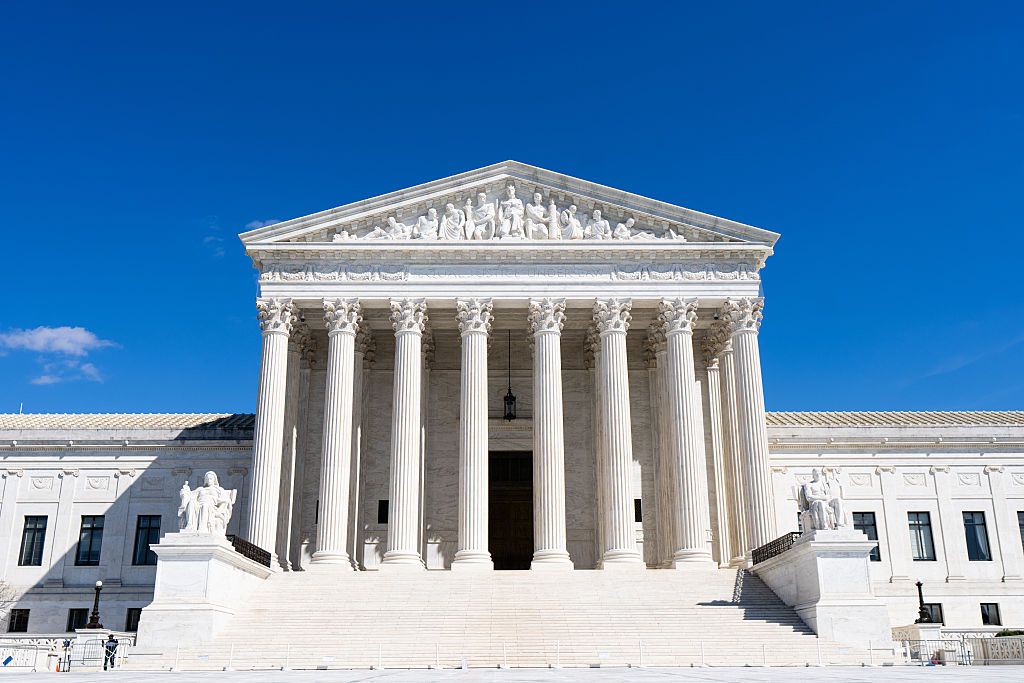
Updated on Sept. 9 at 10:50 a.m. Justice Brett Kavanaugh on Tuesday blocked Missouri from using a new congressional map, intended to give Republicans an additional seat in the U.S. House of Representatives, in the November elections. In a brief order sent to reporters on Tuesday afternoon, Kavanaugh – who handles emergency appeals from the 8th Circuit, which includes Missouri – turned down a request from the state’s top election official to pause a ruling by the Missouri Supreme Court that bars the state from deploying the new map. Although Tuesday’s order came on the Supreme Court’s interim docket, the court’s ruling likely settles the issue of the maps for the 2026 election, restoring the map that the state adopted in 2022 in the wake of the 2020 census. Missouri was one of several states that redrew its congressional maps in advance of the 2026 elections with the encouragement of President Donald Trump. The new map, known as HB 1, was intended to give Republicans seven of the state’s eight seats in the U.S. House. In December 2025, opponents of the state’s new map – including Richard von Glahn, the plaintiff in the case now before the Supreme Court – submitted more than 300,000 signatures in support of a petition to put a statewide referendum on the new maps on the ballot in the November 2026 elections. The state’s top election official, Missouri Secretary of State Denny Hoskins, rejected the petition on Aug. 4, 2026, the last day on which he could make that determination as well as the day of the state’s primary election. In Hoskins’ view, Missouri’s constitution “does not authorize a referendum on congressional redistricting plans passed by the General Assembly.” Just a few hours later, von Glahn filed a lawsuit, asking a state court to reverse Hoskins’ decision and bar Missouri from using the new map. In a unanimous ruling on Sept. 3, the Missouri Supreme Court granted his request. The state supreme court wrote that “the plain language of … the Missouri Constitution authorizes a referendum as to ‘any act of the general assembly’ and no exception applies.” Because the referendum petition “was legal, sufficient, and timely,” the court concluded, the new map was never in effect and will not go into effect “unless and until approved by the voters at the November 2026 general election.” The state supreme court deemed “wholly unpersuasive” Hoskins’ argument that, if the state cannot use the new map, it will lead to “confusion, expense, and practical difficulties.” “[T]hese arguments are particularly misplaced given the secretary’s delay created” the problems about which he is now complaining, the court wrote. Hoskins came to the Supreme Court on Friday night , where he told the justices that “[a] federal-election-administration disaster is unfolding in Missouri” and that the state was “genuinely unsure whether it can switch its governing congressional map in time to run a timely federal election.” He argued that the Missouri Supreme Court’s ruling violates the U.S. Constitution in several ways. Among other things, he contended, it runs afoul of the elections clause , which in his view gives state legislatures – rather than the voters who sign a petition – the power to prescribe the “Times, Places, and Manner” of federal elections. The Supreme Court, he wrote, “has never held that just 3.3% of a State’s voters can unilaterally suspend a disfavored congressional map by submitting a referendum petition.” The Missouri Supreme Court’s ruling, Hoskins continued, also unconstitutionally disenfranchised “hundreds of thousands” of voters by putting them in new districts, where they will be “forced to vote on General Election candidates they had no role in choosing.” This violates the “fundamental right to vote” protected by the Constitution, he contended. Von Glahn countered that the Supreme Court lacks the power to weigh in because the Missouri Supreme Court’s ruling had rested only on state law – known as an “adequate and independent state-law” bar to Supreme Court review. The Missouri Supreme Court indicated that Hoskins could not make his arguments based on federal law because he had not originally made them in rejecting von Glahn’s petition. A stay of the Missouri Supreme Court’s ruling also would not actually provide the relief that Hoskins seeks, von Glahn continued, because HB 1 never went into effect. “In short,” von Glahn reasoned, “under Missouri law, the 2022 Plan is the legal status quo, not HB 1.” If Hoskins want to be able to use HB 1 in the upcoming election, von Glahn said, he needs an injunction – “an order affirmatively establishing [his] authority to use it,” which requires him to meet a much higher bar. But even if the Supreme Court could review Hoskins’ appeal, von Glahn concluded, his arguments on the merits are wrong. His “Elections Clause theory runs headlong into more than a century of precedent recognizing that state constitutional referendum procedures may constrain congressional-redistricting legislation.” And Hoskins, he said, “ask[s] this Court to recognize a right no precedent confers: a guarantee to preserve every consequence of a primary vote through November.” Kavanaugh turned down Hoskins’ request on Tuesday afternoon without referring it to the full court. After Kavanaugh issued his order on Tuesday, a federal judge in Missouri issued a temporary restraining order that instructed the state to use the 2025 map. The order by Chief U.S. District Judge Stephen R. Clark came in a case filed on Sept. 4 by (among others) Rep. Robert Onder, a Republican who represents Missouri’s 3rd congressional district. Noting that the deadline for finalizing the ballot was 5 p.m. on Tuesday, Clark acknowledged that “[c]onducting state elections in accordance with the Missouri Constitution undoubtedly qualifies as an important interest.” But, he concluded, the challengers in the federal case “face irreparable harm” without a temporary restraining order “because many Missouri voters would have to cast their general-election votes for candidates whom they had no role in nominating.” On Tuesday night, von Glahn – who had joined the federal case – went to the U.S. Court of Appeals for the 8th Circuit, asking that court to pause Clark’s order. In a brief filed on Wednesday morning, he told the court of appeals that the dispute came to it in an “extraordinary” “procedural posture”: “Missouri officials may not use the HB 1 districts (because the Missouri Supreme Court has enjoined them) but they may also not use any other map (because the District Court has enjoined them).” Moreover, von Glahn added, the district court case is “collusive” and “feigned.” The plaintiffs in that case “are Republican party congressional candidates and party officials” who are “fully aligned” with Hoskins, the defendant in the case, who “consented to the district court’s TRO without opposition.” The Missouri Supreme Court ordered Hoskins to file a brief by noon on Wednesday to show why he should not be held in contempt of court for sending an email on Sept. 8 that instructed election officials to use the 2025 map. Von Glahn's response to Hoskins’ filing is due by 4 p.m. on Wednesday; the state supreme court will hold oral arguments on the question at 10 a.m. on Thursday.
SCOTUSblog•Amy Howe8 Sept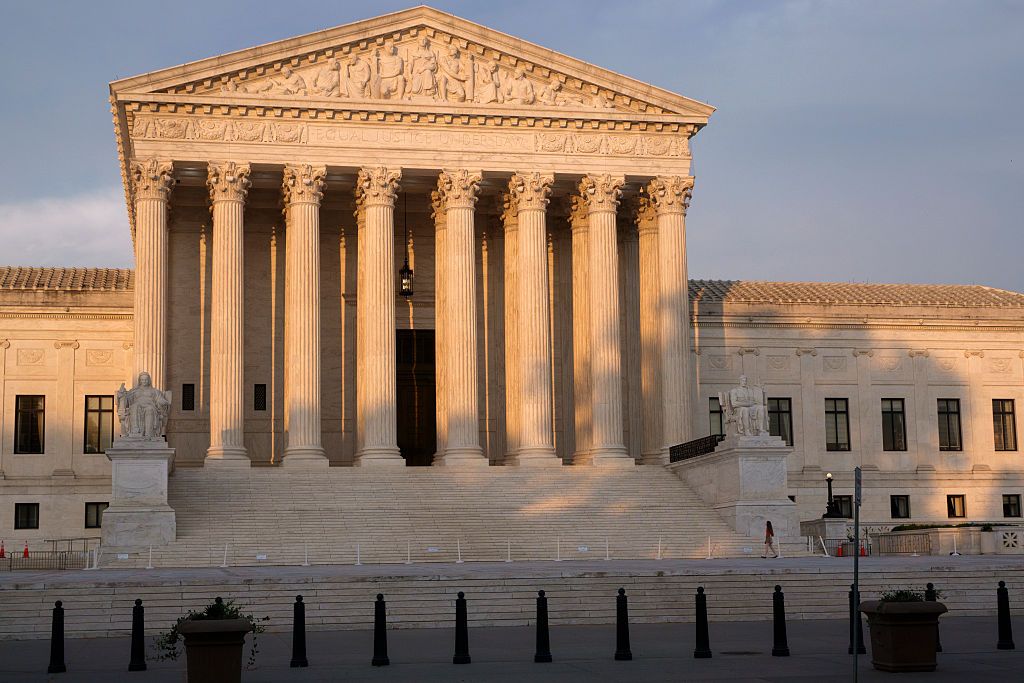
For the second time in three days, the Trump administration on Tuesday came to the Supreme Court, asking the justices to clear the way for it to implement a program that it says is intended to combat election fraud. U.S. Solicitor General D. John Sauer urged the court to pause a ruling by a federal judge in Washington, D.C., that bars the government from using the current version of the Department of Homeland Security’s Systematic Alien Verification for Entitlements database to verify voters’ citizenship. Sauer told the justices that the order by U.S. District Judge Sparkle Sooknanan “makes it harder to detect ineligible voters, undermining the integrity of federal elections and public confidence in the results of those elections.” On Sunday, the Trump administration asked the justices to block a ruling by a federal judge in Boston that bars the government from implementing portions of a U.S. Postal Service rule on mail-in ballots. Sauer argued in that case that Friday’s order by U.S. District Judge Indira Talwani “nullif[ies] the Postal Service’s efforts to address the risk that the federal mails will be used to perpetrate voter fraud—a particularly pernicious species of fraud that dilutes the votes of lawful voters, prevents election results from reflecting the will of the American people, and undermines ‘public confidence in the integrity of the electoral process.’” On March 25, President Donald Trump issued an executive order that (among other things) directed the Department of Homeland Security and the Social Security Administration to create systems that would allow state and local governments to verify the citizenship and immigration status of voters. Those agencies then overhauled the SAVE system to include the records of U.S.-born citizens, to give it access to Social Security numbers, and to allow bulk searches (rather than requiring users to inquire about one person at a time). The League of Women Voters and the Electronic Privacy Information Center brought a lawsuit in federal court in Washington challenging the changes to the SAVE system. In a ruling on June 22, Sooknanan agreed that the modified system violates federal privacy laws, the Social Security Act, and the federal laws governing administrative agencies, and she barred the government from using the modified system. Sooknanan wrote that “the federal government has knowingly trampled on the privacy rights of American citizens in a manner that threatens the sacred right to vote.” Moreover, she continued, “states have partnered with the federal government to access the database and are actively removing United States citizens from voter rolls based on inaccurate information.” A divided panel of the U.S. Court of Appeals for the District of Columbia Circuit turned down the government’s request to put Sooknanan’s order on hold while the appeal moves forward, but it said that the case should be fast-tracked. Sauer then came to the Supreme Court on Tuesday morning, asking the justices to step in. He called Sooknanan’s ruling an “indefensible order that threatens the integrity of upcoming elections by vacating the federal government’s authority to internally use Social Security data when fulfilling its duty to respond to requests by States to verify the citizenship of individuals for voting and other purposes.” Sauer argued that Sooknanan did not have the authority to enter her order because the challengers do not have a legal right to sue, known as standing. Among other things, he wrote, the federal government is not the source of any injury that the challengers and their members might suffer. “SAVE,” he said, “does not disqualify any voter; instead, it merely notifies the States whether the federal government can confirm citizenship.” To the extent that anyone is injured, he suggested, that injury would come from the states themselves. And in any event, Sauer continued, the government’s “policy is consistent with all applicable federal statutes.” Federal law, he emphasized, “requir[es] DHS to provide citizenship verification” and therefore gives the agency the power “to take steps—such as checking Social Security records—that are reasonably necessary to perform that duty.” Moreover, he added, federal law bars “courts from relying on other statutes, such as the Privacy Act and the Social Security Act, to block citizenship-verification responses based on the sharing of Social Security information.” Finally, Sauer told the justices that the government will suffer “irreparable” harm – another criterion for temporary relief – if Sooknanan’s order is not put on hold. The government, he said, would be “required to return to an older, more cumbersome, and less reliable version of the” SAVE system, and any “reversal of the district court’s judgment ‘would come too late for the 2026 midterms.’” Chief Justice John Roberts, who has initial responsibility for emergency appeals from Washington, D.C., directed the challengers to file their response by 4 p.m. EDT on Tuesday, Sept. 15.
SCOTUSblog•Amy Howe8 Sept
This is the fourth of seven introductory articles on the relevance for constitutional law and the Supreme Court of the “born free and equal” clauses, which appeared in the Declaration of Independence and in six out of 12 state constitutions when the federal Bill of Rights was ratified in 1791, and in 24 out of 37 state constitutions when the 14th Amendment was ratified in 1868. The “born free and equal” clause of the Massachusetts Constitution of 1780, for example, provided that : Article I. All men are born free and equal, and have certain natural, essential, and unalienable rights; among which may be reckoned the right of enjoying and defending their lives and liberties; that of acquiring, possessing, and protecting property; in fine, that of seeking and obtaining their safety and happiness. In my initial articles, I showed that the “born free and equal” idea is deeply rooted in American history and tradition as that phrase is used in such correctly decided cases as Washington v. Glucksberg (rejecting a right to assisted suicide), McDonald v. City of Chicago (recognizing that the Second Amendment’s right to own a handgun for self-protection extends to the states), and Dobbs v. Jackson Women’s Health Organization (overturning Roe v. Wade ). In the second article, I showed that while the 14th Amendment does not give birth to a so-called “right to privacy,” it does through the privileges or immunities clause constitutionalize the “born free and equal” clauses, subject to rational basis review, which justifies the outcome, although not the opinions in 1965’s Griswold v. Connecticut (holding that states may not criminalize the use of contraceptives by married couples) and in 2003’s Lawrence v. Texas (holding that states may not criminalize same-sex “sodomy”). In this fourth article, I want to examine the application of the “born free and equal” clauses to yet another famous “right to privacy” case: 2015’s decision in Obergefell v. Hodges , finding a national constitutional right to same-sex civil marriages. Prior to Obergefell , same-sex marriage had already become the law in 36 states plus the District of Columbia, and the trend was unequivocally in the direction of same-sex marriage. That is nearly an Article V consensus of three-quarters of the states, which is the number it takes to amend the Constitution. (The passage of the Respect for Marriage Act in 2022 also codified protection for same-sex marriages as a matter of federal statutory law.) Revisiting Obergefell is especially timely given that this precedent has recently faced considerable criticism from both inside and outside the court and given my own belief that substantive due process, upon which the opinion was based, is an oxymoron (like “green pastel redness,” as put by John Hart Ely ). Unlike many fellow conservatives, I nevertheless think that this case was rightly decided. Before going further, I should make clear that by civil marriage, I mean the government sanctioned marriage right, which carries with it: 1) tax and inheritance law benefits; 2) rights to adopt and raise children; 3) medical care proxies and hospital visitation rights; and 4) all other government-conferred benefits that accompany a marriage license from either the state or federal governments in the United States. I am not addressing the understanding of marriage as a religious sacrament, which is recognized in most of the world’s major faiths. Sacramental marriage is governed by religious rules, which are protected by the free exercise of religion clause of the First Amendment, incorporated against the states by the 14th Amendment. I first consider arguments from the text of the 14th Amendment and then the original meaning of the words themselves. The text of the 14th Amendment Section 1 of the 14th Amendment contains two great commands: 1) the “born equal” command (which is exhaustively documented and defended in Akhil Reed Amar’s Born Equal: Remaking America’s Constitution, 1840-1920 ); and 2) the “born free” command, which has been the subject of my first three inaugural articles for SCOTUSblog. Both commands are captured by the “born free and equal” clauses, which were not only widely present in state bills of rights in 1791 and in 1868, but which also appear in 37 out of 50 state bills of rights today. Indeed, the text of section 1 constitutionalizes the “born equal” command in three separate clauses to emphasize just how strong that command really is. The citizenship clause, as affirmed by the court in Trump v. Barbara , makes everyone born or naturalized in the United States an equal citizen. Samuel Johnson’s 1755 dictionary of the English language defines the noun citizen as “[a] freeman of a city; not a foreigner; not a slave;” and (less relevant here) as “[a] townsman; a man of trade; not a gentleman.” Daniel Webster’s 1828 Dictionary of American English gives the word the same meaning. Citizens are born with the same civil rights as are all other citizens , unlike slaves or nobles/gentlemen who are born with lesser or greater rights than a citizen has. The Latin root in “ civil right” is the same root as in “ citizen .” All persons born in the United States are then equally a citizen with the civil right to marry save a few trivial exceptions – none of which concern sexual orientation. The privileges or immunities clause of the 14th Amendment also makes all citizens equal by forbidding the “making” of any law that abridges (i.e., “shortens” or “lessens”) the privileges or immunities of one class of citizens (such as free Black people and northerners in the south) as compared to another class of citizens (such as white southerners). The word “abridge” is used here in the same anti-discrimination sense in which it appears in the 15th Amendment, which states: “The right of citizens of the United States to vote shall not be denied or abridged by the United States or by any State on account of race, color, or previous condition of servitude.” The making of an abridged set of rights for one class of people, as compared to another class, is therefore strictly forbidden by both amendments. Finally, the equal protection clause forbids discrimination in the enforcing of laws. It affirmatively commands state police, prosecutors, and judges, for example, to give to all classes of citizens the same protection of the law from, for instance, the Ku Klux Klan as is received by southern white citizens. Note that the noun in this clause is “protection” and “equal” is only an adjective. The equal protection clause was originally about the affirmative duty of state governments to enforce equally all laws already on the books. So why does the 14th Amendment command birth equality in three separate clauses? For the same reason an apartment owner locks his front door by pushing in a button on the door handle, and then by throwing a deadbolt, and then by locking a chain. Such an apartment owner obviously wants to make extra sure that no one will break in while he is sleeping. Although the text of the 14th Amendment thus bans “discrimination” in three clauses, it never says “discrimination on account of what.” For that, we must then turn to the original public meaning of section 1 of the 14th Amendment as understood by the people who framed and ratified it. Original public meaning The 14th Amendment bans not only race discrimination but all systems of caste, of aristocracy, and of feudalism, as I have argued elsewhere . Specifically, the 14th Amendment bans both the Hindu Caste system and European feudalism, in which some people were born into a lower social caste as untouchables or serfs or slaves while others were born into a higher social caste as Brahmins, or Lords, or slave-owners. The framers of the 14th Amendment considered an early draft of that amendment that banned only race discrimination against Black Americans, and they rejected that draft as being too narrow. They wanted the amendment, for example, to also protect the rights of white northerners when they were living in the south. The 14th Amendment therefore does not use the word “race” because it supports a broader ban on all systems of caste. Even before the 14th Amendment was drafted, abolitionists equated slavery with the Hindu caste system and with European feudalism. For example, Rep. Farnsworth complained in 1861 that: As a moral being, as a man, I hate slavery in the States of this Union as I hate serfdom in Russia – which by the way is about to be abolished in that Empire, while we are quarreling over the extension of slavery in this – just as I hate caste in India; just as I hate oppression everywhere. In the 1866 debates on the passage of the 14th Amendment, Sen. Charles Sumner captured the prevailing sentiment when he said that the problem with the southern Black Codes was that they created a system of caste. Specifically, Sumner argued that under the 14th Amendment, as he understood it: [T]here shall be no Oligarchy, Aristocracy, Caste, or Monopoly invested with special powers and privileges, and there shall be no denial of rights, civil or political, on account of color or race anywhere within the limits of the United States or the jurisdiction thereof. The Hindu Caste system, European feudalism, slavery in the United States before 1865, and the southern Black Codes of 1865 all have in common a denial of birthright equality.The common evil of these dystopian forms of rule is that some people are born with either more or with fewer rights than are other people. LGTBQ+ Citizens LGTBQ+ citizens are born with the trait of being attracted to sexual and marriage partners of the same sex or of both sexes. It is both unfair and irrational – and thus contrary to the 14th Amendment – to discriminate against citizens based on an immutable trait with which they are born. Corfield v. Coryell , which I have previously said is the 14th Amendment’s version of the “born free and equal” clauses, stated: The inquiry is, what are the privileges and immunities of citizens in the several states? … They may … be all comprehended under the following general heads: Protection by the government; the enjoyment of life and liberty, with the right to acquire and possess property of every kind, and to pursue and obtain happiness and safety; subject nevertheless to such restraints as the government may justly prescribe for the general good of the whole [people]. The ability of two people who are sexual partners to marry, whether they are a heterosexual couple or an LGBTQ+ one, is undoubtedly central to the ability of that couple to “enjoy[] … life and liberty” and “to pursue and obtain happiness and safety.” A state civil marriage law, which allows for heterosexual marriage but denies the right of LGBTQ+ couples to marry does not “justly” limit liberty “for the general good of the whole [people].” It wrongly creates an irrational sexual orientation caste system in which heterosexual couples are Brahmins and LGBTQ+ couples are Untouchables. In other words, laws banning same-sex marriage are as unfair and irrational as would be a law forbidding people who are born left-handed from getting married. Some, like my esteemed former boss, Justice Antonin Scalia, have countered by saying that the framers of the 14th Amendment would be shocked to see that amendment used to recognize LGBTQ+ civil marriages. He is not wrong. But as I said in my last article for SCOTUSblog, many of the people who voted for the 14th Amendment would be shocked to see it used to mandate integrated public schools or a right to racial intermarriage. As Judge Robert Bork said in “The Tempting of America: The Political Seduction of the Law,” we are governed by the laws enacted by dead people and not by their unenacted original intentions and expected applications. (This is why original public meaning textualism came to replace the original intent of the framers, at then-Judge Scalia’s urging, in a famous speech given at the Meese Justice Department in June 1986 before President Ronald Reagan nominated him to the Supreme Court.) Judge Bork also said in “The Tempting of America” that “The world changes in which unchanging values [I would say legal texts] find their application.” In 1868, the freedom of speech and of the press clauses did not yet apply to state laws criminalizing expressive conduct such as flag burning. The ratifiers of the 14th Amendment would have been shocked to learn that state laws banning flag burning were unconstitutional. Yet, in 1989’s Texas v. Johnson , the Supreme Court held that the First Amendment did indeed apply to such laws, a case in which Justice Scalia himself provided the critical fifth vote. Likewise, in 1868, Americans did not yet understand that sexual orientation was determined by birth. Now we do. Benefits of same-sex civil marriage The right to marry has been recognized by the Supreme Court to be a fundamental right that is deeply rooted in history and tradition in cases like Loving v. Virginia and Turner v. Safley (an opinion which Justice Scalia joined). Civil marriage laws exist for several reasons, almost all of which apply just as much to an LGBTQ+ couple as to a heterosexual couple that either cannot have children, chooses not to have children, or is too old to have more children. While I believe that there is a fundamental right to marry, I am also not naïve. I recognize that a great deal of marriages end in divorce. I am also aware that most American heterosexuals have more than one sex partner during their lives – although they are typically monogamous with that one partner for a period. (Hence, the useful phrase “serial monogamy” coined by professor Mary Ann Glendon.) Finally, I recognize that some gay men (and women) who are married live in open marriages and may have more than one sexual partner. Notwithstanding all of this, there are still big gains to be had by encouraging civil marriage as much as possible, as the Supreme Court ruled in 1978’s Zablocki v. Redhail (holding unconstitutional a Wisconsin law which forbade non-custodial parents after a divorce from remarrying if they were in arrears on their child support). First, there is a great social benefit to civil marriage in that married couples live longer than their unmarried counterparts – with partners contributing to better physical, mental, and social health. At the risk of making too cute an analogy, marriage is like a “buddy system” at a children’s camp where every camper has one and only one buddy, the main duty of which is to take care of his or her partner. In marriage, a partner is expected to push his or her spouse to seek medical help when necessary, to alleviate loneliness and make life more meaningful, and prevent the other person from acting foolishly. Moreover, studies show that sex with one partner, regardless of frequency, leads to better health. Second, and relatedly, marriage is associated with less substance abuse, heavy drinking of alcohol, dangerous driving, criminal behavior, and suicide. There are, of course, exceptions to this in that a bad marriage may lead to more risky behavior. But the overall trend is that marriage reduces dangerous risk-taking. Third, the data is quite clear that married couples are wealthier than are unmarried couples. The Census Bureau has reported stark differences in median net worth among married couples as compared to the unmarried. This is not only of benefit to the couple but to society as a whole because uninherited wealth is acquired by producing something of value to others and then making Pareto-optimal exchanges. Fourth, marriage allows a couple to delegate tasks to the spouse that best performs them – including such tasks as earning a living, paying the bills, shopping and cooking meals, and maintaining one’s house or apartment. Finally, a stable marriage helps enormously with raising well-adapted children. LGBTQ+ parents are often better educated, wealthier, and have gone to more trouble to become parents by using fertility treatments than is true of heterosexual parents. Studies show that children with happy same-sex parents fare better than children raised by different sex-couples who are in a bad marriage. And 59% of LGBTQ+ couples under the age of 50 hope to get married someday, which is comparable to the 63% figure for heterosexual couples. Justice Samuel Alito once pointed out to me in conversation that Samuel Johnson’s and Daniel Webster’s dictionary definition of marriage in 1787 and in 1868 is only the union of one man and one woman for life. He is correct. But Webster’s 1828 Dictionary goes on to say: marriage is a contract both civil and religious, by which the parties engage to live together in mutual affection and fidelity, till death shall separate them. marriage was instituted by God himself for the purpose of preventing the promiscuous intercourse of the sexes, for promoting domestic felicity, and for securing the maintenance and education of children. In a world where a large number of marriages end in divorce, and do not last for life, and in which not everyone believes in God, I think the Supreme Court today should differentiate between civil and religious marriages (something Webster’s Dictionary fails to do). My own case for LGBTQ+ marriage is a case for civil and not necessarily religious marriage. As a practicing Episcopalian, I may support LGBTQ+ marriage equality as to religious marriages, but I know that other faiths do not agree. Conclusion To summarize, under the “born free and equal” clauses, and under Section 1, in general, of the 14th Amendment as it is informed by Corfield v. Coryell , same-sex couples have a constitutional right to the enormous benefits which civil marriage confers. The right to same-sex marriage can then only be denied to the LGBTQ+ community by a law which is “just” and which benefits “the whole people.” Laws against same sex civil marriage flunk both these tests, just as would a law that banned civil marriage for left-handed people. The benefits of same-sex civil marriage are so great, and the costs of same-sex promiscuity are so high, that I then find myself in disagreement with fellow conservatives who believe Obergefell ’s holding was wrong and argue that it should be overruled.
SCOTUSblog•Steven Gow Calabresi8 Sept
This is the seventh piece in a series on what I believe the court can, and should, do better. *** In my last column , I suggested several ways in which the Supreme Court could provide more procedural protections for the court’s minority. These rules would necessarily require the buy-in from the majority of justices, since they would be surrendering some authority. But, in all cases, a majority can rule. As Justice William Brennan may have remarked, five votes can do anything at the Supreme Court. So what can six votes accomplish? There may be instances where a supermajority of the court should be able to do certain things that might not be justified with only five votes. But it is important that two-thirds of the court cannot not run rough-shod over the minority by making up ad hoc rules. In this seventh installment, I propose concrete rules that would empower a supermajority to achieve substantive aims. The Deep-6 In the last installment, I proposed two rules based on the number three. With the Join-3, the chief justice would automatically provide a fourth vote for certiorari when there are three other votes. And with the Pre-3, three justices could vote before the conference to grant a case. The Pre-3 when combined with the Join-3 would put cases on the docket without further discussion. The Join-3 and the Pre-3 give the court’s minority more control over the docket, and an ability to set the court’s agenda. But I would grant the super-majority a greater power, called the Deep-6. Under the current practice, where there are not yet enough votes to grant cert, a petition can be rescheduled or relisted many times. This is the docket purgatory I have described before. But with the Deep-6, six members of the court could vote to deny a petition immediately and end all further deliberations. One or more justices could note their dissent from that denial. The Deep-6 would then let a large majority put a petition out of its misery where there is no chance that it will be granted instead of further wasting the court’s time or giving false hope to the petitioners. The Skip-6 In the previous installment, I proposed the DIG-3. After briefing concludes, three members who voted to grant cert could now vote to dismiss the case as improvidently granted . The DIG-3 operates, in effect, as a motion for reconsideration. The mirror image of the DIG-3 is the Skip-6. If, after briefing, it becomes clear to six justices that the case is easy to resolve, oral arguments can be skipped. Cases often look far different at the cert-stage and the merits-stage. With the DIG-3, two-thirds of the court can issue an order removing the case from the calendar. At some later date, the court would release a majority opinion. It might be a summary reversal, or a full opinion. The minority can dissent from the cancellation of oral argument or just issue a dissent from the majority opinion. The Refer-6 In the normal course, emergency applications are filed with the circuit justice . At that point, the circuit justice has a lot of discretion. The application can be unilaterally denied by the circuit justice, he or she can grant or deny a motion for an administrative stay , or the circuit justice can call for a response from the respondent and set a briefing schedule. Sometimes, the respondent might get a few days, other times the respondent might get two weeks. The justices take different approaches based on the urgency of the case. Some justices call for a response right away, as Circuit Justice Samuel Alito did in the Texas redistricting case . By contrast, in Libby v. Fectau , Circuit Justice Ketanji Brown Jackson waited nearly three days to even call for a response, setting the due date for eight days later. In total, the entire process took nearly 11 days. (In Trump v. California , Circuit Justice Jackson called for a response at once.) In Trump v. AFGE , Circuit Justice Elena Kagan never bothered calling for a response, because the controversy was likely to become moot. In the ballroom case , Circuit Justice John Roberts immediately called for a response, but only granted an administrative stay when the lower court’s stay was about to expire. Ultimately, it falls to the full court, and not the circuit justice, to make the final decision. Usually, after the case is fully briefed, the circuit justice refers the case to the full court, which can then grant or deny the application. Alito observed that the circuit justice will usually refer a case to the full court if it “involves anything that we think will involve any disagreement” among the nine justices. But in rare cases, the court can take a case away from the circuit justice who does not make a prompt referral. Rollins v. RI Council of Churches might have been such a case. That case involved cuts to funding during the government shutdown. By the time the case arrived to the court, a deal in Congress had already been reached to end the shutdown. Yet Circuit Justice Jackson imposed an unusually short briefing schedule, requiring the government to file a brief in approximately 12 hours, and the respondent had to file a brief later that same day. The next day, there was an unusual notation on the docket: “The application for stay presented to Justice Jackson is referred to the Court.” The court then extended the administrative stay. Jackson dissented from that order. Usually, the circuit justice actively refers the case, but it appears the court took it away from her. It seems that the court disagreed with how Jackson was handling the case, especially where the shutdown was about to conclude. It is not clear how many votes are needed to take a case away from a circuit justice. Here, I propose a clear rule: the Refer-6. Six justices, at any point, can vote to refer any pending matter to the full court. At the latest, the Refer-6 can be invoked after the briefing is completed. The Refer-6 can also be invoked to establish a briefing schedule. Or the Refer-6 can be invoked as soon as an application is filed in order to enter an administrative stay. Realistically, the Refer-6 can be discussed even before an emergency application is filed. Usually, the clerk of the Supreme Court is given a heads-up that an emergency application is on its way. The Refer-6 can follow a Conference-3. At that point, the justices can informally establish a game plan, given how the case has proceeded through the lower courts. If six justices decide this matter belongs before the full court, the referral can happen right away. Of course, the circuit justice can dissent from the order being referred to the full court. But the circuit justice cannot stop the referral. Some of my proposals were designed to promote collegiality. The Refer-6 would have just the opposite effect. It would signal that the court did not want a particular circuit justice to have power over a matter. But I suspect this Rubicon was already crossed in the Rhode Island case. Jackson perhaps tried to do too much in her capacity as circuit justice, and her colleagues apparently countermanded her. The Release-6 There is a familiar pattern on the Supreme Court’s emergency docket. The court’s majority will frequently issue an unsigned opinion with, at most, a few sentences of reasoning. Following the majority opinion will be a dissent stretching several pages with extended analysis of why the majority was incorrect. Yet the majority does not respond to or even acknowledge the dissent. The majority opinion was likely completed rather quickly, but the judgment was held until the dissent was ready for release. That said, the court does not always wait for the dissent. Sometimes the dissent will come later. For example, in A.A.R.P. v. Trump , the court issued a late-night emergency stay . The one paragraph order noted that “Justice Thomas and Justice Alito dissent from the Court’s order. Statement from Justice Alito to follow.” About 24 hours later, Alito’s dissent was filed . Generally, on a collegial court, the majority will wait until the dissent is ready. (There was one notable exception on a recent three-judge panel in Texas.) I can imagine there are circumstances where a dissenter might drag her feet to delay a case. Perhaps this happened with Jackson’s dissent in Trump v. California . Indeed, in Louisiana v. Callais , Alito’s majority opinion all but alleged that Jackson’s dissent delayed the resolution of the voting rights case. In A.A.R.P. , however, the majority felt the need to act immediately, and there was no allegation that Alito was being dilatory. It isn’t clear how many votes are needed to release an order before the dissent is ready. I suspect in A.A.R.P. , at least five, and maybe six or seven justices agreed with this path. (That is, unless the chief justice did so on his own, given the fast-moving case.) So I would propose a rule to address this issue: the Release-6. For any matter, six justices can force the release of a judgment immediately. This rule would apply on both the merits and emergency dockets. The majority opinion could be published right away, with a notation that a dissent is forthcoming. Or a simple judgment could be issued, with a notation that a majority opinion would come later. The Release-6 would be similar to the Deep-6. In both cases, a super-majority of the court can bring a pending matter to an immediate conclusion. If a justice wishes, he or she can publish the dissent at a later date, but the business of the court will move forward. There are some emergency matters where an immediate resolution is essential for the government or the private parties. It may also not be viable to keep an administrative stay in effect for an extended period of time. With the Release-6, six members of the court can issue their judgment, and the dissent can come later, or not at all. The Stop-6 I propose one last solution, mostly in jest. Under the Supreme Court’s current format for oral argument, each justice gets an apparently unlimited amount of time to ask questions during the seriatim round. Some of these sessions can go on for almost 30 minutes. The court has apparently installed timers on the bench to measure how long each justice speaks for. (This measure seems a bit passive aggressive and ultimately ineffective.) With the Stop-6, if any six members of the bench agree, the chief justice could terminate an individual justice’s seriatim round. Maybe the justices could circulate a poll on the bench or just show a thumbs down. I suspect this remedy would only have to be used once, if at all. The Sword of Damocles is most effective when it never falls.
SCOTUSblog•Josh Blackman8 Sept
As SCOTUSblog readers are well aware, on June 30, a majority of justices struck down President Donald Trump’s executive order seeking to end birthright citizenship. Much of this decision relied on the 1898 case of United States v. Wong Kim Ark , which (in the court’s words) held that “the Citizenship Clause” of the 14th Amendment “granted citizenship to nearly all children born in the United States.” This landmark case on birthright citizenship is not just a lesson about the 14th Amendment’s reach, however, but how old battles may reemerge long after they’ve seemingly been won. I. The cook In August 1895, Wong Kim Ark sailed into San Francisco aboard the S.S. Coptic. It was the city where he had been born and a port through which he had already passed once before without incident. Still, he apparently had experienced some anxiety about leaving. Before he left to visit family in China the previous year in 1894, he had secured a notarized departure statement , signed by three witnesses who attested to his identity and his right to return, having been “born in the City and County of San Francisco, State of California.” But this time when he returned, the collector of customs refused to let him land. The refusal may have been no bureaucratic accident. Federal officials had been searching for a vehicle to challenge birthright citizenship. A San Francisco lawyer named George Collins had publicly attacked an earlier decision recognizing the citizenship of a Chinese American born in the United States and urged the Justice Department to take the issue to the Supreme Court under a competing theory that citizenship followed blood, not birthplace. United States Attorney Henry Foote then went looking for a suitable case. He found one in Wong Kim Ark. Wong, a 24-year-old cook, may have been particularly appealing given his limited resources and the fact that his wife and children lived in China, meaning he would not be separated from them if he wasn’t allowed to live in the United States. Wong had been born above his parents’ business at 751 Sacramento Street in San Francisco’s Chinatown. The Supreme Court record gives the year as 1873, although later historical research places his birth in 1870 – a reminder that the documentary records available to Chinese immigrants were far less tidy than the government’s exacting demands upon them. His parents had come to California from China and established a home and business in the city. They ran a grocery and butcher shop and lived above it, but Wong did not follow them into the family business. Instead, he worked as a dishwasher and cook, living nearby in the few crowded blocks of Chinatown. At the time, federal law made Chinese immigrants ineligible for naturalization. Wong’s parents therefore could not become citizens no matter how long they lived, worked, or paid taxes in the United States. The Chinese Exclusion Act of 1882 further barred Chinese laborers from entering the country, making it risky for Chinese Americans to depart without sufficient paperwork. The state of the law had divided Wong’s family across the Pacific. His parents eventually returned to China permanently and Wong married there while continuing to work in the United States and sending money home. His 1894 trip allowed him to see his wife for the first time in four years and meet his eldest son; his second son was conceived during the visit . Then the United States told him he could not come home. For months, Wong was held aboard steamships in San Francisco Bay at the direction of customs officials while his lawyers sought a writ of habeas corpus. In January 1896, a federal judge ruled that Wong was a citizen and ordered his release. The government appealed, and Wong remained free after posting a $250 bond – roughly $10,000 in today’s money. The Chinese Consolidated Benevolent Association, better known as the Chinese Six Companies, helped finance and organize his legal defense. The political stakes were larger than immigration, since citizenship carried the vote. The person at the center of this constitutional struggle, meanwhile, was still simply trying to get off a ship and go back to work. II. “Subject to the jurisdiction thereof” The case turned on one sentence adopted into our Constitution by amendment after the Civil War: “All persons born or naturalized in the United States, and subject to the jurisdiction thereof, are citizens of the United States and of the State wherein they reside.” The citizenship clause was written against the backdrop of Dred Scott v. Sandford , which had declared that Black Americans could not be citizens of the United States. The context of the 14th Amendment was bound up with slavery and Reconstruction, and its immediate purpose was to reverse Dred Scott . Its language, however, was more general. The court had already recognized in discussing the 13th Amendment (abolishing slavery) and other parts of the 14th Amendment that a constitutional rule may arise from a particular evil without being limited to that evil and will reach all cases that fall within its terms, even if the authors did not necessarily anticipate them. As the court had made clear, “[w]hile the thirteenth article of amendment was intended primarily to abolish African slavery,” it would equally “forbid Mexican peonage or the Chinese coolie trade when they amount to slavery.” Wong argued that the 14th Amendment adopted the longstanding common law rule of jus soli : subject to narrow exceptions, a person born within the sovereign’s territory is a citizen at birth. The government, for its part, focused on the qualifying words “subject to the jurisdiction thereof.” Because Wong’s parents were not citizens and remained subjects of the emperor of China, it argued, they were subject to a foreign power. Their American-born son therefore fell outside the citizenship clause. Justice Horace Gray, writing for a 6-2 Court (Justice Joseph McKenna did not participate because he joined the court after argument), sided with Wong. Because the Constitution did not define the key terms, he looked to “the common law, the principles and history of which were familiarly known to the framers of the Constitution.” Under the English common law rule, nearly everyone born within the sovereign’s territory and protection was a natural-born subject. The traditional exclusions were narrow and included children of foreign diplomats and children born to enemy forces occupying the territory. The court also recognized the then-existing exclusion of members of sovereign Indian tribes, a category Congress later eliminated by statute. III. The Great Dissenter’s blind spot Chief Justice Melville Fuller dissented, joined by Justice John Marshall Harlan. Just two years earlier, Harlan, who came to be known as the court’s “great dissenter,” had been the lone dissenting voice in Plessy v. Ferguson , where he famously stated that the Constitution is “color-blind” and warned that state-imposed segregation would prove as pernicious as Dred Scott . Frederick Douglass reportedly regarded Harlan as a moral hero. Yet Harlan’s constitutional vision had sharp boundaries. Within the same opinion celebrated for its ringing promise of legal equality, Harlan wrote that the Chinese were “a race so different from our own” that they were barred from naturalization and largely excluded from the country. He invoked the fact that a Chinese passenger could ride in a railcar with white passengers while a Black citizen could not – not to defend the Chinese passenger’s equality, but to expose what he saw as the absurdity of Louisiana’s racial classifications. Harlan did not speak in Wong Kim Ark , however, simply joining Fuller’s dissent. Fuller accused the majority of importing the feudal English law of subjectship into an American republic. Common law might properly illuminate common-law rights, Fuller wrote, but national citizenship implicated international relations and political status. The American Revolution had rejected perpetual allegiance to a king. It therefore made little sense, the dissent argued, to assume that the new nation had retained a rule under which birth created an indissoluble political bond with a monarch. The dissent also pointed to American naturalization law, which required new citizens to renounce their former sovereigns, and to statutes granting citizenship to children born abroad to American fathers. Those rules, Fuller thought, reflected a system in which citizenship followed the parent rather than the soil and required full allegiance. He also treated the Civil Rights Act’s phrase “not subject to any foreign power,” which was a predecessor of the citizenship clause, as interchangeable with the 14th Amendment’s “subject to the jurisdiction thereof.” The dissent ended by echoing the government’s view that Chinese laborers were a distinct, unassimilable population whose presence might threaten “good order” and the public interest. They concluded, “It is not to be admitted that the children of persons so situated become citizens by the accident of birth.” For Wong, a Supreme Court opinion bearing his name was not sufficient to secure safety. In October 1901, three and a half years after the court ruled, Wong attempted to cross into America via El Paso. He was initially rejected, and then arrested under the Chinese Exclusion Act. Wong was forced to post another bond – this time $300. Four months later, federal officials acknowledged that he was the same Wong Kim Ark whom the Supreme Court had declared a citizen and dismissed the case. Some of his sons were later admitted into the country, though one individual later confessed to falsely claiming to be his son to gain entry. In 1931 Wong Kim Ark left for China again, filed papers stating that he intended to return, and apparently never did. IV. The modern case For more than a century, Wong Kim Ark was widely understood to establish a nearly universal rule of birthright citizenship. But in January 2025, President Donald Trump issued an executive order directing federal agencies to deny citizenship to children born in the United States when neither parent was a citizen or lawful permanent resident and the mother was either unlawfully present or lawfully present only temporarily. The administration tried to distinguish Wong Kim Ark on the basis that his parents were lawful and permanently domiciled in the United States. Once again, the government was ostensibly prodding the Supreme Court into taking up the issue of birthright citizenship. The first trip to the court, in Trump v. CASA , concerned the power of lower courts to issue universal injunctions. The court did not decide whether the executive order was constitutional. That procedural ruling produced a second wave of litigation, including class actions designed to protect all affected children without relying on universal relief. The merits arrived the following term in Trump v. Barbara . On June 30, 2026, the court held that children born in the United States to parents who are unlawfully or temporarily present are indeed citizens under the 14th Amendment. Chief Justice John Roberts wrote for five justices – Sonia Sotomayor, Elena Kagan, Amy Coney Barrett, and Ketanji Brown Jackson. Justice Brett Kavanaugh supplied a sixth vote, but only on statutory, not constitutional, grounds. Roberts’ opinion returned to the same kind of evidence Gray had used in 1898, including text, common law, Reconstruction-era debates, and longstanding practice. It invoked Wong Kim Ark and concluded that, “Citizenship, then and now, was the right to have rights—to freely participate in our political community. The Framers of the Fourteenth Amendment extended that promise to ‘every free-born person in this land.’ We keep that promise today.” Kavanaugh agreed that the executive order could not stand, but he relied on the Immigration and Nationality Act. Federal law provides citizenship to a person “born in the United States, and subject to the jurisdiction thereof.” When Congress reenacted that language after Wong Kim Ark , Kavanaugh reasoned, it adopted the court’s construction of it, including the decision’s closed set of exceptions. On his reading, however, Congress could amend the statute and add exceptions for the children of people unlawfully or temporarily present. Justices Clarence Thomas, Samuel Alito, and Neil Gorsuch dissented. Thomas argued that Wong Kim Ark repeatedly emphasized the permanent domicile of Wong’s parents and did not resolve the status of children born to temporary visitors or people unlawfully present. He would have treated domicile as central, while reserving some questions about which undocumented parents could acquire it. Alito likewise emphasized political allegiance and read the Civil Rights Act of 1866 as evidence that the citizenship clause did not reach everyone born here who remained subject to a foreign power. Gorsuch wrote separately to emphasize that it was possible that people here illegally may establish domicile and their children would then potentially be birthright citizens. But he left that question for another day. V. The battle continues As it turns out, the Supreme Court’s recent decision did not end the debate any more completely than Wong’s victory did. In August 2026, slightly over a month after the Supreme Court’s decision in Barbara , the administration issued orders that targeted “ birth tourism ,” and that expanded both the categories of foreign officials whose children would be excluded from citizenship and denied birthright citizenship for persons born to enemy aliens. The order also eliminated birthright citizenship for several other categories of persons, including those whose parents engaged in “commercial transactions” to secure such citizenship. On Sept. 2, a federal judge blocked portions of that policy, relying on Barbara , saying that the court had already decided some of the categories excluded by the EO were explicitly deemed citizens by the Supreme Court. The administration, for its part, argues that Barbara merely recognized that certain categories were not automatically excluded, but said nothing about the president’s ability to shape those categories. More than a century after Wong Kim Ark , its rule has endured, and so has the government’s determination to challenge it.
SCOTUSblog•Anastasia Boden8 SeptPlus, how two men without lawyers got their cases to the Supreme Court.
SCOTUSblog•Kelsey Dallas, Nora Collins8 Sept
A Missouri man on Monday urged the Supreme Court to leave in place a ruling by the Missouri Supreme Court that bars the state from using a new congressional map that could give Republicans an additional seat in the upcoming November elections. Richard von Glahn, one of the organizers of a referendum that would put the new map up for a vote on November’s ballot, told the justices that the case “does not present a real emergency.” The dispute began last year, when the Missouri Legislature passed – and Gov. Mike Kehoe signed – the new map, known as HB 1. If successful, Republicans would hold seven of the state’s eight seats in the U.S. House. The move came after President Donald Trump encouraged states with Republican legislatures to draw new maps outside of the normal decennial redistricting cycle. In December, organizers submitted more than 300,000 signatures in support of a petition to put a statewide referendum on the new maps on Missouri’s 2026 ballot. Missouri Secretary of State Denny Hoskins rejected the petition on Aug. 4, 2026, the last day on which he could make his certification decision and the day of the state’s primary election. In his view, Missouri’s constitution “does not authorize a referendum on congressional redistricting plans passed by the General Assembly.” On the same day that Hoskins denied the petition, von Glahn went to state court, seeking to reverse Hoskins’ decision and prohibit the state from using the new map. The Missouri Supreme Court granted that request on Sept. 3. In a unanimous ruling, the state supreme court explained that “the plain language of … the Missouri Constitution authorizes a referendum as to ‘any act of the general assembly’ and no exception applies.” As a result, the court concluded, the referendum petition “was legal, sufficient, and timely.” Therefore, the court continued, “HB 1 never took effect” and will not go into effect “unless and until approved by the voters at the November 2026 general election.” The state supreme court deemed “wholly unpersuasive” Hoskins’ argument that the failure to use the new congressional map would create “confusion, expense, and practical difficulties.” “Besides being irrelevant to the secretary’s sole basis for declaring the referendum petition insufficient,” the Missouri Supreme Court wrote, “these arguments are particularly misplaced given the secretary’s delay created” the problems about which he is now complaining. Telling the justices that Missouri was “genuinely unsure whether it can switch its governing congressional map in time to run a timely federal election,” Hoskins came to the Supreme Court on Friday night, asking the justices to step in. He argued first that the state supreme court’s decision violates the U.S. Constitution’s elections clause . That provision, he said, gives state legislatures – rather than the voters who sign a petition – the power to prescribe the “Times, Places, and Manner” of federal elections. The Supreme Court, he said, “has never held that just 3.3% of a State’s voters can unilaterally suspend a disfavored congressional map by submitting a referendum petition.” The Missouri Supreme Court’s ruling, Hoskins continued, also unconstitutionally disenfranchised “hundreds of thousands” of voters by putting them in new districts, where they will be “forced to vote on General Election candidates they had no role in choosing.” In his response on Monday, von Glahn told the justices that the Supreme Court lacks the power to weigh in because the Missouri Supreme Court’s ruling had rested only on state law – known as an “adequate and independent state-law” bar to Supreme Court review. The Missouri Supreme Court indicated that Hoskins could not make his arguments based on federal law because he had not originally made them in rejecting von Glahn’s petition. A stay of the Missouri Supreme Court’s ruling also would not actually provide the relief that Hoskins seeks, von Glahn continued, because HB 1 never went into effect. “In short,” von Glahn reasoned, “under Missouri law, the 2022 Plan is the legal status quo, not HB 1.” If Hoskins want to be able to use HB 1 in the upcoming election, von Glahn said, he needs an injunction – “an order affirmatively establishing [his] authority to use it,” which requires him to meet a much higher bar. Von Glahn also argued that neither Hoskins nor the Republican groups that joined the case to support him have a legal right, known as standing, to bring a lawsuit contending “that the Missouri Supreme Court unlawfully displaced authority the Elections Clause assigns to the state legislature.” But in any event, von Glahn concluded, Hoskins’ arguments fail on the merits. His “Elections Clause theory runs headlong into more than a century of precedent recognizing that state constitutional referendum procedures may constrain congressional-redistricting legislation.” And Hoskins, he said, “ask[s] this Court to recognize a right no precedent confers: a guarantee to preserve every consequence of a primary vote through November.”
SCOTUSblog•Amy Howe7 Sept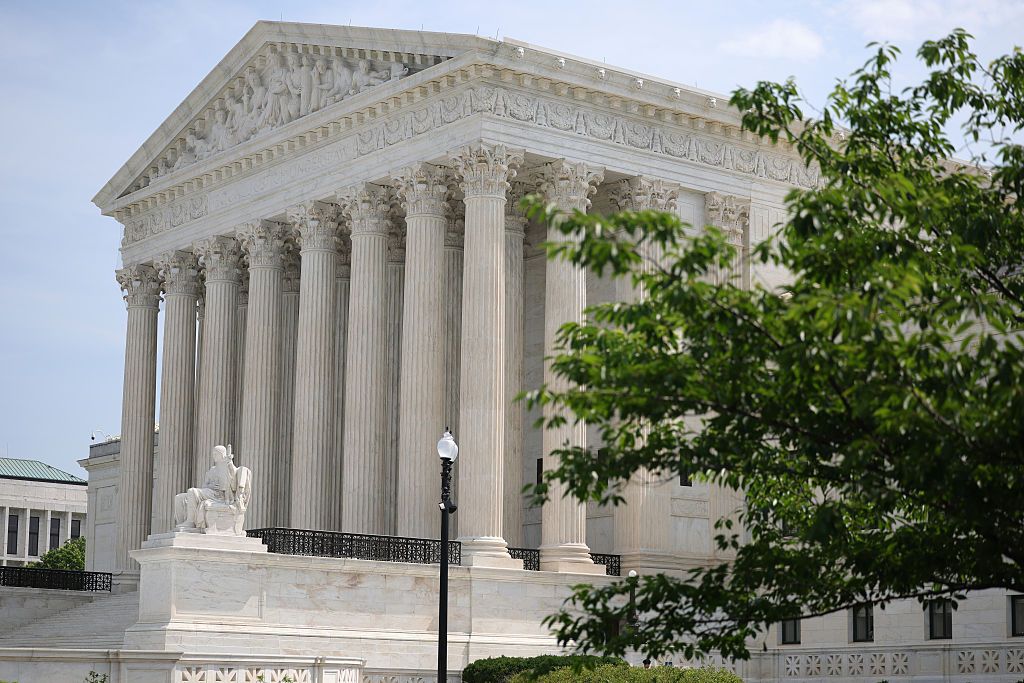
The Trump administration came to the Supreme Court on Sunday morning, asking the justices to pause a ruling by a federal judge in Massachusetts that bars the government from implementing parts of a U.S. Postal Service rule on mail-in ballots. U.S. Solicitor General D. John Sauer told the court that Friday’s order by U.S. District Judge Indira Talwani “nullif[ies] the Postal Service’s efforts to address the risk that the federal mails will be used to perpetrate voter fraud—a particularly pernicious species of fraud that dilutes the votes of lawful voters, prevents election results from reflecting the will of the American people, and undermines ‘public confidence in the integrity of the electoral process.’” Sunday’s filing was the third time in less than six weeks, and the second time since Thursday, that the Trump administration came to the Supreme Court seeking to clear the way to implement restrictions on mail-in voting. In March, President Donald Trump signed an executive order that directed federal agencies to take a series of steps on mail-in voting. The first provision instructs the Department of Homeland Security to create lists of the adult U.S. citizens in each state and to send those lists to states at least 60 days before a federal election. The second provision tells the U.S. attorney general to “prioritize the investigation and, as appropriate, the prosecution of State and local officials … who issue Federal ballots to individuals not eligible to vote in a Federal election.” And the third provision requires states to give the U.S. Postal Service a list of voters to whom the states intend to send mail ballots, and it prohibits the USPS from mailing ballots to voters who are not on the lists of “enrolled” voters that the USPS will create. A group of 23 states, led by California, and the District of Columbia went to federal court in Boston to challenge the government’s implementation of the order. They argued that the executive order conflicts with provisions in the Constitution that give states the power to determine voter eligibility and to set the “Times, Places, and Manner” of holding congressional elections. Talwani prohibited the federal government from implementing the challenged restrictions on or before Nov. 3, 2026, in the District of Columbia and the 23 challenging states. After the U.S. Court of Appeals for the 1st Circuit declined to pause Talwani’s order while the litigation continued, the Trump administration on July 27 asked the Supreme Court to step in – as did a group of 12 states, led by Alabama , that had joined the case on the Trump administration’s side. Nearly a month later, the Supreme Court allowed the Trump administration to begin implementing the executive order. In a 10-page, unsigned opinion , the majority wrote that it was too soon for courts to consider the states’ challenge because the order had not yet been carried out – and, as a result, the states have not suffered the kind of injury that would allow their lawsuit to proceed. Shortly after the court’s ruling, Talwani lifted an injunction that she had issued in a separate challenge, brought by the League of Women Voters, to one provision of the executive order. But in an Aug. 27 decision , Talwani issued a temporary restraining order that blocked the Trump administration, for 14 days, from requiring states to comply with several provisions of the new Postal Service rule , such as ballot envelope design requirements and the submission of voter data into a USPS portal. The Trump administration returned to the Supreme Court on Thursday, asking the justices to freeze Talwani’s order (and to issue an administrative stay, which puts the order on hold while they consider the government’s request). On Friday, Talwani issued a preliminary injunction , which replaced her Aug. 27 temporary restraining order and barred the Trump administration from requiring states to comply with provisions of the rule indefinitely while the states’ challenge continues. On Sunday, Sauer submitted a letter to Scott Harris, the clerk of the Supreme Court, withdrawing the Trump administration’s Sept. 3 application in light of Talwani’s new order granting a preliminary injunction. The Trump administration on Sunday then also filed a new application , seeking to put Talwani’s Sept. 4 preliminary injunction on hold. Sauer wrote that the order is “materially identical to the temporary restraining order, both in its substantive scope and its minimal, conclusory reasoning.” Talwani’s “continuing prejudgment of the rule is baseless,” he contended, and its rationale is “simplistic.” Sauer pushed back against suggestions “that the Postal Service is trying to federalize the rules for mail-in voting.” Instead, he said, “the Postal Service’s final rule imposes only modest envelope-design and addressee-information requirements for federal-election ballots sent via U.S. Mail.” The new rule, Sauer continued, “is plainly constitutional. While the States have primary authority to regulate the manner of elections, they cannot choose to use the federal mails to carry out their elections but then insist that their election-related mail is somehow exempt from the Postal Service’s rulemaking authority, conferred by Congress, to regulate envelope design and addressee information.” If Talwani’s order is not put on hold, Sauer said, the government will – as the Supreme Court has already recognized in earlier proceedings involving the rule – suffer permanent harm (a key factor in determining whether to award temporary relief) because the election is so soon. North Carolina has already started to mail out ballots, Alabama will do so on Sept. 9, and “at least five States” will do so the following week – all without being required to comply with the new rule. By contrast, Sauer contended, the states’ claims that complying with the rule will harm them are “overblown.” Justice Ketanji Brown Jackson, who has initial responsibility for emergency appeals from Massachusetts, directed the challengers to file their response by 4 p.m. EDT on Wednesday, Sept. 9.
SCOTUSblog•Amy Howe6 Sept
Telling the justices that “[a] federal-election-administration disaster is unfolding in Missouri,” Missouri Secretary of State Denny Hoskins came to the Supreme Court on Friday night , asking the justices to intervene in a battle over the state’s congressional maps. Hoskins urged the justices to pause a ruling by the Missouri Supreme Court that would require the state to use the map that it adopted in 2022 rather than a new map which could give Republicans an additional seat in the U.S. House of Representatives that it adopted last year and used in its primary elections in August. “No court in American history has ever given such an extraordinary remedy, which inflicts unprecedented chaos on Missouri,” Hoskins contended. Justice Brett Kavanaugh, who handles emergency appeals from the region that includes Missouri, has instructed Richard von Glahn, the challenger in the case, to respond by noon EDT on Monday – a federal holiday, which suggests that the court intends to move quickly on the request. The dispute has its roots in a push from President Donald Trump last year for states with Republican legislatures to draw new congressional maps – generally a relatively rare step outside of the normal redistricting that follows the decennial census. In September 2025, the Missouri Legislature passed – and Gov. Mike Kehoe signed – HB 1. If successful, Republicans would hold seven of the state’s eight seats in the U.S. House. On Dec. 9, 2025, organizers submitted boxes containing more than 300,000 signatures in support of a petition to put a statewide referendum on the new maps on the 2026 ballot. On Aug. 4, 2026, the last day on which he could make his certification decision and the day of the state’s primary election, Hoskins rejected the petition, explaining that the state’s constitution “does not authorize a referendum on congressional redistricting plans passed by the General Assembly.” Von Glahn, one of the proponents of the petition, went to state court, seeking to reverse Hoskins’ decision and block the state from using the new map. On Thursday, the Missouri Supreme Court granted that request. In a unanimous ruling, the state supreme court explained that “the plain language of … the Missouri Constitution authorizes a referendum as to ‘any act of the general assembly’ and no exception applies.” As a result, the court concluded, the referendum petition “was legal, sufficient, and timely.” The state supreme court rejected Hoskins’ argument that allowing the referendum to go forward and not using the new congressional map would create “confusion, expense, and practical difficulties,” calling it “wholly unpersuasive.” Among other things, the court suggested, Hoskins himself created these problems by delaying his action on the referendum petition until the last day to do so. Hoskins, the state court said, also fundamentally misunderstood the status of HB 1 pending the vote on the referendum. The new map does not become law unless a majority of the voters approve, the state court stressed; “the 2022 map is the only map in effect.” In his filing on Friday night, Hoskins argued that the Missouri Supreme Court’s decision violates the U.S. Constitution’s elections clause . That provision, he said, gives state legislatures – not a small number of voters who sign a petition – the power to prescribe the “Times, Places, and Manner” of federal elections. The Supreme Court, he said, “has never held that just 3.3% of a State’s voters can unilaterally suspend a disfavored congressional map by submitting a referendum petition.” The state supreme court’s ruling, he continued, also unconstitutionally disenfranchised “hundreds of thousands” of voters by putting them in new districts, where they will be “forced to vote on General Election candidates they had no role in choosing.” Hoskins suggested that the state was “genuinely unsure whether it can switch its governing congressional map in time to run a timely federal election.” By contrast, he emphasized, von Glahn “will get his referendum vote on Missouri’s congressional map regardless of what this Court does. The only question is whether he (joined by a small minority of the State’s voters) can void a congressional map before he gets his vote.” Finally, stressing the importance of “much needed clarity” for “confused election officials,” Hoskins asked the justices to enter an administrative stay – that is, an immediate pause of the state supreme court’s ruling to give them time to consider his request.
SCOTUSblog•Amy Howe5 Sept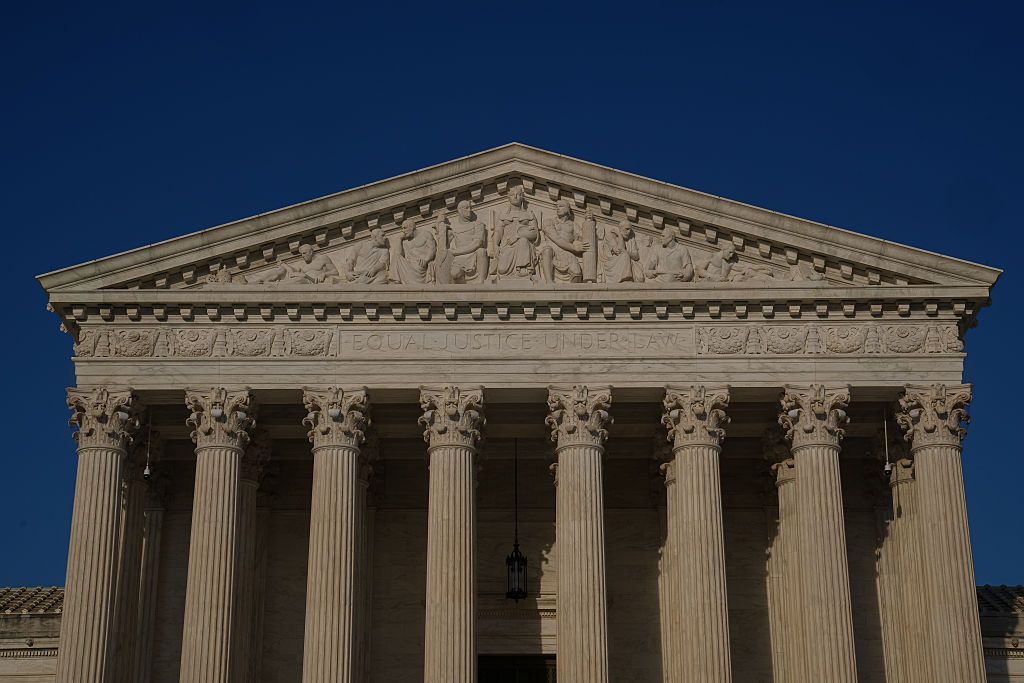
The Supreme Court on Friday cleared the way for political parties and joint fundraising committees, at least for now, to receive favorable advertising rates in the upcoming midterm elections. In a four-page, unsigned opinion , the justices temporarily paused a ruling by a federal appeals court in Richmond, Virginia, that limited the favorable rates to candidates for federal office. Justice Ketanji Brown Jackson was the lone dissenter. She would have turned down the request by the National Republican Senatorial Committee and the National Republican Congressional Committee to freeze the ruling by the U.S. Court of Appeals for the 4th Circuit. The dispute began this spring. Under federal election law , candidates for federal office can purchase advertising time at preferential rates during the run-up to elections: 45 days before the primary election and 60 days before the general. On March 30, the Federal Communications Commission’s Media Bureau issued a “public notice” indicating that political parties and joint fundraising committees would also be entitled to the more favorable rates. Sen. Jon Ossoff of Georgia and three other Democrats who are candidates for the House or Senate went to the full FCC on April 29, asking it to review the public notice. Approximately six weeks later, before the agency had acted on their application for review, they went to federal court, where they argued that the public notice was inconsistent with federal election laws. A divided panel of the 4th Circuit agreed . Writing for the majority, Judge Robert King held that federal law is “unambiguous”: it gives the preferential rates only to a “candidate” for his or her personal use, which does not extend to a candidate’s “mere authorization of someone else’s use.” Judge J. Harvie Wilkinson dissented. In his view, it was too soon for the court of appeals to weigh in, because the FCC was still deliberating. And in his view, the text of the law is ambiguous: it can “accommodate[], and may indeed favor, the FCC’s view.” Moreover, he added, the court’s decision “restrict[s] political speech in the sensitive period leading up to an election.” The NRSC and the NRCC, which had joined the case, came to the Supreme Court late last month, asking the justices to step in. Like Wilkinson, they argued that the court of appeals did not have the power to consider the candidates’ challenge in the first place because the public notice was merely a “staff-level” document “that is neither final nor an agency action” – an important distinction because the court only has the power to review “final orders of the Federal Communications Commission.” Instead, they contended, the notice “is at most an interpretive guidance document restating the FCC’s longstanding position regarding” the preferential rates. The 4th Circuit’s decision was also wrong on the merits, the committees continued. Whether an entity is entitled to a preferential rate hinges on whether a candidate or “any authorized committee of the candidate” uses a broadcasting station before the election; who pays for the advertisements is irrelevant, they argued. “Indeed,” they suggested, “a candidate might ‘use’ a broadcasting station by appearing in an advertisement authorized by the candidate.” The Trump administration filed a brief supporting the Republican groups in which it contended (among other things) that the challengers lacked a legal right to sue, known as standing. The public notice, U.S. Solicitor General D. John Sauer argued, “does not grant favored treatment to one side or the other; instead, the notice’s interpretation offers the same benefit to all sides, including the challengers themselves and the committees and parties supporting them.” Ossoff and the other candidates on Thursday urged the justices to leave the 4th Circuit’s ruling in place. They emphasized that “[n]o court has ever held, or even hinted,” that the preferential rates should be available to anyone other than the candidates themselves. And until it issued the guidance at the center of this case, the challengers added, the FCC itself “had long agreed that ‘ only candidates are entitled to’” the more favorable rates. The candidates also contended that they have standing because of the negative effect that a ruling for the committees would have on them. They noted that “the Candidates’ rival party committees have promised that if the Public Notice stands, they will spend hundreds of millions of dollars ‘at the candidate rate’ to ‘obliterate’ Democratic candidates like” the challengers in this case, “characterizing it as ‘a complete game changer.’” The candidates also resisted any suggestion that they had asked the court of appeals to weigh in too soon. Federal law, they said, specifically envisions that federal courts of appeals can review agency actions like the public notice as long as the challenger has filed an application asking the FCC to review the action – precisely what the candidates have done here. On Friday afternoon, the Supreme Court granted the committees’ request and put the 4th Circuit’s decision on hold to give the committees time to seek Supreme Court review. The committees were likely to prevail on their argument that the 4th Circuit did not have the power to review the public notice before the FCC had acted on the candidates’ petition for review, the Supreme Court emphasized. “The Communications Act … contemplates that an aggrieved party will file an application for review with the Commission, that the Commission will resolve that application by order, and that public notice of that order will issue before an aggrieved party may petition for further review in federal court. Because the candidates’ application for review was pending when they filed their petition for review,” the court explained, “the Fourth Circuit likely lacked statutory jurisdiction to address their challenge.” The committees will also suffer permanent harm – another important factor in considering whether to award temporary relief – if the 4th Circuit’s decision remains in place, the Supreme Court said. The committees have indicated that, based on that ruling, “broadcasters are already rescinding favorable rates,” which “will require the party committees to pay more for advertising space, thereby hampering their efforts to reach the electorate in the critical weeks leading up to the midterms. That injury, which implicates their First Amendment rights to speak and coordinate their political activities freely, cannot be remedied after the fact through refunds or reimbursements.” Jackson penned a one-paragraph dissent. In her view, the committees “are not likely to succeed on the merits of their argument that the Fourth Circuit lacked” the power to consider the candidates’ case. She pointed to cases (including the proceedings in the 4th Circuit in this case) standing for the ideas that an agency cannot ward off review of its conduct by a court by failing to act and that the failure to comply with requirements outlined in a statute does not strip a court of the authority to hear a case.
SCOTUSblog•Amy Howe4 Sept
The Supreme Court will hear a pair of challenges to the constitutionality of bans on AR-15s and other semiautomatic rifles on Dec. 2. The oral arguments in Viramontes v. Cook County , which has been consolidated with Grant v. Higgins , headline the December argument calendar , which was released on Friday afternoon. Other highlights of the December argument session include cases involving the rights of parents to bring a lawsuit challenging a state law on care for runaway teens and Arizona election laws. The justices will hear seven separate arguments during the six days of the December argument session, which runs from Monday, Nov. 30, until Wednesday, Dec. 2, and then again from Monday, Dec. 7, until Wednesday, Dec. 9. Cutberto Viramontes filed the challenge to the ban on semiautomatic rifles in Cook County, Illinois, while gun owners and gun-rights groups challenged a similar law that Connecticut passed in the wake of the 2012 mass shooting at Sandy Hook Elementary in Newtown, Connecticut. In both cases, the lower courts upheld the bans against arguments that they violated the Second Amendment right to bear arms, prompting the challengers to come to the Supreme Court in 2025. After repeatedly considering the cases at their private conferences, the justices finally agreed on June 30 to weigh in. In International Partners for Ethical Care v. Ferguson , on Dec. 7, the justices will consider whether parents have a right to challenge Washington state laws allowing runaway teens to receive mental health care and treatment (including as to gender transitions of their children) at licensed shelters without parental consent. And on Dec. 8, the justices will hear oral argument in Republican National Committee v. Mi Familia Vota , a challenge to Arizona’s requirement that applicants using the state’s voter-registration form provide proof that they are U.S. citizens, which also raises the question whether a federal law, the National Voter Registration Act, allows states to remove noncitizens from its voting rolls within 90 days of a federal election. The December argument schedule Crowther v. Board of Regents of the University System of Georgia (Nov. 30): Whether employees can bring lawsuits for sex discrimination under a federal law that applies to schools that receive federal funding. Wassily v. Blanche (Nov. 30): Whether noncitizens who receive asylum but whose asylum is later terminated can become lawful permanent residents or are instead always ineligible. Jouppi v. Alaska (Dec. 1): Whether the forfeiture of a $95,000 airplane – because a passenger was bringing beer into an Alaskan village where alcohol is prohibited – violates the Eighth Amendment’s ban on excessive fines. Viramontes v. Cook County (consolidated with Grant v. Higgins ) (Dec. 2): Whether bans on AR-15s and other semiautomatic rifles violate the Second Amendment’s right to bear arms. International Partners for Ethical Care v. Ferguson (Dec. 7): Whether parents have a legal right to sue, known as standing, to challenge state laws that (among other things) allow runaway minors seeking gender-transition treatments to be referred for services without parental notice or consent. Republican National Committee v. Mi Familia Vota (Dec. 8): A dispute over (among other things) Arizona’s requirement of proof of U.S. citizenship to vote. Grand v. City of University Heights (Dec. 9): A religious-discrimination lawsuit brought by an Orthodox Jewish man against city officials who told him he needed a permit to host a prayer group in his home.
SCOTUSblog•Amy Howe4 Sept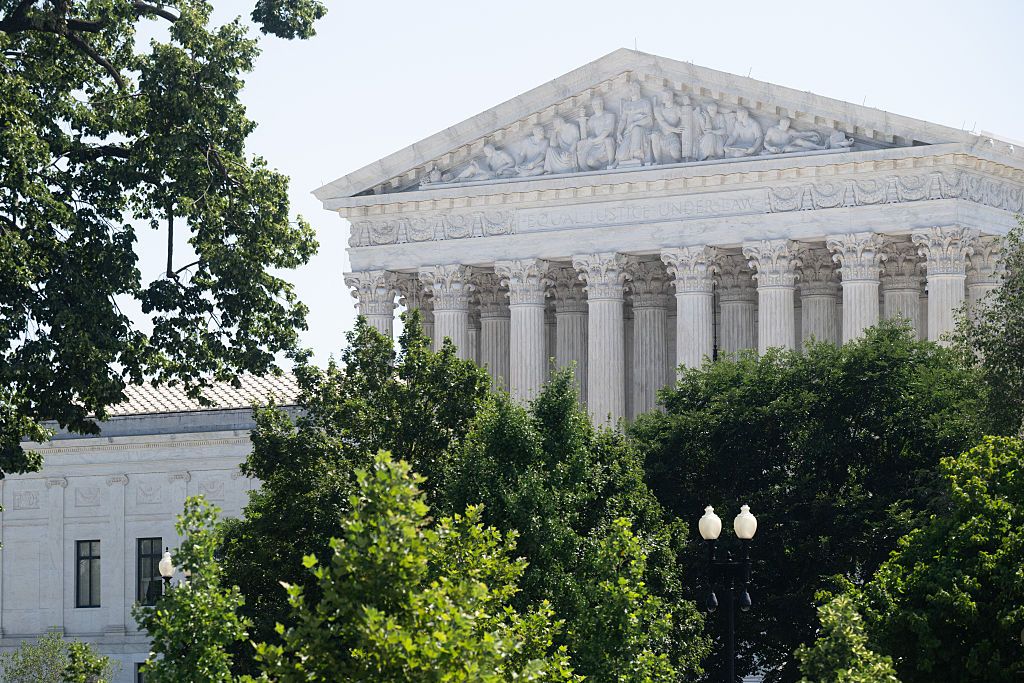
The Supreme Court on Friday morning once again declined to weigh in on a case brought by New York healthcare workers who were denied a religious accommodation from the state’s COVID-19 vaccine mandate for healthcare workers and lost their jobs when they were not vaccinated. The denial of rehearing in Does 1-2 v. Hochul came as part of the third and final regularly scheduled list of summer orders . Summer order lists normally serve as a chance for the justices to clear out some of the pending requests for action – particularly petitions for rehearing – that build up between the end of June or early July, when they hold their final conference before their summer recess, and late September, when they return and hold the so-called “ long conference .” Although the court ordinarily does not add new cases to its merits docket on its summer order lists (as opposed to after the “long conference”), it sometimes opts to do so, as it did on July 20 , when it granted review in Jouppi v. Alaska . In Does 1-2 v. Hochul , the court denied the healthcare workers’ original petition for review on June 29, over a dissent by Justice Neil Gorsuch that Justices Clarence Thomas and Samuel Alito joined. Gorsuch contended that the healthcare workers’ case “raises an important and recurring question of federal law that warrants this Court’s attention.” “I fail to see,” Gorsuch emphasized, “how a state law (especially an unconstitutional state law) prohibiting an accommodation can always and automatically supply an employer with a” defense that accommodating the employee’s religious observance or practice would place an “undue hardship” on the employer’s business. On July 23, the healthcare workers asked the Supreme Court to reconsider its denial of review. They argued that the U.S. Court of Appeals for the 2nd Circuit, whose decision the Supreme Court had left in place, has continued to adhere to its position that “federal antidiscrimination claims must yield to contrary state statutory schemes.” Moreover, they added, the U.S. Court of Appeals for the 9th Circuit has also “adopted the framework that religious accommodations must yield to contrary state laws,” which exacerbates the division among federal appeals courts on this question – an important factor that the Supreme Court considers in deciding whether to grant review. On Friday, the court turned down the healthcare workers’ petition for reconsideration without asking New York Governor Kathy Hochul to respond. The justices will meet on Sept. 28 for their “ long conference ”; they are likely to issue an initial list of orders from that conference later that week.
SCOTUSblog•Amy Howe4 Sept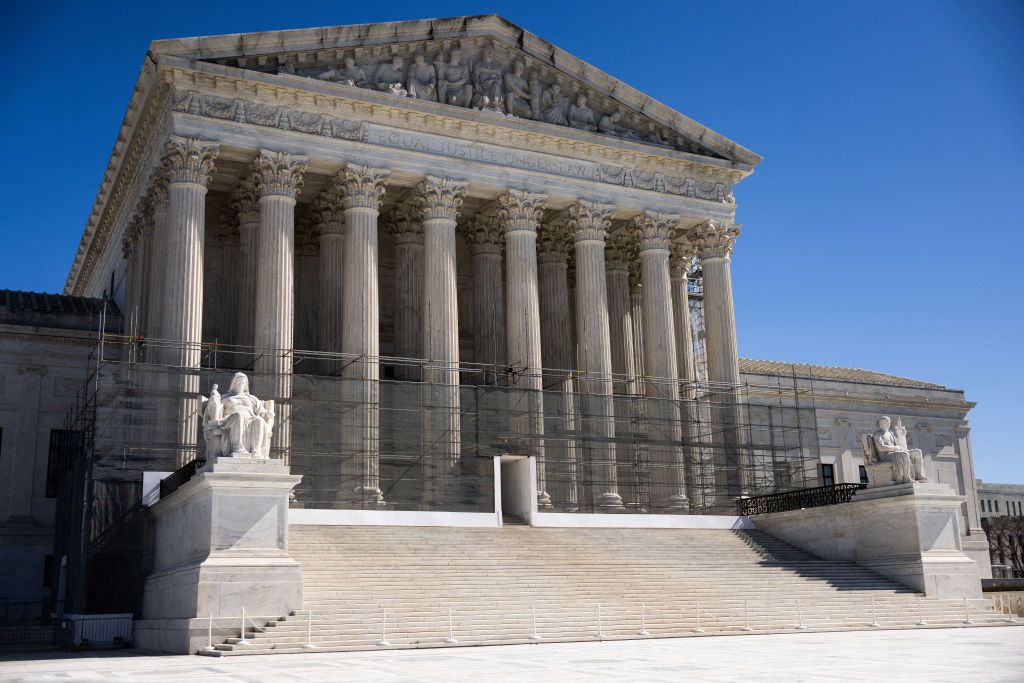
Please note that SCOTUS Outside Opinions constitute the views of outside contributors and do not necessarily reflect the opinions of SCOTUSblog or its staff. Moments after the Supreme Court reaffirmed its expansive understanding of birthright citizenship in Trump v. Barbara this June, making clear that virtually all of those born in the United States are U.S. citizens based on the 14th Amendment’s citizenship clause, the Heritage Foundation’s Roger Severino tweeted “Pres. Trump should immediately amend his EO to apply to U.S. Territories which are not auto-bound by the 14th Amendment.” Hours later, Fox News host Laura Ingraham asked Vice President JD Vance about the tweet on her primetime program. He agreed that action limiting birthright citizenship in U.S. territories would be “a great idea,” chuckling , “we’re certainly looking at that.” Two weeks later, a member of the Congressional Freedom Caucus introduced the End Birthright Citizenship for Territories Act , with far-reaching language that, if passed, could deny citizenship to anyone born in a U.S. territory from Jan. 1, 2027, forward. Shortly after, President Donald Trump took action, issuing an Executive Order in August that, among other things, purports to limit birthright citizenship in U.S. territories “where citizenship is not conferred by Federal statute.” In the wake of this executive order, a new report by Americans Advancing Freedom and the Edwin Meese III Institute made the case that Congress “can and should … limit U.S. citizenship” for people “born in the territories.” Each of these attempts to subvert constitutional limits are specifically grounded in a series of 125-year-old Supreme Court decisions known as the Insular Cases , which addressed whether and how the Constitution applied in Puerto Rico, Guam, and other newly acquired U.S. territories following the 1898 Spanish American War. According to the End Birthright Citizenship for Territories Act, the Insular Cases “stand[] for the proposition” that “Congress has the inherent authority to change statutes relating to citizenship of persons born in the territories.” This is possible because under the Insular Cases , the AAF report claims, “the Constitution does not fully apply” in so-called “unincorporated territories.” However, what legal force the Insular Cases have today, if any, continues to be debated (not least in part because they were grounded on expressly racist sentiments). On the one hand, the Supreme Court has characterized the Insular Cases “doctrine of territorial incorporation” as broadly supporting the idea that “the Constitution applies in full in incorporated Territories surely destined for statehood but only in part in unincorporated Territories.” But in the same breath it made clear that “[t]he Constitution grants Congress and the President the power to acquire, dispose of, and govern territory, not the power to decide when and where its terms apply.” And while the Supreme Court in Barbara expressly rejected attempts by the Trump administration to reinterpret the citizenship clause to exclude disfavored immigrant groups, the Supreme Court has simply dodged answering the question of citizenship in U.S. territories at all – first in one of the Insular Cases in 1904 and twice more over the last decade. At the same time, these cases have faced much criticism within the court itself, which has increasingly limited the Insular Cases to their specific historical context and narrow legal conclusions, reaffirming recently that these cases “should not be further extended.” Several justices have gone even further. In Justice Ketanji Brown Jackson’s concurrence in Barbara , for example, she specifically critiqued the Insular Cases as an example of when the Supreme Court has “denied Americans” the “promise” of “securing equal citizenship.” Similarly, Justices Neil Gorsuch and Sonia Sotomayor have labeled the Insular Cases a “misguided framework” and called for them to be overruled. Sotomayor wrote that the Insular Cases were “premised on beliefs both odious and wrong.” Gorsuch, for his part, has declared in unequivocal terms that the Insular Cases “deserve no place in our law” because they “have no foundation in the Constitution and rest instead on racial stereotypes.” Despite the court’s increasing skepticism of the Insular Cases , their unresolved status has left the door open for the political branches to define for themselves who in so-called “unincorporated” territories are U.S. citizens. The federal government – Republican and Democratic administrations alike – continue to label people born in Puerto Rico, Guam, the U.S. Virgin Islands, and the Northern Mariana Islands as “statutory” rather than “Fourteenth Amendment” U.S. citizens. And it denies even statutory recognition of citizenship to people born to non-citizen parents in American Samoa, labeling them instead with the anomalous status of “non-citizen” U.S. nationals – owing “permanent allegiance” to the United States, but lacking the protections or rights of citizenship. For the 3.6 million people living in U.S. territories, it remains a daily reality that constitutional limits on federal power remain unclear, with their status as U.S. citizens under threat from unilateral federal action. Federal actions in U.S. territories lack democratic accountability Current efforts to limit citizenship in U.S. territories are just the latest example of the federal government claiming near unlimited powers and testing controversial policy ideas on people who lack the basic democratic tools to defend themselves. In Puerto Rico, an undemocratic, federally appointed financial oversight board has for the last decade exercised not just near-unlimited power over the archipelago’s budget and finances, but even the power to annul local legislation. Basic social safety net programs like supplemental security income for low-income seniors and disabled people are provided to residents of the Northern Mariana Islands, but not in Guam, which lies less than 60 miles away. Residents of the U.S. Virgin Islands enjoy full benefits under the Supplemental Nutrition Assistance Program (food stamps), but not residents of Puerto Rico just 22 miles away. Conversely, Puerto Rico remains subject to the cost-raising shipping limitations of the Jones Act , but not the U.S. Virgin Islands. Pacific territories and the Indigenous communities that call them home are also on the front lines – denied any meaningful say – of the Trump administration’s aggressive efforts to secure rare earth minerals through controversial and untested deep sea mining. And next month the Supreme Court will consider a case questioning whether the U.S. Air Force can continue open-air detonation of hazardous military ordinance over Guam’s sole source aquifer without completing the environmental impact statement and community engagement generally required under federal law. Usually when the federal government does something people don’t like, they are told to call their senator or representative or to “throw the bums out” at the next election. But people in U.S. territories lack any voting representation in Congress. They cannot vote for president. And for 125 years they have been denied their right to self-determination. Supreme Court Justice Louis Brandeis famously established the idea of states as “laboratories of democracy,” describing how “a single courageous State may, if its citizens choose, serve as a laboratory; and try novel social and economic experiments without risk to the rest of the country.” What we have today in U.S. territories is the converse – laboratories of (un)democracy, or what Gorsuch properly termed “American colonialism.” The people of U.S. territories are subject to novel social and economic experiments without their say or consent. None of this can be squared with the principles of “consent of the governed” and all “created equal” on which the United States was founded 250 years ago. The results of these ongoing policy “experiments” are grim - poverty rates ranging from 2-5 times the national average, an 11.6% loss of population from 2010-2020, and health disparities greater than any state. The Insular Cases are an open invitation for authoritarians Finally, these latest developments targeting the constitutional rights of people in U.S. territories are problematic for reasons that should concern everyone. Until the Barbara decision, there was a growing cross-ideological consensus that it was time for “a long overdue reckoning,” as Gorsuch put it, on the Insular Cases and their doctrine of extra-constitutional powers. Prominent originalist scholars like professor Michael Ramsey have made a compelling case that the Insular Cases are “contrary to the Constitution’s original meaning.” Small government conservatives like professor Gary Lawson, co-founder of the Federalist Society, wrote a whole book called “ The Constitution of Empire ” about how “there is nothing in the Constitution that even intimates that express constitutional limitations on national power apply differently to different territories.” The recent embrace of the Insular Cases by the Heritage Foundation, AAF, and the Edwin Meese III Institute, as noted earlier, represents a troubling shift in this consensus. It also fits within a broader context of Trump expressing his admiration of McKinley during his second Inaugural Address, declaring “[t]he United States will once again consider itself a growing nation — one that … expands our territory … and carries our flag into new and beautiful horizons.” Just last week, Trump posted a picture on social media showing the Strait of Hormuz as a “new” U.S. territory, along with flags of other existing U.S. territories (as well as Washington, D.C., and two Pacific nations that are not U.S. territories). And then there is the president’s ongoing obsession with Greenland and other parts of the world he’d like the United States to “own.” The legacy of the Insular Cases , and with it the idea that the United States can obtain sovereignty over foreign peoples and lands without the president or Congress having to respect constitutional rights or limits on constitutional power – much less provide for democratic rights – is thus more dangerous today than ever before. It is not hard to see the slippery slope for a doctrine holding that the Constitution does not “fully apply” with regard to U.S. citizens living on U.S. soil. If the political branches can carve out exceptions to the Constitution in one context, such as the citizenship clause in the territories, it opens the door to carving them out in other contexts. Yet, while the Supreme Court has narrowed the Insular Cases , it has avoided opportunity after opportunity to overrule them altogether, leaving them as precedent to be potentially weaponized by any president or Congress. *** One of the strengths of the U.S. federal system is that it allows for democratic experimentation at the state and local levels. But that only works under a constitutional framework that ensures political accountability and the rule of law for everyone. U.S. territories offer a cautionary tale of what goes wrong when our constitutional framework is set aside and democracy shifts towards authoritarian rule. It is time for anyone serious about democracy, limited government, or self-determination to recognize that the colonial framework established by the Insular Cases is real, wrong, and needs to end now. Disclosure : The author served as counsel of record in an amicus brief filed in support of the Trump v. Barbara Respondents on behalf of current and former elected officials and judges from U.S. territories and counsel in an amicus brief filed in support of the Department of the Air Force v. Prutehi Guåhan Respondents on behalf of community-based environmental and cultural organizations in U.S. territories .
SCOTUSblog•Neil Weare4 Sept