War on the Rocks

War on the Rocks

Latest

page 1 of 6

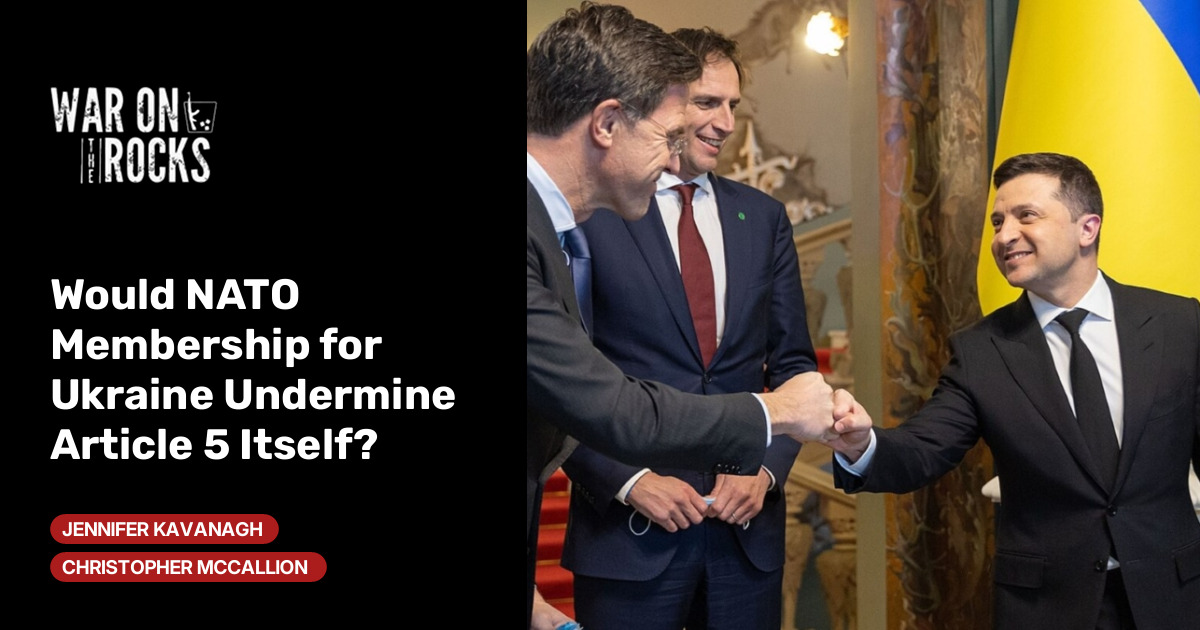
Would NATO Membership for Ukraine Undermine Article 5 Itself?

In 2025, Jennifer Kavanaugh and Christopher McCallion wrote, “Armed Neutrality for Ukraine Is NATO’s Least Poor Option,” where they made the case for armed neutrality over full NATO membership as the wiser course for both Ukraine and NATO. A year later, we asked them to revisit their arguments. Image: MidjourneyIn your 2025 article, you argued that NATO membership and binding U.S. or European security guarantees for Ukraine were effectively unworkable, and that armed neutrality was the option best suited to protecting both Ukraine’s security and NATO’s credibility. As the debate has evolved to include talk of “Article 5-like” assurances short of
War on the RocksWar on the RocksChristopher McCallion3h ago

Strategic Stability and the Rebuilding of Xi’s Military

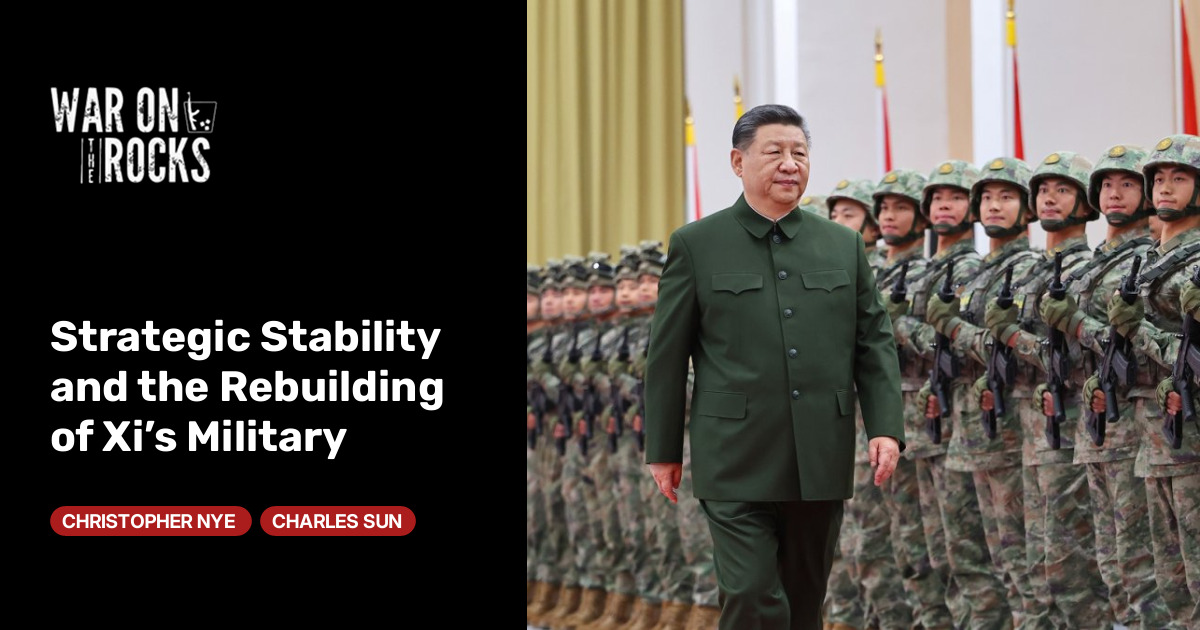
For all the warnings about an increasingly capable Chinese military, this may very well be an awkward moment for Beijing to have that military tested. General Secretary Xi Jinping has hollowed out much of the People’s Liberation Army’s senior command through purges and is now trying to rebuild it while preserving the appearance of uninterrupted strength. Several factors have allowed Xi to purge and rebuild on this scale, among them a temporary easing of external pressure. The United States unintentionally provided that comfort.One year ago, on the stage of the Shangri-La Dialogue in Singapore, U.S. Defense Secretary Pete Hegseth said

War on the RocksWar on the RocksCharles Sun13h ago

Three Patrons, Three Clients: The Mecca Alliance No One Owns

Every alliance contains a struggle over who gets to decide what the alliance is for. The unusual thing about the Mecca Alliance, formally known as the “Mecca Joint Defence Agreement,” is that all three of its members appear to believe they possess something that should give them that privilege: Saudi Arabia has the capital, Turkey has the defense industrial base, and Pakistan has the manpower and nuclear arsenal. Each can therefore imagine itself as the patron and the other two as clients. None of them, however, holds enough leverage to make that hierarchy stick.That unresolved competition for patronage may prove

War on the RocksWar on the RocksAhmed Saber Abbas15 Sept

Reading the Kremlin’s Mind: Ukrainian Writers Attempt to Understand Putin

Welcome to The Ukraine Compass, a weekly digest of Ukrainian commentary and analysis from across the political spectrum, only for War on the Rocks members. Each Monday, we bring you a curated selection of articles from Ukrainian media offering insight into how Ukrainians themselves debate the issues shaping their country.American coverage often narrows the view to the battlefield — these pieces widen it, revealing the texture of daily life, politics, and public argument in a nation at war. The perspectives gathered here are varied, candid, and often surprising, together forming a more complete picture of Ukraine as it really is.Frontline and StrategyФокус

War on the RocksWar on the RocksNicole Wiley14 Sept

This Is Not Your Father’s Nuclear Flight Test Vehicle

For decades, the United States’ nuclear weapons enterprise has wrestled with an institutional paradox. On one hand is the imperative to make the complex more “responsive” to global tumult and technical surprise, able to field new weapons quickly in reaction to unanticipated threats. On the other are the unforgiving engineering requirements of thermonuclear warheads, devices whose development is measured in years. No silver bullet solution to this unstoppable-force-meets-immovable-object conundrum will likely present itself. But the contours of a new model in systems development are taking shape that may bring the long-sought responsiveness of the complex far closer to reality.Under the

War on the RocksWar on the RocksBrandon Williams14 Sept

The Big Bet on the Emerging Space Economy

The space economy has surpassed $600 billion in annual value, with some projecting it will reach a trillion by the 2030s. Jonathan Panter is joined by Joseph Yaffe (Cowboy Space), Brian Weeden (The Aerospace Corporation), and Dan Wald (Booz Allen) to weigh where the real growth is. They discuss how AI infrastructure is blurring the line between the space economy and the regular economy, the regulatory tangle, the leap toward autonomous constellations of hundreds of thousands of satellites, competition with China, and the dual-use risks of data centers in orbit.Image: Giuseppe Donatiello via Wikimedia Commons.

War on the RocksWar on the RocksJonathan Panter14 Sept

The Age of Strategic Exclusion

Major powers are increasingly trying to shut out their rivals. Russia invaded Ukraine in part to prevent the latter’s further integration with the West. The United States is restricting China’s access to advanced semiconductors and encouraging allies to do the same. China’s Belt and Road Initiative secures privileged positions in strategic infrastructure and economic relationships. Though these examples vary in aims and methods, they reflect a growing willingness of major powers to restrict rivals’ access and influence.I use the term ‘strategic exclusion’ to describe policies that move competition from shared access to restricted access. Territorial control is its most extreme

War on the RocksWar on the RocksPatrick Gill-Tiney14 Sept

The War’s Last Generation Is Still Holding America’s Moral Debt

On the first night of the evacuation of Kabul, Aug. 15, 2021, a young mother found me in the crowd at Hamid Karzai International Airport. She had marked me, correctly, as someone who spoke her language. By the end of the night, she was pressing the body of her dead child into my chest and telling me, “You did this.” I have spent five years with that sentence.In a way, she was wrong about me. I had done nothing to her son. But the decisions that delivered her to that night were made an ocean away, and their consequences needed

War on the RocksWar on the RocksOmer S. Rafiq11 Sept

What America’s Adversaries and Allies Hope to Gain at the U.N. General Assembly

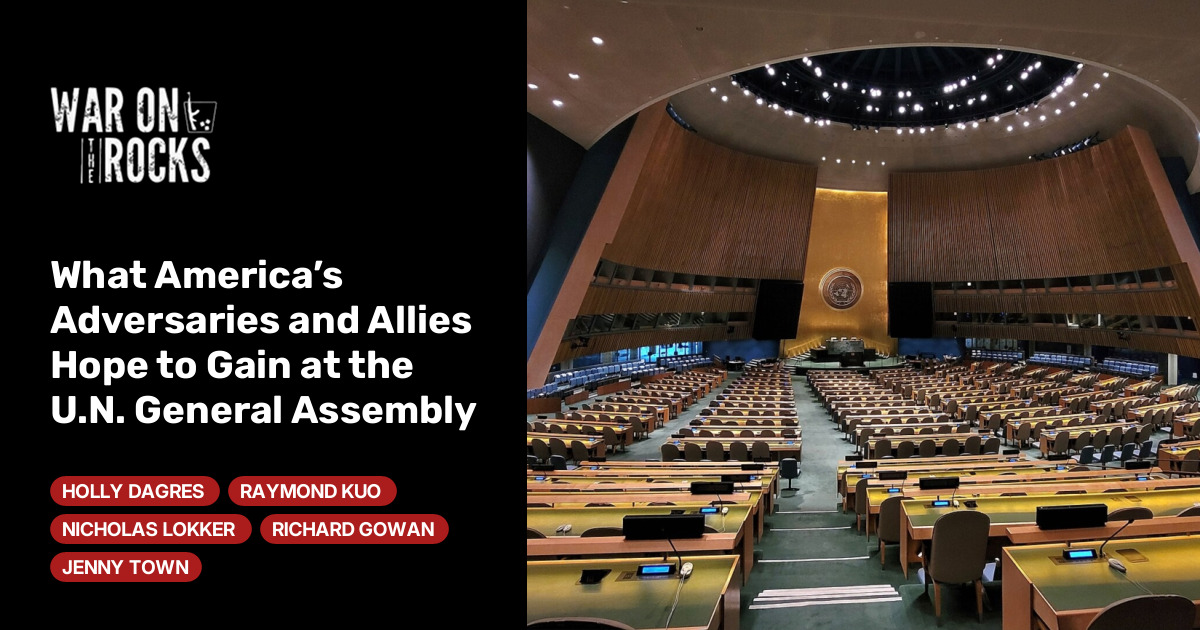
This year’s U.N. General Assembly officially opened on Tuesday, Sept. 8. The annual gathering gives diplomats and leaders a valuable opportunity to press their foreign policy priorities and engage — formally and informally — with both partners and adversaries. Most heads of state will arrive later this month for the General Debate that begins on Sept. 22. The General Assembly will wrap up on Sept. 28.U.S. President Donald Trump and his senior officials have strongly criticized the United Nations, withdrawn from multiple U.N. organizations, and reduced funding. More broadly, the Trump administration’s moves to withdraw some U.S. troops, shift more

War on the RocksWar on the RocksJenny Town10 Sept

Automating the Action Officer: Between Bureaucracy and Technology

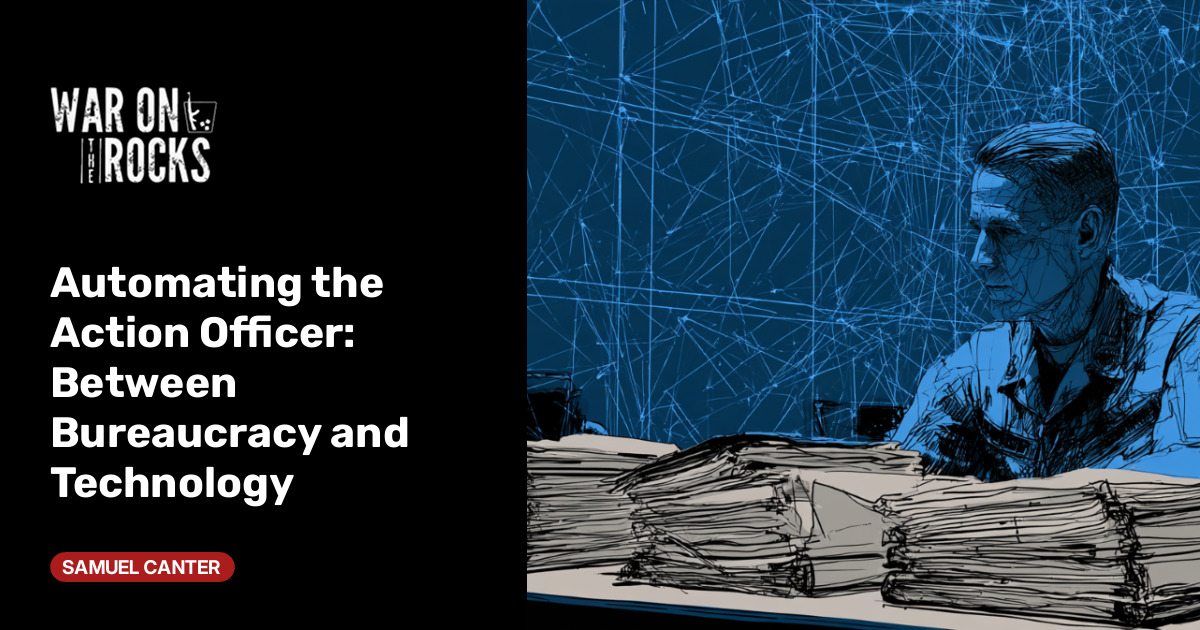
If there is a revolution brewing in the automation of white-collar work, you wouldn’t know it at the Pentagon. Here, the typical action officers, staff who tackle the daily work of the bureaucracy, perform essentially the same duties as their predecessors in 1996 or 1956: creating charts, authoring papers, delivering briefings, and coordinating across offices. Given the promise of AI tools, allowing this staff ecosystem to remain stuck in the past represents a dangerous failure to adapt, especially as senior leaders criticize the workforce for lacking organizational speed. Having served as an action officer across the White House, Pentagon, and

War on the RocksWar on the RocksSamuel Canter10 Sept

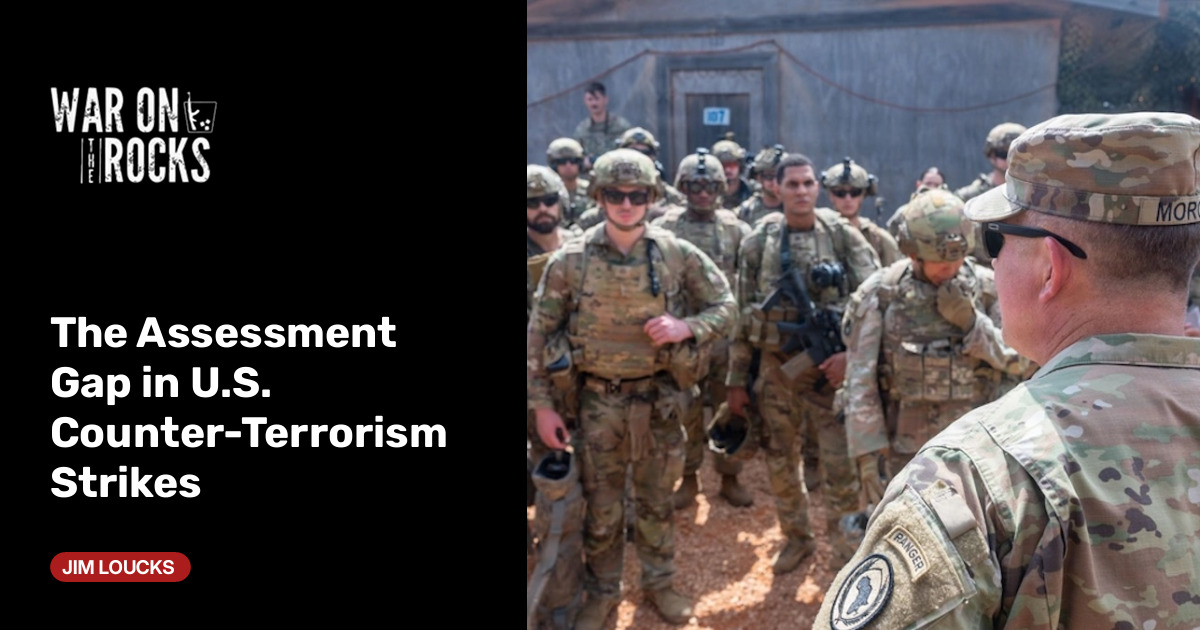
The Assessment Gap in U.S. Counter-Terrorism Strikes

For eight years I helped decide whether American counter-terrorism money was working.As a programs advisor in the State Department’s Bureau of Counterterrorism from 2018 to 2025, I oversaw about 20 projects in East Africa worth roughly $80 million a year. None of that money moved without a performance monitoring plan. We established baselines before work started and agreed on indicators in advance. When a project underperformed, or the reporting came late, we withheld funding. Reporting tracked activities against those metrics across the life of the program. Independent evaluations validated what implementers said they had done.That machinery was not the bureau’s

War on the RocksWar on the RocksJim Loucks10 Sept

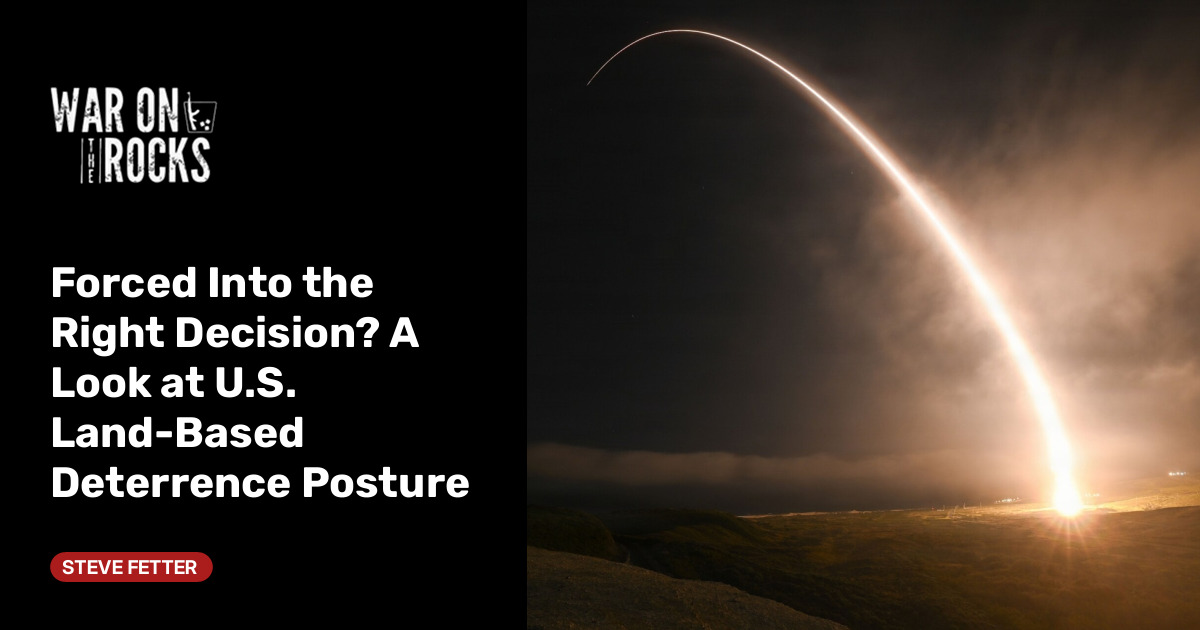
Forced Into the Right Decision? A Look at U.S. Land-Based Deterrence Posture

In 2019, Steve Fetter wrote “A Cheaper Nuclear Sponge,” in which he argued that building a new intercontinental ballistic missile (ICBM) was unnecessary for strengthening U.S. land-based deterrence. After several years of changing defense budgets and strategic priorities, we asked Steve to revisit his arguments.Image: U.S. Air Force (John Ingle)In your 2019 article, you argued that building an entirely new ICBM was unnecessary and that the Pentagon could save tens of billions by extending the life of the Minuteman III instead. Nearly seven years on, how has that argument held up? What has the new ballistic missile program’s trajectory looked

War on the RocksWar on the RocksSteve Fetter9 Sept

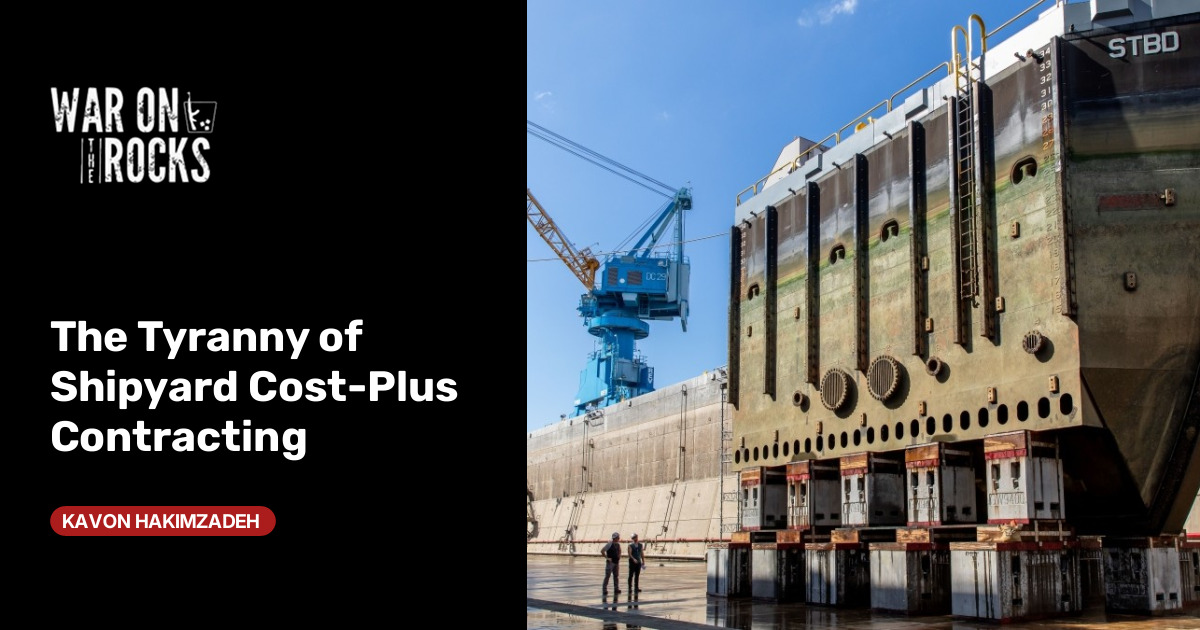
The Tyranny of Shipyard Cost-Plus Contracting

As a naval shipyard commander, my mandate from Navy leadership is straightforward: return warships to the fleet as quickly as possible. Neither my shipyard nor many other public and private shipyards are consistently fulfilling that mission.Public shipyard availabilities — the scheduled periods during which nuclear-powered warships are taken out of operational service for maintenance, repair, or modernization — are often delayed well beyond their original timelines. A recent Government Accountability Office report highlighted that over the past 10 years, maintenance delays for attack submarines have resulted in 15,000 lost operational days and an estimated $3.4 billion in costs. This problem of maintenance

War on the RocksWar on the RocksKavon Hakimzadeh9 Sept

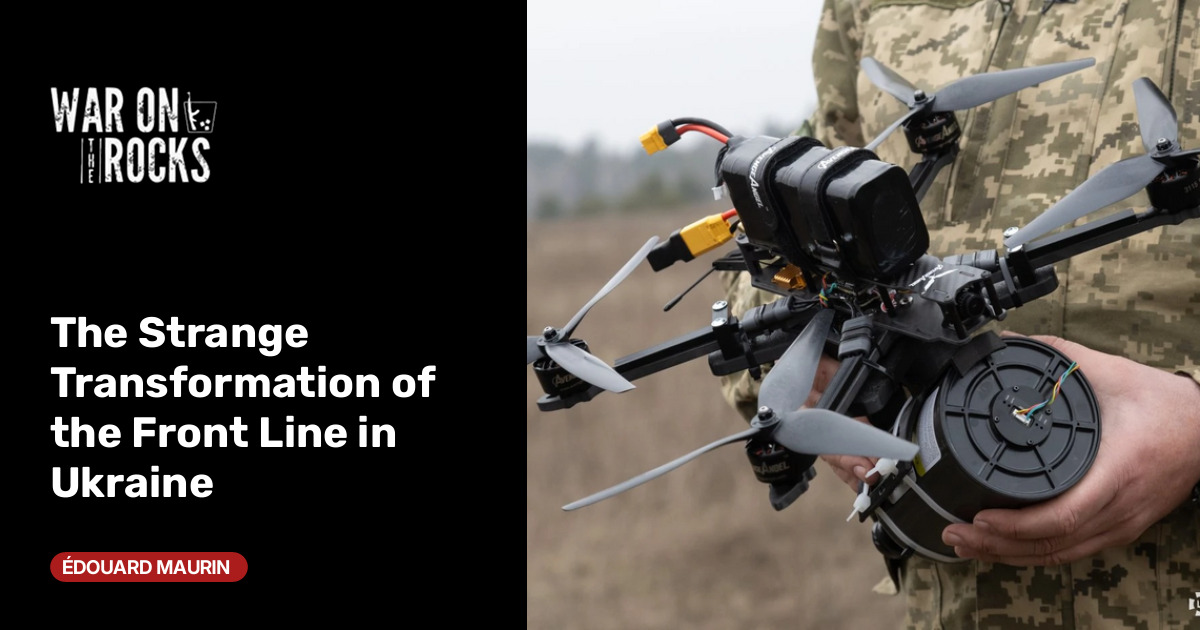
The Strange Transformation of the Front Line in Ukraine

On Jan. 5, 2025, my volunteer platoon attached to the 23rd Special Purpose Battalion of the Presidential Brigade entered a 1-kilometer-long tree line called CHAI, on the outskirts of Kotlyne, a few kilometers west of Pokrovsk, Ukraine. Our task was to occupy a position whose status on DeepState, an open-source map tracking military operations in the Russo-Ukrainian war, had been shifting out of gray for five days. On DeepState’s map, different colors illustrate the fighting situation: the red area is held by the aggressor, while green or blue areas show territory successfully defended or recaptured by the Ukrainian army. The

War on the RocksWar on the RocksÉdouard Maurin9 Sept

The Mecca Pact’s Credibility Gap

Collective-defense pacts are meant to make war less likely. Poorly designed ones can do the opposite. If allies make sweeping promises without the military integration, decision-making mechanisms, and escalation controls needed to carry them out, they may invite adversaries to test the boundaries of these promises.The Mecca Joint Defense Agreement between Saudi Arabia, Turkey, and Pakistan, signed on Aug. 7 amid intensifying regional conflict, represents a significant but uncertain development in the region. The agreement declares that an attack on one member will be treated as an attack on all three, establishing a broad commitment to collective deterrence. Yet the

War on the RocksWar on the RocksDoga Eralp9 Sept

The Two Questions Ukraine Asks Before Every Decision

Welcome to The Ukraine Compass, a weekly digest of Ukrainian commentary and analysis from across the political spectrum, only for War on the Rocks members. Each Monday, we bring you a curated selection of articles from Ukrainian media offering insight into how Ukrainians themselves debate the issues shaping their country.American coverage often narrows the view to the battlefield — these pieces widen it, revealing the texture of daily life, politics, and public argument in a nation at war. The perspectives gathered here are varied, candid, and often surprising, together forming a more complete picture of Ukraine as it really is.Frontline and StrategyЕспресо

War on the RocksWar on the RocksNicole Wiley8 Sept

China’s Warrior Scientists: Insights from Recent Operations Around Taiwan

China’s marine scientific research ships are expanding their operations around Taiwan, and they are not just there to advance the frontiers of human knowledge. Their operations serve to undermine Taiwan’s independent political status and to force international acceptance of Beijing’s claim of sovereignty over the island and its surrounding waters. This pressure campaign by the People’s Republic of China began intensifying in 2022. While media coverage of this development has focused on the activities of the People’s Liberation Army and the China Coast Guard, China’s civilian survey ships operate among them often unnoticed and in unprecedented numbers. Because of the

War on the RocksWar on the RocksRyan D. Martinson8 Sept

Nicaragua’s Army Will Decide What Comes After Ortega

The first institution Nicaragua’s National Assembly called to testify on the constitutional reform ending competitive elections was the army. On July 29, 2026, Gen. Julio César Avilés appeared before the Special Constitutional Commission and pledged the firm support of the Army of Nicaragua for a package that dissolves the electoral basis of the civilian authority he serves. Avilés spoke on behalf of the General Command, the Military Council, and the ground, naval, air, and reserve forces under his command. Five years earlier, at the ceremony launching the distribution of ballots for the 2021 election, the same officer committed 15,000 troops

War on the RocksWar on the RocksRandy Pestana8 Sept

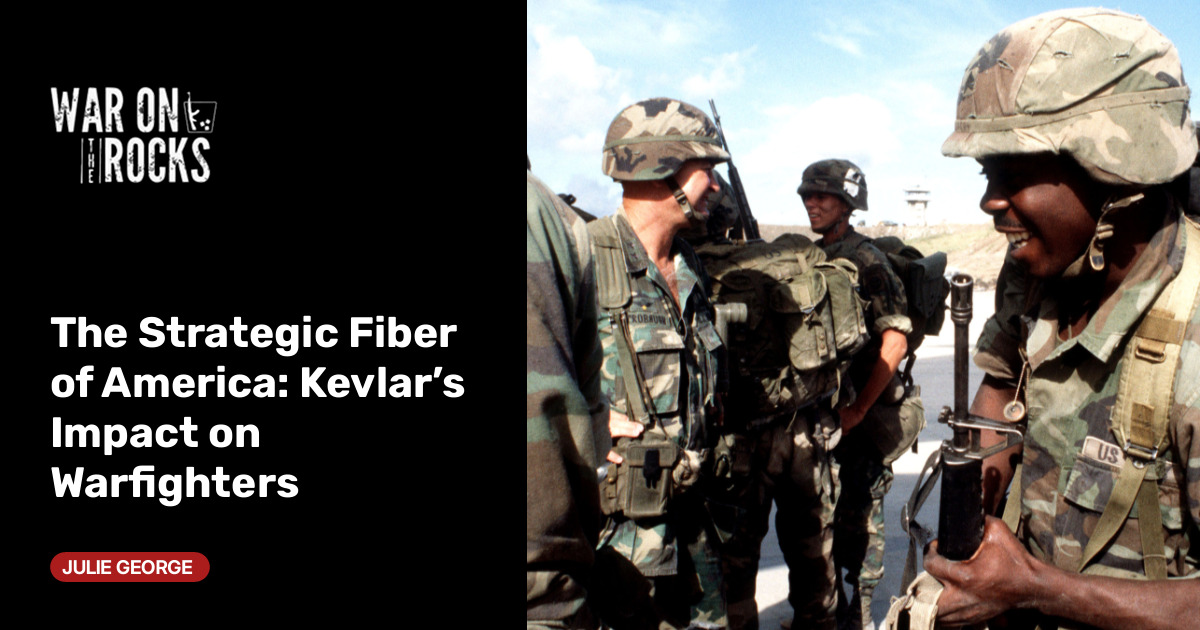
The Strategic Fiber of America: Kevlar’s Impact on Warfighters

Editor’s note: This is the tenth article in a limited series celebrating American defense technologies born from wartime and their effects on broader national security, politics, and society. This series will run for several weeks to commemorate America’s 250th anniversary, and winners will be selected by a reader vote undertaken through our newsletter later this summer. Prior installments can be found at the Arsenal of Innovation page.I was fortunate enough to do something that would be a benefit to mankind. It’s been an extremely satisfying discovery. I don’t think there’s anything like saving someone’s life to bring you satisfaction and happiness.– Stephanie Kwolek,

War on the RocksWar on the RocksJulie George7 Sept

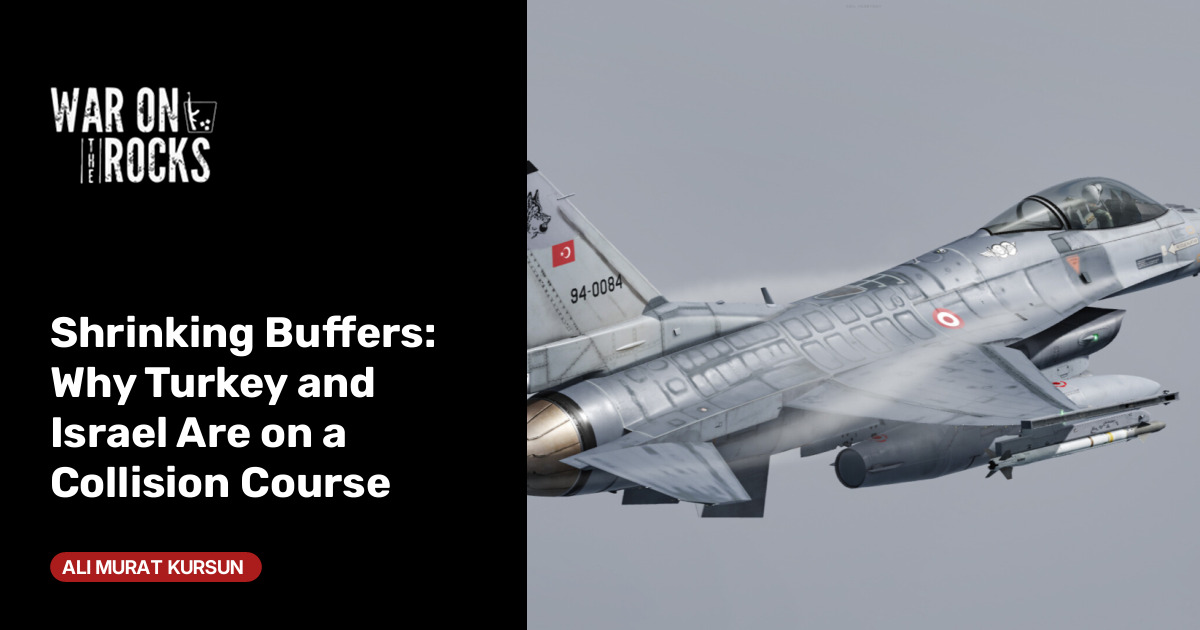
Shrinking Buffers: Why Turkey and Israel Are on a Collision Course

When Israeli warplanes struck the Abu al-Duhur airbase in Syria on Aug. 18, 2026, the smoke rose over the demolition of an old geopolitical assumption about the Middle East. This time, Israel directly targeted a strategic sphere of influence where the Turkish military had been working to build local security capacity.Turkey rapidly filled the power vacuum in post-Assad Syria, expanding its military and intelligence footprint southward and positioning itself as a founding actor in the Levant’s new security architecture. With this military move, Israel aimed to draw a new line of engagement on the ground for both Ankara and Damascus.

War on the RocksWar on the RocksAli Murat Kursun7 Sept