War on the Rocks

War on the Rockspage 3

Coverage, page 3

page 3 of 6

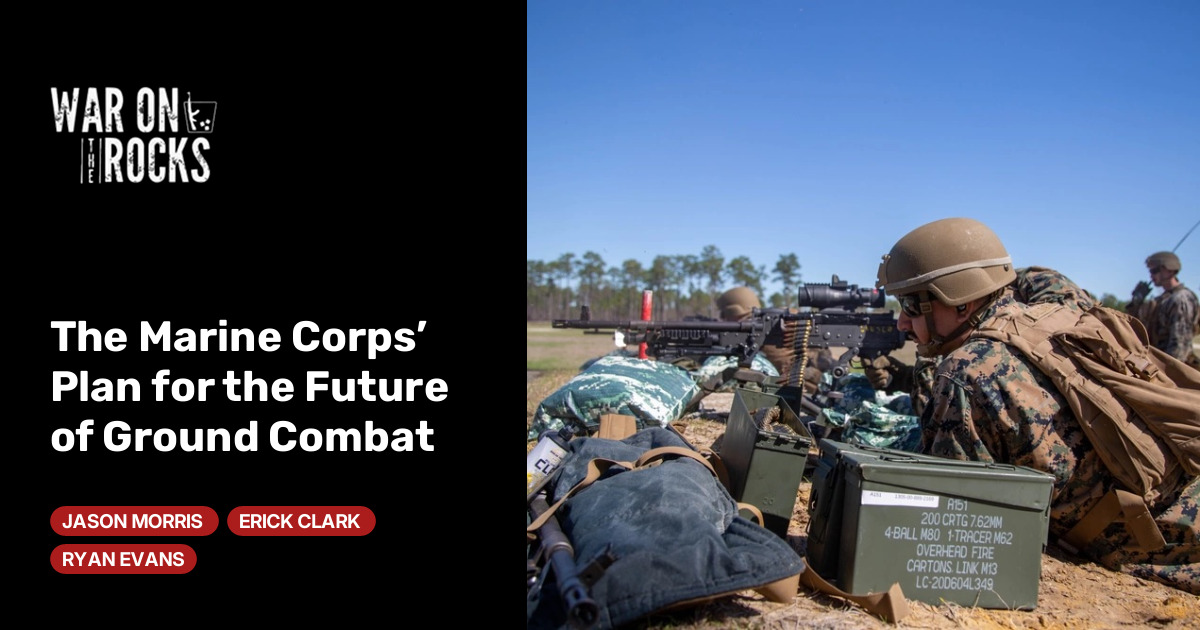
The Marine Corps’ Plan for the Future of Ground Combat

The Marine Corps just released its plan to fight against adversaries on land, and Ryan had the two architects of the plan, Ground Combat Element 2040, on the show to talk about it. They discuss drones, resilience, long-range fires, logistics, and what marines will need to survive and fight on an increasingly transparent battlefield while still preserving the critical human element.Image: Khalil Brown via DVIDS
War on the RocksWar on the RocksRyan Evans26 Aug

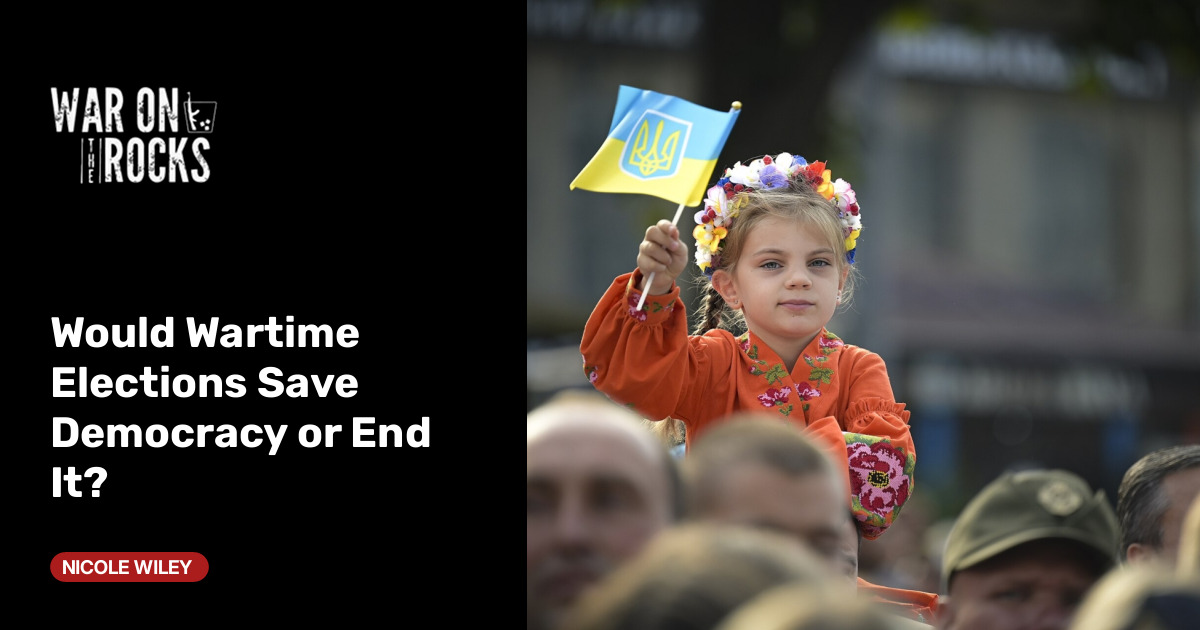
Would Wartime Elections Save Democracy or End It?

Welcome to The Ukraine Compass, a weekly digest of Ukrainian commentary and analysis from across the political spectrum, only for War on the Rocks members. Each Monday, we bring you a curated selection of articles from Ukrainian media offering insight into how Ukrainians themselves debate the issues shaping their country.American coverage often narrows the view to the battlefield — these pieces widen it, revealing the texture of daily life, politics, and public argument in a nation at war. The perspectives gathered here are varied, candid, and often surprising, together forming a more complete picture of Ukraine as it really is.Frontline and StrategyЕспресо

War on the RocksWar on the RocksNicole Wiley26 Aug

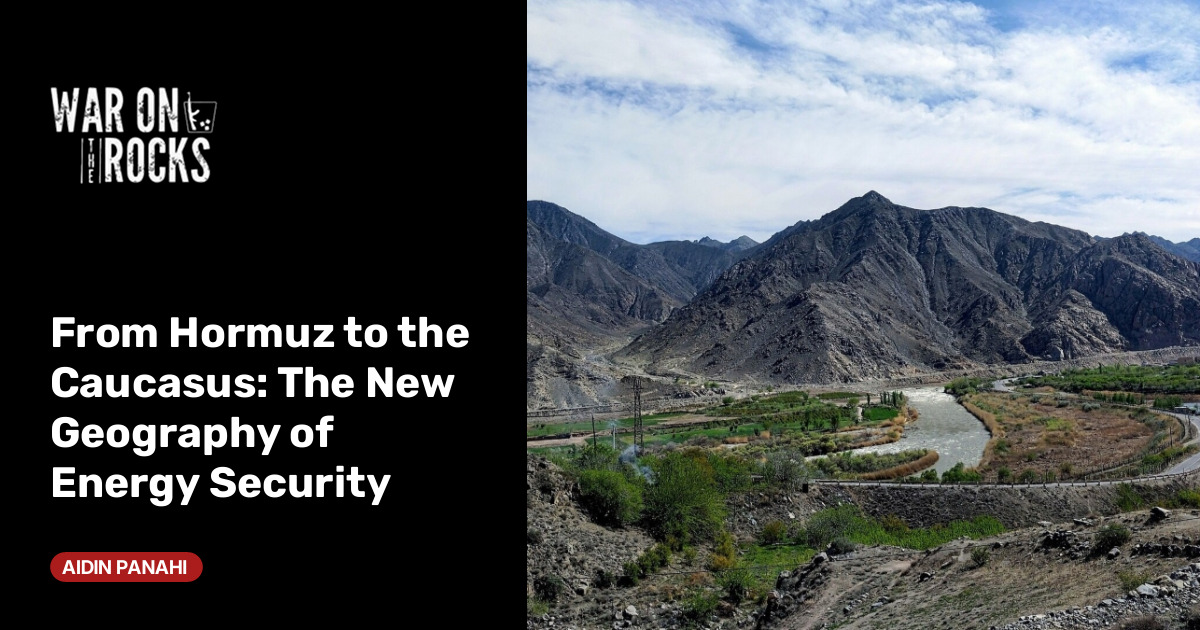
From Hormuz to the Caucasus: The New Geography of Energy Security

Every crisis in the Middle East returns the world’s attention to the same stretch of water. When tankers are seized, or missiles fly near the Persian Gulf, oil prices move, insurers reprice risk, shipping reroutes, and the United States repositions naval and airpower to keep the Strait of Hormuz open. The reflex is sound, because the strait carries volumes nothing else can. Alongside the maritime map, a second geography of energy security is taking shape: the pipelines, railways, power lines, and transit corridors linking the Caspian Basin and the South Caucasus to Europe.Western governments are pairing forward military presence in

War on the RocksWar on the RocksAidin Panahi26 Aug

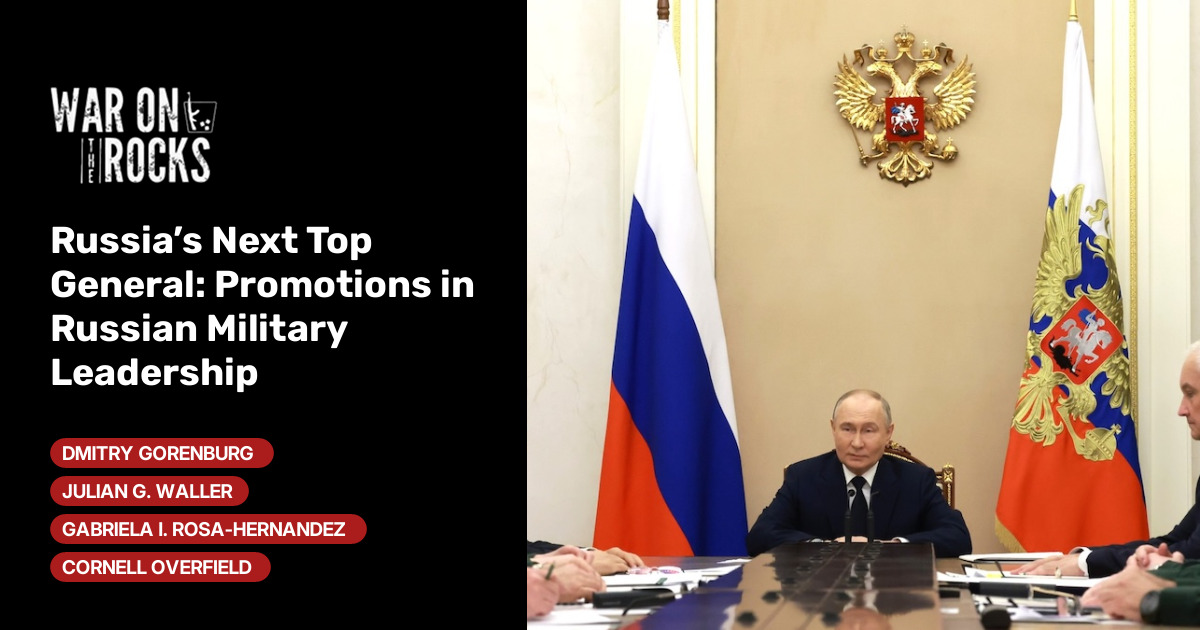
Russia’s Next Top General: Promotions in Russian Military Leadership

Judged by the initial strategic goals set by Russian President Vladimir Putin in 2022, Russia’s military lost its war against Ukraine some time ago. Yet Russia’s armed forces have not stopped fighting and continue to prosecute large-scale combat operations in a brutalizing, protracted war sucking up much of Russia’s assets of national power, from pure military capacity to foreign policy priorities to considerable societal and economic resources. While Putin calls the most important strategic shots, it is Russia’s senior military elite that makes the strategic and operational decisions impacting warfighting outcomes every day. Who are these senior officers, where did

War on the RocksWar on the RocksCornell Overfield25 Aug

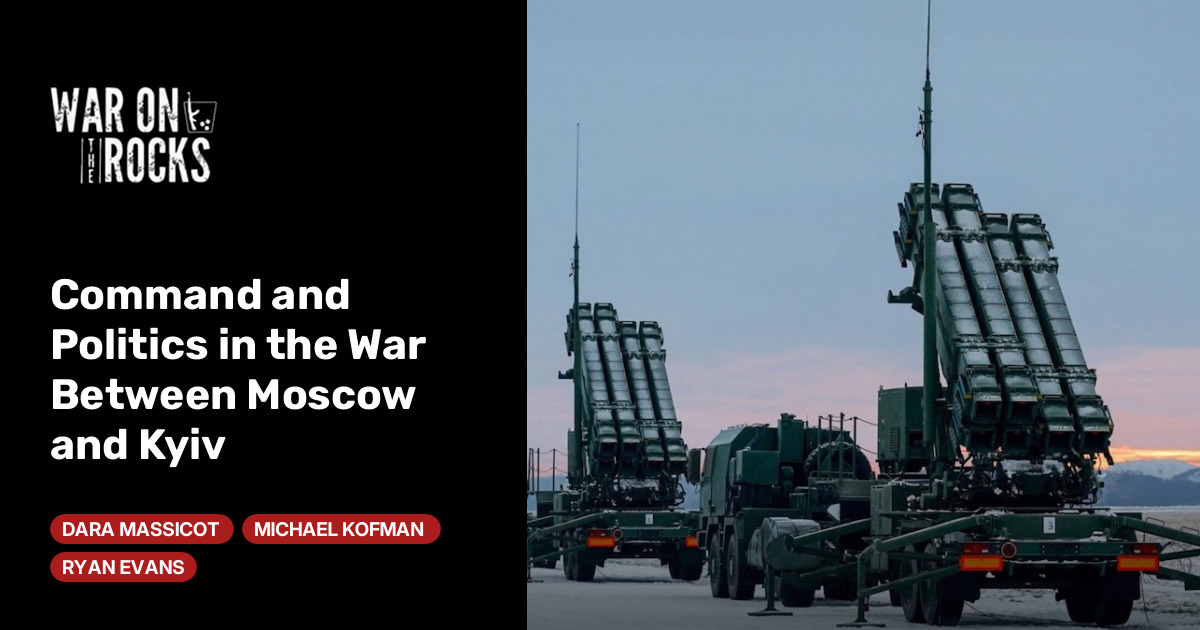
Command and Politics in the War Between Moscow and Kyiv

Our intrepid team covers a lot of ground in this episode: the increasing fluidity of the battlefield, drones and air defense, the biting Black Sea campaign, the causes and aftermath of the firing of Ukraine’s popular defense minister, why Ukraine probably cannot produce PAC-3 air defense missiles (despite what some journalists are telling you), and the likelihood of a new round of Russian mobilization. This episode is Dara Massicot and Michael Kofman at their best.Thanks to NODA AI for supporting this episode. NODA AI is building mission command for autonomous forces. Learn more at warontherocks.com/nodaImage: ArmyInform

War on the RocksWar on the RocksRyan Evans24 Aug

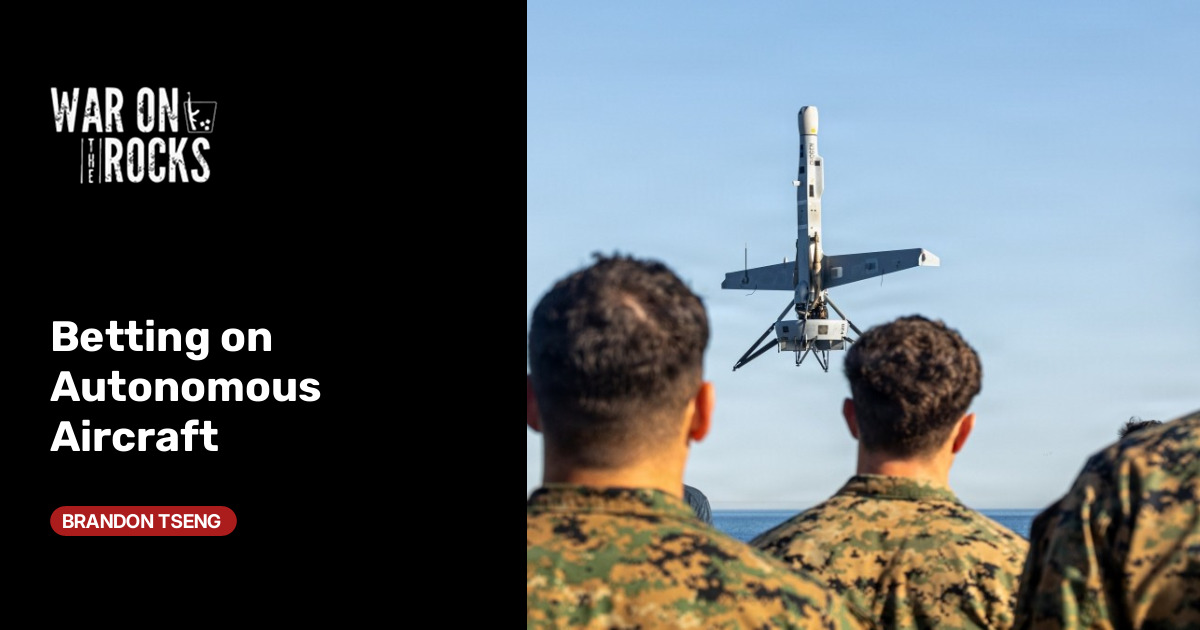
Betting on Autonomous Aircraft

This exclusive Cogs of War interview is with Brandon Tseng, the co-founder and president of Shield AI and a former Navy SEAL, whose company builds the Hivemind autonomy software, the V-BAT and X-BAT aircraft, and Aechelon synthetic reality and simulation technologies. We asked Brandon about the bet at the center of his company — that the AI pilot matters more than the airframe — and about what a decade building autonomy for the Pentagon has taught him. Sign Up for Our Newsletter You founded Shield AI in 2015, before defense tech was fashionable, and when few in Washington believed a startup could

War on the RocksWar on the RocksBrandon Tseng24 Aug

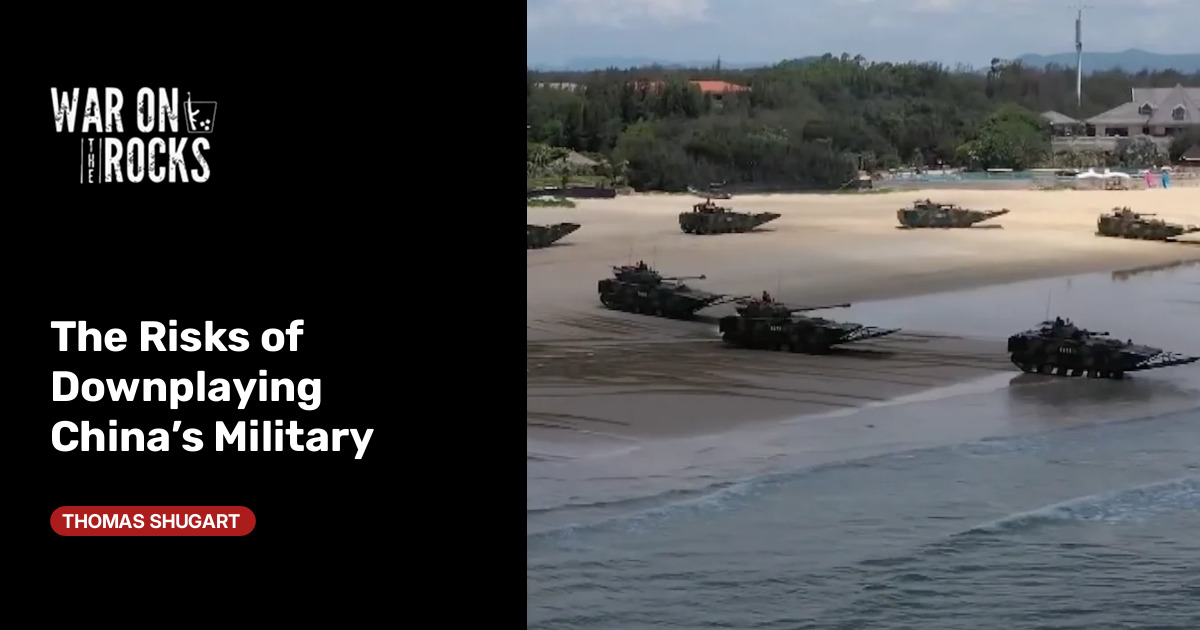
The Risks of Downplaying China’s Military

China has spent years modifying civilian ferries to launch amphibious armored vehicles, developing specialized equipment to move forces ashore without conventional port facilities, hardening dozens of air bases, and rapidly expanding the missile forces that could be used to deter or defeat a U.S. intervention. Yet at the same time, a recurring line of analysis has argued that concerns about China’s military capabilities are overstated — and that an invasion of Taiwan remains beyond the reach of the People’s Liberation Army.These analyses differ in important ways. Some emphasize the Chinese military’s political character, lack of combat experience, and institutional shortcomings. Others

War on the RocksWar on the RocksThomas Shugart24 Aug

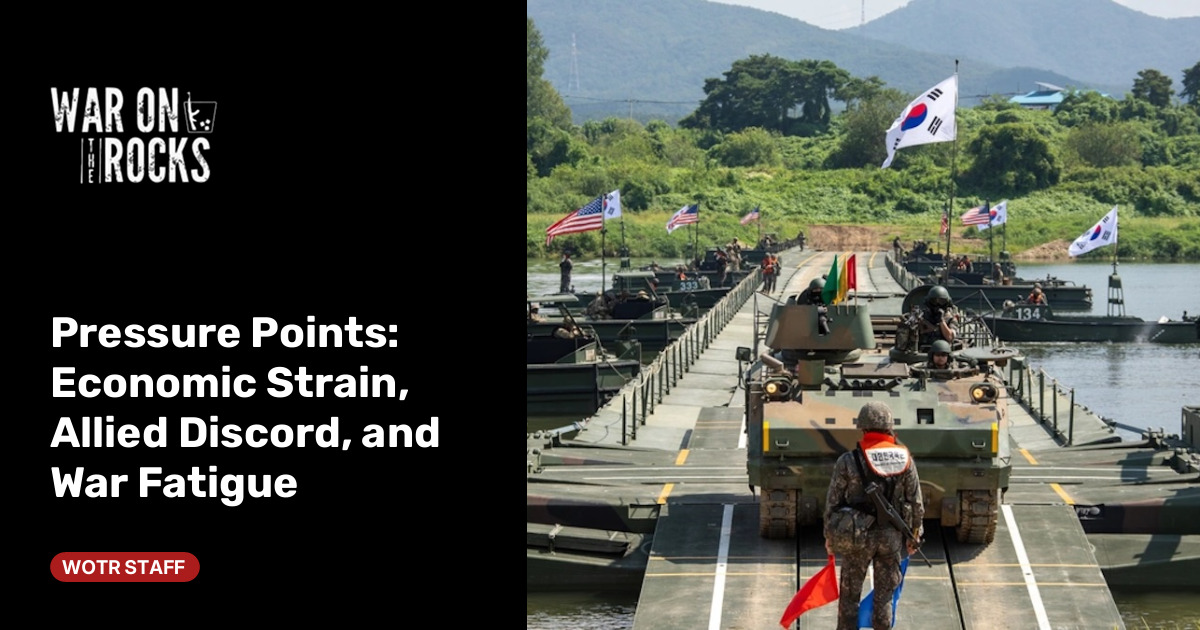
Pressure Points: Economic Strain, Allied Discord, and War Fatigue

Welcome to The Adversarial. Every other week, we’ll provide you with expert analysis on America’s greatest challengers: China, Russia, Iran, North Korea, and jihadists. Read more below.***IranU.S. strikes on Iranian soil tapered off in August after frequent exchanges throughout July. The hiatus seems more of an adjustment in tactics to wear down Iran’s finances rather than further degrade its military capability: A combined “one-two punch” of a physical blockade against Iran’s maritime trade and increased sanctions measures, which Treasury Secretary Scott Bessent last week said, “have never been seen in the history of the economic isolation of a country.” Iran will

War on the RocksWar on the RocksWOTR Staff21 Aug

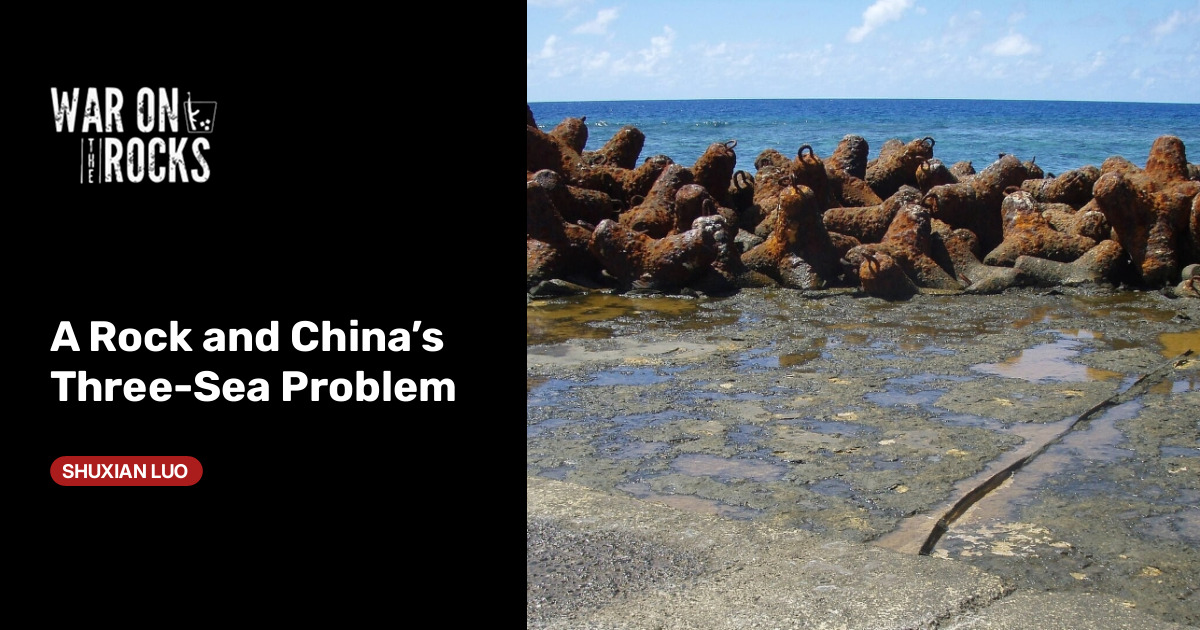
A Rock and China’s Three-Sea Problem

Two rocks surrounded by coral, with a total land size of less than 10 square meters (approximately 108 square feet) at high tide, are the entire basis on which Japan claims a 150,000-square-mile exclusive economic zone, an area nearly the size of Japan itself. The uninhabited feature, located more than 1,000 miles south of Tokyo, is called Okinotori.In late July, Japan protested Sino-Russian live-fire drills held within the exclusive economic zone it claims around Okinotori. Tokyo cited the safety risks the drills posed to nearby vessels, but its broader objection was to Beijing’s claim that Okinotori is merely a rock

War on the RocksWar on the RocksShuxian Luo21 Aug

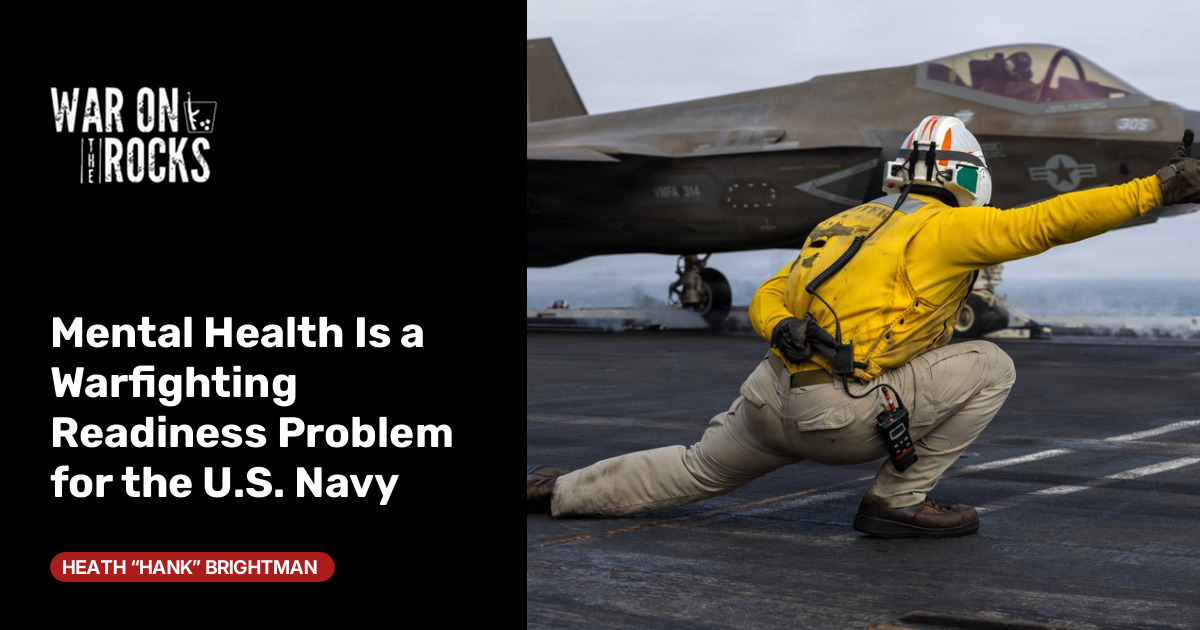
Mental Health Is a Warfighting Readiness Problem for the U.S. Navy

“You cannot be at mental peace always. You will be worried. So even my family — they are scared all the time, and they were anxiously praying [for] the vessel [to] come out of this area safely.” While Captain Chirag operates a commercial cargo vessel in the Red Sea, his comments in the aftermath of the October 7, 2023 attacks in the Middle East could just as easily be attributed to the hard-charging crew of the guided-missile destroyer USS Carney and other surface combatants fighting Houthi threats, or the experiences of the sailors assigned to Carrier Strike Group Three engaging

War on the RocksWar on the RocksHeath “Hank” Brightman21 Aug

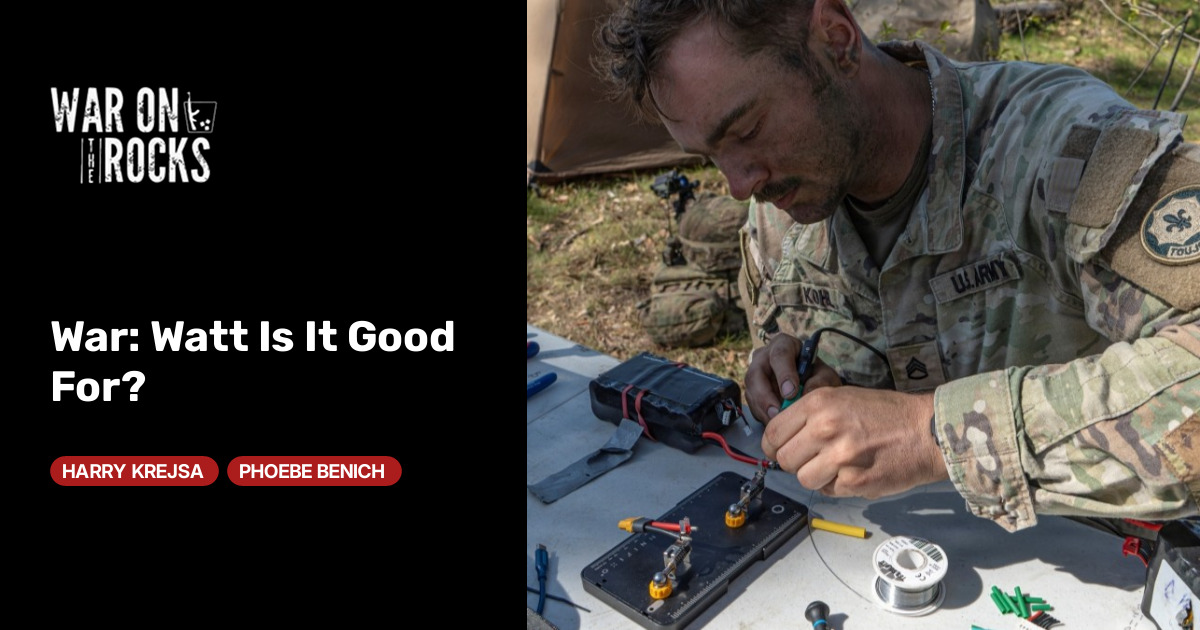
War: Watt Is It Good For?

Military analysts are captivated by how the material nature of war is transforming in Ukraine. Unmanned systems have captured Russian infantry units, battered Russian naval and commercial ships, and even, with the help of on-board AI, conducted autonomous strikes deep into areas where Russian jamming foils remote piloting. These technologies are powering a dramatic democratization of military capability, allowing a country to hold off an invader many times its size.But that democratization is only part of the story, and is in fact driven by an equally dramatic consolidation. Strip down any of these battlefield-transforming tools, and you will find remarkably

War on the RocksWar on the RocksPhoebe Benich20 Aug

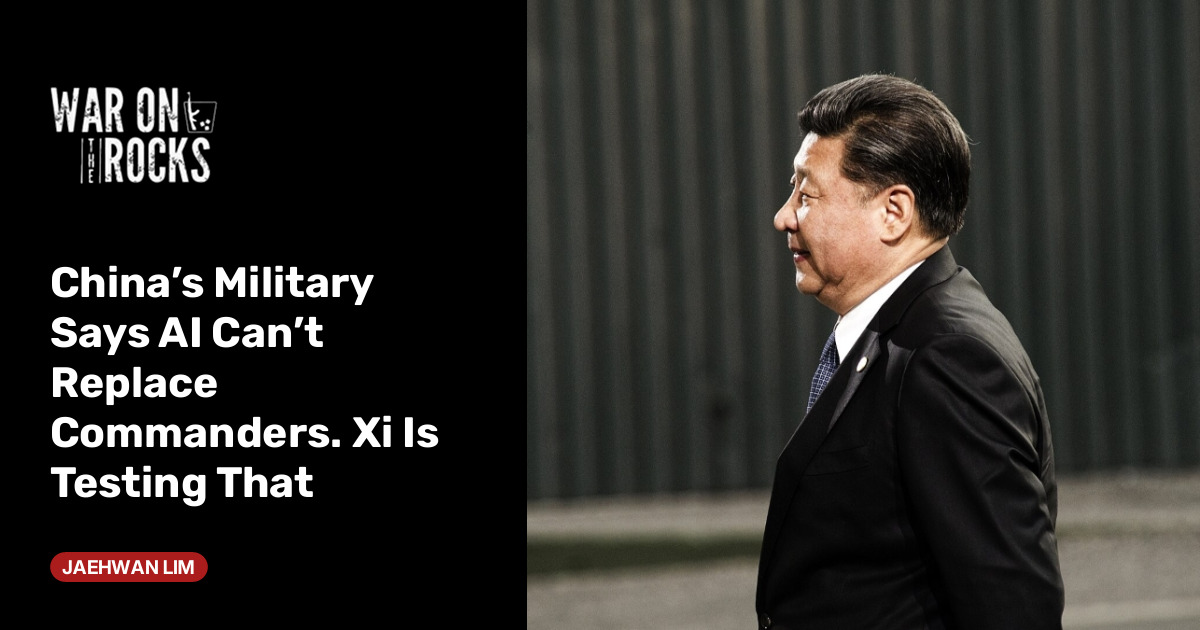
China’s Military Says AI Can’t Replace Commanders. Xi Is Testing That

For years, the Chinese military’s own newspaper has been making a promise it may no longer be able to keep. Whenever the People’s Liberation Army Daily (Jiefangjun Bao), the official newspaper of China’s Central Military Commission, discusses artificial intelligence and command, it returns to the same reassurance: Machines may sort sensor data, draft options, and compress the time between observation and action, but the final authority, and the responsibility that comes with it, belong to the human commander. As one 2025 article puts it, AI cannot resolve the allocation of command authority and responsibility because only a human commander can

War on the RocksWar on the RocksJaehwan Lim20 Aug

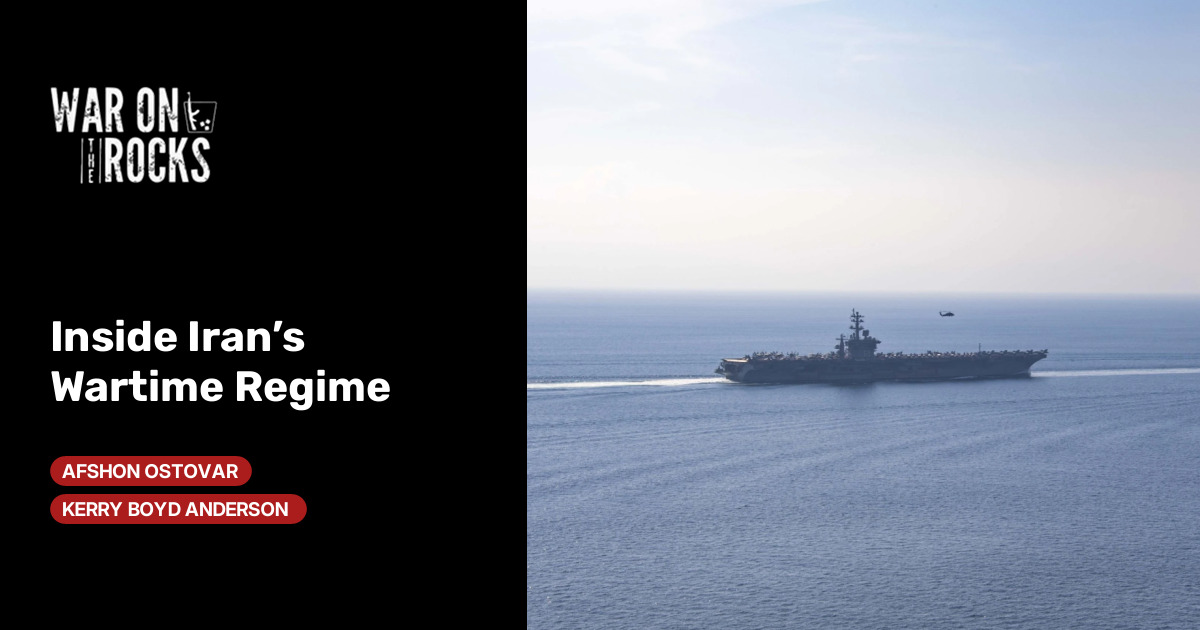
Inside Iran’s Wartime Regime

Afshon Ostovar, one of the leading experts on Iran and the host of the members-only podcast The Iran Reckoning, is joined by War on the Rocks membership editor Kerry Anderson for a state-of-play conversation on the conflict between the United States and Iran. They consider why the fighting has settled into a stalemate and dig into which figures in the Iranian regime have influence over Iran’s approach to the war. Afshon unpacks the implications of Mohsen Rezaei’s recent appointment as head of Iran’s Supreme National Security Council, before the two look ahead to what comes next. Normally members-only content, this

War on the RocksWar on the RocksKerry Boyd Anderson19 Aug

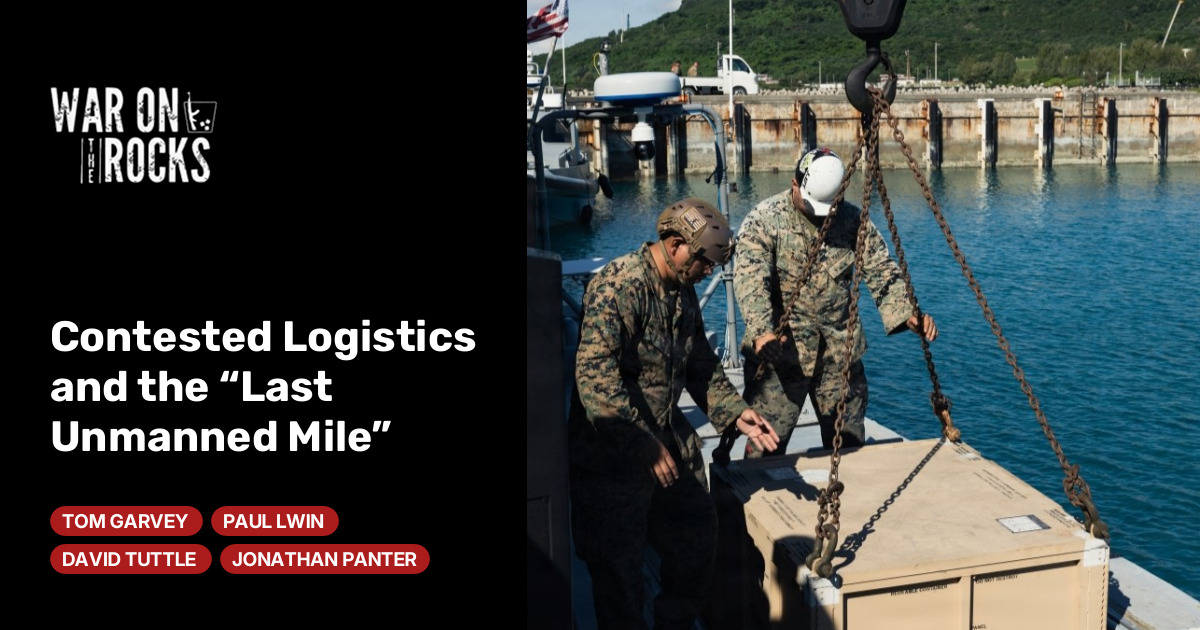
Contested Logistics and the “Last Unmanned Mile”

In a Pacific war, the U.S. military cannot assume uncontested access to its depots and supply lines for munitions, spare parts, food, water, and energy. Jonathan is joined by David Tuttle (Rune Technologies), Paul Lwin (HavocAI), and Tom Garvey (CACI) to discuss sustaining a dispersed force that’s facing enemy fire and lacks stable, secure communications. They debate autonomy versus automation, predictive resupply, where the data comes from, and which lessons from Ukraine transfer across theaters.Image: Sgt. Alora Finigan via DVIDS.

War on the RocksWar on the RocksJonathan Panter19 Aug

Managed Instability: Why the Wars Against Iran and Ukraine Can Go On and On and On…

The Iran war is beginning to resemble the Ukraine war in one important way. Operationally, the wars themselves are still very different — Ukraine is a large-scale ground invasion, while the Iran war is not there just yet. But their political logic after a failure to achieve a quick result is starting to look very similar. In both cases, a larger power expected its overwhelming military force to produce a quick political result. And in both cases, that expectation failed.The targeted state adapted, outside supporters helped it remain afloat, and both conflicts moved from the promise of a decisive outcome

War on the RocksWar on the RocksAlex Kolbin19 Aug

Proving the Negative: Three Warnings from Arms Control for the Age of AI

In early 1963, a single number characterized the difference in the positions of the United States and the Soviet Union on a comprehensive nuclear test ban. Nikita Khrushchev had proposed three on-site inspections each year. Washington was asking for seven. Other differences remained, including inspection procedures and treaty language. But the difference mattered: Seismology could not always distinguish an underground test from an earthquake, and inspections created both assurance and opportunities for espionage.Neither number had been delivered by a technical expert wielding a seismograph. Each represented a political judgment about how much residual uncertainty its government should accept. The negotiations

War on the RocksWar on the RocksMark Daley19 Aug

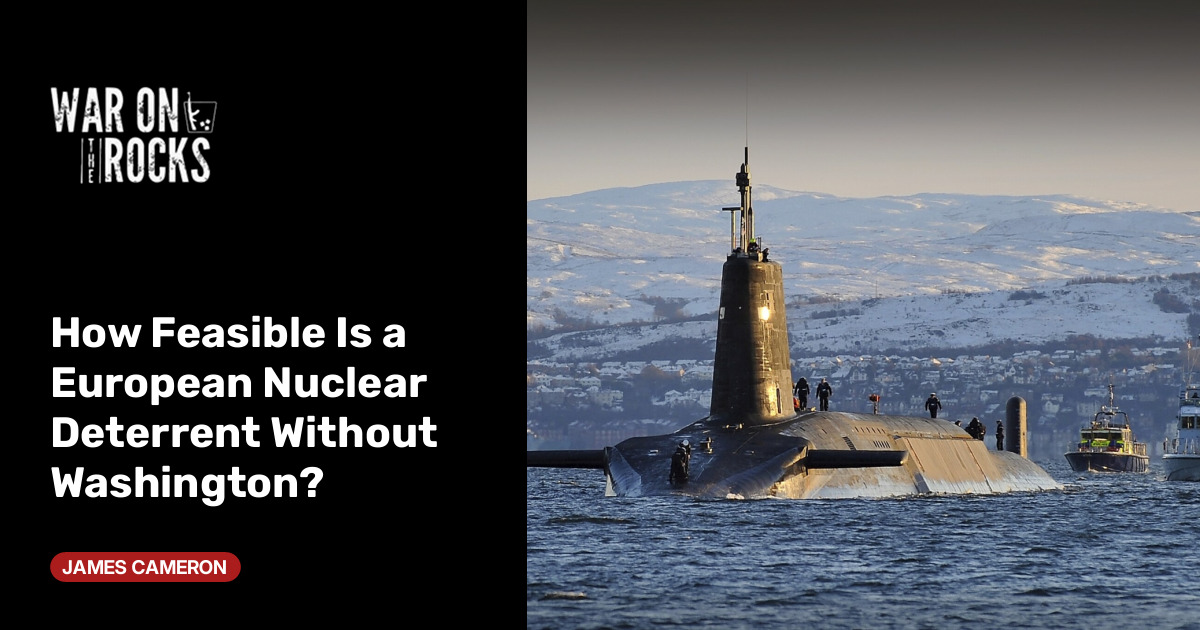
How Feasible Is a European Nuclear Deterrent Without Washington?

In 2025, James Cameron wrote, “Eurodeterrent: A Vision for an Anglo-French Nuclear Force,” where he argued the United Kingdom and France should cooperate to develop a nuclear deterrent umbrella for Europe, independent of Washington. A year later, after French President Emmanuel Macron’s landmark nuclear speech, we asked him to revisit his argument. Image: SAC Rob Bourne/MODIn your 2025 article, you argued that, given Europe’s perceived uncertainty about the U.S. commitment to its security and defense, the United Kingdom and France should cooperate to develop a nuclear deterrent umbrella independent of Washington. In July 2025, the United Kingdom and France signed the Northwood Declaration, and

War on the RocksWar on the RocksJames Cameron18 Aug

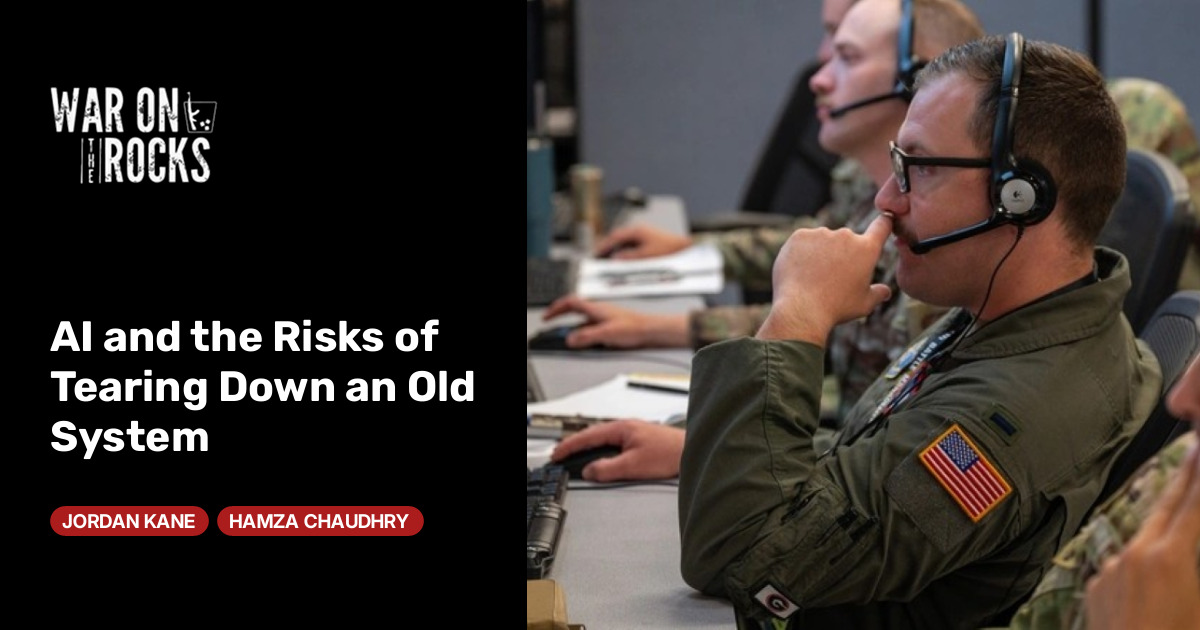
AI and the Risks of Tearing Down an Old System

Operation Epic Fury made clear that AI is now at the heart of American warfighting. Central Command used Claude through Palantir’s Maven Smart System platform to generate and prioritize roughly 1,000 targets in the first 24 hours of the campaign, at an operational tempo that more than doubled the opening phase of the 2003 Iraq invasion. Over 38 days, the campaign reached 13,000 total strikes, according to Pentagon data. Project Maven says that the program has accelerated targeting even further to 5,000 in a single day. The question is whether the department can evaluate what it deploys before it deploys

War on the RocksWar on the RocksHamza Chaudhry18 Aug

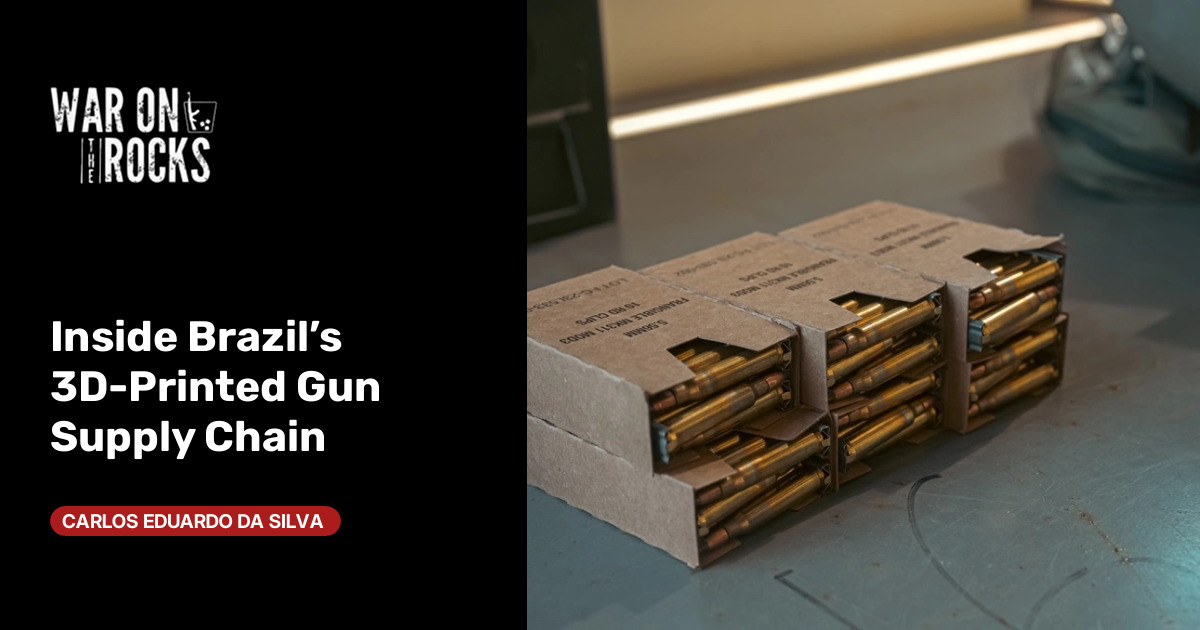
Inside Brazil’s 3D-Printed Gun Supply Chain

On June 26, 2026, the Civil Police of Rio de Janeiro, through its specialized firearms, ammunition, and explosives unit, raided a clandestine workshop in Rio das Pedras, on the city’s west side. Investigators said the group used a 3D printer seized at the scene to produce pistol frames and structural rifle parts in polymer and then completed them with metal parts. Early reports described those parts as imported, but police said on the day of the raid that they were still determining the metal’s origin. Police described the operation’s main target as an international arms and ammunition trafficker who supplied

War on the RocksWar on the RocksCarlos Eduardo da Silva18 Aug

The Tension Between Collectivism and Individualism in Ukraine

Welcome to The Ukraine Compass, a weekly digest of Ukrainian commentary and analysis from across the political spectrum, only for War on the Rocks members. Each Monday, we bring you a curated selection of articles from Ukrainian media offering insight into how Ukrainians themselves debate the issues shaping their country.American coverage often narrows the view to the battlefield — these pieces widen it, revealing the texture of daily life, politics, and public argument in a nation at war. The perspectives gathered here are varied, candid, and often surprising, together forming a more complete picture of Ukraine as it really is.Frontline and StrategyОбозреватель

War on the RocksWar on the RocksNicole Wiley17 Aug