
Iran-Afghanistan - Returns Emergency Response #33
Countries: Iran (Islamic Republic of), Afghanistan Source: UN High Commissioner for Refugees Please refer to the attached Infographic.
 ReliefWeb•UN High Commissioner for Refugees17 Sept
Countries: Iran (Islamic Republic of), Afghanistan Source: UN High Commissioner for Refugees Please refer to the attached Infographic.
ReliefWeb•UN High Commissioner for Refugees17 Sept
Documentary director Orlando von Einsiedel on how the real life tale of a man who cycles 6,000 miles from India to Sweden to find his true love will warm your heart New Delhi, December 1975. It was love at first sight when a Swedish hippy called Lotta von Schedvin sat down to be sketched by an Indian street artist, Pradyumna Kumar Mahanandia, known to everyone as PK. In the 10 minutes it took PK to complete her portrait, everything clicked into place for the pair. They were swept headlong in a whirlwind romance, and PK took Lotta to his village in the east of India to meet his family. But soon after, the time came for Lotta to pack up her VW campervan and head back home with her friends. Heart-stricken PK promised to follow, but a plane ticket to Sweden was an impossible dream. Determined not to lose the love of his life, PK bought a secondhand Raleigh bike, and with $80 sewn into the waistband of his trousers, set off to cycle 6,000 miles to Lotta . He knew the sun set in the west, so that was the direction he took. His plan was to follow the hippy trail, cycling through India, Pakistan, Afghanistan, Iran and Turkey, crossing Europe, finally arriving in Sweden. Continue reading...
 The Guardian•Cath Clarke17 Sept
Countries: World, Afghanistan, Democratic Republic of the Congo, occupied Palestinian territory, Somalia, South Sudan, Syrian Arab Republic, Ukraine, Yemen Source: International Committee of the Red Cross As armed conflicts intensify and financial uncertainty grips the humanitarian sector, our neutral, impartial and independent humanitarian action remains a constant for people affected by armed conflict and other situations of violence worldwide. Yet chronic underfunding increasingly threatens our ability to help people in a principled and effective manner. In 2026, humanitarian needs have continued to outpace available funding. With four months left in the year, we still face a shortfall of approximately CHF 468 million (as of 1 September). Our Renewed Appeal underscores the importance of flexible, predictable funding, especially in contexts that have fallen out of the spotlight, so help can keep reaching those who need it most. Out of the headlines, still in crisis Most of our top underfunded operations are in Africa – including the Democratic Republic of the Congo , Somalia and South Sudan – where outstanding needs total around CHF 346 million (as of 1 September). Across the region, conflict and other violence continue to drive displacement, disrupt access to basic services and deepen existing fragilities. Climate shocks and disease outbreaks compound these challenges. Afghanistan , where nearly half of the population depends on humanitarian aid, remains our most underfunded operation. There, our teams work alongside the Afghan Red Crescent Society to help conflict-affected communities access food, clean water, electricity, livelihood sources and health care. Other contexts – including Israel and the occupied territories , Syrian Arab Republic , Ukraine and Yemen – face the same challenge: large-scale needs persist even as international attention wanes. In these places, our work includes addressing emergency needs, strengthening water, health care and other essential services, helping families stay together or reunite , and promoting international humanitarian law and the protection of civilians and of detainees . Why flexible, predictable funding matters Our ability to respond to the needs of conflict- and violence-affected people depends not only on the volume of support but also on the quality of the support we are able to provide. Flexible funding allows us to allocate resources where and when they are needed the most. It enables us to respond rapidly as emergencies escalate and to sustain operations in underfunded or overlooked crises. Predictable and timely contributions matter just as much: they give us the stability to plan, strengthen preparedness, and remain present in some of the world’s most difficult environments. Our commitment Whether in headline-making conflicts or in crises from which the news has moved on, we remain firmly committed to reaching people in need – with humanity, impartiality and neutrality at the core of everything we do.
ReliefWeb•International Committee of the Red Cross17 Sept
Countries: World, Afghanistan, Angola, Bangladesh, Burkina Faso, Cameroon, Central African Republic, Chad, Colombia, Cuba, Djibouti, Ecuador, El Salvador, Ethiopia, Fiji, Guatemala, Haiti, Honduras, Indonesia, Kenya, Kiribati, Madagascar, Malawi, Mali, Mozambique, Myanmar, Nepal, Nicaragua, Niger, Nigeria, Papua New Guinea, Peru, Solomon Islands, Somalia, South Sudan, Sudan, Timor-Leste, Tuvalu, Uganda, Vanuatu, Venezuela (Bolivarian Republic of), Zambia, Zimbabwe Sources: International Federation of Red Cross and Red Crescent Societies, Save the Children, UN Office for the Coordination of Humanitarian Affairs, World Food Programme Please refer to the attached file. OVERVIEW El Niño is firmly established and is forecast to reach very strong intensity. WMO forecasts indicate a nearly 100 per cent likelihood that it will persist through February 2027, with the event expected to strengthen further and peak towards the end of 2026. Its effects may lag and persist beyond the peak. A very strong El Niño is likely to bring major shifts in rainfall and temperature patterns, increasing the risk of drought, flooding, extreme heat and other weather and climate hazards. These effects will not be felt everywhere at the same time or in the same way. Their severity will depend on where the climate signal coincides with agricultural and livelihood calendars, existing humanitarian needs and people's ability to cope. WMO cautions that the strength of the global event does not translate directly into the scale of impacts in any individual country or region. El Niño is also occurring against the backdrop of long-term climate warming. The emerging risks must be understood alongside conflict, displacement, high food insecurity and high food prices, malnutrition, disease outbreaks, economic pressures and overstretched essential services. These conditions have not improved since the June update. In many places, repeated shocks have depleted household assets, increased debt and weakened the coping mechanisms that people would ordinarily rely on when drought, floods or high prices affect their livelihoods. WFP estimates suggest that up to 50 million people globally could be affected over the next six to nine months, indicating the potential scale of the humanitarian consequences.
ReliefWeb•World Food Programme17 Sept
Canada has formally applied to join the United Kingdom's Joint Expeditionary Force, reversing a decision made more than a decade ago. Born from the Afghanistan war and reshaped by Russia's invasion of Ukraine, the coalition promises speed and flexibility — but raises an old question about what Canada is actually committing itself to.
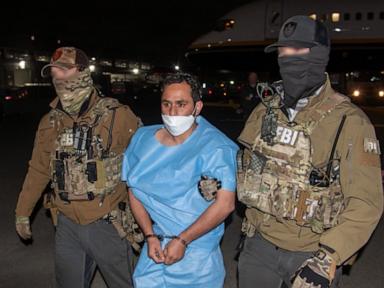
An Afghan man arrested last year in connection with the Abbey Gate suicide bombing at the Kabul airport during the U.S. withdrawal from Afghanistan was sentenced.
 ABC News16 Sept
Country: Afghanistan Source: UN Department of Political and Peacebuilding Affairs Kabul, Afghanistan Georgette Gagnon, Deputy Special Representative of the Secretary-General for Afghanistan Mr. President, Last month, the de facto authorities marked the fifth year of their return to power. They projected confidence, highlighting nationwide control, improved security, infrastructure development, and economic stabilization efforts as evidence of their success. They also launched an initiative to improve institutional openness and accountability. These developments are encouraging. They are occurring, however, in a context of no progress on issues that are of profound concern to the Afghan people and the international community: the severe restrictions on women and girls, exclusionary governance, a human rights crisis, and the continued presence of terrorist groups that threaten Afghanistan, the region, and international peace and security. In line with my last briefing to this Council, we assess that the de facto authorities face no significant armed or political threat. However, key risks to the country’s stability are accumulating and mainly stem from the de facto authorities’ own policies. Recent events in Badakhshan province illustrate these risks. While the armed clashes, as detailed in the Secretary-General’s report, did not threaten de facto authority control, they show what can happen when local communities are excluded from decision-making, resource-sharing, and economic opportunity. During my recent visit to Badakhshan, people told me they seek opportunities, basic services, education, and a future for their children, not exclusion. Over the past three months, events in Herat province remained similarly concerning. UNAMA documented arrests of women and girls related to strict enforcement of the de facto authorities’ dress code. Subsequent protests were met with the excessive use of force. The de facto authorities continue to carry out arrests of women, including over the past week, for alleged violation of the dress code. Across the country, UNAMA also documented mounting pressure on minority communities, media outlet closures, and arrests and intimidation of journalists. These incidents are part of the broader trend of coercive social regulation that is alienating many communities. UNAMA is engaging with the de facto authorities on these critical concerns in Kabul and through our field offices. Mr. President, This month UNAMA released a report on the experiences of victims of Afghanistan's decades-long conflict. Ninety-five per cent of people we interviewed in Afghanistan reported continued psychological and emotional harm, including depression, anxiety, trauma, and flashbacks. Many are still living with disability, chronic pain and loss of livelihoods. The findings remind us that peace is not only the absence of armed conflict. Sustainable peace requires dignity, inclusion, opportunity, and hope. Many Afghans tell us that the last five years of relative stability have provided a welcome breathing space. Yet they also tell us they are suffering under the rigid social policies of the de facto authorities and from Afghanistan's fragile economic and humanitarian situation. While Afghanistan has maintained a degree of macroeconomic stability, this does not equate to recovery. Economic growth has not kept pace with a rising population or made up for declining aid. Per capita income has dropped by 5.6 per cent, and exports are down. Afghanistan remains heavily dependent on imports, with border disruptions and wider regional instability contributing to weakened household purchasing power. Food insecurity and malnutrition present a serious concern. UNICEF reports that some 3.7 million children are suffering from deficient malnutrition, including some one million children experiencing severe acute malnutrition. The 2026 Humanitarian Needs and Response Plan is only 30 per cent funded. Humanitarian organizations are being forced to make hard choices on where they operate, whom they can reach and which services they can maintain. Health facilities, nutrition centers, women’s protection services and other essential programmes have closed or scaled back due to funding cuts. At the same time, Afghanistan continues to experience an extreme demographic and socioeconomic shock. This year alone, nearly 1.2 million Afghans have returned from Pakistan and Iran, with total returns reaching 6.5 million since 2023. Without sustained support for returnees and host communities, competition over scarce resources risks fueling grievances, increasing displacement, and promoting instability. The de facto authorities’ ban on opium poppy cultivation has been a positive measure with huge decreases in cultivation but risks bouncing back because of the economic pressures. Greater support for alternative livelihoods is crucial as is sustained and principled humanitarian and development assistance for the Afghan people. Mr. President, No discussion of Afghanistan can ignore the continued exclusion of women and girls. The words of an Afghan woman we met in Kandahar represents their experience, and I quote: "If we follow one rule, another one comes next; women wearing hijab are instructed to wear a mask; those wearing masks are told to wear a burqa; those wearing a burqa are questioned about the absence of a mahram; and those accompanied by a mahram are questioned about their relationship with him." By denying women access to education, professions, and public life, the de facto authorities are not safeguarding Afghanistan’s future; they are constraining the talent and productivity needed for post-conflict recovery. This is at odds with their stated vision of a prosperous, self-reliant, and sovereign Afghanistan that can attract international investment. This month marks one year since restrictions preventing Afghan women from accessing UN premises, including national female UN personnel, were enforced. This is a violation of UN principles and a serious operational constraint. Humanitarian actors report difficulty reaching women and girls. Male-only delivery models cannot replace the participation of Afghan women staff, and organizations cannot consult women, assess risks, or verify that assistance reaches those who need it most. Funding cuts are compounding the problem. Nearly three-quarters of Afghan women-led organizations have seen reduced funding over the past year, while more than eighty per cent report increasing needs among women and girls. At a moment when Afghan women face unprecedented restrictions, international support mechanisms for them are decreasing. Across Afghanistan, Afghan women tell us that engagement, assistance and support from the international community represent what they call “points of hope”. We urge international partners to prioritize support for Afghan women and girls. Above all, we again call on the de facto authorities to end all restrictions on women and girls. Mr. President, Relations between Afghanistan and Pakistan remain another matter of serious concern. The effects of sporadic hostilities and the almost year-long border closure are taking an increasing toll on civilians, communities and businesses. UNAMA continues to encourage de-escalation and dialogue to resolve differences, including on the presence of terrorist groups in Afghanistan, as reported by the Sanctions Monitoring Team. We welcome ongoing regional mediation efforts. Mr. President, As the High Commissioner for Refugees and the UNDP Administrator cautioned during their joint visit to Afghanistan in July, developments in Afghanistan do not necessarily stay in Afghanistan. Instability, increased displacement and out-migration, radicalization, and growing insecurity have regional and international consequences. Sustained international engagement, including through the Doha Process, remains essential. Currently, the Doha Process is the multilateral framework through which such engagement is occurring aimed at Afghanistan’s reintegration into the international community based on compliance with international obligations and commitments. This structured engagement among the de facto authorities, the international community and a wide range of Afghan stakeholders has identified key issues and positions, expanded dialogue and, in some areas, built confidence. The main obstacle to progress is the de facto authorities’ preference for bilateral approaches over multilateral engagement, which they view as undermining their claims of sovereignty. They continue, however, to participate in Working Groups on counternarcotics and the private sector and engage on some key political issues. What is now needed is a clear indication from the de facto authorities’ of their willingness to address the wider concerns of the international community. To this end, the de facto authorities can take steps toward inclusive governance and lifting of restrictions on women and girls, and show they are meeting their counterterrorism commitments. Member States can reinforce that Afghanistan’s reintegration into the international system is possible through concrete, balanced, cooperative steps that begin to address the key issues preventing reintegration. Mr. President, We remain confident in the value of principled and pragmatic engagement. It sustains dialogue on the key issues and concerns, maintains influence, reduces risks, creates opportunities for progress, and, critically, supports the needs and aspirations of the Afghan people. Thank you.
ReliefWeb•UN Department of Political and Peacebuilding Affairs16 Sept
The wondrous paintbrush of Cartoon Saloon has now reached the Latino community of Brooklyn. The acclaimed Irish studio gained international prominence (and multiple Oscar nominations) with local folktales in gorgeous animated form (“The Secret of Kells,” “Song of the Sea,” “Wolfwalkers”), and tackled an Afghanistan-set story in 2017’s “The Breadwinner.” Now, they’re once again pushing […]
 Variety•Carlos Aguilar16 Sept
Countries: Switzerland, Afghanistan, Eritrea, Ukraine, World Source: UN High Commissioner for Refugees Please refer to the attached file. Close to 25,800 asylum applications were registered in Switzerland in 2025, down from 27,700 in 2024. UNHCR is engaged in the development of a new Asylum Strategy 2027. UNHCR works with authorities and NGOs to further strengthen the quality of the asylum system and the socio-economic inclusion of refugees. Switzerland remains a strong supporter of UNHCR, both as host of UNHCR’s headquarters and a top donor, providing flexible and predictable multi-year funding.
ReliefWeb•UN High Commissioner for Refugees16 Sept
Countries: Afghanistan, Djibouti, Pakistan, Somalia, Sudan, Yemen Source: World Health Organization Please refer to the attached Infographic.
ReliefWeb•World Health Organization16 Sept
Countries: Germany, Afghanistan, Syrian Arab Republic, Türkiye, Ukraine, World Source: UN High Commissioner for Refugees Please refer to the attached file. Germany has a long tradition in refugee protection and ranks among the largest refugee hosting countries globally. Germany maintains a functioning protection system for forcibly displaced and stateless people and supports the implementation of the Global Compact on Refugees. Germany is one of the largest humanitarian donors globally. In 2025, Germany was UNHCR’s third largest and most flexible donor. HIGHLIGHTS Germany as a country of asylum Over 168,000 asylum applications were lodged in 2025. First applications went down to 113,000 which is a reduction by over 50% as compared to the previous year. The number of repeat applications was unusually high (over 55,000), following a surge of applications submitted by Afghan women present in Germany in reaction to the CJEU judgment on the persecution faced by women in Afghanistan. Almost 311,000 decisions were adopted by the authorities, with more than 87,000 applicants granted refugee status, subsidiary or humanitarian protection. Moreover, more than 1.25 million refugees from Ukraine held temporary protection status in Germany at the end of the year.
ReliefWeb•UN High Commissioner for Refugees16 Sept
Countries: Belgium, Afghanistan, occupied Palestinian territory, Syrian Arab Republic, Ukraine Source: UN High Commissioner for Refugees Please refer to the attached file. According to the Immigration Office, Belgium has received 34,439 applications for international protection in 2025, a 13 per cent decrease compared to 2024. The total recognition rate at first instance stands at 30 per cent. According to the Immigration Office, between January - November 2025, a total of 8,157 people were granted temporary protection, bringing the number of beneficiaries of temporary protection in Belgium to 99,963. The reception system remains overstrained in Belgium and thousands of asylum-seekers have been squatting or sleeping in the streets. UNHCR continues to call for adequate reception conditions. HIGHLIGHTS Family reunification In June 2025, UNHCR issued comments on the draft law on family reunification, noting that the proposed changes risk significantly limiting access to family reunification for beneficiaries of international protection. EU Pact on Asylum and Migration UNHCR has analysed the impact of the EU Pact on Migration and Asylum at national level and is engaged with authorities and civil society on its implementation, highlighting the importance of upholding international protection standards.
ReliefWeb•UN High Commissioner for Refugees16 Sept
Countries: Slovenia, Afghanistan, Algeria, Morocco, Syrian Arab Republic, Ukraine, World Source: UN High Commissioner for Refugees Please refer to the attached file. Slovenia continues to offer a generally welcoming environment for forcibly displaced individuals, ensuring access to territory, protection, social services, and employment, in line with its Global Refugee Forum (GRF) pledges. In October 2025, Slovenia became a member of the Global Alliance to End Statelessness, a broad international coalition of governments, UN agencies, civil society and other partners committed to ending statelessness worldwide. UNHCR participates in Slovenia’s inter-ministerial working group on the EU Pact on Migration and Asylum, and contributes to legislation and training for its protection-sensitive implementation. HIGHLIGHTS Complementary Education Pathways On 14 November 2025, two refugee students arrived in Slovenia to begin their Master’s studies at the EuroMediterranean University (EMUNI) in Piran, marking the latest milestone in Slovenia’s Complementary Education Pathway, supported by UNHCR. Now in its second year, the initiative offers a safe route for refugees to pursue higher education in Slovenia, while ensuring their international protection needs are fully met upon arrival. Capacity-building for interpreters In November 2025, UNHCR and the Slovenian Ministry of the Interior organised two practical workshops for around 20 interpreters working in asylum procedures, focusing on professional standards for interpreting including confidentiality, impartiality and clear role boundaries as well as communication with vulnerable applicants.
ReliefWeb•UN High Commissioner for Refugees16 Sept
Countries: Ireland, Afghanistan, Syrian Arab Republic, Ukraine, World Source: UN High Commissioner for Refugees Please refer to the attached file. Arrivals: a total of 13,162 people applied for international protection in Ireland in 2025, representing a decrease of nearly 30 per cent compared with 2024. In addition, Ireland welcomed 290 Syrian refugees through resettlement from Lebanon and Jordan. CJEU Ruling: In its judgment on reception conditions in Ireland, the Court of Justice of the European Union found that the State cannot invoke force majeure to justify failing to provide asylum‑seekers with their basic material needs. The ruling aligns with UNHCR’s submission. International Protection Bill: In January, the Minister for Justice received Cabinet approval to publish the International Protection Bill 2026, which will replace the International Protection Act 2015 and reform Ireland’s asylum system in line with the EU Pact on Migration and Asylum.
ReliefWeb•UN High Commissioner for Refugees16 Sept
Countries: Afghanistan, Iran (Islamic Republic of), Pakistan Source: International Organization for Migration Please refer to the attached Infographic.
ReliefWeb•International Organization for Migration16 Sept
Country: Afghanistan Source: World Food Programme Please refer to the attached file. KEY HIGHLIGHTS Major Economic Developments Economic Growth & Household Welfare: Afghanistan’s economy continues to show modest growth, supported by domestic demand and the return of large numbers of Afghans, with agriculture, industry, and services contributing to economic activity. However, the pace of recovery remains insufficient to keep up with population growth, limiting improvements in per capita income and household purchasing power. Limited income opportunities, widespread poverty and subsistence insecurity, and gaps in access to basic services continue to constrain household resilience and reduce the ability to absorb food-price, employment, and other market shocks. Trade & External Vulnerability: Domestic markets in Afghanistan are highly vulnerable to regional trade disruptions and global price fluctuations, given the country's reliance on imports for major food and non-food items. Rising global commodity prices and geopolitical uncertainty, alongside continued disruptions to regional trade routes and reliance on alternative corridors, remain key risks to price stability. These cost pressures disproportionately affect low-income households, which spend a large share of their income on essential goods and have limited capacity to absorb price shocks. Exchange Rate: The Afghani appreciated modestly against the US dollar in August, with the monthly average reaching AFN 65.4/USD. The currency was 4.5 percent stronger than a year earlier and 12 percent stronger than its three-year average, supporting relative exchange-rate stability, providing some protection against imported inflation; however, the benefit was partly offset by higher transportation costs, market instability and elevated international commodity prices. Inflation Rate: Inflationary pressures remained elevated, with July 2026 headline inflation at 7.5 percent year-on-year and food inflation at 7.0 percent. Non-food inflation remained higher at 7.9 percent, driven by persistent increases in health, housing and transportation costs. Continued import and transport cost pressures, alongside elevated housing and healthcare expenses, point to sustained pressure on household living costs. Key Market Pressures: Diesel prices increased 3.3 percent in August to AFN 76.7 per litre, standing 15 percent above last year. Fertilizer prices remained substantially above last year, with Urea 35 percent higher and DAP 15 percent higher, maintaining pressure on agricultural production costs.
ReliefWeb•World Food Programme16 Sept
Sanju Samson's half century helps India seal three-match series with wins in first two games.
 Al Jazeera15 Sept
If this chart is correct next stop is near 8 % which could take several years to play out. The chart really looks like Bull Flag which makes sense since we were at a historical low for the interest rate. It is loco to think that interest rate could go that high but in the face of history it makes sense. Also since oil prices and interest rates are so correlated does this mean that oil prices will spike dramatically from here ? The war in Afghanistan was 20 years long. Does this mean we will have disruption for 20 years in Iran. If Iran is fighting an existential war then this could be the case. The IRGC has stated it will wait out the Trump administration so we are looking at least 2 more years of war. I think that is conservative. What do you think ? will rate go to 8% in the following years or drop from there ? Tell me what you think !!

Countries: Kazakhstan, Afghanistan Source: UN High Commissioner for Refugees Please refer to the attached file.
ReliefWeb•UN High Commissioner for Refugees15 Sept
Countries: Iran (Islamic Republic of), Afghanistan Source: UN High Commissioner for Refugees Please refer to the attached file.
ReliefWeb•UN High Commissioner for Refugees15 Sept