Asiapage 2

Place · 361 articles
Share

Coverage, page 2

page 2 of 19

El Nino threatens Asia with drought, higher global food prices

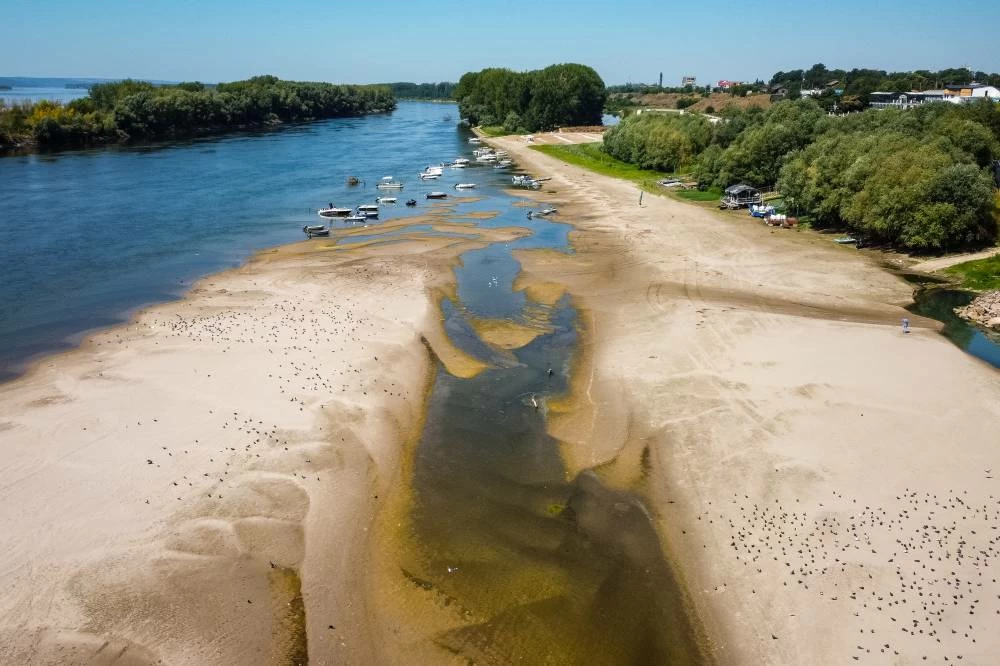
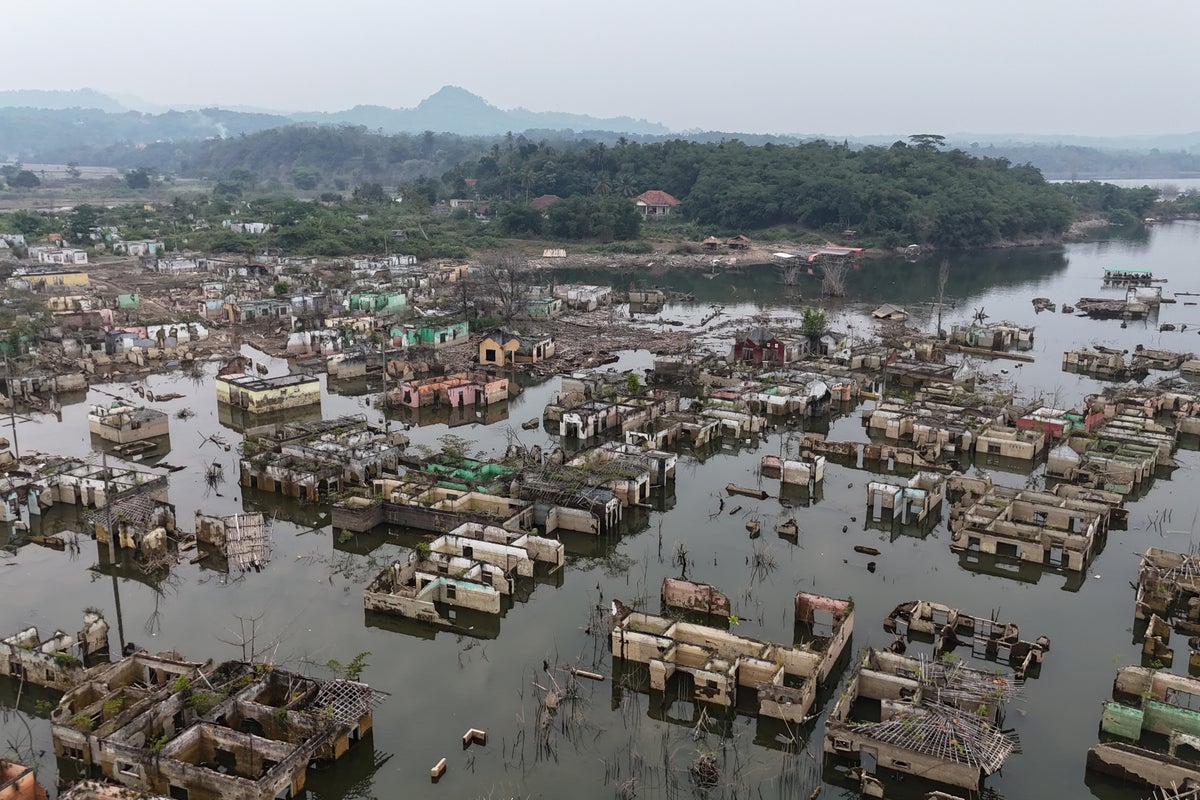
BANTEN, Indonesia : All signs are pointing toward a record-breaking El Nino this year, which experts say may cause severe drought in Asia and other extreme weather across the world, threatening food security for millions of people. El Nino is part of a natural climate cycle of warming ocean temperatures, but this year’s is expected to reach new extremes of drought, heat waves, flooding and other climate-related disruptions in South America, Africa and Asia. Southeast Asia is one of the world's most climate vulnerable regions. It's already beset by an energy crisis triggered by the war in Iran. El Nino is already fueling wildfires across farmland, depleting water supplies for major cities and hurting fish catches in the region. Asian governments that have been drawing on their financial reserves to mitigate the war's ripple effects of higher energy costs and scarce fertilizer supplies have less capacity to cope with this year's intensifying El Nino, which is forecast to peak in December. The phenomenon may amplify other crises in Southeast Asia, according to Paul Teng, with Singapore’s ISEAS-Yusof Ishak Institute, who said, "El Nino is only compounding all the other problems that we see.” During El Nino years, sea surface temperatures in the Pacific Ocean are warmer than usual. This happens every few years and often alters global weather patterns. This year, the seas already are hotter than average, with global oceans hitting new temperature records in August as the climate warms, said Kareff Rafisura, chief of the Disaster Risk Reduction Division at the U.N. Economic and Social Commission for Asia and the Pacific. This intensifying El Nino may be the "strongest in living memory,” according to the United Kingdom’s national weather and climate service. Similarly, the U.S.' National Oceanic and Atmospheric Administration said there is a 69% chance that this will be the strongest recorded El Nino since record-keeping began in 1950. El Nino's impact will be felt differently across regions, but it is expected to jeopardize food security worldwide. It could push at least 49 million more people into acute food insecurity by the end of 2027, according to the United Nations’ World Food Program. The problem will be worst in parts of Central America and southern Africa, with significant effects also anticipated in eastern Africa and South and Southeast Asia, warned the food agency. In Southeast Asia, wildfires are torching forests and peatlands in Indonesia, sending up plumes of toxic haze. The water level of a major reservoir supplying the bustling capital city of Jakarta - the world's biggest metropolis - is dropping inch by inch. As the lake dries, the ruins of one of 11 villages that had been inundated by the reservoir have emerged, as alarm grows over the need for alternative water supplies for the city of 42 million. "I would have rather not moved. There were plenty of livelihood opportunities here,” said Hussen, who only uses one name, as he ferried people across the receding reservoir. This is just the beginning, said Erma Yulihastin with Indonesia's Research Center for Climate and Atmosphere, who warned El Nino has only just begun its "super phase.” Less rainfall and hotter temperatures are putting pressure on Southeast Asia's fisheries, an essential source of protein. It's a pressing problem along the Mekong, a river basin that flows through six nations and is being disrupted by mining and construction of hydropower dams. "It’s one punch after another,” said Zeb Hogan, with the University of Nevada, Reno, who runs the research and conservation project, Wonders of the Mekong. "If the river doesn’t catch a break, we will reach a point where it’s no longer going to sustain people in the way that it always has.” Lower flows are especially hard on communities along the Mekong that depend on predictable water levels for fishing and farming, said Kongmeng Ly, with the Mekong River Commission, an intergovernmental group for Cambodia, Laos, Thailand and Vietnam. Southeast Asia's wet season generally runs from June to October, when rains usually replenish reservoirs, cool overheated cities and supply water for irrigation ahead of the next planting season. Drought may force farmers to delay planting, reduce acreage or switch crops entirely, said Rafisura, with the U.N. "Agriculture is definitely on the front line,” she said. Cutbacks in staple crops like rice and palm oil can have global impacts. The world's top three exporters of rice - India, Vietnam and Thailand - are among the nations most likely to be hit hard by El Nino this year. North of the Thai capital Bangkok, rice farmers like 55-year-old Boonmark Marksuuk are already facing tough choices. Apart from pricier fuel and fertilizer because of the war, he's spending most of his days pumping water into his rice fields because he no longer trusts the rain. El Nino is also bearing down on Indonesia and Malaysia, suppliers of about 85% of the world’s palm oil, which is used in everything from cookies and lipstick to toothpaste and laundry detergent. Malaysia’s prime minister has ordered its Ministry of Agriculture and Food Security to find ways to mitigate El Nino’s impact, which is forecast to hit Malaysia hardest in November. In Indonesia, farmers rely on rain to dissolve fertilizers into the soil to avoid burning the plants, explained Eddy Martono, chairman of the Indonesian Palm Oil Association. "If it doesn’t rain, everyone will definitely stop fertilizing,” which will hurt national production, he said. While the total economic fallout of an extreme El Nino is hard to calculate, losses from past events have reached trillions of dollars, according to HSBC’s Global Investment Research, which warns the numbers could be even bigger this time. Analysts at the investment bank Goldman Sachs estimate this El Nino could push global food commodity prices up more than 15%. "Whatever happens to agriculture really determines whether people stay below or just slightly above the poverty line,” Rafisura said. "Coming back to Southeast Asia, whatever happens here, the extent to which countries can protect production levels, will have global impacts.”
MBMobile BusinessAssociated Press22 Sept

World leaders address climate crisis before UN meet amid record-breaking El-Niño

Prime ministers of Australia and Iceland discuss effects on their countries even as some shy away in face of war and inflation World political leaders are descending on New York for the UN general assembly and some of them are putting the climate crisis on the agenda as they spoke on Monday at the start of the city’s annual Climate Week. This year’s Climate Week – which runs alongside UNGA – comes after months of extreme heat in large parts of the world including Europe and the US, wildfires in Africa, flash flooding in Asia and a record-breaking El Niño . Continue reading...

The GuardianThe GuardianSara Sneath in New York and Oliver Milman21 Sept
R

World: ASG Khiari's remarks at the Gulf Cooperation Council Side Event on Challenges Related to Non-State Armed Groups [as delivered]

Country: World Source: UN Department of Political and Peacebuilding Affairs New York, USA Khaled Khiari, Assistant Secretary-General for the Middle East, Europe, the Americas, Asia and the Pacific Your Excellency Mr. Jasem Mohamed Albudaiwi, the Secretary-General of the Gulf Cooperation Council. Excellencies, Distinguished guests, Thank you for the opportunity to participate in this timely event. Non-State Armed Groups are a widespread challenge to States in every geographic region. More than 200 million people are estimated to live in areas they control or contest. In many contexts, armed groups can exert significant influence over security, governance, and economic opportunity. Their presence can threaten communities, fuel crime, prolong conflict, and challenge state institutions. In some settings, multiple armed groups can operate simultaneously. New, inexpensive, and readily available technologies allow even small groups to cause disproportionate harm. For example, drone use has expanded rapidly, and over 80 percent of armed groups are estimated to have access to drone technology. Meanwhile, social media enables groups to spread misinformation and expand their reach and influence. Understanding how to address the challenges posed by these entities -- while upholding international law, state sovereignty, territorial integrity, and national ownership -- is an essential component of conflict prevention, resolution, and peacebuilding. State responses require comprehensive whole-of-government approaches and the coordination of political, security, legal, and administrative efforts. International support can be crucial where national capacity or resources are limited. Effective cooperation with sub-national authorities is especially important. They are often closest to affected communities, particularly where state presence is limited. At the international level, cooperation between States is essential, particularly where armed groups operate across borders, launch cross-border attacks, or disrupt trade routes. Few regions have experienced these challenges as directly as the Middle East, where non-state armed groups such as the Houthis and Hezbollah are undermining the authority of internationally recognized governments and contributing to wider risks to regional and international peace and security. More broadly, efforts to prevent and resolve regional and intra-state tensions can reduce external support that enables armed groups to sustain conflict. As part of these efforts, analyzing the interests of armed groups is necessary, even when they appear irreconcilable with those of governments and other stakeholders. This can help identify practical steps to reduce violence, facilitate humanitarian access, restore services, and advance sustainable political and legal outcomes. This is particularly crucial where armed groups are capable of sustaining prolonged asymmetrical violence, causing grievous human suffering and destruction, undermining territorial integrity and state authority, and contributing to broader regional and international instability. Engagement with Non-State Armed Groups will rarely be straightforward. Yet, we cannot be daunted by the challenges. We need comprehensive strategies with coherent objectives: to reduce violence and other harmful impacts in the short term, while creating pathways to long-term solutions. Such efforts are most effective when they are nationally owned and focused on sustainable peace, even if progress is incremental. National efforts can be reinforced if we approach this challenge collectively, through international cooperation and coordinated action. This allows us to draw on the complementary strengths of States, regional organizations, the United Nations and local actors. Regional and sub-regional organizations, like the Gulf Cooperation Council, have an important role to play: coordinating diplomatic efforts, supporting technical assistance to national institutions that serve and protect all communities, and investing in the disarmament and reintegration of former combatants and the recovery of conflict-affected communities. The United Nations stands ready to support Member State initiatives to address challenges posed by non-state armed groups, including efforts to strengthen effective and inclusive state institutions, reinforce legitimate state authority and advance solutions that contribute to sustainable peace and stability. Thank you.

ReliefWebReliefWebUN Department of Political and Peacebuilding Affairs21 Sept

Asian shares rise amid optimism around US-Chinese talks on trade and AI; oil prices fall – business live

Talks between officials in New York come ahead of summit between Donald Trump and Xi Jinping later in the week Good morning, and welcome to our rolling coverage of business, the financial markets and the world economy. Stock markets in Asia have risen led by technology shares, lifted by optimism around talks between the US and China on trade and artificial intelligence, while oil prices declined. 2030 is not going to be the end of the world. There is 0% chance that’s going to be the end of the world. Scaring people is unnecessary. It is irresponsible. Scott Bessent and Chinese vice premier He Lifeng have already laid the groundwork [for the Trump-Xi meeting] in New York, with trade, investment and artificial intelligence on the table, but this is not a market waiting for a grand bargain. It is waiting to see whether both sides can keep the next trade grenade in the drawer. 9.30am BST: UK S&P Global Consumer sentiment index 1.30pm BST: US Chicago Fed National Activity Index for August 2.10pm BST: IMF managing director Kristalina Georgieva speaks at the IMF Legal Department 80th anniversary conference in Washington Continue reading...

The GuardianThe GuardianJulia Kollewe21 Sept

Europe Outbids Asia for LNG as Prices Surge 150%

Liquefied natural gas prices on the spot market are moving higher as demand picks up seasonally and Asian importers are souring on the fuel. European buyers are stepping up purchases, however, despite the price. They have no choice. Asian demand for liquefied gas is set to decline this month—and over the year—according to analysts. September flows of LNG into Asian countries are estimated at 20.09 million tons by Kpler, which would be down from 22.27 million tons a year ago, and 22.25 million tons a month ago, Reuters’ Clyde Russell…

OilPrice.comOilPrice.comIrina Slav19 Sept

SBI Invests in Singapore’s Dtcpay to Scale Stablecoin Rails

SBI Group is backing Singapore-based Dtcpay as the regulated payments company expands its stablecoin merchant network and product suite. The investment extends Dtcpay’s Series A to $25 million and deepens SBI’s digital asset push across Asia. SBI Extends Dtcpay’s Series A to $25 Million Regulated stablecoin payment access is set to expand across Asia after […]

Bitcoin.com NewsBitcoin.com NewsKevin Helms19 Sept
  • neutral toward SBI Holdings · 96%