Asiapage 4

Place · 361 articles
Share

Coverage, page 4

page 4 of 19

World: State of Global Water Resources 2025

Countries: World, Argentina, Armenia, Australia, Chile, Cuba, Democratic Republic of the Congo, Djibouti, Dominican Republic, Eritrea, Ethiopia, France, Haiti, Indonesia, Iran (Islamic Republic of), Jamaica, Jordan, Malaysia, Nigeria, Pakistan, Philippines, Somalia, South Africa, Sri Lanka, Syrian Arab Republic, Thailand, Türkiye, United States of America, Viet Nam Source: World Meteorological Organization Please refer to the attached file. WMO: Recent water trends have serious future implications The WMO State of Global Water Resources report is a comprehensive science-based annual assessment of the hydrological cycle and extreme events in 2025 and over the past five years. 2025 was one of driest years for river discharge in 35 years Past 7 years have seen abnormal river flows Water storage on Earth’s land surface has decreased in past 10 years Widespread glacier loss across all regions for 4th consecutive year Asia and Africa are the regions most affected by water-related disasters Water data availability has improved, but gaps remain in hard hit areas Geneva, Switzerland, 17 September 2026 (WMO) – Rivers across the globe in 2025 had one of the driest years in more than three decades, according to a new report from the World Meteorological Organization (WMO). It shows a continuation of the long-term decline in Earth’s freshwater storage and in glacier retreat - trends with serious implications for people and economies in the future. The WMO State of Global Water Resources Report shows that the water cycle has become more erratic and unpredictable, swinging between too little or too much. The past seven years have seen the fewest rivers with “normal” flows since 1991. Asia and Africa together accounted for at least half of all recorded water-related extreme events and more than 80% of reported associated deaths over the past five years, it says. The report provides a comprehensive, science-based assessment of the entire water cycle loop, including river discharge, groundwater, evapotranspiration, land water storage, and snow and ice, as well as high-impact events. It covers the year 2025 and summarizes findings of the past five years since it was first published. Some parts of this cycle are fast – such as precipitation, river flow, soil moisture – they respond to weather within days or weeks. Others, like groundwater, glaciers and seasonal snowpack, are slow, they accumulate or deplete over seasons to decades or longer. Traditionally these slow reserves have acted as the planet's savings account: a buffer that absorbs bad years so that a single drought or a single dry season does not translate directly into a water crisis,” said WMO Secretary-General Celeste Saulo. “We are depleting that savings account. Global terrestrial water storage has shown a declining trend since 2014–2016 - a persistent, decade-long signal. For the fourth consecutive year, every major glaciated region on Earth lost ice mass. Groundwater tells a similar story: nearly two-thirds of monitored wells worldwide showed conditions outside the historical norm in 2025, and the balance shifted further toward deficit compared with 2024, not toward recovery,” said Celeste Saulo. “At the same time, we are seeing more water-related disasters. The strengthening El Niño will increase the risk of drought in some areas, and flooding in others,” she said. The report highlights some major areas of concern: 2025 was one of driest years for river discharge globally in 35 years, with below-normal flows over 36% of global basin area. This is based on data from simulations from 13 global hydrological models, driven by observed weather data. For the seventh year in a row, the number of river basins with “normal” conditions was in a clear minority: ranging between 34-38%, compared to the average of 46% between 1991-2020, according to the report. Terrestrial water storage – the total amount of water stored in groundwater, lakes and rivers, soil moisture, vegetation and ice and snow – has been in decline since mid-2010s. 2025 marked the fourth consecutive year with widespread glacier loss across all regions – leading to short term hazards like floods and long-term water insecurity. Between 2023-2025 glaciers lost mass in each reporting year with cumulative global glacier mass loss at 1400 Gigatonnes of water. This is roughly equal to the water required to fill about 560 million Olympic-sized swimming pools, or about one third of annual freshwater withdrawals. In each of the past five years, National Meteorological and Hydrological Services around the globe reported record-breaking floods and droughts. Some places have had no recovery time between one event and the next. “Water respects no borders. A river basin's water balance depends on what happens in another country. A glacier's retreat in one country reshapes water availability for populations hundreds of kilometers downstream. This is precisely why we need shared data, shared standards, and shared early warning — the exact function WMO exists to perform,” said Celeste Saulo. Dozens of experts from National Meteorological and Hydrological Services, data centres, researchers and partner institutions shared in situ observations, model outputs and space-based data and contributed to the report, which has expanded from three to 15 hydrological variables since the first edition in 2021. Country coverage has greatly expanded. However, Africa and Asia are still among the least represented regions in terms of hydrological observations in the report, even though they are most affected by extremes. 2025 was one of the warmest years on record. A weak La Niña emerged towards the end of the year after neutral conditions, and there was a predominantly negative Indian Ocean Dipole, which influenced precipitation. River basins Across the five reporting years (2021-2025), recurring below-normal river discharge was observed in major parts of the Amazon and La Plata basins, North America, Central and East Africa, Central Asia and the Middle East. Annual river discharge in 2025 was above-normal to much-above-normal across South and South-East Asia and parts of northern South America. In Africa, there were above-normal flows in the Senegal, Niger, Lake Chad, Orange and Limpopo basins, but much-below-normal discharge in the Nile, Congo and Zambezi basins. Below-normal to much-below-normal river discharge affected several major regions, including much of North America, the La Plata and São Francisco basins of South America, Eastern European basins, the Middle East and Central Asia. Reservoir and lake levels followed similar geographical trends as for river basins. African lakes were largely much above normal, with Kariba a notable exception. Terrestrial water storage Terrestrial water storage shows a persistent negative trend since 2014-2016 with increasing area under below-normal conditions. Between 2021-2025 below-normal terrestrial water storage repeatedly affected the south-western United States, Patagonia and the subtropical Andes, the Ganges–Indus headwaters, North Africa, the Middle East, Central Asia and eastern China, while persistent positive anomalies occurred in parts of sub-Saharan Africa, the Sahel and the Tibetan Plateau. In 2025, it was below-normal in northern and southwestern North America, Patagonia, Eastern Europe, the Middle East, Central Asia, eastern Brazil, northern India, parts of Northern Europe, the Russian Federation, China and Northern Africa. La Plata in South America showed signs of partial recovery from the long-term drought. Much-above-normal storage continued from 2024 into 2025 in Central and Southern Africa. Groundwater levels Persistent groundwater deficits were observed during 2022–2025 in parts of the Americas, Europe, the Middle East, India, southern Africa and Australia. Persistent and widespread below-normal to much-below-normal groundwater levels were observed across Central and Eastern Europe, central United States, parts of Mexico, northern and central Chile, northeastern and central-western Brazil, northern South Africa, northwestern India and parts of southern Australia, pointing to a cumulative depletion with multi-year drying trend. There were above-normal to much-above-normal conditions include parts of France, much of Northern Europe, the southeastern United States, large parts of South Africa, South-East Asia, and eastern Australia. Snow cover and glaciers Snow conditions were below normal across Europe in 2025, whilst the Russian Federation and North America showed strong regional contrasts. In the hydrological year 2025, glaciers lost 408 (±132) Gigatonnes of mass, equivalent to 1.1 (±0.4) mm of sea-level rise. It marked the fourth consecutive year in which every major glaciated region recorded a net loss. Central Asia, South Asia West, Russian Arctic, Iceland, Western Canada and USA all recorded annual mass balances that ranked among the three most negative years on record for that region. Some regions dominated by smaller glaciers, such as the Caucasus, Western Canada and the USA, and Central Europe may already have reached “peak water conditions,” the threshold where the glacier reaches its maximum runoff due to melting. Extreme events From 2021-2025, South America’s La Plata and Amazon basins, the Middle East and the Greater Horn of Africa experienced persistent multi-year drought conditions, while severe floods repeatedly affected West and Central Africa and South-East Asia. Asia and Africa were the regions most affected by extreme hydrometeorological events in 2025, with several African countries experiencing major flooding for two (Nigeria) or three consecutive years (Democratic Republic of the Congo). South and South-East Asia was hit by compound tropical cyclones and intense monsoon, leading to up to 3 600 deaths across affected countries - Sri Lanka, Pakistan, Viet Nam, Indonesia, Thailand, Malaysia, the Philippines. Assessing the economic losses associated with water-related disasters remains challenging in many countries. Jamaica reported that hurricane Melissa resulted in losses equivalent to 41% of GDP. Cyclone Ditwah cost Sri Lanka around 4% of GDP. Severe drought gripped East Europe, the Mediterranean, and Middle East and also returned to the Greater Horn of Africa after one of the driest October–December seasons on record linked to La Niña and a negative Indian Ocean Dipole. Notes to Editors The WMO State of Global Water Resources 2025 report includes scientific contributions from dozens of WMO Members, partners and scientists. Full details of the datasets, references and institutions involved are available in the report. The WMO Secretariat wishes to thank everyone who dedicated their time and expertise to this report. The World Meteorological Organization is the United Nations System’s authoritative voice on Weather, Climate and Water. For further information, please contact: Clare Nullis, WMO media officer, cnullis@wmo.int, +41 79 709 13 97 Global Communication and Engagement Media Contact media@wmo.int

ReliefWebReliefWebWorld Meteorological Organization17 Sept
China: New Border Decree Curtails Right to Leave

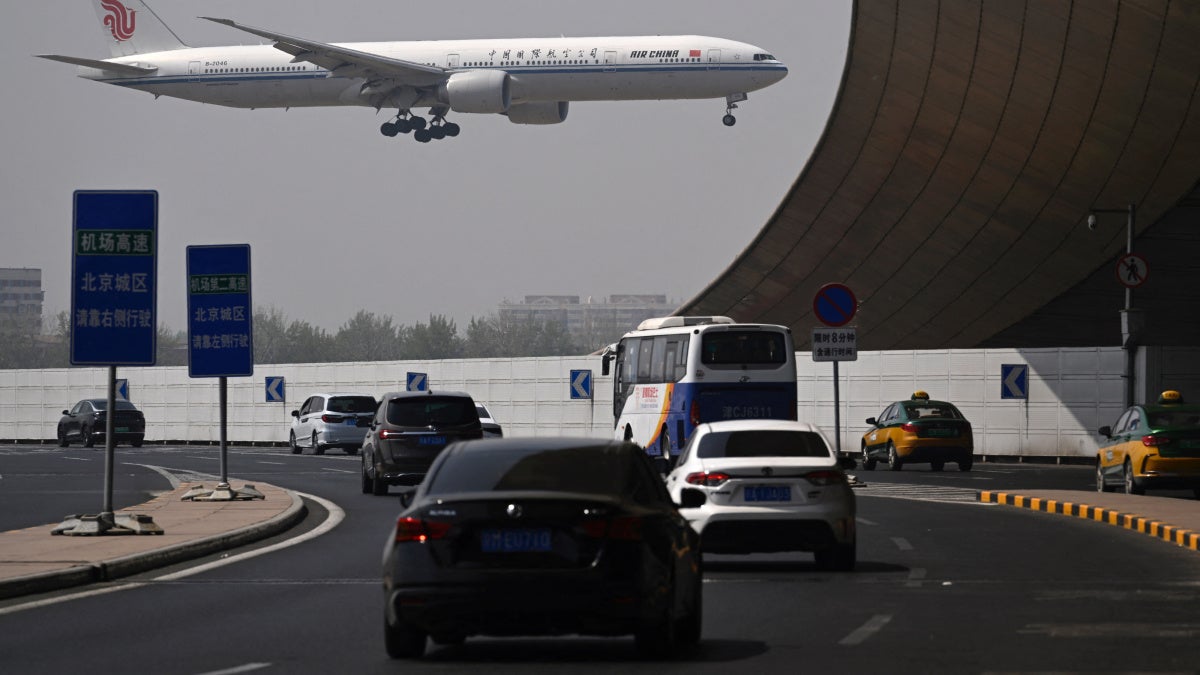
Click to expand Image An Air China Boeing 777-300 at Beijing Capital International Airport, April 10, 2025. © 2025 Wang Zhao/AFP via Getty Images (New York) – A new Chinese government decree expands the discretion of administrative authorities to arbitrarily bar people from leaving China, violating the internationally protected right to leave a country, Human Rights Watch said today. The State Council’s 19-article Regulations on Exit-Entry Administration, known as Decree No. 841, took effect on September 15, 2026. The new decree restricts nationals and non-nationals from leaving China for a range of ill-defined reasons of national security and risk. However, under international human rights law, any legal restrictions on leaving a country must be necessary and proportionate for legitimate aims. “The Chinese government is tightening its rules to decide arbitrarily who can and cannot leave China, violating the internationally protected right to leave one’s country,” said Maya Wang, deputy Asia director at Human Rights Watch. “The authorities have increasingly subjected human rights defenders and ethnic minorities to restrictions and scrutiny of their international travel, but everyone including foreigners should worry about their ability to leave China.” Many provisions of Decree No. 841 consolidate exit restrictions in China’s Exit and Entry Administration Law, the Passport Law, and other regulations. Article 12(5) of the Exit and Entry Administration Law, for instance, broadly allows the authorities to prohibit citizens who “may endanger national security or interests” from leaving the country. However, the new decree appears to further integrate immigration decisions with a tightening national security regulatory framework. Article 2 of the decree authorizes immigration authorities, “when necessary,” to “dissuade” citizens from traveling to “high-risk” countries or regions when processing travel document applications or at border controls. The decree does not define the criteria for “high-risk” or the standard for when dissuasion becomes “necessary,” leaving decisions to relevant departments’ discretion. Article 3 states that anyone applying to leave China must show that their reasons are “truthful and lawful,” without defining “lawful” travel purposes or specifying what evidence is sufficient. The decree also broadens the grounds for exit bans and, in some cases, allows authorities to withhold notice entirely, violating due process rights. Article 4 gives administrative authorities the power to bar citizens from leaving the country for up to three years if they engage in unspecified “illegal or criminal activities abroad endangering national security or interests.” Article 6 states that people barred from leaving China must ordinarily be notified “in writing of the facts, reasons, legal basis, and available remedies for the ban,” but allows authorities to withhold notice “if disclosure may affect national security or criminal investigations.” The decree also prohibits exit-entry intermediary services, such as immigration advisers, from engaging in vaguely defined “acts that endanger national security or interests.” In addition, article 4 allows administrative authorities to bar nationals from leaving the country when they “violate export control, technology import and export administration…in a manner that may endanger national industrial or technological security.” An official explanation of the new rules says that this is to combat “illegal transfer of technology abroad.” In March 2026, Chinese authorities banned the co-founders of Chinese AI startup Manus from leaving the country, then blocked its acquisition by Facebook. Article 5 also permits the authorities to bar foreigners from leaving the country if they are blacklisted on “the countermeasures list, unreliable entity list, [or] malicious entity list” for having “endangered China’s national sovereignty” and other vaguely defined actions. Chinese authorities have also issued exit bans on specific foreign nationals without justification. In July 2025, the government blocked a US federal employee and a Wells Fargo bank executive from leaving China, though neither had been charged with a criminal offense. Chinese citizens—except those from Xinjiang and Tibetan areas—had largely been able to travel abroad more easily since 2002, when the Ministry of Public Security’s Entry and Exit Administration began an “on demand” system to simplify passport applications. However, over the past decade, the Chinese government has tightened exit controls, including new travel restrictions on religious minorities and human rights defenders. In 2016, authorities in Xinjiang confiscated all previously issued passports as part of a crackdown in the region. While some Uyghurs can now travel abroad, they continue to face severe restrictions. Chinese authorities have also increasingly required government employees to surrender passports for “safekeeping,” requiring official approval for returning them. While such practices have long been common among high-level officials, they have been expanded to lower-level employees, including those at schools, universities, and hospitals. The authorities say the measures prevent graft and deter the leaking of state secrets. The authorities in recent years have required citizens from areas they broadly consider high-risk for online fraud or “unlawful” emigration to submit additional paperwork and obtain multiple government approvals during passport applications. The Universal Declaration of Human Rights states: “Everyone has the right to leave any country,” including their own. The United Nations Human Rights Committee states in a General Comment that governments may only limit freedom to leave when restrictions are “provided by law” and necessary “to protect national security, public order, public health or morals, or the rights and freedoms of others.” Such restrictions must be proportionate to the interest to be protected, and the least intrusive option for achieving specific goals. Chinese legislation that allows authorities to broadly restrict the right of nationals and foreigners to leave the country under vague claims does not meet these standards, Human Rights Watch said. “China’s exit restrictions will further chill expression and academic freedom, increasing self-censorship by Chinese nationals and foreigners fearful of being barred from leaving the country,” Wang said. “Concerned governments should press China to repeal these abusive rules and support their citizens affected by these arbitrary restrictions.”

Human Rights WatchHuman Rights WatchHuman Rights Watch16 Sept

World: Global Weather Hazards Summary, September 17, 2026 – September 23, 2026

Country: World Source: Famine Early Warning System Network Please refer to the attached file. El Niño is strengthening. Abnormal heat continues to threaten parts of northern and eastern Africa, Hispaniola, Central America, and northern South America. Drought is expanding in parts of Central America. South Africa sees flooding. Global Weather Hazards The Global Weather Hazards report anticipates severe weather or climate events in Africa; Latin America and the Caribbean; and the Middle East and Asia. This product provides maps with current weather and climate information; short and medium range weather forecasts (up to one week); and the potential impact on crop and pasture conditions. It does not reflect long range forecasts or food security conditions.

ReliefWebReliefWebFamine Early Warning System Network16 Sept

KBW2026 Unveils Partner Lineup Featuring Global Digital Asset Leaders

Korea Blockchain Week 2026 with Upbit (KBW2026), Asia’s leading digital asset conference, has unveiled its partner lineup, bringing together major players across exchanges, blockchain infrastructure, stablecoins and institutional digital assets. FACTBLOCK, the organizer of KBW2026, announced on September 9 that Upbit, 0G, BRV, Stable, Tria and BitGo will participate as key sponsors of this year’s […]

Bitcoin.com NewsBitcoin.com NewsMedia16 Sept

The 'apex predator' of fires choking south-east Asia - podcast

Indonesia is in the middle of a climate emergency, experiencing what Nasa calls the ‘apex predator’ of wildfires. It’s burning an area three times the size of Singapore and choking millions across south-east Asia with toxic haze. But while Europe’s catastrophic summer made headlines in Australia, the climate emergency happening to one of our closest neighbours is less well known. Kate Lamb joins Matilda Boseley to talk about just how consequential these fires could become Read more : El Niño-fuelled wildfires destroy precious Indonesian forests – in pictures The women saving Borneo: battling fire, patriarchy and super El Niño on Indonesia’s peatland frontlines Indonesian wildfires threaten leading orangutan research site in Borneo Continue reading...

The GuardianThe GuardianPresented by Matilda Boseley with Kate Lamb. Produced by Cheyne Anderson with mixing and sound design by Lu Hill. Molly Glassey is executive producer16 Sept

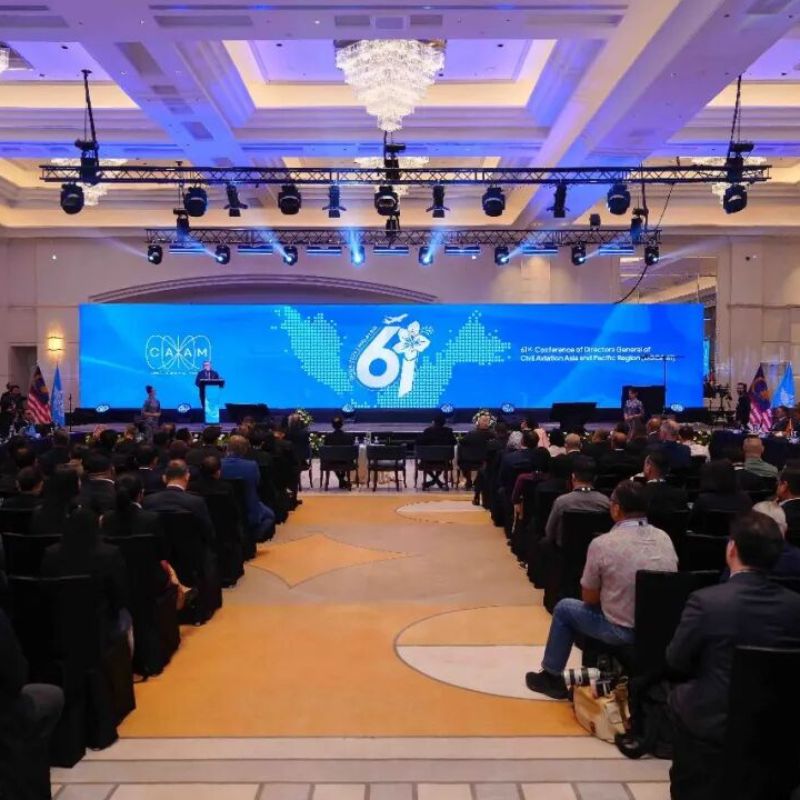
EHang Showcases Global Fast Track Program at ICAO DGCA/61

EHang Holdings Limited announced that it was invited to attend the 61st Conference of Directors General of Civil Aviation, Asia and Pacific Region (DGCA/61), held in Kuala Lumpur, Malaysia, from September 7 to 11. Hosted by the Civil Aviation Authority of Malaysia (CAAM) under the theme “Smart Skies: Emerging Technologies for Safe, Secure, Sustainable and

HeliHubHeliHubGwen Wilson16 Sept
  • neutral toward International Civil Aviation Organization · 99%

Etihad Airways, Swissport expand global ground handling, cargo partnership

ABU DHABI: Etihad Airways and Swissport, the world’s largest provider of aviation services by revenue, have signed a Memorandum of Understanding at Arabian Travel Market to expand their global partnership, increasing the number of airports at which Swissport serves the airline from 30 to 40. The expanded partnership covers airports across Africa, Europe, North America, the Middle East and Asia. Captain Majed Al Marzouqi, Chief Operations and Guest Officer, Etihad Airways, said, "Working with one partner across 40 airports gives our guests the same experience whether they are departing from Europe, Asia or North America, and gives our operation the consistency it needs to match that expansion.” Warwick Brady, President and Chief Executive Officer, Swissport, said, "Etihad and Swissport are a natural fit. We share the same ambition for operational excellence and an uncompromising focus on the customer experience. Etihad is embarking on an exciting phase of growth, and Swissport is proud to support that journey with our global network, our teams’ operational expertise and our technology capabilities.” Under the MoU, the two companies will work together across ground handling and cargo services, with scope to extend the relationship into airport hospitality through Swissport’s Aspire brand. Technology and innovation will be important drivers of the expanded partnership as Etihad and Swissport explore opportunities to enhance operational efficiency, strengthen service delivery and improve the guest experience. By applying automation, artificial intelligence and data-driven insights, including Swissport’s work on autonomous ground vehicles, the two organisations aim to support safer, smarter and more seamless airport operations, while investing in the people and capabilities that will support it.

MBMobile BusinessWAM16 Sept
  • neutral toward Etihad Airways · 99%

Digital Asset Leaders Converge at KBW2026 as Partner Lineup Unveiled

Upbit joins as Presenting Partner, with 0G and BRV confirmed as Official Conference Partners Stable and Tria join as Diamond Sponsors, while BitGo comes on board as Official Institutional Sponsor Kyoungsuk Oh, Michael Heinrich, Brian Mehler, John Lilic and Mike Belshe among featured speakers   Korea Blockchain Week 2026 with Upbit (KBW2026), Asia’s leading digital asset conference, has unveiled its partner lineup, bringing together major players across exchanges, blockchain infrastructure, stablecoins and institutional digital assets. FACTBLOCK, the organizer of KBW2026, announced on August 31 that Upbit, 0G, BRV, Stable, Tria and BitGo will participate as key sponsors of this year’s event. Beyond brand partnerships, CEOs and founders from the participating companies will also take the stage as speakers to discuss some of the most significant shifts shaping the global digital asset industry. Upbit is the Presenting Partner of KBW2026. Kyoungsuk Oh, CEO of Upbit, will also speak at the conference, sharing his perspective on changes in the global digital asset market and the role of Korea. Through its partnership with Upbit, KBW2026 will broaden the conversation around Korea’s digital asset market beyond retail investors to include institutional participation and global financial markets. Decentralized AI infrastructure company 0G and global venture capital firm BRV will participate as the Official Conference Partners. Michael Heinrich, Co-Founder and CEO of 0G Labs, will take the KBW2026 main stage to explore the rise of the agent economy and how decentralized infrastructure is creating a new foundation for AI. 0G is the trust layer for AI, bringing together verifiable compute, private inference, decentralized storage and an AI-native blockchain to power the next generation of AI applications and autonomous agents. BRV will also join as a Conference Partner, further strengthening KBW2026’s global investment and industry network. Global digital asset infrastructure company BitGo will participate as the Official Institutional Sponsor. BitGo Korea, whose strategic shareholders include Hana Financial Group and SK Telecom, recently secured acceptance of its Virtual Asset Service Provider (VASP) registration from Korea’s Financial Intelligence Unit (KoFIU), establishing a regulatory foundation for its domestic operations. Mike Belshe, Co-Founder and CEO of BitGo, will also speak at KBW2026. Stable and Tria will participate as Diamond Sponsors. Brian Mehler, CEO of Stable, and John Lilic, Co-Founder and Chief Strategy Officer of Tria, will each take the stage at KBW2026. Stable is building blockchain infrastructure optimized for stablecoin payments and transfers, while Tria is building financial infrastructure enabling businesses and AI agents to transact across blockchains and digital assets, powering its growing stablecoin neobank. This year’s sponsor lineup reflects the continued expansion of the global digital asset industry beyond trading and investment into institutional finance, payments, stablecoins, AI and next-generation infrastructure. With senior executives from many of these companies participating not only as sponsors but also as speakers, KBW2026 will offer attendees a firsthand look at the strategies of companies driving the industry’s next phase of growth. KBW2026 will take place in Seoul from September 29 to October 1. The Upbit Institutional Summit (UIS), an invite-only gathering focused on institutions and the financial sector, will be held on September 29, followed by the KBW2026 main conference from September 30 to October 1. Andrew Park, CEO of FACTBLOCK, said, “This year, KBW is bringing together key partners that are shaping the next stage of the industry, spanning exchanges, institutional digital asset infrastructure, AI, stablecoins and next-generation financial services. With senior executives from these companies also taking the stage as speakers, KBW2026 will provide a valuable opportunity to see where the most important changes in the global digital asset market are emerging.

NewsBTCNewsBTCBlockmanPR16 Sept

Peter Jackson’s Weta FX to Talk AI as Netflix’s Creative Asia Spotlights ‘Possible Love’ in Busan

Netflix and the Busan International Film Festival (BIFF) are bringing back Creative Asia for a third consecutive year, with the program set for Oct. 10 at Dongseo University’s Centum Campus. BIFF, the Asian Film Commissions Network (AFCNet) and the Motion Picture Association (MPA) all helped shape this year’s lineup. Creative Asia is Netflix’s flagship initiative […]

VarietyVarietyNaman Ramachandran16 Sept

‘Possible Love’ DoP Kim Ji-yong, ‘The Blue Road’ Director Han Jun-hee & WETA FX’s Kimball Thurston Among Speakers For Netflix ‘Creative Asia’ At BIFF

Netflix has announced that speakers including Possible Love DoP Kim Ji-yong, The Blue Road director Han Jun-hee and WETA FX’s CTO Kimball Thurston will join the streamer’s Creative Asia programme at this year’s Busan International Film Festival (BIFF). Ji-yong will deliver a masterclass on how he and Possible Love director Lee Chang-dong shaped the visual […]

DeadlineDeadlineLiz Shackleton16 Sept
R

ASG Khiari's remarks to the Security Council on developments in Yemen [as delivered]

Countries: Yemen, Djibouti Source: UN Department of Political and Peacebuilding Affairs New York, UN Khaled Khiari, Assistant Secretary-General for the Middle East, Europe, the Americas, Asia and the Pacific Mr. President, The situation in and around the Bab al Mandab Strait has become increasingly volatile in recent days. Further to the briefing of Special Envoy Grundberg to this Council on 10 September, fighting has intensified along Yemen’s west coast, as the Houthis continued their advance towards the Bab al Mandab Strait, reportedly capturing several islands in the southern Red Sea. According to maritime tracking sites, commercial shipping flows through the Red Sea appear to remain unaffected for the time being. Nevertheless, the Houthi advance has added to market concerns, amid continuing disruptions in the Strait of Hormuz. In parallel, the Government of Yemen reportedly launched a counteroffensive following the Houthi advances over the past week, with localized clashes reported across several frontlines in Marib, Lahj, Al-Jawf, Hajjah, Al-Bayda and Sa’ada. The counteroffensive, reportedly including extensive airstrikes, also extends to Taiz. Unconfirmed estimates indicate hundreds of combatant casualties in recent days. Mr. President, The impact of these hostilities also extends to the civilian population, forcing people to flee their homes, causing civilian casualties and putting already stretched humanitarian operations under growing pressure. Our colleagues from the Office for the Coordination of Humanitarian Affairs (OCHA) warn that at least 125,000 people have now been displaced across Yemen since the start of the month. Over this same period, the UN Human Rights Office has reported 40 civilian casualties – eight people killed and 32 others injured. Women and children account for half of those killed and more than half of those injured. Meanwhile, across the Red Sea in Djibouti, UN teams are working closely with the Government of Djibouti in response to the arrival of people fleeing the latest escalation of conflict in Yemen. As of 14 September, approximately 2,300 people had arrived in the Obock region in northern Djibouti. Registration is continuing, and further arrivals are expected. We call on all parties to protect civilians, respect international humanitarian law, and facilitate safe and unimpeded humanitarian access so that urgently needed assistance can reach communities in need. Mr. President, The ongoing escalation is not limited to the Bab al Mandab Strait and Yemen. On 14 September, the spokesperson for the Saudi coalition forces said 13 individuals were injured, and seven residences were damaged in Houthi missile and drone strikes on Abha, Khamis Mushait, and Taif in Saudi Arabia. On 12 September, the Kingdom of Saudi Arabia condemned the targeting of the East-West Pipeline in the Riyadh and Madinah regions by several drones reportedly launched from an area inside Iraq. The attacks reportedly resulted in injuries and material damage. The strikes caused the pipeline to shut down for repairs, interrupting the crucial artery Saudi Arabia had been using as an alternative to the Strait of Hormuz. In a statement, the Saudi Ministry of Foreign Affairs indicated it had decided to avoid escalatory countermeasures following a request from Iraq’s Prime Minister. On 12 September, the Office of the Iraqi Prime Minister released a statement expressing appreciation for “the Kingdom’s response to the efforts made by Iraq to contain the situation.” The statement also noted that Prime Minister al-Zaidi had ordered an urgent investigation into the attacks and the parties behind them. Iraq also reaffirmed that “its territory and airspace will not be a launching pad for aggression against any State”. Mr. President, On 14 September, the Houthis claimed to have targeted the King Khaled Airbase in Khamis Mushait in southern Saudi Arabia with several ballistic missiles and drones in response to “300 Saudi airstrikes over the past five days”. This follows an earlier attack on 8 September on civilian and economic targets across Abha, Khamis Mushait, Jizan and Najran in southern Saudi Arabia, reportedly injuring 73 civilians, including women and children. We reiterate our firm condemnation of Houthi cross-border attacks on civilian and energy infrastructure in Saudi Arabia. Navigational rights and freedoms in and around the Red Sea and the Bab al Mandab Strait must be fully restored and respected by all, in accordance with international law and consistent with relevant resolutions of this Council, including resolution 2722. We remain concerned by the continued intensification of military clashes across multiple frontlines in Yemen, and call upon all parties to exercise restraint, prevent further escalation, and engage constructively with UN-led political efforts. Mr. President, We remain deeply concerned by the continued instability affecting another critical maritime waterway in the region – the Strait of Hormuz. Navigational rights and freedoms in and around international maritime corridors must be fully restored and respected in accordance with international law. The longer the Strait remains choked, the higher the cost globally. Further escalation risks grave consequences for international peace and security, global energy markets, food security, and the economies of countries far beyond the region, particularly the most vulnerable. All parties must take every feasible precaution to protect civilian vessels, crews and infrastructure. Mr. President, Developments around the Bab al-Mandab underline the urgent need to prevent Yemen’s conflict from further threatening the security of the Red Sea and this vital international maritime route. What is needed now is sustained engagement that reduces tensions, prevents further escalation and safeguards freedom of navigation. The parties in Yemen should prioritize dialogue and engage constructively with UN-led efforts toward a negotiated political solution. Thank you.

ReliefWebReliefWebUN Department of Political and Peacebuilding Affairs15 Sept

Houthis threaten more Saudi strikes as UN warns of humanitarian crisis in Yemen

Estimated 100,000 Yemenis displaced amid renewed fighting as Qatar sounds alarm over Bab al-Mandab strait Saudi cities faced the threat of a second day of Houthi attacks as fighting across Yemen led the UN to warn of a humanitarian crisis with 100,000 Yemenis already displaced. As oil prices remained well over $100 (£74) a barrel, Qatar warned of a catastrophe if the Iran-backed Houthi militants won full control of the Bab al-Mandab strait, the narrow waterway at the bottom of the Red Sea dominating the key naval route to Asia. The strait has become vital to Saudi crude oil exports as the wider Middle East war chokes the strait of Hormuz in the Gulf. Continue reading...

The GuardianThe GuardianPatrick Wintour Diplomatic editor15 Sept

Saudi Oil Crisis Deepens as Aramco Suspends Yanbu Loadings

Saudi Arabia suspends Yanbu oil loadings after halting its East-West pipeline, sending Brent back to $108. Asia’s Oil Crunch Sends Regional Benchmarks to Record Highs - Asia’s oil industry is facing a double whammy of supply shortages and better-than-expected demand, with crude differentials across the region gradually climbing towards record highs.   - Futures prices on China’s Shanghai Futures Exchange rose to $138 per barrel on Tuesday, the highest reading on record, as Chinese refiners scramble to put their hands on available…

OilPrice.comOilPrice.comTom Kool15 Sept

BambooToken Malware Uses MQTT to Control Windows and Linux Systems

Cybersecurity researchers have disclosed details of a multi-platform campaign that uses the Message Queueing Telemetry Transport (MQTT) protocol as a communication channel to control Windows and Linux systems. The emerging malware family, codenamed BambooToken, is assessed to be active since at least February 2023 and put to use in attacks targeting organizations across Asia and South America.

The Hacker NewsThe Hacker Newsinfo@thehackernews.com (The Hacker News)15 Sept