
Spot bitcoin ETFs attract nearly $1 billion in largest daily inflow in 11 months
US spot bitcoin ETFs saw $999 million in net inflows on Monday, the largest single-day amount the funds have attracted since Oct. 6, 2025.
 The Block•Timmy Shen22 Sept
US spot bitcoin ETFs saw $999 million in net inflows on Monday, the largest single-day amount the funds have attracted since Oct. 6, 2025.
The Block•Timmy Shen22 Sept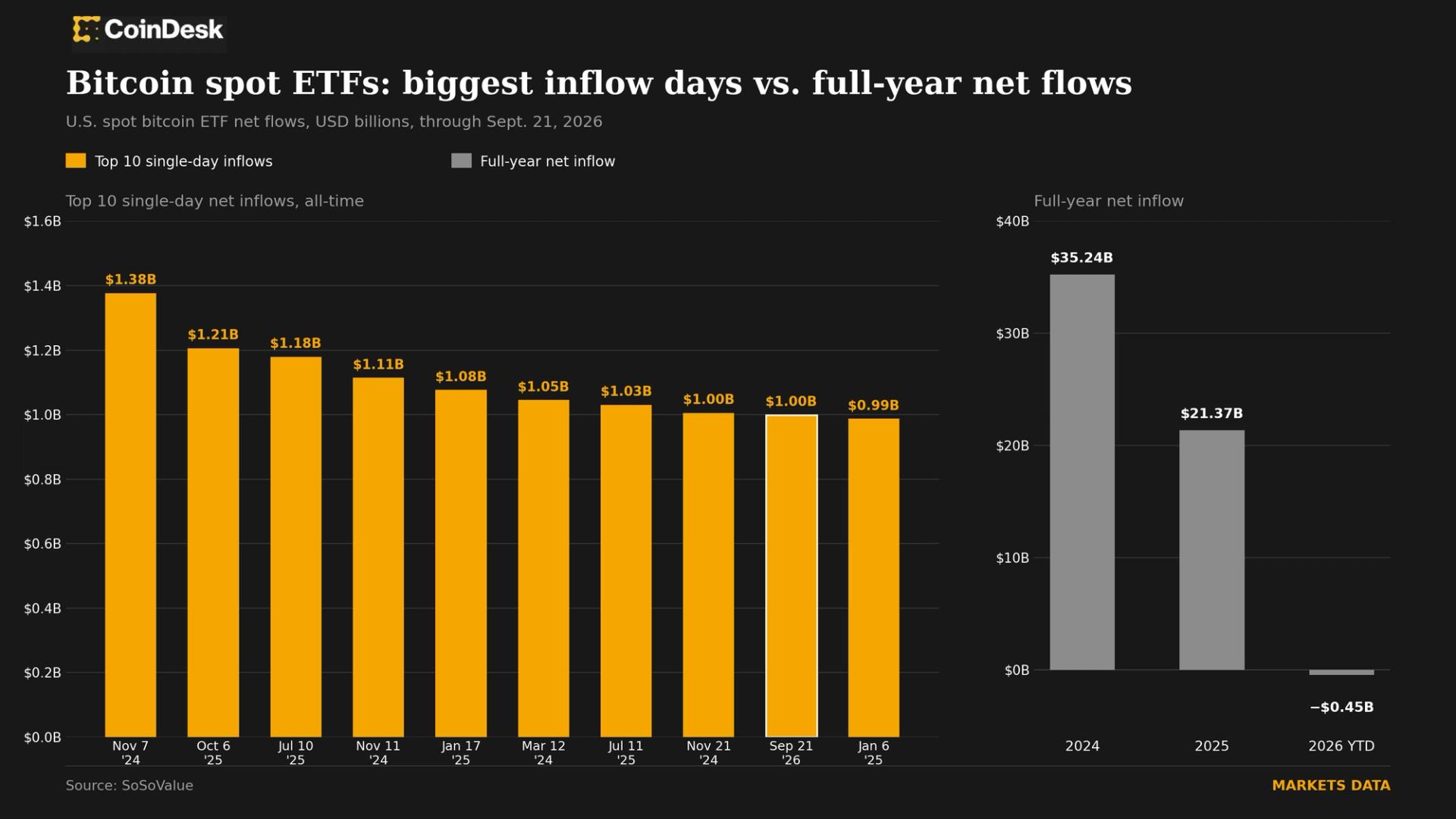
 CoinDesk•Omkar Godbole22 Sept
US spot Bitcoin ETFs drew nearly $1 billion on Monday, their largest daily inflow since October 2025, as Bitcoin briefly climbed above $87,000.
 Cointelegraph•Cointelegraph by Helen Partz22 Sept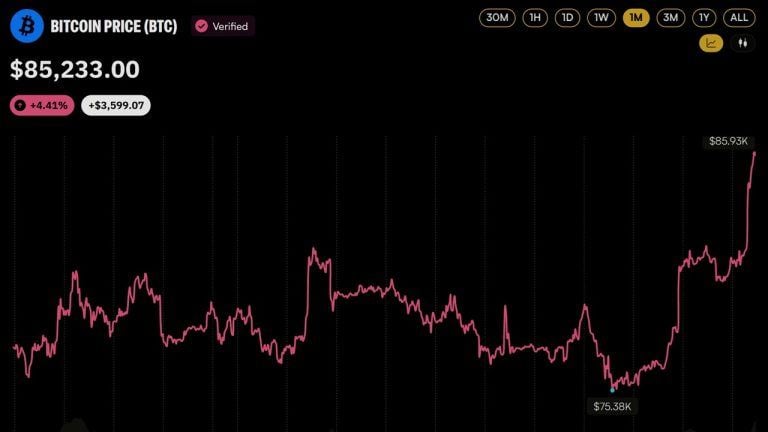
Bitcoin has climbed as much as 37% since Jim Cramer told CNBC viewers on Aug. 3 that he was dumping his bitcoin over quantum computing fears. The Call That Aged Badly Cramer’s apprehension apparently began on July 30, when, during an interview with IBM Chairman and CEO Arvind Krishna, he asked whether quantum computers could […]
 Bitcoin.com News•Shiraz Jagati22 Sept
Bitcoin's brief tryst above $87,000 has flipped market sentiment sharply. But Santiment believes "risk is less attractive now than when the crowd was fearful last week."

Tim Draper says Apple and Meta should hold Bitcoin as a treasury hedge, warning current U.S. fiscal trends could threaten cash and banks.

X now links U.S. Cashtags for stocks, ETFs and crypto to five partner platforms, where users can complete trades outside the social app.
 CoinDesk•AI Boost22 Sept
Arthur Hayes says an AI credit bust could push U.S. authorities toward liquidity support, a scenario he argues could benefit Bitcoin.

Institutional adoption of Bitcoin ETFs signals a growing mainstream acceptance, potentially stabilizing and legitimizing the crypto market.
 CryptoBriefing•Editorial Team22 Sept
Circle has launched Bitcoin-backed USDC borrowing in Circle Mint, letting eligible institutions use cirBTC collateral on Arc and Ethereum.

TL;DR CoinsBee says USDT on TRON generated about 1.8 times as many completed payments as Bitcoin over its measured 90-day window. USDT on TRON accounted for 16.23% of CoinsBee’s 2026 year-to-date payments, up from 9.92% in 2025. The figures describe CoinsBee activity only and should not be generalized to global crypto payments. USDT on TRON has overtaken Bitcoin in payment activity on CoinsBee, according to a new data release covering a 90-day period from June 4 through September 1. CoinsBee’s figures show TRC-20 USDT generated roughly 1.8 times as many completed payments as Bitcoin and around 1.9 times as many as Ethereum during the measurement window. Stablecoin Spending Gains Ground On CoinsBee The broader year-to-date numbers point in the same direction. USDT on TRON represented 16.23% of all CoinsBee payments in 2026 through the reporting period, compared with 9.92% in 2025. CoinsBee described that as a 64% increase in payment share. Within USDT activity on the platform, TRC-20 accounted for 44.6% of transaction count and 64.5% of total USDT turnover. Those numbers help explain why TRON remains closely associated with stablecoin transfer activity: low transaction costs and wide exchange support can matter more to payment users than the asset’s role in investment markets. The Data Is Platform-Specific There is an important limit to the story. CoinsBee’s data does not establish that USDT on TRON is the world’s most-used payment method, nor does it measure total global payment volume across every merchant, wallet or chain. It tells us what happened on CoinsBee. The company and TRON DAO are also running a 2% promotional discount using code USDT-TRC from September 21 through October 5, which may affect payment behavior during that campaign period. Within the scope that can be verified, however, the trend is clear: on CoinsBee, USDT on TRON has become a larger payment rail than Bitcoin by completed transaction count over the measured window. This article was written by the News Desk and edited by Samuel Rae. Source: Primary Source
 NewsBTC•NewsBTC Editorial Team22 Sept
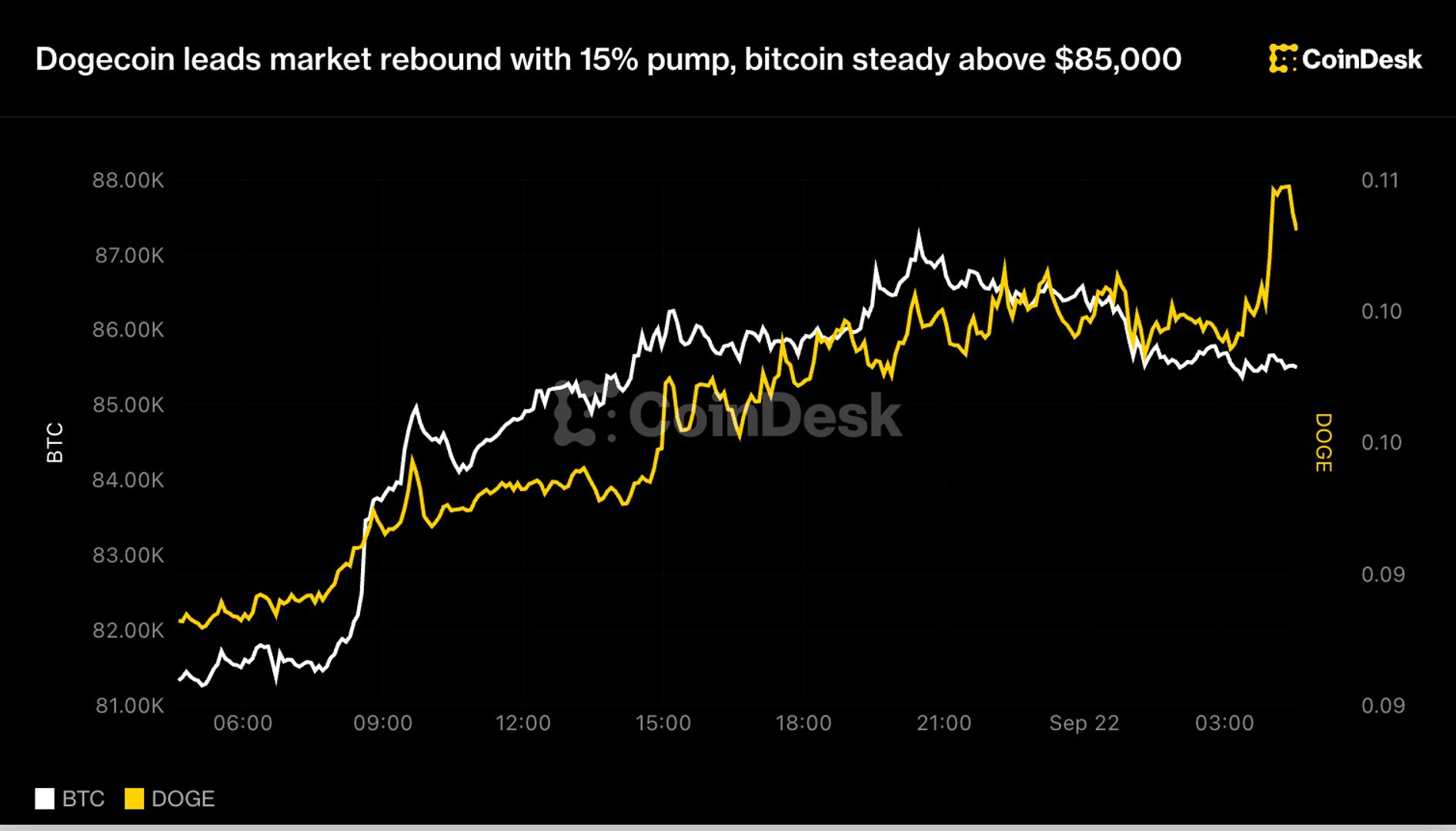
 CoinDesk•Omkar Godbole22 Sept
 CoinDesk•Shaurya Malwa22 Sept
Ethereum is seeing stronger accumulation than Bitcoin, as Binance withdrawals reached three-year highs.

As capital rotation into all things AI-related has been cited as one of the reasons for the bitcoin bear market this year, a new environment is emerging that could help BTC recapture at least some of that capital. One reason for this possible capital rotation back into bitcoin is that AI now affects so many […]
Bitcoin.com News•Linas Kmieliauskas22 Sept
The Mint workflow removes operational steps, while variable market terms and liquidation risk remain with the third-party lender.
 CryptoSlate•Liam 'Akiba' Wright22 Sept
Arthur Hayes claims AI debt exposure makes US insurers insolvent, and explains what a bailout could mean for Bitcoin.
 BeInCrypto•Darryn Pollock22 Sept
Leveraged trading's volatility underscores the precarious balance between skill and risk, highlighting the potential for significant financial loss.
CryptoBriefing•Editorial Team22 Sept
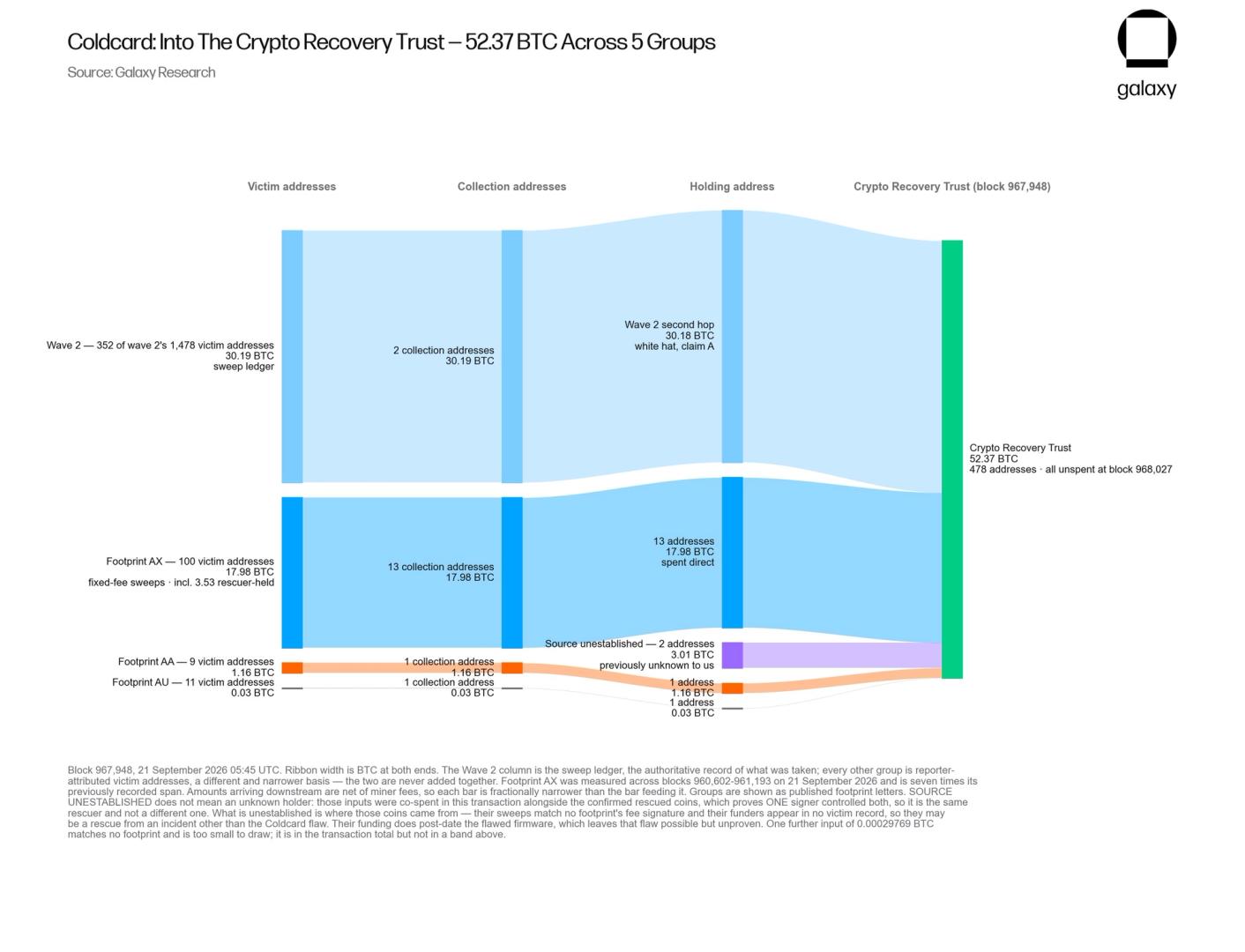
The recovery effort highlights the importance of proactive security measures and collaboration in mitigating the impact of crypto exploits.
CryptoBriefing•Editorial Team22 Sept