Circle CEO Jeremy Allaire argues SEC is not suitable regulator for stablecoins
The GENIUS Act's banking-style oversight for stablecoins may reshape market dynamics, pressuring competitors to enhance compliance or risk exclusion.

The GENIUS Act's banking-style oversight for stablecoins may reshape market dynamics, pressuring competitors to enhance compliance or risk exclusion.

Circle reportedly minted 1B USDC on Solana, lifting weekly issuance to 3.5B as payments, trading liquidity, and USDC settlement grow.

Dragonfly General Partner Rob Hadick believes stablecoins are entering a new phase. While USDT and USDC remain dominant today, he argues that growing competition from banks, fintechs, and new issuers will eventually break the stablecoin duopoly and create a more diverse market built around specific use cases. Dragonfly’s Rob Hadick Says the USDT-USDC Duopoly Won’t […]

Binance has activated its tokenized-equity layer, converting live stock positions on its brokerage platform into BNB Chain tokens tradable around the clock. The first five bStocks include Nvidia, Tesla, Circle, Micron, and Sandisk.
0x Protocol has opened its Cross-Chain API to general availability with 12 bridge providers live from day one, including Circle, LayerZero, Stargate and Across — accessible through a single API integration.

The 22-page memorandum is the first formal supervisory link between the New York regulator licensing Circle, Paxos and Gemini and the EU body overseeing MiCA stablecoin issuers, committing both authorities to quarterly reserve-data exchange as the GENIUS Act and MiCA move toward enforcement.

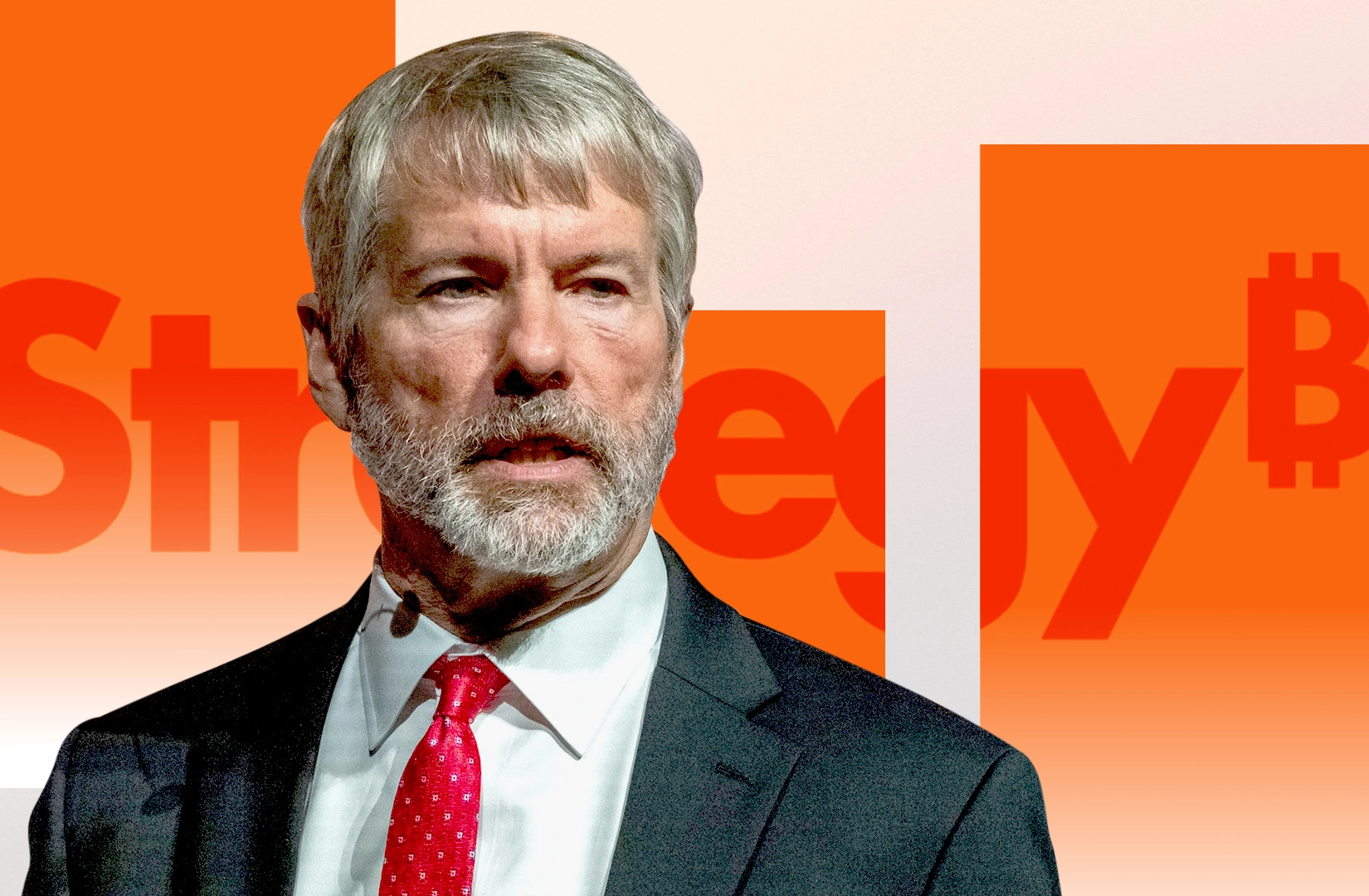
Strategy is on a tear. Shares of the world's largest corporate Bitcoin holder have surged more than 50% over the past month, riding the top crypto’s climb past $80,000 as short sellers scramble for the exits and institutional money pours back in. On Monday, MSTR jumped another 4% to nearly $184 per share, adding to a 7% surge on Friday. After-hours trading suggests the stock’s price has inched up at least another 2% ahead of Strategy’s first-quarter earnings call on Tuesday. The rally comes amid renewed institutional demand. Bitcoin exchange-traded funds drew $827 million in the first two trading days of May alone, extending a two-month winning streak, DefiLlama data shows . Over $200 million in short positions were liquidated in a single day as the rally gathered pace. Strategy shares are seen as a leveraged bet on Bitcoin, and the firm's stock price closely tracks the top crypto. Bitcoin's rally above $80,000 is sound, according to Jake Kennis, senior research analyst at Nansen. He told DL News that the funding rate — a key measure of market temperature — sits at a healthy 0.00045% hourly, well below the overheated readings that typically precede a sharp correction. "With $2.4 billion in open interest and daily perpetual volume of $3.4 billion outpacing spot turnover, derivatives are clearly playing a significant role in price discovery around this level," Kennis said. "The moderate funding rate and balanced buy/sell ratio don't indicate extreme leverage build-up that would suggest a major pullback." Q1 earnings call All eyes now turn to Strategy's first quarter financial results. Consensus voices expect revenue of around $125 million, up from $115 million a year earlier, alongside an accounting loss tied to Bitcoin's price swings and financing costs. But investors are paying less attention to the income statement than to the capital markets machine Saylor has built underneath it. Strategy has quietly transformed from a software company with a Bitcoin position into a financing vehicle built to convert market demand into Bitcoin exposure. The engine driving that machine is STRC — Strategy's Bitcoin-backed preferred stock, paying a variable dividend of around 11.5% annually — which has grown to $8.5 billion in notional value in under nine months. "The world's $300 trillion credit market is a much bigger opportunity than the world's roughly $2 trillion Bitcoin market, and Strategy has built the first product to bridge the two," Michael Saylor, Strategy's founder and Executive Chairman, told the Bitcoin 2026 conference in Las Vegas last week. BlackRock's iShares Preferred & Income Securities ETF has already taken a $210 million position in STRC. Saylor says the instrument has financed the acquisition of roughly 77,000 Bitcoin so far this year — ten times the net inflow of all US spot Bitcoin ETFs combined over the same period. “STRC is a battery that stores Bitcoin gains and distributes them over time,” said Strategy CEO Phong Le. Strategy did pause its Bitcoin buying streak ahead of Tuesday's earnings — only the second such break this year, according to Saylor. Its most recent purchase added 3,273 Bitcoin at an average price of around $77,900. Strategy is scheduled to release its first quarter financial results at 10 pm London time or 5 pm US Eastern time on Tuesday. Saylor has promised a live question-and-answer session, with notable guests to be announced. Crypto market movers Bitcoin is up 0.7% over the past 24 hours at $80,886. Ethereum is down 0.5% over the past few hours at $2,381. What we’re reading Aave secures emergency hearing to void ‘catastrophic’ restraining order — DL News Clarity Act odds surge on stablecoin compromise, Coinbase support — DL News World Liberty Financial Quietly Sold Billions in Tokens as Early Investors Remained Locked Out — Unchained $80K: we got there. Now what? — Milk Road Ethereum devs huddled in the Arctic Circle to fix the network. Here’s what to know — DL News Lance Datskoluo is DL News’ Europe-based markets correspondent. Got a tip? Email him at lance@dlnews.com

Ethereum's core developers have delivered their most significant technical milestone in months, emerging from a week above the Arctic Circle with a credible roadmap to dramatically scale the network's capacity. Last week, just over 100 core contributors gathered in Longyearbyen, on Norway's Svalbard archipelago — some 78 degrees north, where the sun never sets — for the Soldøgn interop, a week of intensive work on the Glamsterdam network upgrade. By Friday, the team had locked in a post-Glamsterdam gas limit floor of 200 million, stabilised external block builder implementations, and finalised gas repricing numbers for EIP-8037. "At their best, interop weeks can compress a month of asynchronous progress into each day," Ethereum Foundation researcher Tim Beiko wrote in a recap shared with developers on Friday. The breakthrough lands as Ether trades at $2,377, still more than 50% below its August peak of $4,946. However, signs of hope are emerging. Ethereum has jumped 14% over the past month, CoinGecko data shows . The 200 million gas limit target is notable because it determines how many transactions Ethereum can process per block. The higher the limit, the more activity the network can handle without congestion — and the stronger the case for Ethereum as the backbone of a global financial system. Beiko billed it as one of the most productive weeks in recent memory for the Ethereum team. Foundation sells, Bitmine buys The Ethereum Foundation wasted no time translating its technical progress into operational runway. On Friday, the Foundation completed a third over-the-counter sale of 10,000 Ether tokens to Bitmine Immersion Technologies — the largest Ethereum treasury company — at an average price of $2,292 per coin, bringing the total transaction value to roughly $23 million. It is the third such deal between the two parties. In March, the Foundation sold Bitmine 5,000 ETH at around $2,043 per coin. Last Friday, another 10,000 ETH changed hands at $2,387. The Foundation has also conducted a separate 10,000 ETH sale to rival treasury firm Sharplink. The money goes straight back into funding Ethereum's development, including research, grants, and the kind of work that just happened in Svalbard, the Foundation said. But despite the price downturn, Bitmine, led by prominent Wall Street bull Tom Lee, is not flinching. Earlier this week the company disclosed its largest Ethereum purchase of the year — 101,901 ETH worth roughly $235 million — bringing its total holdings above 5 million Ether and cementing its position as the dominant corporate accumulator of the asset. Bitmine bought most of its Ethereum at much higher prices. At today's levels, the company is sitting on an unrealised loss of more than $6 billion. Lance Datskoluo is DL News’ Europe-based markets correspondent. Got a tip? Email him at lance@dlnews.com

XRP has a lot going for it. The cryptocurrency is intimately linked to Ripple, the company whose founders developed it, and the venture’s fortunes. But despite Ripple having notched several big wins over the past year, XRP is still trading 62% below its $3.65 record high from July. “XRP is basically being held back by the same two forces that have capped most large-cap alts in this regime: macro noise and flow quality,” Louis De Backer, crypto trading analyst at financial services platform Marex, told DL News . His comments come as the US’ conflict with Iran weighs on the global market. With talks between Washington and Tehran at a standstill, the flow of oil through the Strait of Hormuz has catapulted the commodity’s price above $114 per barrel. Elevated energy prices make it increasingly unlikely that the Federal Reserve and other central banks will cut interest rates. High interest rates are seen as a headwind for cryptocurrency prices. “With energy at four-year highs and the Fed messaging more divided , risk budgets stay tight and investors default to BTC first, then ETH,” De Backer said. “In that tape, XRP tends to behave like beta, it moves with the complex but struggles to attract fresh standalone demand.” If the macroeconomic environment was to calm down, that would enable traders to move beyond Bitcoin and Ethereum and start to trade with altcoins like XRP, De Backer said. “The second constraint is positioning versus spot depth,” De Backer said. “When liquidity is thin and derivatives flows dominate, moves in XRP can be sharp but they often fade. You need consistent spot buying to turn a push into a trend, otherwise it remains range-bound and reactive.” For the Ripple-linked cryptocurrency to rally, it needs to break out of its current level of trading between $1.35 and $1.45 and hold the new, higher level for longer, he added. “In short, XRP isn’t broken,” De Backer said. “It’s just stuck in a market that is still trading macro first and rewarding the deepest, most liquid exposures. When that pressure eases and spot flows show up, XRP can move quickly.” Ripple’s successes Ripple has been on a tear of late. The company has ended its long-running legal feud with the US Securities and Exchange Commission, seen President Donald Trump include XRP in a proposed strategic digital reserve, signed a deal with one of South Korea’s biggest insurance companies, and has made a number of acquisitions. In March, Ripple achieved a $50 billion valuation, according to reports. That’s more than double the market capitalisation of stablecoin giant Circle. XRP exchange-traded funds launched in November have mostly seen positive inflows, according to Coinglass. Yet, even despite the prospect of global tension easing the strain on markets, not everyone is bullish that XRP will ever reclaim its former glory. “I’m just not convinced that in this marketplace, XRP is going to succeed at regaining the stature that it once had, which is sad and unfortunate,” Ric Edelman, founder of Edelman Financial Engines, told DL News in March. Polymarket punters share that sentiment, at least in the short term. Betters on the prediction market give XRP a 13% chance of hitting $3.60 before the end of the year. Conversely, they give it a 61% chance of hitting $1 before January 1. Eric Johansson is DL News’ managing editor. Got a tip. Email him at eric@dlnews.com .

Crypto majors are red following Trump’s tariff turmoil; BTC -2% at $91,100; ETH -4% at $3,105, SOL -3% at $129; XRP -2% to $1.93. CC (+12%), MYX (+5%) and SYRUP (+4%) led top movers. The NYSE began preparations for 24/7 tokenized stock and ETF trading. Steak ’n Shake revealed roughly $10M in Bitcoin exposure alongside the creation of a corporate BTC strategic reserve. Vitalik Buterin called for more sophisticated DAO governance models to improve accountability, coordination, and long-term sustainability. Bermuda outlined plans for a fully onchain national economy, working with Coinbase and Circle on payments, identity, and tokenized financial infrastructure. In Corporate Treasuries / ETFs. The BTC ETFs saw $394M in net outflows on Friday breaking a 4-day inflow streak; ETH ETFs stayed green with $4.7M in inflows. In Memes / Onchain Movers. Meme majors were red along with majors; Doge -1%, Shiba -1%, PEPE -2%, TRUMP -1%, Bonk -1%, Pengu -4%, SPX -12%, WIF -1% and Fartcoin -8%. USOR (+70%), GSD (+50%), and Eliza Town (+800%) led onchain movers.

Crypto majors are red following Trump’s tariff turmoil; BTC -2% at $91,100; ETH -4% at $3,105, SOL -3% at $129; XRP -2% to $1.93. CC (+12%), MYX (+5%) and SYRUP (+4%) led top movers. The NYSE began preparations for 24/7 tokenized stock and ETF trading. Steak ’n Shake revealed roughly $10M in Bitcoin exposure alongside the creation of a corporate BTC strategic reserve. Vitalik Buterin called for more sophisticated DAO governance models to improve accountability, coordination, and long-term sustainability. Bermuda outlined plans for a fully onchain national economy, working with Coinbase and Circle on payments, identity, and tokenized financial infrastructure. In Corporate Treasuries / ETFs. The BTC ETFs saw $394M in net outflows on Friday breaking a 4-day inflow streak; ETH ETFs stayed green with $4.7M in inflows. In Memes / Onchain Movers. Meme majors were red along with majors; Doge -1%, Shiba -1%, PEPE -2%, TRUMP -1%, Bonk -1%, Pengu -4%, SPX -12%, WIF -1% and Fartcoin -8%. USOR (+70%), GSD (+50%), and Eliza Town (+800%) led onchain movers.