

ZEC and NEAR Are Eating the Blue Chips' Bid
BTC:ETH::ZEC:NEAR! How Zcash and NEAR are drawing capital away from Bitcoin and Ethereum.
BTC:ETH::ZEC:NEAR! How Zcash and NEAR are drawing capital away from Bitcoin and Ethereum.

Ethereum price fell below $2,700 on Sep. 23 after a rally toward $2,800 stalled. The reversal brought the day’s $2,648 low into focus, while US spot Ethereum ETFs had recorded two consecutive days of net inflows before the pullback. Ethereum…

A 3,049% liquidation imbalance slams overheated BTC, XRP, and ETH buyers as global markets pivot to $101 Brent oil.
 U.Today•Gamza Khanzadaev3h ago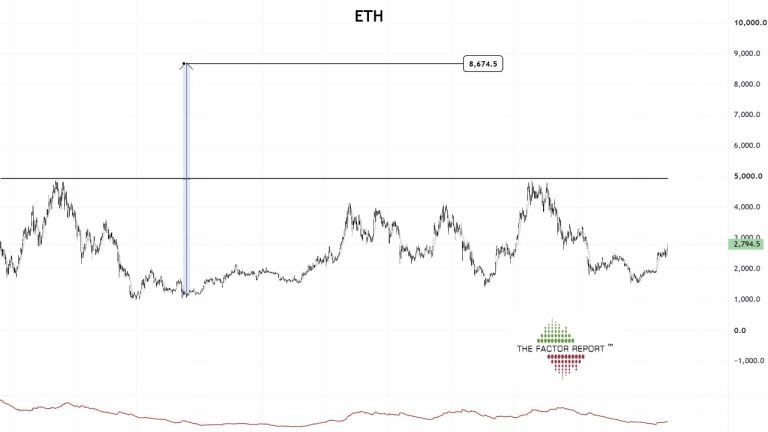
Ethereum could eventually reach $8,600 if it first clears $5,000, according to a long-term chart posted by veteran trader Peter Brandt. With ETH trading well below that threshold, investors have a substantial price gap to watch before his scenario comes into view. Ethereum Faces a $5,000 Hurdle Ethereum investors have a clear threshold to watch […]
 Bitcoin.com News•Kevin Helms4h ago
The surge in institutional investments in crypto ETFs signals growing mainstream acceptance and could drive further market stability and growth.
 CryptoBriefing•Editorial Team5h ago
Bitcoin ETFs pulled in another $714.75 million on Tuesday, extending their inflow streak to four sessions as bitcoin traded near $86,000. Ether, solana, XRP and ZEC funds also attracted fresh capital, broadening the institutional bid across crypto markets. No Bitcoin Fund Posts an Outflow as Net Assets Climb Above $110B The money kept coming. A […]
Bitcoin.com News•Emmanuel Musa5h ago
The partnership may boost blockchain's role in finance, enhancing liquidity and accessibility, while potentially elevating Ethereum's market value.
CryptoBriefing•Estefano Gomez5h agoThe summit underscores the critical need for robust security measures in Ethereum's ecosystem, impacting its stability and future growth.
CryptoBriefing•Editorial Team5h ago
TL;DR Binance Futures has launched a 24/7 perpetual contract tied to the USD/BRL foreign-exchange rate. USD/BRL is the first pair in the new FX-perpetual product line. The product gives synthetic leveraged FX exposure through a crypto derivatives venue; it is not spot foreign-exchange settlement. Binance is moving another traditional market into the always-on crypto trading model. The exchange has launched 24/7 foreign-exchange perpetuals, beginning with a contract tied to the US dollar and Brazilian real. USD/BRL Is The First Pair The initial contract gives traders continuous synthetic exposure to the USD/BRL exchange rate using the perpetual-futures format already familiar across crypto markets. That removes the conventional weekend and overnight boundaries associated with many FX venues. For crypto-native traders, the product also means foreign-exchange exposure can sit alongside Bitcoin, Ethereum and other derivatives inside the same collateral and risk-management environment. The launch pair is USD/BRL. Binance has indicated that additional FX contracts are expected, but the September 21 rollout should not be read as the simultaneous launch of every major currency pair. Crypto Exchanges Keep Expanding Into TradFi Markets The broader trend is becoming difficult to miss. Major crypto derivatives venues are no longer limiting themselves to crypto assets. Equity-linked perpetuals, pre-IPO contracts and now foreign-exchange products are increasingly being offered through the same 24/7 infrastructure. That creates a different trading experience from the underlying markets. A perpetual contract provides price exposure, but it does not mean the trader is receiving or delivering physical currency. The USD/BRL launch is therefore less about Binance becoming a conventional FX bank and more about crypto-style derivatives becoming a wrapper for a wider range of financial prices. This article was written by the News Desk and edited by Samuel Rae.
 NewsBTC•NewsBTC Editorial Team6h ago
EU supervisors warn quantum computing could weaken blockchain security as Bitcoin developers weigh a draft migration plan and Ethereum targets 2029.
 Cointelegraph•Cointelegraph by Yohan Yun6h ago
Solana's rise in tokenized commodities trading highlights its growing influence in DeFi, challenging Ethereum's dominance in the sector.
CryptoBriefing•Editorial Team6h ago
"The next Ethereum run could surprise a lot of people," one X user claimed.

TL;DR Ondo Finance has added in-kind minting and redemption for institutional Ondo Stocks users. Eligible institutions can contribute existing equity inventory rather than converting shares to cash first. The service currently supports tokenized positions on Ethereum and BNB Chain and is not a retail minting product. Ondo Finance is removing one of the more awkward steps in institutional stock tokenization: converting existing share inventory to cash before moving it onchain. Through an integration with Alpaca’s Instant Tokenization Network, eligible institutional users can now contribute existing equity inventory directly to mint Ondo Stocks positions. Shares Can Move Into The Tokenized System Without A Cash Detour The new in-kind flow changes the mechanics for institutions that already hold the underlying securities. Instead of selling shares, moving cash and then using that cash to create tokenized exposure, qualified users can deposit the existing inventory into the process. Ondo says the mechanism supports minting and redemption on Ethereum and BNB Chain. For large institutions, that can reduce settlement friction and make tokenized equities feel less like a separate market that needs to be funded from scratch. It also brings the workflow closer to the creation-and-redemption mechanics familiar from other institutional investment products. Retail Users Are Not The Target The service is restricted to KYC and AML-verified institutional participants. That means this is not a new button that lets ordinary retail users turn brokerage shares into blockchain tokens. The significance is more structural. Tokenized securities become easier to scale when the conversion process works with the inventory institutions already hold. Ondo and Alpaca are effectively trying to make the bridge between conventional equity custody and tokenized ownership less cumbersome. The product is now live for eligible institutional users on Ethereum and BNB Chain, with no cash-conversion step required for contributed inventory. This article was written by the News Desk and edited by Samuel Rae.
NewsBTC•NewsBTC Editorial Team7h ago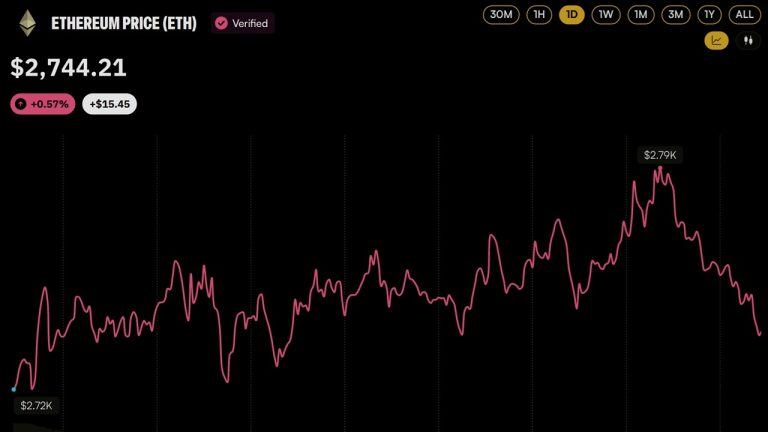
FTX’s bankruptcy estate moved 27,372 ETH worth about $75.32 million to market maker Wintermute on Tuesday, routed through six separate wallets. Decoding the Movements Arriving in a big bunch, the FTX and Alameda Research liquidation team transferred 27,372 ETH, worth roughly $75.32 million, to Wintermute across six wallets, according to onchain analyst EmberCN. Other trackers […]
Bitcoin.com News•Shiraz Jagati7h ago
Ethereum trades near $2,749 as ETF inflows hit $270M and whales accumulate. Key levels, Glamsterdam catalyst, and forecasts through year-end.

 CoinDesk•Olivier Acuna9h ago
TL;DR US spot Ethereum ETFs recorded $270.0 million of net inflows for the September 21 session. BlackRock’s ETHA led the day with $110.0 million, while Fidelity’s FETH added roughly $73.0 million. The numbers are single-session ETF flows, not direct purchases by the Ethereum network or protocol. US spot Ethereum ETFs bounced back with a $270 million net inflow day, giving the market one of its stronger institutional-demand readings of the month. The figures cover the September 21 trading session and were reported on September 22. BlackRock And Fidelity Lead The Day BlackRock’s ETHA took in $110.0 million, while Fidelity’s FETH added approximately $72.96 million. Those two products accounted for most of the day’s net demand. According to the validated fund-flow data, ETHA’s cumulative inflows reached roughly $13.067 billion, while FETH’s cumulative figure moved to about $2.32 billion. The important point is the direction of travel: after a period in which Ethereum products had struggled to match the consistency of Bitcoin ETF demand, the September 21 session produced a clear positive reversal. That does not guarantee the trend will persist, but it does put fresh institutional capital back into the Ethereum ETF conversation. ETF Demand Gives ETH A Cleaner Institutional Signal Spot ETF flows are useful because they isolate one specific channel of demand. They do not tell us everything about Ethereum’s market structure, and they should not be confused with protocol revenue, staking deposits or direct onchain activity. What they do show is whether regulated US investment products are receiving or losing capital. On September 21, that answer was unambiguously positive. A $270 million net inflow day does not erase prior redemptions or establish a permanent shift, but it gives ETH traders a new institutional datapoint at a time when the market has been closely watching whether Ethereum can attract sustained capital alongside Bitcoin. This article was written by the News Desk and edited by Samuel Rae.
NewsBTC•NewsBTC Editorial Team10h ago
DefiLlama’s September 22 snapshot and longer-window totals show why fee generation, staking receipts and holder returns require separate measures.
 CryptoSlate•Liam 'Akiba' Wright13h ago
Bitcoin and Ethereum options carrying roughly $18.1 billion in notional value have moved toward their Sept. 25 quarterly expiry with calls outweighing puts across both markets, according to Coinbase Markets. Coinbase Markets said Bitcoin’s open-interest put/call ratio stood at 0.66,…
21Shares launched physically backed Zcash and ether.fi ETPs on Euronext Paris and Amsterdam, with each product charging a 2.5% annual fee.