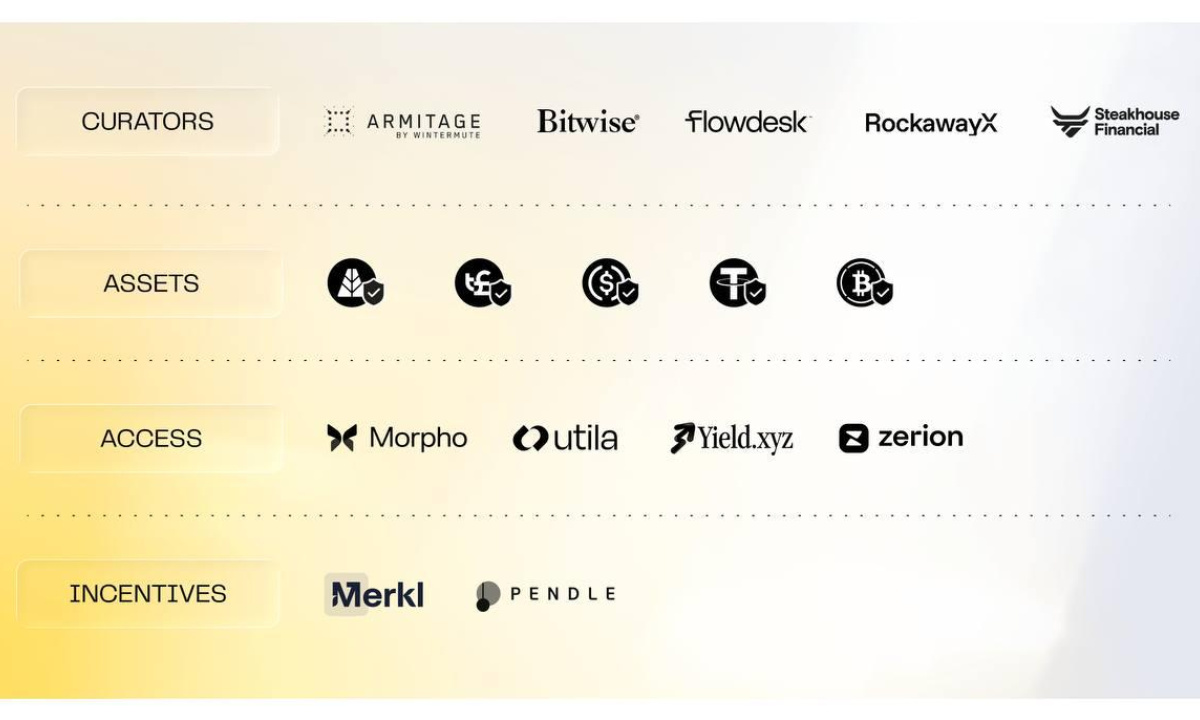
Zama Opens Confidential Access to DeFi’s Existing Yield Venues
Paris, France, 17th September 2026, Chainwire
Paris, France, 17th September 2026, Chainwire

French fishermen angered by soaring fuel costs blocked access to oil depots and ports on Thursday in the latest wave of protests sweeping France as the country's embattled minority government struggles to finalise a new budget ahead of presidential and parliamentary elections next year.

Canada’s prime minister, Mark Carney, is due to address the European parliament on Thursday. Plus, how the attention economy overwhelmed children’s TV Good morning. Donald Trump has threatened the EU with “serious tariffs” after the European Commission president, Ursula von der Leyen, invited Canada to become the EU’s first “associate member”. Why does the EU want closer ties with Canada? Von der Leyen told the European parliament that, as democracies faced a “fracture in the international rules-based system”, Brussels and Ottawa needed to pull closer together. “This is a partnership not against anyone else, but for our common strength,” she said. How has the EU responded to Trump’s comments? France’s Europe minister, Benjamin Haddad, said on Thursday that Washington had no power to veto EU decisions. “It is not up to the United States, or anyone else, to choose the political and geopolitical direction of the Europeans,” Haddad told Public Sénat TV channel. What’s next? Canada’s prime minister, Mark Carney, has been addressing the European parliament on Thursday. Follow our live coverage here . Did Warsh identify what is driving inflation? Warsh acknowledged changing geopolitics, but avoided calling out the US-Israel war with Iran by name. How did Trump respond? Shortly after the announcement, Trump said in a Truth Social post that interest rates should be 1% or less and criticized the US trade deficit. Continue reading...
 The Guardian•Vivian Ho17 Sept

France's national library is lending the manuscript recounting the history of the Aztecs to Mexico.
 BBC17 Sept
The Adecco Group is rolling out Salesforce’s Agentforce Coworker across more than 40 countries following a pilot in the UK and France, the staffing group announced on September 15. The group said the rollout brings agentic AI into the daily workflows of 27,000 employees. Agentforce Coworker is Salesforce’s AI assistant for enterprise staff. According to the Adecco […]
 AI News•Dashveenjit Kaur17 Sept
France’s Council of State has rejected an emergency request from Bull Bitcoin and Paymium to suspend the French decree implementing the European Union’s DAC8 crypto tax reporting rules while a separate challenge seeking to annul the measure remains before the…

The presidential hopeful is in favor of training Ukrainian soldiers and sending defensive gear — but "financially, we can’t do it anymore."

Paris, France, 17th September 2026, Chainwire
 The Daily Hodl•Chainwire17 Sept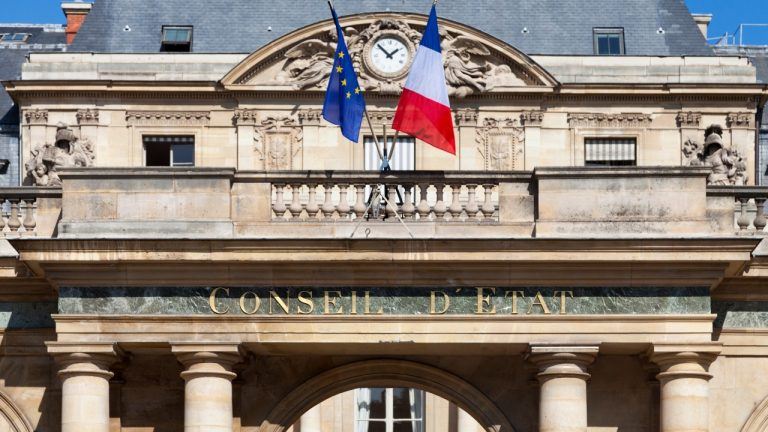
France’s Council of State has rejected an emergency bid by Bull Bitcoin and Paymium to halt a decree enforcing the EU’s DAC8 crypto tax‑transparency rules. Emergency Motion Dismissed France’s highest administrative court, the Council of State, has rejected an emergency motion seeking the immediate suspension of the French decree implementing the European Union’s Eighth Directive […]
 Bitcoin.com News•Terence Zimwara17 Sept
A marital drama set against the war in Ukraine, produced by French companies, will compete for the best international film Oscar in March 2027. A "subtle and judicious" choice, according to film expert Jean-Philippe Domecq.
 Euronews17 Sept
The National Rally politician was once a keen proponent of a vote for France to leave the EU, following in the UK's footsteps.
Euronews17 Sept
PRESS REVIEW – Thursday, September 17: Will Canada become an associate member of the EU? Commissioner Ursula von der Leyen floated the idea in a speech but did not give any details about what it would entail. The press is reacting with scepticism. Also, Le Monde profiles some of the 8,000 people who died during France's summer heatwave. Scientists observe a humpback whale mourning her dead calf for the first time. And Singapore wants to pay citizens to stop scrolling and start reading.

French President Emmanuel Macron is hosting Lebanese President Joseph Aoun in Paris for talks focused on Lebanon's security and wider Middle East tensions, with Jordan's King Abdullah II also taking part in the meeting. FRANCE 24's Luke Shrago and Kethevane Gorjestani have the analysis from Paris.
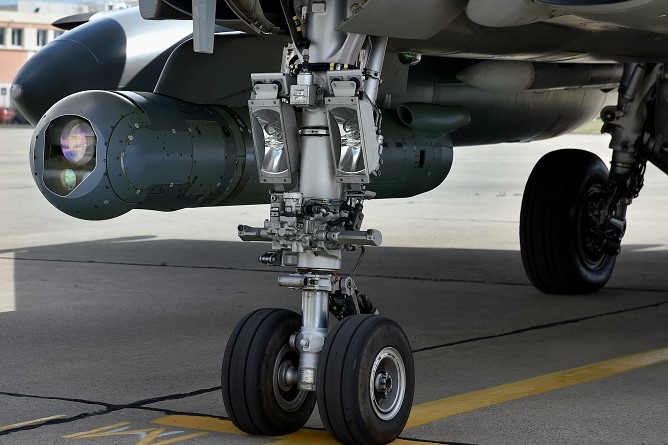
France’s defense procurement agency, the Direction générale de l’armement (DGA), has qualified the Thales Talios targeting pod on…
 AeroTime•Clement Charpentreau17 Sept
European Commission president Ursula von der Leyen says such a partnership is for the European Union’s ‘common strength’ Back to Trump’s threats over the proposed “associate membership” for Canada overnight, France’s Europe minister Benjamin Haddad said in response that the EU has no power to veto EU’s geopolitical choices. “ It is not up to the United States – or anyone else – to choose the political and geopolitical direction of the Europeans . Once again, we have a relationship with Canada, and we are fully entitled to seek to deepen it,” Haddad said in an interview on Public Senat TV channel, reported by Reuters. Continue reading...
The Guardian•Jakub Krupa17 Sept
Mohamed Bakkali, convicted for coordinating logistics for the 2015 Paris attacks, could be granted parole in Belgium despite receiving a 30-year sentence in France with a 20-year minimum term. Belgian authorities will decide on September 29 whether to release him under electronic monitoring, a prospect that has sparked anger among victims and families, while prosecutors oppose his release.

Emmanuel Macron is hosting Lebanese President Joseph Aoun and Jordan's King Abdullah II in Paris for talks on Lebanon's security and international support for the Lebanese army. The meeting comes as concerns grow over Israel's continued strikes in southern Lebanon and the possible end of the UNIFIL peacekeeping mission, with France seeking a "clear, credible and realistic" plan to back Lebanon through funding, equipment and military training.


Countries: World, Argentina, Armenia, Australia, Chile, Cuba, Democratic Republic of the Congo, Djibouti, Dominican Republic, Eritrea, Ethiopia, France, Haiti, Indonesia, Iran (Islamic Republic of), Jamaica, Jordan, Malaysia, Nigeria, Pakistan, Philippines, Somalia, South Africa, Sri Lanka, Syrian Arab Republic, Thailand, Türkiye, United States of America, Viet Nam Source: World Meteorological Organization Please refer to the attached file. WMO: Recent water trends have serious future implications The WMO State of Global Water Resources report is a comprehensive science-based annual assessment of the hydrological cycle and extreme events in 2025 and over the past five years. 2025 was one of driest years for river discharge in 35 years Past 7 years have seen abnormal river flows Water storage on Earth’s land surface has decreased in past 10 years Widespread glacier loss across all regions for 4th consecutive year Asia and Africa are the regions most affected by water-related disasters Water data availability has improved, but gaps remain in hard hit areas Geneva, Switzerland, 17 September 2026 (WMO) – Rivers across the globe in 2025 had one of the driest years in more than three decades, according to a new report from the World Meteorological Organization (WMO). It shows a continuation of the long-term decline in Earth’s freshwater storage and in glacier retreat - trends with serious implications for people and economies in the future. The WMO State of Global Water Resources Report shows that the water cycle has become more erratic and unpredictable, swinging between too little or too much. The past seven years have seen the fewest rivers with “normal” flows since 1991. Asia and Africa together accounted for at least half of all recorded water-related extreme events and more than 80% of reported associated deaths over the past five years, it says. The report provides a comprehensive, science-based assessment of the entire water cycle loop, including river discharge, groundwater, evapotranspiration, land water storage, and snow and ice, as well as high-impact events. It covers the year 2025 and summarizes findings of the past five years since it was first published. Some parts of this cycle are fast – such as precipitation, river flow, soil moisture – they respond to weather within days or weeks. Others, like groundwater, glaciers and seasonal snowpack, are slow, they accumulate or deplete over seasons to decades or longer. Traditionally these slow reserves have acted as the planet's savings account: a buffer that absorbs bad years so that a single drought or a single dry season does not translate directly into a water crisis,” said WMO Secretary-General Celeste Saulo. “We are depleting that savings account. Global terrestrial water storage has shown a declining trend since 2014–2016 - a persistent, decade-long signal. For the fourth consecutive year, every major glaciated region on Earth lost ice mass. Groundwater tells a similar story: nearly two-thirds of monitored wells worldwide showed conditions outside the historical norm in 2025, and the balance shifted further toward deficit compared with 2024, not toward recovery,” said Celeste Saulo. “At the same time, we are seeing more water-related disasters. The strengthening El Niño will increase the risk of drought in some areas, and flooding in others,” she said. The report highlights some major areas of concern: 2025 was one of driest years for river discharge globally in 35 years, with below-normal flows over 36% of global basin area. This is based on data from simulations from 13 global hydrological models, driven by observed weather data. For the seventh year in a row, the number of river basins with “normal” conditions was in a clear minority: ranging between 34-38%, compared to the average of 46% between 1991-2020, according to the report. Terrestrial water storage – the total amount of water stored in groundwater, lakes and rivers, soil moisture, vegetation and ice and snow – has been in decline since mid-2010s. 2025 marked the fourth consecutive year with widespread glacier loss across all regions – leading to short term hazards like floods and long-term water insecurity. Between 2023-2025 glaciers lost mass in each reporting year with cumulative global glacier mass loss at 1400 Gigatonnes of water. This is roughly equal to the water required to fill about 560 million Olympic-sized swimming pools, or about one third of annual freshwater withdrawals. In each of the past five years, National Meteorological and Hydrological Services around the globe reported record-breaking floods and droughts. Some places have had no recovery time between one event and the next. “Water respects no borders. A river basin's water balance depends on what happens in another country. A glacier's retreat in one country reshapes water availability for populations hundreds of kilometers downstream. This is precisely why we need shared data, shared standards, and shared early warning — the exact function WMO exists to perform,” said Celeste Saulo. Dozens of experts from National Meteorological and Hydrological Services, data centres, researchers and partner institutions shared in situ observations, model outputs and space-based data and contributed to the report, which has expanded from three to 15 hydrological variables since the first edition in 2021. Country coverage has greatly expanded. However, Africa and Asia are still among the least represented regions in terms of hydrological observations in the report, even though they are most affected by extremes. 2025 was one of the warmest years on record. A weak La Niña emerged towards the end of the year after neutral conditions, and there was a predominantly negative Indian Ocean Dipole, which influenced precipitation. River basins Across the five reporting years (2021-2025), recurring below-normal river discharge was observed in major parts of the Amazon and La Plata basins, North America, Central and East Africa, Central Asia and the Middle East. Annual river discharge in 2025 was above-normal to much-above-normal across South and South-East Asia and parts of northern South America. In Africa, there were above-normal flows in the Senegal, Niger, Lake Chad, Orange and Limpopo basins, but much-below-normal discharge in the Nile, Congo and Zambezi basins. Below-normal to much-below-normal river discharge affected several major regions, including much of North America, the La Plata and São Francisco basins of South America, Eastern European basins, the Middle East and Central Asia. Reservoir and lake levels followed similar geographical trends as for river basins. African lakes were largely much above normal, with Kariba a notable exception. Terrestrial water storage Terrestrial water storage shows a persistent negative trend since 2014-2016 with increasing area under below-normal conditions. Between 2021-2025 below-normal terrestrial water storage repeatedly affected the south-western United States, Patagonia and the subtropical Andes, the Ganges–Indus headwaters, North Africa, the Middle East, Central Asia and eastern China, while persistent positive anomalies occurred in parts of sub-Saharan Africa, the Sahel and the Tibetan Plateau. In 2025, it was below-normal in northern and southwestern North America, Patagonia, Eastern Europe, the Middle East, Central Asia, eastern Brazil, northern India, parts of Northern Europe, the Russian Federation, China and Northern Africa. La Plata in South America showed signs of partial recovery from the long-term drought. Much-above-normal storage continued from 2024 into 2025 in Central and Southern Africa. Groundwater levels Persistent groundwater deficits were observed during 2022–2025 in parts of the Americas, Europe, the Middle East, India, southern Africa and Australia. Persistent and widespread below-normal to much-below-normal groundwater levels were observed across Central and Eastern Europe, central United States, parts of Mexico, northern and central Chile, northeastern and central-western Brazil, northern South Africa, northwestern India and parts of southern Australia, pointing to a cumulative depletion with multi-year drying trend. There were above-normal to much-above-normal conditions include parts of France, much of Northern Europe, the southeastern United States, large parts of South Africa, South-East Asia, and eastern Australia. Snow cover and glaciers Snow conditions were below normal across Europe in 2025, whilst the Russian Federation and North America showed strong regional contrasts. In the hydrological year 2025, glaciers lost 408 (±132) Gigatonnes of mass, equivalent to 1.1 (±0.4) mm of sea-level rise. It marked the fourth consecutive year in which every major glaciated region recorded a net loss. Central Asia, South Asia West, Russian Arctic, Iceland, Western Canada and USA all recorded annual mass balances that ranked among the three most negative years on record for that region. Some regions dominated by smaller glaciers, such as the Caucasus, Western Canada and the USA, and Central Europe may already have reached “peak water conditions,” the threshold where the glacier reaches its maximum runoff due to melting. Extreme events From 2021-2025, South America’s La Plata and Amazon basins, the Middle East and the Greater Horn of Africa experienced persistent multi-year drought conditions, while severe floods repeatedly affected West and Central Africa and South-East Asia. Asia and Africa were the regions most affected by extreme hydrometeorological events in 2025, with several African countries experiencing major flooding for two (Nigeria) or three consecutive years (Democratic Republic of the Congo). South and South-East Asia was hit by compound tropical cyclones and intense monsoon, leading to up to 3 600 deaths across affected countries - Sri Lanka, Pakistan, Viet Nam, Indonesia, Thailand, Malaysia, the Philippines. Assessing the economic losses associated with water-related disasters remains challenging in many countries. Jamaica reported that hurricane Melissa resulted in losses equivalent to 41% of GDP. Cyclone Ditwah cost Sri Lanka around 4% of GDP. Severe drought gripped East Europe, the Mediterranean, and Middle East and also returned to the Greater Horn of Africa after one of the driest October–December seasons on record linked to La Niña and a negative Indian Ocean Dipole. Notes to Editors The WMO State of Global Water Resources 2025 report includes scientific contributions from dozens of WMO Members, partners and scientists. Full details of the datasets, references and institutions involved are available in the report. The WMO Secretariat wishes to thank everyone who dedicated their time and expertise to this report. The World Meteorological Organization is the United Nations System’s authoritative voice on Weather, Climate and Water. For further information, please contact: Clare Nullis, WMO media officer, cnullis@wmo.int, +41 79 709 13 97 Global Communication and Engagement Media Contact media@wmo.int
 ReliefWeb•World Meteorological Organization17 Sept