
Google selects Finland for largest investment in Europe
Google's investment in Finland could significantly boost the local economy, enhance AI infrastructure, and set a precedent for sustainable tech growth.
 CryptoBriefing•Editorial Team9 Sept
Google's investment in Finland could significantly boost the local economy, enhance AI infrastructure, and set a precedent for sustainable tech growth.
CryptoBriefing•Editorial Team9 Sept
The US tech giant says the €13bn data centre project will create tens of thousands of jobs.
 BBC9 Sept
Google's investment in Finnish nuclear power highlights a shift towards sustainable energy, boosting Finland's economy and tech infrastructure.
CryptoBriefing•Editorial Team9 Sept
Tonight’s game between the New England Patriots and the Seattle Seahawks isn’t just a Super Bowl LX rematch — it’s also the official start of the 2026 NFL season. Google has invested pretty heavily in football over the past few years through YouTube TV , but today, it’s giving Search some big improvements to make following the season a little easier. more…
 9to5Google•Will Sattelberg9 Sept
Cybercriminals are hijacking artificial intelligence (AI) user accounts via information stealer logs to create "stolen keys" that grant illicit access to tools from model providers like Google, Anthropic, and others. Information stealers like Lumma Stealer or Vidar are equipped to harvest a wide range of data from compromised systems. This can include credential, session tokens, and API
Google's nuclear deal with Fortum secures long-term clean energy, boosts Finland's economy, and signals Big Tech's growing nuclear interest.
CryptoBriefing•Editorial Team9 Sept
Once hailed as the future, even the likes of Google, Sony and Microsoft have struggled to make streaming games fun, fast or affordable • Don’t get Pushing Buttons delivered to your inbox? Sign up here In August 2009, at the very first Gamescom expo, I sat in a small meeting room in Germany and played Mario Kart and World of Warcraft on a laptop, via technology that was then completely new: cloud gaming. It was a demonstration for a yet-to-be-launched service called Gaikai that promised to let you play any game in a browser window, without a console. (Here is an ancient video of that demonstration, featuring a very young Keza.) With a single click I could launch into any game, hosted on servers hundreds of miles away. It really did look like the future. Since then, plenty of companies have tried to be the first to truly crack game streaming, vying to be the Netflix of games. Sony ended up buying Gaikai for $380m (£242m) in 2012; its technology now powers the streamable classic games library on PlayStation, and the PS5’s advanced game streaming. OnLive, Gaikai’s first competitor, launched in 2011 but shut down after less than a year, leaving Sony to acquire all its patents. Google’s Stadia cloud gaming service also imploded, launching in 2019 and shutting down three years later. Continue reading...
 The Guardian•Keza MacDonald9 Sept
Once hailed as the future, even the likes of Google, Sony and Microsoft have struggled to make streaming games fun, fast or affordable • Don’t get Pushing Buttons delivered to your inbox? Sign up here In August 2009, at the very first Gamescom expo, I sat in a small meeting room in Germany and played Mario Kart and World of Warcraft on a laptop, via technology that was then completely new: cloud gaming. It was a demonstration for a yet-to-be-launched service called Gaikai that promised to let you play any game in a browser window, without a console. (Here is an ancient video of that demonstration, featuring a very young Keza.) With a single click I could launch into any game, hosted on servers hundreds of miles away. It really did look like the future. Since then, plenty of companies have tried to be the first to truly crack game streaming, vying to be the Netflix of games. Sony ended up buying Gaikai for $380m (£242m) in 2012; its technology now powers the streamable classic games library on PlayStation, and the PS5’s advanced game streaming. OnLive, Gaikai’s first competitor, launched in 2011 but shut down after less than a year, leaving Sony to acquire all its patents. Google’s Stadia cloud gaming service also imploded, launching in 2019 and shutting down three years later. Continue reading...
The Guardian•Keza MacDonald9 Sept
Plexo Capital's Lo Toney says AI is splitting the Magnificent Seven into distinct winners, with Google positioned to gain the most.
 BeInCrypto•Darryn Pollock9 Sept
Cathay Pacific and Google announced a partnership to advance research on contrails and their contribution to aviation’s climate impact. Cathay Pacific is Google’s first commercial airline partner in Asia-Pacific to […]

After introducing at I/O 2026 in May, Google is making Daily Brief in the Gemini app available for free in the US. more…
9to5Google•Abner Li8 Sept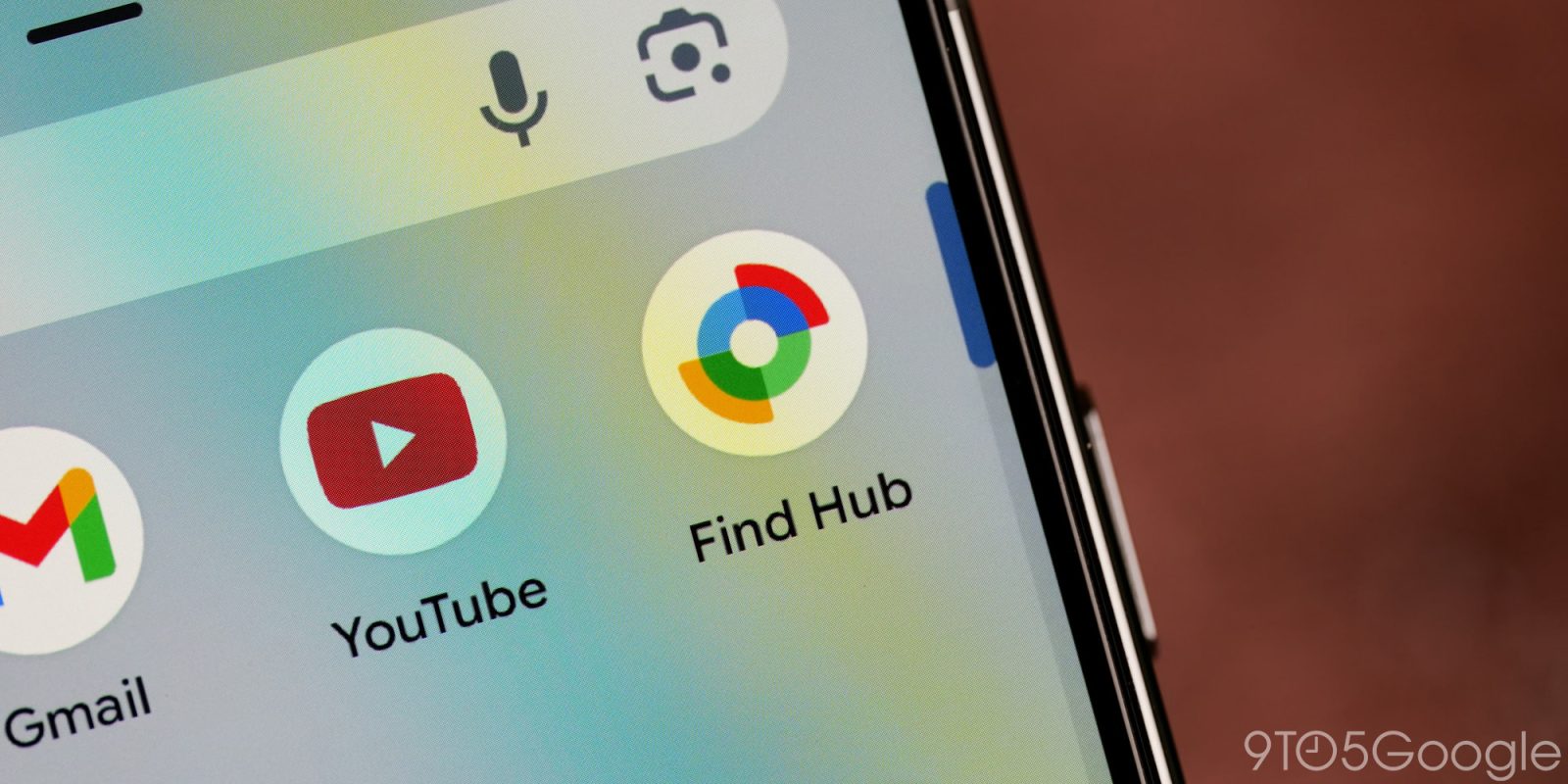
Following last week’s Android Drop , Google is now rolling out an app update that brings the “Remembered” tab to Find Hub. more…
9to5Google•Abner Li8 Sept
Iran's AI-enhanced cyber tactics amplify existing threats, potentially destabilizing geopolitical landscapes and complicating global cybersecurity efforts.
CryptoBriefing•Editorial Team8 Sept
Google's search changes in Europe may hinder user experience and business traffic, highlighting tensions between tech giants and regulatory bodies.
CryptoBriefing•Editorial Team8 Sept
The voluntary nature of Canada's data center principles may limit their impact, relying on corporate commitment to drive sustainable practices.
CryptoBriefing•Editorial Team8 Sept
Google's compliance with EU rules may inadvertently empower large intermediaries, potentially disadvantaging small businesses and altering market dynamics.
CryptoBriefing•Editorial Team8 Sept
Hey, happy Tuesday. How was your long weekend? I hope it involved a little Windows 98-style downtime , maybe some pickleball with Andre Agassi , a dive into the origins of the newly UN-endorsed Equal Earth map , and a few examples of GPT-6 Astra blowing some minds . As a reminder, Inbox is the tech newsletter that goes beyond the news cycle. We cover the most important 9to5Google stories from the last couple of days along with a few highlights from around the web. We publish every Tuesday and Thursday, and if you like what you read, please subscribe . more…
9to5Google•Daniel Bader8 Sept
Google’s newest AI weather forecasting model predicts wind speed at 100 metres above the ground, roughly the height of a modern wind turbine. It also forecasts cloud cover and how much sunlight reaches the surface, and it updates every hour. Energy traders, grid operators and wind and solar developers already pay other companies for that […]
 AI News•Dashveenjit Kaur8 Sept
Google's integration of Notebooks with NotebookLM enhances AI workspace efficiency, potentially boosting user engagement and subscription upgrades.
CryptoBriefing•Editorial Team7 Sept
Three tokenized stocks generated $7.1 billion in DEX volume, accounting for nearly 45% of the category's total activity.