Japanpage 5

Place · 912 articles
Share

Coverage, page 5

page 5 of 46

SBI, Kyobo Complete Japan-Korea Stablecoin Test With No Dollar Leg

SBI Digital Practice and Kyobo Life completed a cross-border pilot that directly converted yen-linked test tokens into won-linked tokens. The trial examined whether stablecoin infrastructure could reduce delays, conversion steps, and costs in institutional transfers. SBI and Kyobo Test Direct Yen-Won Settlement Cross-border institutions could eventually move funds between Japan and South Korea without routing […]

Bitcoin.com NewsBitcoin.com NewsKevin Helms18 Sept
  • neutral toward SBI Holdings · 99%

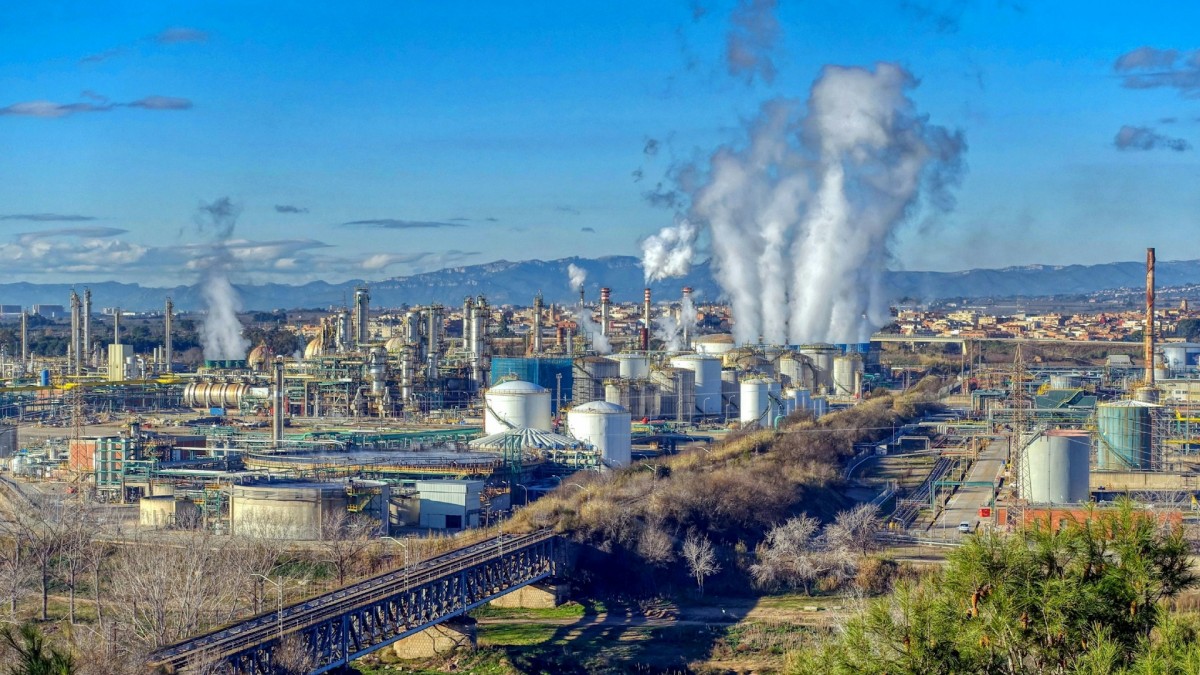
Japan's Refiners Have Enough Crude to Last Through November, Industry Body Says

Japanese refiners have procured enough crude oil to last them through November, the head of the Petroleum Association of Japan (PAJ) said on Friday, amid yet another twist in supply availability from the Middle East.  The temporary shutdown of the East-West oil pipeline in Saudi Arabia following attacks last week added another uncertainty in oil cargo movements from the Middle East region after the Kingdom halted loadings at the Red Sea port of Yanbu.    The Saudis, however, have boosted shuttle-shipping through the Strait of…

OilPrice.comOilPrice.comMichael Kern18 Sept

Japan’s Top Broadcasters Unite for First Joint Delegation to MipCancun (EXCLUSIVE)

Ten major Japanese broadcasters are joining forces for the first time to send a joint delegation to MipCancun, marking the country’s first coordinated television market presence outside Asia. The “All-Japan” initiative is organized under the Japan Commercial Broadcasters Association (JBA) in collaboration with Japan’s Ministry of Internal Affairs and Communications (MIC) and the Broadcast Program […]

VarietyVarietyNaman Ramachandran18 Sept

Weather tracker: Thunderstorms hit Spain as Japan braces for typhoon

At least one person dead as stormy weather causes severe flooding in Barcelona and Valencia Intense and slow-moving thunderstorms broke out on Wednesday afternoon across parts of eastern Spain, bringing some severe flooding and killing at least one person . Storms first struck over the Castilla-La Mancha regionduring the afternoon before passing over Spain’s east coast, becoming very slow-moving and continuing overnight. Torrential rainfall, strong winds and large hail were reported in Valencia and Barcelona, causing widespread flooding in both cities. Weather stations west of Barcelona recorded some of the highest totals with more than 100mm (4in) of rain falling in the space of a few hours, and locally 70mm in just 30 minutes in the early hours of Thursday morning. Cars and roads were submerged, and flights were cancelled across the region. Continue reading...

The GuardianThe GuardianJames Michelin for MetDesk18 Sept

Forgot to Pre-Order iPhone 18 Pro? Apple Store Pickup Available Today at Most Locations

Apple's new iPhone 18 Pro and iPhone 18 Pro Max models are now being delivered to customers worldwide following the pre-order period that began on Saturday, September 12. For those who didn't pre-order, there's now a 3-4 week wait time for iPhone 18 Pro Max models across all storage options and colorways in the U.S. Demand has been less strong for iPhone 18 Pro models, but you're still looking at a 2-3 week wait for any configuration. However, delivery or in-store pickup at select Apple Store locations on launch day is still an option. As of writing, Apple's online stores in the United States and Canada haven't yet been updated to show pickup availability, but there could be shortages for some configurations, though there could be some variation state by state. In the U.K., all ‌iPhone 18 Pro and iPhone 18 Pro Max‌ configurations have shipping estimates running into the first and second week of October, respectively, but ‌same-day pickup is still available in many regions, but it could depend on the store you choose. Apple Stores in Australia, China, India, Japan, Malaysia, Mexico, South Korea, Türkiye, and the UAE are also offering same-day pickup options. To order a product with ‌Apple Store‌ pickup, add the product to your bag on Apple.com or in the ‌Apple Store‌ app, proceed to checkout, select the "I'll pick it up" option, enter your ZIP or postal code, choose an available ‌Apple Store‌ location, select a pickup date, and select a 15-minute check-in window. Payment is completed online, and a valid government-issued photo ID and the order number may be required upon pickup. ‌iPhone 18 Pro models may also be available for walk-in customers at ‌Apple Store‌ locations with sufficient inventory, but availability can't be guaranteed. Walk-in customers may be placed into a separate queue with lower priority upon arrival to the store. The iPhone 18 Pro starts at $1,199 and the iPhone 18 Pro Max starts at $1,299. Both received a $100 increase over their predecessors, and the increases get steeper the more storage you opt for, with a 1TB iPhone 18 Pro now costing $300 more than a 1TB iPhone 17 Pro did last year. What Upgrading to iPhone 18 Pro From iPhone 17 Pro Gets You iPhone 18 Pro vs. iPhone 18 Pro Max Buyer's Guide iPhone 17 Pro vs. iPhone 18 Pro: 35+ Upgrades Compared iPhone 16 Pro vs. iPhone 18 Pro Buyer's Guide: Worth Upgrading? iPhone 15 Pro vs. iPhone 18 Pro Buyer's Guide: Should You Upgrade? Both phones have the same OLED Super Retina XDR always-on display with ProMotion and the Dynamic Island, the A20 Pro chip, 5G connectivity, a 48 megapixel Pro Fusion camera system, and the same four color options: Burgundy, Glacier Blue, Silver, and Black. Both are also offered in the same four storage tiers, including a 2TB option that is available on the smaller Pro model for the first time. Related Roundup: iPhone 18 Pro Tag: Apple Store Buyer's Guide: iPhone 18 Pro (Buy Now) Related Forum: iPhone This article, " Forgot to Pre-Order iPhone 18 Pro? Apple Store Pickup Available Today at Most Locations " first appeared on MacRumors.com Discuss this article in our forums

MacRumorsMacRumorsTim Hardwick18 Sept

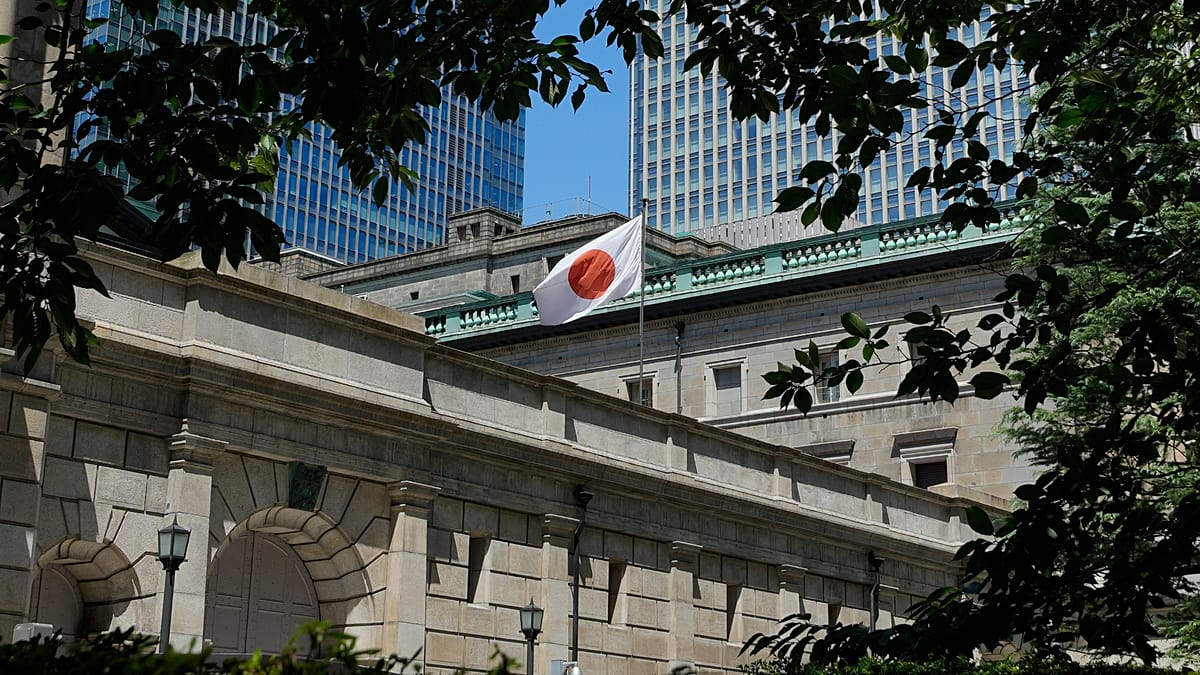
Japan raises interest rates to 31-year high to curb impact of rising prices

Increase from 1% to 1.25% follows US Federal Reserve and European Central Bank tightening monetary policy Business live – latest updates Japan’s central bank has increased interest rates to a fresh 31-year high as it attempts to combat high global inflation linked to the war in Iran. The Bank of Japan voted to raise its target interest rate from 1% to 1.25%, the highest level since 1995. Continue reading...

The GuardianThe GuardianReuters18 Sept

Japan raises interest rates to 31-year high as central bankers fight inflation; retail sales rise in Great Britain – business live

Rolling coverage of the latest economic and financial news The oil price has dropped by 2% this morning, pushed down by hopes that supply disruptions from Saudi Arabia may not be as severe as feared. Brent crude has dropped to $102.55 a barrel, following reports that Saudi authorities hope to bypass a damaged section of its 1,200-km East-West Pipeline and restore roughly half its capacity within days. Continue reading...

The GuardianThe GuardianGraeme Wearden18 Sept
R

Additional Emergency Assistance to Nepal in Response to the Flash Flood

Countries: Nepal, Japan Source: Government of Japan Today, September 17, upon the request of the Government of Nepal, in light of the humanitarian perspective and the close relations between Japan and Nepal, the Government of Japan has decided to provide DNA testing equipment as emergency relief goods to Nepal in response to the damage caused by the flash flood. (Reference) The flash flood struck Nepal on August 26, causing numerous casualties, fatalities, and extensive physical damage. According to the Government of Nepal, as of September 16, 1,399 people died and 5,179 people are missing.

ReliefWebReliefWebGovernment of Japan18 Sept

‘Vintage Violence’ Review: Eugene Kotlyarenko’s Blood-Splattered Rom-Com Is A Fun Crime-Fueled Trip Through Japan’s Denim Trade — Toronto Studio

Six years after his unhinged social media age horror Spree, writer/director Eugene Kotlyarenko takes a more optimistic approach with his action-packed rom-com out of Japan. In Vintage Violence, Carter (Cole Sprouse) is an urban explorer who finds a haul of rare denim in a mineshaft. When Izumi (Kiko Mizuhara) invites him to offload the merchandise […]

DeadlineDeadlineGlenn Garner18 Sept
R

Major disasters disrupted education for at least 13 million children in six countries in three months as Venezuela reopens schools

Countries: Venezuela (Bolivarian Republic of), Colombia, Indonesia, Japan, Nepal, Philippines Source: Save the Children CARACAS, Venezuela, 17 September 2026 – Education was disrupted for about 13 million children over the past three months as Nepal, Japan, Colombia, Venezuela, Indonesia, and the Philippines were all hit by major natural or climate disasters such as earthquakes, floods, or wildfires , said Save the Children. In many countries where the disasters stuck, classes were in session at the time such as in Nepal where children were forced to flee flash flooding. In others, schools were approaching the end of year holidays such as in Venezuela where pupils return to class this week and learning disruptions are only now being felt. Analysing various data sources, Save the Children looked at the impact of these disasters over the past three months and estimated that about 13 million children saw their learning suspended, transferred online, reduced or disrupted in other ways, with some continuing to see their education impacted.[1] In Venezuela, students and teachers said that they were feeling anxious as they returned to school for the new academic year following the twin earthquakes that hit the country on 24 June, killing more than 6,500 people. The earthquakes, the most powerful in a century, halted education for more than 21,000 students [2] and disrupted learning for one million**,** or about one in every eight school-aged child, Save the Children said. Teachers from La Guaira, a coastal region badly hit in northern Venezuela, said it was important to continue efforts to ensure that schools can provide supportive environments for children returning after the earthquakes although some schools have suffered structural damage and cannot reopen. Alondra*, 37, a teacher in Venezuela and mother to nine-year-old Emma*, is worried that the disruption will force students into overcrowded schools, affecting both learning quality and recreational opportunities. “My daughter's education is paramount, of course, and I'm not going to take her out of school, especially not because of this [earthquake],” she said. Alondra has been taking Emma to a Save the Children safe space in the months since the earthquake so she can continue learning and playing with other children her own age. Save the Children in Venezuela and its national partners have helped over 93,970 people** since the earthquakes including through psychosocial support, health support, and community engagement activities. The child rights organisation will also start rehabilitating learning spaces and schools and training teachers to support children affected by the earthquakes. Four other powerful earthquakes in Colombia, the Philippines, Indonesia and in Japan disrupted education for about 4 million children out of the 13 million children. A 7.8 magnitude earthquake struck the southern Philippines on 8 June, the first day back to school after the country’s summer break, disrupting education. Since then, Save the Children has reached more than 8,800 people, including 3,900 children, providing support including household items, hygiene kits and temporary learning spaces. Floods brought about by this season's monsoon in the Philippines also affected nearly 7 million students who saw classes suspended including in the capital Manila and several provinces, on and off, for almost two weeks, while almost 900 schools sustained damaged.[3] Tatiana Betancourt, an education officer at Save the Children Colombia, said: “Families temporarily settled in spaces that do not have adequate security and protection conditions affecting educational institutions, limiting children's and adolescents' access to safe learning spaces. Emotional effects on children, caregivers and families include fear, stress and uncertainty generated by the emergency.” In Colombia, the earthquake’s damage to education infrastructure disrupted access to education for over 1 million children and compounded pre-existing poverty. While about 80% of children have returned to learning through partial, hybrid, or alternating attendance, more than 300,000 children are estimated to be facing heightened protection risks, including recruitment by armed groups. [4] Save the Children in Colombia is focusing on supporting the safe return to schools wherever feasible and is supporting temporary learning arrangements through local education partners including temporary learning tents in affected areas such as Chocó. Flash floods in Nepal in August which hit as children were either on their way to school or starting their lessons, killed at least 1,350 people with about 4,800 still missing.[5] While some schools closed by the floods in Nepal have begun to reopen, many displaced children are not currently able to attend classes as they are not registered for schools in areas they moved to. Save the Children has supported more than 6,000 people across Nuwakot, Dhading and Rasuwa districts with essential items and has set up two temporary learning spaces to help children learn. In Japan, Save the Children set up child friendly spaces to provide children with a safe environment to play and recover following the 28 July earthquake in Kumamoto Prefecture, southern Japan, among other support. When disasters or climate emergencies disrupt children’s education, as they have for children in Nepal, Venezuela, Colombia and elsewhere this summer, children must be able to continue their education through crisis. Governments also need stronger, more inclusive, and resilient education systems that can last. Save the Children is calling on world leaders gathering in New York for the UN General Assembly this month to pledge at least US $5 billion to the Global Partnership for Education to help reach about 750 million children across 96 countries by 2030 by strengthening education systems. The child rights organisation is also calling on leaders to pledge US$600 million this November for Education Cannot Wait, so children in crisis can continue learning. *Names changed for anonymity References: **As of 11 September 2026. Methodology: Over 13 million figure is based on looking at major or high-profile disasters between 1 June and early September where there was a publicly reported impact on education. Disasters included earthquakes in Venezuela (1 million children’s education impacted) ; Colombia ( 1 million ) Indonesia ( over 116,000 ), Japan (about 200,000) and the Philippines ( 3 million ), wildfires in Indonesia ( 1.4 million ), monsoon flooding in the Philippines ( 6.8 million ) and flash floods in Nepal ( 19,000 ). For Japan, the number of children with disrupted education is estimated based on data from Ministry of Education, Culture, Sports, Science and Technology (MEXT) on 650 affected schools, using the average number of students per school in Japan. [1, 5] NEPAL: https://www.unocha.org/publications/report/nepal/nepal-rasuwa-flood-situation-report-no-7-8-september-2026 [2] Save the Children Rapid Needs Assessment (RNA) August 2026 + UNICEF assessment indicates that more than 432 schools suffered physical damage to their infrastructure. In the state of La Guaira, out of the 290 public and independent schools surveyed in the coastal area, 62 sustained structural damage or suffered total physical collapse. [3] EDCOM 2 - The Second Congressional Commission on Education: https://www.facebook.com/edcom2ph/posts/pfbid0xPVJkvHr9HAYRbofaMZcX3kDNtVcqeiHiq3yCtUSd2pSiYpwMCBMcxMoGrq1GH5fl [4] IRC, 14 Aug 2026: https://www.rescue.org/press-release/irc-launches-health-child-protection-response-colombia-earthquake-death-toll-rises

ReliefWebReliefWebSave the Children18 Sept