Korea Crypto News: Stablecoin Outflows and the 18-Month Streak Explained
South Korea's top five exchanges posted a $367M net stablecoin outflow in June 2026, extending an 18-month streak driven by restricted domestic products.

South Korea's top five exchanges posted a $367M net stablecoin outflow in June 2026, extending an 18-month streak driven by restricted domestic products.

Rising GPU costs in South Korea could reshape crypto mining viability, influencing global supply chains and tech market dynamics.

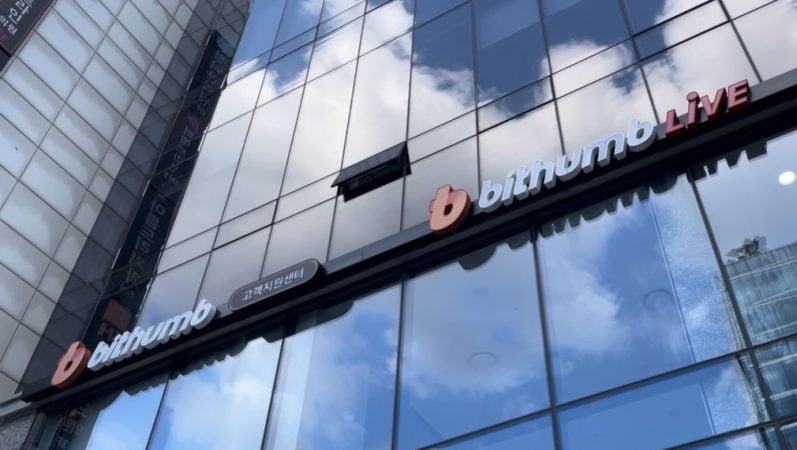
Bithumb plans to request a preliminary listing review and have its application reviewed by local authorities in 2027.
South Korea’s “leverage washout” has created a fresh entry point into the AI trade, according to Morgan Stanley, which lifted its rating on the country’s equities to overweight. The bank now sees the KOSPI climbing 36% to its 9,000 target. Strategists led by Daniel K Blake described the selloff as mainly technical. The bank previously

Prolonged stablecoin outflows from South Korea highlight regulatory challenges, risking financial stability and undermining capital control efforts.
Bitcoin's 2026 volatility trails South Korea's AI-driven KOSPI, as Samsung and SK Hynix swings expose leveraged ETF risk.

The KOSPI's volatility highlights the risks of market concentration and the broader impact of AI sentiment on global financial stability.

This record investment may signal renewed confidence in South Korea's market, potentially stabilizing regional economic dynamics.

Regulatory shifts in South Korea and Russia may reshape global crypto dynamics, influencing market sentiment and mining operations significantly.
AviationNews – South Korea’s Defense Acquisition Program Administration (DAPA) and Korea Aerospace Industries (KAI) officially concluded the ten-year development phase of the KF-21 Boramae supersonic...

The significant stablecoin outflows from South Korea highlight potential regulatory challenges and underscore the need for domestic financial innovation.
South Korea confirmed a 22% crypto tax starting in 2027, just as trading volume across its five main exchanges collapsed nearly 55% during the first half of the year. The timing raises an uncomfortable question about taxing a market that is already shrinking fast. How the 22% Crypto Tax Will Work Other income is a

Trading volume across South Korea’s five major won-based crypto exchanges fell 54.6% year over year in the first half of 2026 as liquidity became increasingly concentrated on market leader Upbit. South Korea crypto volume drops below $367B Upbit, Bithumb, Coinone,…

South Korea will begin taxing cryptocurrency gains at a combined rate of 22% from Jan. 1, 2027, ending expectations that the long-delayed measure could be postponed for a fourth time. South Korea confirms crypto tax launch Deputy Prime Minister and…

The surge highlights the interconnectedness of global markets, with AI spending driving volatility and concentration risks in major indices.

This rare collaboration may signal a shift towards more coordinated economic strategies in Asia, impacting global financial stability.

KSNet has partnered with the Solana Foundation to test blockchain payments and AI-driven transaction systems for South Korea’s financial market. KSNet announced on July 30 that it has signed a memorandum of understanding (MOU) with the Solana Foundation to jointly…

The rally in South Korea's chip sector signals a robust AI infrastructure expansion, impacting global tech markets and crypto industries.
Did stablecoins become Korea’s emergency liquidity rail?

South Korea has approved plans to establish a new 20 trillion won investment account within its sovereign wealth fund to finance artificial intelligence, data centers and other strategic industries while allowing domestic investments for the first time. According to a…