
Syrian man uncovers library hidden behind wall for 15 years
Abu Bilal built a secret wall in his home to protect his books from Syria’s former Assad regime.
 Al Jazeera17 Sept
Abu Bilal built a secret wall in his home to protect his books from Syria’s former Assad regime.
Al Jazeera17 Sept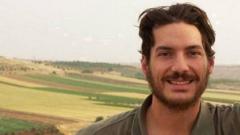
Austin Tice’s abduction was approved by Syria’s former leader Bashar al-Assad, a source claims.
 BBC17 Sept
Higher diesel and petrol prices are pushing up transport and food costs across an already impoverished Syria.
Al Jazeera16 Sept
Discontent is testing President Ahmed al-Sharaa's ability to unify a country emerging from 14 years of conflict.
Al Jazeera16 Sept
Countries including Syria, France and Guatemala have seen blockades, marches or other protests due to rising fuel prices caused by conflict in the Middle East.
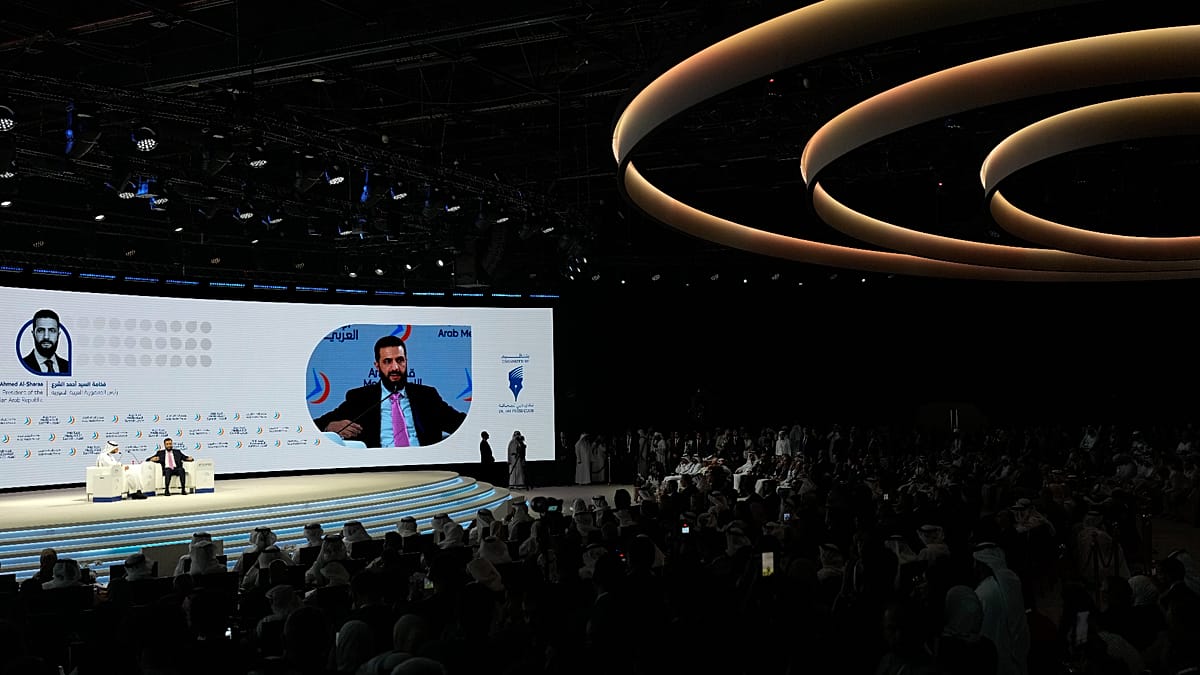
Syria's president delivered the opening keynote in Dubai on Tuesday, a day that also brought the UAE's most complete account of the cyber-attacks it faced this year and new figures on Dubai's media economy.
 Euronews16 Sept
Country: Syrian Arab Republic Source: UN Office for Disaster Risk Reduction Syria has taken another important step towards strengthening its national multi-hazard early warning system through a two-day national workshop bringing together government institutions, United Nations entities, international organizations and disaster risk reduction partners to assess existing capacities, identify priority gaps and define the way forward for a more integrated and people-centred early warning system. Organized by the Ministry of Emergency and Disaster Management in Damascus in partnership with UNDRR, the National Multi-Sectoral Early Warning System Gap Analysis Workshop is supporting national efforts to review progress across the four pillars of the Early Warnings for All (EW4All) initiative and strengthen coordination among institutions responsible for disaster risk management, forecasting, warning dissemination and preparedness. The workshop provides a platform to take stock of Syria’s existing early warning capacities, identify institutional, technical and operational gaps, strengthen coordination between national and local actors, and align ongoing initiatives and partner support around national priorities. A key expected outcome is to lay the foundation for a four-year national roadmap for multi-hazard early warning, complemented by a set of priority actions for the coming six months. From managing disasters to managing risk Opening the workshop, H.E. Raed Al-Saleh, Minister of Emergency and Disaster Management, emphasized Syria’s ambition to progressively move from managing disasters after they occur towards managing risks before they become disasters. He highlighted the opportunity to build a modern national early warning system that draws on technology, data and national and international expertise, while stressing that an effective warning is one that reaches people in time, is understood and trusted, and enables communities and institutions to act before hazards become disasters. The workshop reflects a broader shift towards strengthening prevention, preparedness and anticipatory action and placing risk information at the centre of national decision-making. Building on Syria's progress in disaster risk reduction Speaking at the workshop, Raidan AlSaqqaf, Deputy Chief of the United Nations Office for Disaster Risk Reduction (UNDRR) Regional Office for Arab States, highlighted the progress made in Syria over the past two years in strengthening disaster risk reduction and resilience. This progress has included efforts to improve risk understanding and disaster data, strengthen preparedness and institutional coordination, and advance the development of multi-hazard early warning systems. The next step is to translate these foundations into an integrated system capable of responding to the needs of people and communities across Syria, particularly those most exposed and vulnerable to disaster risk. UNDRR will continue supporting this nationally led process through technical expertise, knowledge and international experience, while promoting a people-centred approach that connects risk knowledge with forecasting, warning communication, preparedness and early action. Connecting risk knowledge with early action The workshop builds on wider national efforts to strengthen disaster risk information and risk-informed decision-making. Syria has been among the early adopters of DELTA Resilience, UNDRR's new disaster tracking system, supporting efforts to establish a systematic national mechanism for recording disaster impacts and strengthening the use of risk information in planning and decision-making. Strengthening this evidence base provides an important foundation for multi-hazard early warning. Historical disaster impacts, vulnerability information and future risk projections can help authorities identify priority hazards and exposed populations and better connect risk knowledge with preparedness, anticipatory action and recovery planning. The national workshop therefore marks an important step from strengthening the understanding of risk towards ensuring that information can ultimately translate into earlier action and better protection for people and communities. A coordinated approach to Early Warnings for All Effective multi-hazard early warning systems depend on collaboration across institutions and sectors. Participants in the workshop are examining capacities and gaps across the interconnected components of early warning, including: disaster risk knowledge and information; detection, observation, monitoring, analysis and forecasting; warning dissemination and communication; preparedness and response capabilities; institutional coordination and governance; and community awareness and the ability of people to understand and act on warnings. The International Telecommunication Union highlighted the importance of regulatory, institutional and technological arrangements that allow trusted warning messages to reach all people through multiple, inclusive and accessible communication channels. The Syrian Arab Red Crescent also emphasized the importance of community awareness, capacity development, training, simulation exercises and stronger operational capacities at both national and local levels. Together, these elements are essential to ensure that early warning is not simply about issuing an alert, but about enabling timely and informed action that saves lives and reduces losses. Towards a national roadmap The outcomes of the workshop are expected to inform the development of a multi-year national roadmap for strengthening Syria's multi-hazard early warning system, identifying institutional and technical priorities, areas requiring partner support and immediate actions that can be advanced over the coming months. The process contributes to the global Early Warnings for All initiative and complements Syria’s broader efforts to strengthen disaster risk governance, preparedness and resilience. For UNDRR, the workshop forms part of continued support to Syria to strengthen risk knowledge, institutional capacities and preparedness and to establish a national multi-hazard early warning system that places people and communities at its centre.
 ReliefWeb•UN Office for Disaster Risk Reduction16 Sept
Country: Syrian Arab Republic Source: Médecins Sans Frontières 15 September 2026 - Years of conflict have severely weakened healthcare services across Daraa governorate, Syria. Health facilities continue to face shortages of trained staff, medicines, and medical supplies, alongside unreliable infrastructure and a weak referral system. Financial barriers also remain significant, with many patients having to pay out of pocket for services or medicines they cannot afford. These gaps are particularly acute for maternal and newborn care, while mental health services and treatment for chronic diseases also remain limited. In the Nawa region of Daraa governorate, the Directorate of Health estimates that around 90,500 people rely on health services in the area, including nearly 23,000 women of reproductive age and almost 18,000 children under 5. At the same time, people returning after years of displacement are adding to the demand on already strained services. In 2026, around 604,000 people in Daraa governate are estimated to need health assistance. As of 3 September, UNHCR recorded 149,682 refugee returnees to Daraa governorate. Nawa National Hospital serves communities across Daraa governorate and neighbouring Quneitra; MSF has previously estimated that its activities at Nawa National Hospital help support a population of around 1.2 million people across Daraa and surrounding communities. For one family from Tal Shihab in southern Syria, reaching the healthcare they needed meant travelling to Nawa National Hospital. “Because of our difficult financial situation, I could not afford the cost of a caesarean section [for my wife],” says Bilal Bashndi, whose baby was born at Nawa National Hospital. “We came from Tal Shihab. It took us around an hour and a half by car to reach the hospital." Since Médecins Sans Frontières/Doctors Without Borders (MSF) began supporting Nawa National Hospital, working with the Directorate of Health to strengthen both medical services and the hospital systems needed to provide them, activities have included rehabilitation and reorganisation of key hospital spaces, repairing the hospital elevator, medical equipment, and supplies, and support to the obstetrics and gynaecology and neonatal departments. This year, work has also included the reorganisation of the operating theatre and continued improvements to the pharmacy and other hospital support services. MSF also supports infection prevention and control, including cleaning, disinfection, and sterilisation, as well as essential services such as laundry and central sterilisation and the operation of a kitchen providing meals for patients. At Nawa, MSF supports obstetric and gynaecological care and neonatal services, including vaginal and caesarean deliveries, antenatal and postnatal care, family planning, and care for newborns. MSF provides training for medical staff as well. Some services have changed significantly over the past year,” says Tariq Al-Mohammad, MSF's deputy project medical referent. “The neonatal department, which was previously not functioning, is now operational, while specialist coverage and access to medicines and medical supplies have improved. We can see a noticeable improvement in the services.” During the first year of activities, Nawa National Hospital’s obstetrics and gynaecology departments admitted more than 7,100 mothers and have assisted 3,140 births — with 794 surgical intervention — while 315 newborns were admitted and treated with MSF-supported neonatal care. Beyond Nawa National Hospital, MSF also supports primary healthcare services at Tasil Health Centre, helping people in Tasil and surrounding communities access care closer to where they live. Mental health, health promotion, and community engagement activities are also part of MSF’s support in Tasil. Mental health needs after years of conflict The consequences of years of conflict in Daraa extend beyond physical healthcare. Repeated exposure to violence, displacement, economic hardship, and major changes in people’s living conditions have created significant mental health and psychosocial needs. For people returning after years away, reintegrating into communities that have themselves changed can bring additional social, economic, and psychological challenges. MSF provides mental health and psychosocial support in Nawa and Tasil, including community-based activities, individual and family support, and specialised care. “The community today needs mental health services,” says Yousef Hannou MSF's mental health activity manager in Daraa. “People have lived through years of war and repeated traumatic events.” Hannou says that some returnees are coming back after spending many years outside Syria, sometimes to communities with damaged infrastructure, limited services, and very different living conditions from those they left behind. Adapting to these changes, alongside economic difficulties and the effects of past traumatic experiences, can further affect people’s mental wellbeing. MSF health promotion and community engagement teams work with people in Nawa, Tasil, and surrounding communities through health education sessions, regular meetings with community representatives, and group discussions. The teams gather feedback on barriers to healthcare, concerns about the services provided, and suggestions for how they can be improved. “One of our main achievements in community engagement has been establishing networks of community health workers in Nawa and Tasil, made up of people from the communities themselves,” says Mohammad Abazid, MSF health promotion supervisor. “We wanted community health workers to come from the same communities, so that participation is more effective.” MSF has also strengthened infection prevention and control measures within the facility. In addition, water and sanitation teams have ensured adequate water supply and proper waste disposal at the facility over the past year. MSF is initially supporting the hospital’s water supply with around 70,000 litres of water per month. These interventions have significantly improved the overall functionality and quality of services at the hospital. Despite incipient recovery over the past year, significant gaps remain across Daraa’s healthcare system. Substantial support is still needed to ensure patients can access consistent, good-quality care closer to home. -ENDS-
ReliefWeb•Médecins Sans Frontières15 Sept
Country: World Source: Famine Early Warning System Network Please refer to the attached file. Key messages In March 2027, FEWS NET expects the number of people in need of humanitarian food assistance to be highest in Sudan, Pakistan, Nigeria, Democratic Republic of the Congo, and Yemen, followed by Afghanistan. When food assistance needs are expressed as a percent of the total population of each respective FEWS NETmonitored country, FEWS NET expects the share of the population that needs humanitarian food assistance to be highest in South Sudan, where 50-55 percent of the country’s population will most likely need food assistance. The share of the country’s population that needs food assistance is also very high in Yemen (45-50 percent); Sudan (40-45 percent); Somalia, Syria, and Haiti (25-30 percent each); and Lebanon (20-25 percent). Out of the projected total 155-165 million people in need across FEWS NET-monitored countries, Sudan, Pakistan, Nigeria, and Democratic Republic of the Congo are each expected to contribute over 10 percent of total food assistance needs. Yemen and Afghanistan are each expected to contribute 5-10 percent of total food assistance needs. In comparison to March 2026, FEWS NET expects the number of people in need of food assistance to be higher in Sudan, Pakistan, Nigeria, the Democratic Republic of the Congo, Yemen, Uganda, Venezuela, Ukraine, Madagascar, Lebanon, and Angola. In contrast, FEWS NET expects the number of people in need of food assistance to be lower in Afghanistan, Kenya, Mozambique, Zambia, and Burundi. In all other countries, food assistance needs are expected to be similar to last year.
ReliefWeb•Famine Early Warning System Network15 Sept
Countries: Luxembourg, Eritrea, Syrian Arab Republic, Ukraine, Venezuela (Bolivarian Republic of) Source: UN High Commissioner for Refugees Please refer to the attached file. Between Jan-Nov 2025, 1,648 people applied for international protection (a 7 per cent decrease compared to the same period in 2024). Top countries of origin were Eritrea, Syria and Algeria. The first instance protection rate was 56 per cent. Between Jan-Nov 2025, 1,070 people applied for temporary protection (TP). During this period, 902 individuals were granted TP, while 3,865 existing TP holders renewed their status, extending validity until March 2026. The national reception agency provides housing to asylum-seekers, refugees and beneficiaries of TP. Despite the creation of additional places, the occupancy rate remains at 97 per cent.
ReliefWeb•UN High Commissioner for Refugees15 Sept
From Indonesia to Guatemala to Syria, shortages and price increases are setting off protests and blackouts.
 The New York Times•Damien Cave15 Sept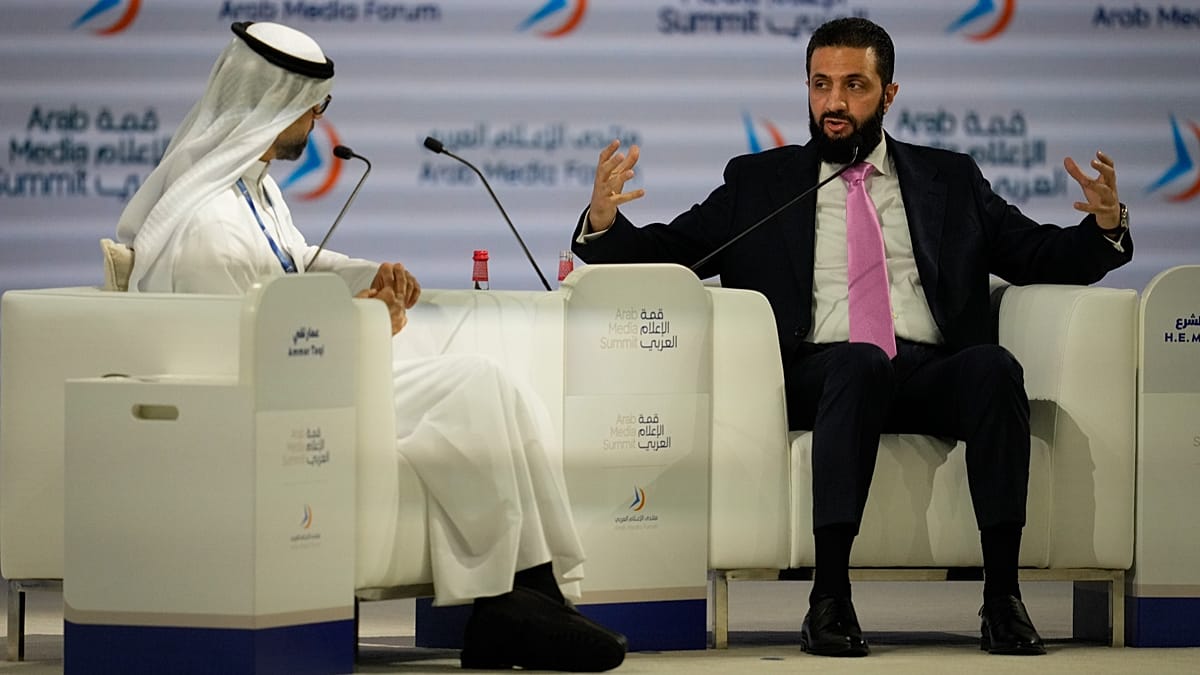
Answering Euronews' question at the Arab Media Summit in Dubai, Syria's president said he hoped the situation "remains stable" but admitted "nobody can predict" what happens next, while urging Arab countries to work together.
Euronews15 Sept
Country: Syrian Arab Republic Source: DOZ International Please refer to the attached file. The report presents findings from a Rapid Needs Assessment conducted between August and September 2026 across eight Syrian governorates, gathering the perspectives of 348 respondents on social cohesion, peacebuilding, local governance, transitional justice, women's leadership, youth engagement, and disability inclusion. The assessment highlights both the continuing challenges facing Syrian communities and the strong demand for inclusive recovery, reconciliation, accountable governance, and locally driven peacebuilding initiatives. Among the key findings: 69.5% identified Social Cohesion as the highest priority for future interventions. 50.0% identified Transitional Justice as a key priority for recovery and long-term stability. Communities expressed strong support for dialogue, reconciliation, and trust-building initiatives. Women, youth, and persons with disabilities were consistently recognized as essential actors in strengthening community resilience and sustainable recovery.
ReliefWeb•DOZ International15 Sept
For many in Washington, being sanctioned by America’s adversaries is a badge of honor. Omar Hossino, the national security lead for the House Republican Policy Committee, is viewed as the staffer who has helped members get on those blacklists. “His greatest achievement: He had me identified by the Assad dictatorship [in Syria] as an enemy…
 The Hill•Laura Kelly15 Sept
Moscow maintains military foothold in the Mediterranean following talks with Damascus
Al Jazeera15 Sept
Anger rises in Syrian cities as fuel price hikes burden struggling households amid an ongoing cost-of-living crisis.
Al Jazeera14 Sept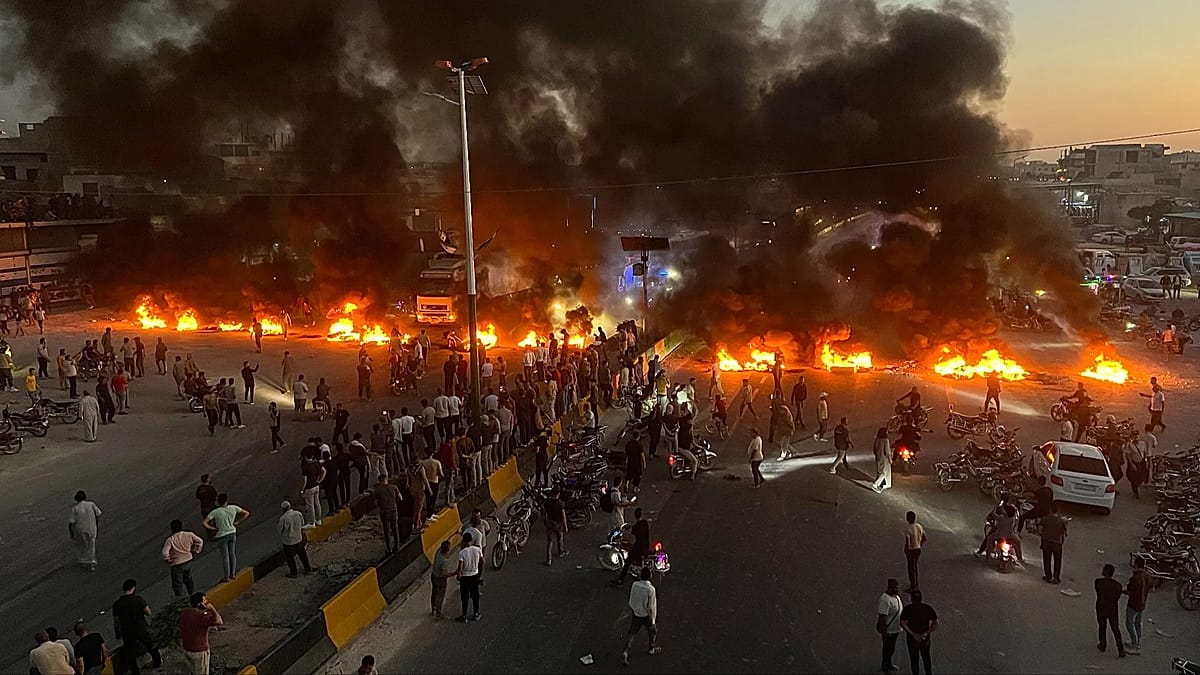
Demonstrators blocked oil tanker routes and roads in six provinces on the second consecutive day of unrest over a 25-40% fuel price rise, as more than 50 MPs signed a demand to question the energy minister.
Euronews14 Sept
Syria raised diesel prices 40% and gasoline prices by as much as 28% on Saturday, and protesters blocked the highway linking Damascus to Aleppo and burned tires along the road to Turkey within 24 hours, the widest unrest since Bashar al-Assad's fall in December 2024. Diesel now costs 175 Syrian pounds a liter and household and industrial gas prices climbed roughly 9%. Protests also broke out in Hama, Khan Sheikhoun and Maarat al-Numan, and crude tanker convoys bound for refineries were halted en route. Syria's Energy Ministry called the increase…

Countries: Syrian Arab Republic, Egypt, Iraq, Jordan, Lebanon, Türkiye Source: Estonian Refugee Council Please refer to the attached file. Key Takeaways • Since December 2024, Syria has witnessed one of the largest and most rapid return movements of this century. More than 3.5 million refugees and IDPs have returned to their places of origin – a scale unimaginable only a few years ago. While the renewed possibility of return is encouraging, movements have far outpaced many communities’ absorption capacity. In many locations, returnees have found essential services missing and are having to live in damaged housing. As such, any future humanitarian programming should incorporate an area-based reintegration approach. • Available benchmarks show that income covers only a fraction of essential costs. In March, the minimum wage covered 28% of WFP’s MEB for a family of five and less than half (43%) of its food component. Independently, SCPR found that university educated public-sector and private-sector wages covered only 33.9% and 38.5% of the household abject-poverty line in April. These findings reinforce the need to verify household income and expenditure locally before setting transfer values and to review values regularly as prices and exchange conditions change. • Women-headed households, children, people with disabilities and families of missing persons face compounded protection concerns. Documentation and death-registration gaps restrict property rights and assistance; people with disabilities experience exclusion from work; economic stress increases GBV and harmful coping; and children are at a high risk for explosive-ordnance casualties, child labor and child marriages. Specialist legal assistance and robust referral system add-ons should be considered to ensure that assistance coverage goes beyond the minimum survival standards and accounts for specific vulnerabilities of affected groups. • Cash-delivery conditions improved somewhat in June and July as exchange-rate differences narrowed and the Central Bank expanded currency choice for beneficiaries of covered incoming remittances. However, local humanitarian transactions and procurement must still be conducted in Syrian pounds, and feasibility remains highly location specific. Financial service provider liquidity, currency availability, fees, agent coverage, documentation requirements, electricity, connectivity and cash-out safety should therefore be verified before selecting a delivery mechanism, with offline and non-cash alternatives retained. • Explosive-ordnance contamination and the prohibitive cost of land clearance constrain agricultural recovery in many return areas. Livelihood support should therefore extend beyond agriculture to viable non-farm microenterprises, particularly for womenheaded and returnee households. Productive-asset grants including support to purchase sewing machines, workshop tools, small-business stock, or equipment for small food retail activities is recommended, provided local assessment confirms demand and viability.
ReliefWeb•Estonian Refugee Council14 Sept
Demonstrators burn tyres and block highways as protests over increased fuel prices grip Syrian cities.
Al Jazeera14 Sept