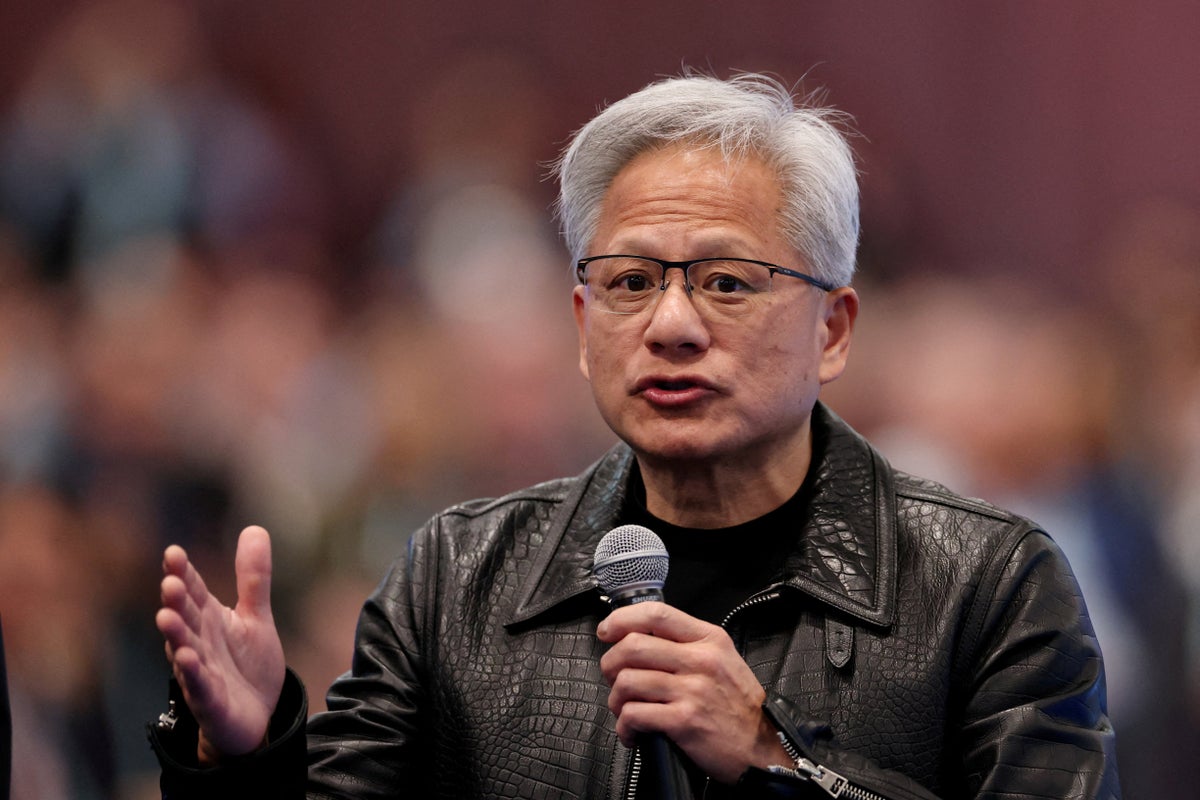
AI powerhouse boss to join Trump and Xi at White House as fears over technology grow
Trump is scheduled to meet with Xi on September 24 in Washington
Trump is scheduled to meet with Xi on September 24 in Washington
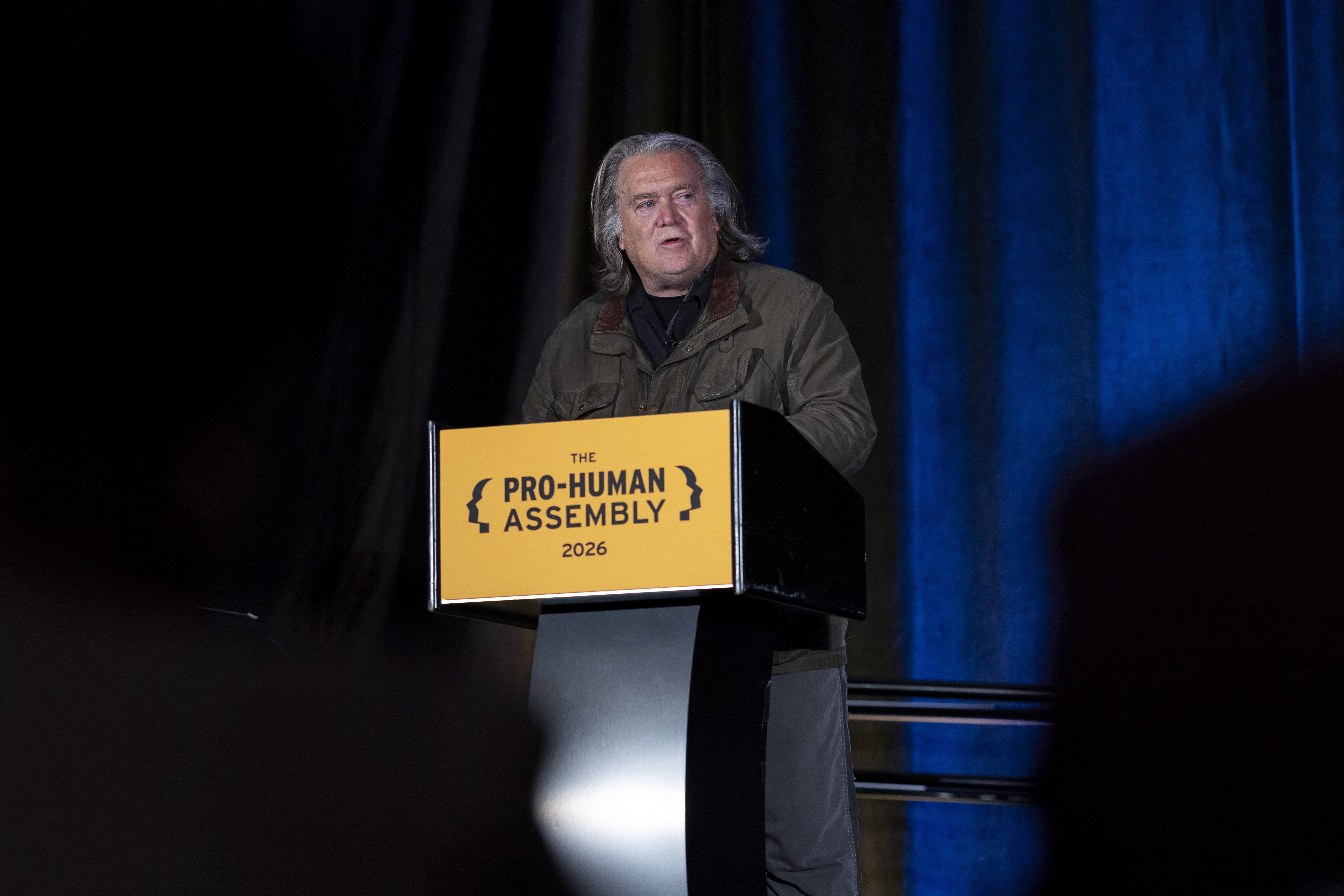
Where does Steve Bannon fit in the debate over regulating or slowing AI? He tells Morning Edition where he breaks with Trump and what he thinks Washington should do.
 NPR•Steve Inskeep16 Sept
Twenty-five years after 9/11, figures compiled by conflict monitor underline how Sahel region has become centre of Islamist terror Islamist extremist violence in Africa’s Sahel region is set to reach historic highs after a series of sweeping offensives by groups linked to al-Qaida and Islamic State, according to new figures compiled by the conflict monitor Acled . As the US marks the 25th anniversary of the 9/11 attacks launched by al-Qaida against targets in Washington and New York, the statistics underline the continued expansion of the veteran organisation in parts of Africa – in stark contrast with its relative weakness elsewhere. Continue reading...
 The Guardian•Jason Burke International security correspondent16 Sept
France's incoming ambassador to the US has been cleared to take up his post after Paris apologised for criticism of Washington over a UN vote. Aurelien Lechevallier, chosen by President Emmanuel Macron to replace Laurent Bili, is expected to arrive in Washington in the coming weeks following the diplomatic dispute.

Technological rivalry between Washington and Beijing makes it harder to agree how to manage potentially existential dangers

A former Anthropic researcher’s apocalyptic declaration about artificial intelligence has led to a global panic that the technology might be the end of us all. At an event in Washington today to warn about the dangers of AI, US senator Bernie Sanders said that Congress has been ‘asleep at the wheel'. Oddly, Steve Bannon appeared at the same event. But is this response a distraction from the more immediate problems AI is already causing? Kai Wright and Carter Sherman are joined by Guardian tech reporter Johana Bhuyian to put this moment in context, and she explains why we should be cynical about industry calls for regulation Continue reading...
The Guardian•Hosted by Kai Wright and Carter Sherman with Johana Bhuiyan . Produced by Tiara Chiaramonte engineered by Ivan Kuraev executive producers Jonathan Menjivar and Rachel Humphreys15 Sept
President says he will block renovation project unless court decision to bar his name from being added is overturned Kennedy Center leaders say Trump’s name on building may avoid ‘fiscal collapse’ Donald Trump said on Tuesday that the Kennedy Center would close “immediately” and threatened to cancel a planned renovation of the institution if federal courts did not allow his name to be placed on the front of the building. Trump’s ultimatum came shortly after the president’s handpicked board voted, again, to close the institution’s performing arts building in Washington, citing safety and financial concerns. Continue reading...
The Guardian•Joseph Gedeon in Washington15 Sept
The Kennedy Center board voted Tuesday to close most of the Washington performing arts complex for safety repairs, hours after a judge again blocked efforts to add President Donald Trump’s name to the building. Trump said the $257 million renovation plan depended on recognising his role in the project.

Who are the Democrats running in the midterms, and where do they stand? Our political reporters will be hosting a series of conversations on the critical issues ahead of November. First up: the state of the Democrats, the party’s moderate and leftwing candidates and key races to watch. Drop your questions and join us live at 12pm (EDT) on 16 September Sign up or sign in to post a question We’re less than two months from the midterm elections that could have an outsized impact on the future of the United States. With the primaries wrapped, our reporting team is fanned out across the country to tell the stories behind the horse race, from Washington to the Midwest and along the West Coast. Continue reading...
The Guardian•Guardian moderators (now); Shrai Popat, David Smith, Alice Speri, Joseph Gedeon and Rachel Leingang (later)15 Sept
WASHINGTON (RNS) — The dangers of AI hung heavy over Tuesday's conference, including the faith-focused panel with evangelical, Catholic and LDS leaders.
 Religion News Service•Jack Jenkins15 Sept
Lawyers for the League of Women Voters and the Electronic Privacy Information Center on Tuesday urged the Supreme Court to leave in place a ruling by a federal judge in Washington, D.C., that bars the federal government from using a centralized database to verify voters’ citizenship. Nikhel Sus, the lawyer representing the two groups, told the justices that, in violation of federal law, “the government has recklessly created an error-laden master citizenship database that endangers millions of Americans’ privacy and voting rights.” The filing came less than 24 hours after the Supreme Court rejected the federal government’s request to be allowed to implement portions of a U.S. Postal Service rule on mail-in ballots – which, like the database at the center of this case, the Trump administration said was necessary to combat election fraud. The dispute has its roots in a March 25 executive order that (among other things) instructed the Department of Homeland Security and the Social Security Administration to establish systems that would allow state and local governments to verify voters’ citizenship and immigration status. Those agencies then overhauled the Department of Homeland Security’s Systematic Alien Verification for Entitlements database, known as the SAVE system, to include the records of U.S.-born citizens, to give it access to Social Security numbers, and to allow users to conduct multiple searches simultaneously. The League of Women Voters and the Electronic Privacy Information Center went to federal court in Washington, where they challenged the changes to the SAVE system. On June 22, U.S. District Judge Sparkle Sooknanan blocked the government from using the modified system, agreeing with the challengers that it violates federal privacy laws, the Social Security Act, and the federal laws governing administrative agencies. Sooknanan wrote that “the federal government has knowingly trampled on the privacy rights of American citizens in a manner that threatens the sacred right to vote.” Moreover, she continued, “states have partnered with the federal government to access the database and are actively removing United States citizens from voter rolls based on inaccurate information.” By a vote of 2-1, the U.S. Court of Appeals for the District of Columbia Circuit on Sept. 4 rejected the government’s request to put Sooknanan’s order on hold while the appeal moves forward, but it ordered the appeal to be fast-tracked. The court instructed the litigants to propose a briefing schedule by Sept. 14, but the litigants later agreed that the briefing schedule should be postponed until the Supreme Court acts on the Trump administration’s request. U.S. Solicitor General D. John Sauer then came to the Supreme Court on Sept. 8, asking the justices to pause Sooknanan’s ruling while the government’s appeal moves forward. He called Sooknanan’s decision an “indefensible order that threatens the integrity of upcoming elections by vacating the federal government’s authority to internally use Social Security data when fulfilling its duty to respond to requests by States to verify the citizenship of individuals for voting and other purposes.” Moreover, he added, Sooknanan did not have the power to enter her order because the challengers do not have a legal right to sue, known as standing. Among other things, he wrote, the federal government is not the source of any injury that the challengers and their members might suffer, because the SAVE system “merely notifies the States whether the federal government can confirm citizenship.” In their filing on Tuesday afternoon, the groups pushed back against the government’s argument that they lack standing because the states, rather than the federal government, would be the source of any injury to them. That contention cannot be squared with the Supreme Court’s own cases, Sus wrote, which have “repeatedly recognized that a plaintiff has standing if ‘”third parties will likely react” to the government [action] “in predictable ways” that will likely cause . . . the plaintiff’s injury.’” “‘It is hardly surprising,” Sus continued,” “that additional voter verification and potential voter disenfranchisement is “the predictable effect of” the federal government incorrectly informing a state that an individual may be ineligible to vote.’ Indeed,” he concluded, “the government concedes this is the intended effect.” The groups also told the justices that the federal government was reading too much into a provision of federal immigration law – which, Sauer had argued, trumps any other federal law, like the Social Security Act or the Privacy Act, that might prevent DHS from obtaining or disclosing information. Accepting that interpretation, Sus countered, “would give DHS unlimited power to vacuum up millions of Americans’ sensitive information from SSA (or any other agency) and disclose it in bulk to states however it wants.” If Congress had intended to give DHS that “extraordinary power,” Sus suggested, “it would have done so clearly and expressly.” But not only has it not done so, Sus emphasized, but “several bills that would expressly authorize the SAVE modifications have failed in Congress.” Finally, the groups said, there is no real harm to the government if it cannot move forward with the modified system while the litigation continues. The pre-2025 SAVE system will remain in place, they stressed, and government agencies can continue “to use SAVE for individualized citizenship checks as they did for decades prior to 2025.” Moreover, they added, “[t]he government also lacks a substantial interest in operating a citizenship database it admits is error-prone and unreliable.”
 SCOTUSblog•Amy Howe15 Sept
The CLARITY Act finally reached its first real Senate floor test Tuesday and promptly hit a wall. Senators voted 49-50 against cloture on the motion to proceed to H.R. 3633, leaving the crypto market-structure bill 11 votes short of the 60 needed to advance. The bill isn’t technically dead, but with Congress racing toward its […]
 Bitcoin.com News•Jamie Redman15 Sept
The 2026 midterms could reshape Washington as voters weigh Trump, party divisions and the issues driving the election.
 Al Jazeera15 Sept
With diesel prices hitting a record $6.27 a gallon, Washington is talking about a maneuver that could ultimately make matters worse.

At an event in Washington, partisanship took a back seat as elected officials, religious leaders, parents and artists called for reining in artificial intelligence.
 The New York Times•Jeremy W. Peters, Cecilia Kang and Tierney L. Cross For The New York Times15 Sept
Legislation would force public reporting and FAA slot decisions as part of a staged plan to ease Reagan’s congestion.

Leftwing senator and far-right strategist rail against tech oligarchs but offer competing visions on Chinese ‘cold war’ The progressive senator Bernie Sanders and rightwing strategist Steve Bannon have called for restrictions on artificial intelligence (AI) but offered competing visions for what they termed a “cold war” with China. Speaking at the “Pro-Human Assembly” in Washington on Tuesday, the ideological adversaries were united in warning of the potential dangers of AI and demanding stringent guardrails against Silicon Valley’s “oligarchs”. Continue reading...
The Guardian•David Smith in Washington15 Sept
Bernie Sanders criticised the advancement of artificial intelligence at the Pro-Human Assembly in Washington Tuesday, warning that this version of AI is 'the least capable version of AI that we will ever have'. The independent senator from Vermont was speaking at the conference alongside a number of AI sceptics, including Steve Bannon Continue reading...
The Guardian•Guardian Staff15 Sept
This week in Washington and one day of ETF flows explain why the calendar suddenly matters. Meta AI predicts the next three months will be unusually consequential, and it projects Bitcoin to range from $78,000 to $92,000 by the end of 2026, with $85,000 as the base case.Today (September 15) is the first trigger. The […]

Lawmakers and AI regulation advocates met Tuesday in Washington at a Future of Life Institute event to urge regulatory action to rein in the expanding technology.