War on the Rocks

War on the Rockspage 4

Coverage, page 4

page 4 of 6

A Life in Army Special Operations, from Desert Storm to the Next War

Lt. Gen. (ret.) Francis Beaudette, former commanding general of the U.S. Army Special Operations Command, joins Ryan to discuss how his family history, service, and books shaped his path into and time in the Army. Together, they talk through his years as a young officer during Operation Desert Storm, the wars that followed, the present and future challenges of special operations (and how they aren’t that different from the past), and the difficulty of learning the right lessons from the wars of today. Thanks to Legion Intelligence for sponsoring the event at which this episode was recorded.Image: ChatGPT
War on the RocksWar on the RocksRyan Evans17 Aug

Blanchard’s Lathe and the Long Arc of American Manufacturing

Editor’s note: This is the ninth article in a limited series celebrating American defense technologies born from wartime and their effects on broader national security, politics, and society. This series will run for several weeks to commemorate America’s 250th anniversary, and winners will be selected by a reader vote undertaken through our newsletter later this summer. Prior installments can be found at the Arsenal of Innovation page.Emerging from the chaos of supplying the U.S. Army during the War of 1812, the War Department sought to foster domestic production of standardized muskets. Out of this industrial project arose an invention that laid the foundation

War on the RocksWar on the RocksAubry Eaton17 Aug

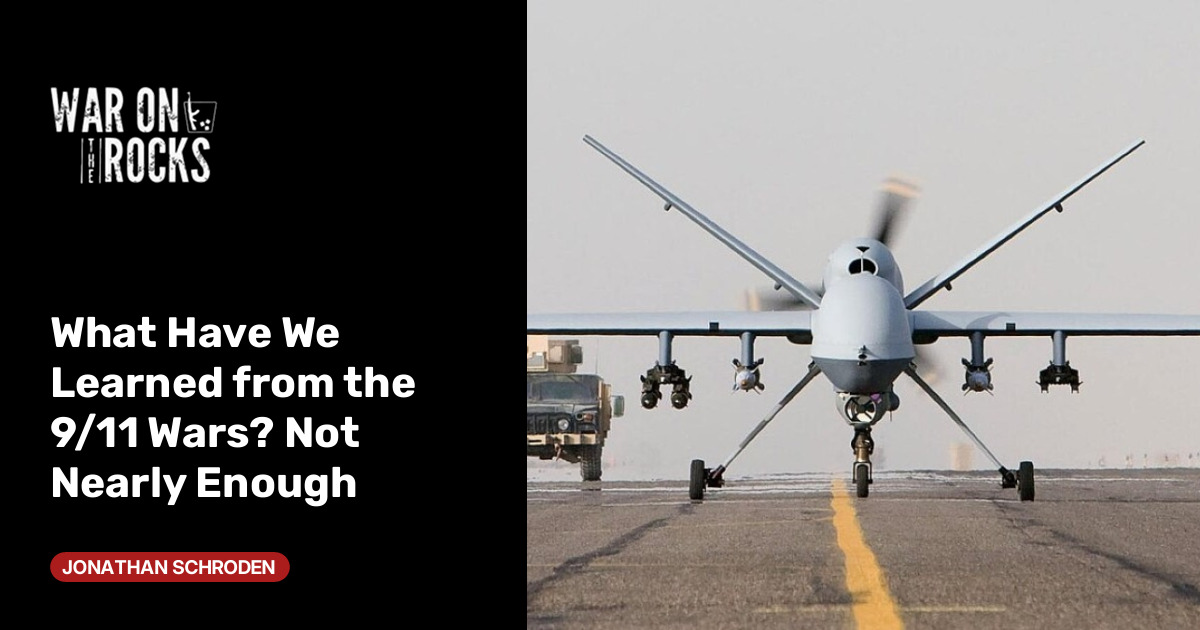
What Have We Learned from the 9/11 Wars? Not Nearly Enough

Editor’s Note: The following article draws on themes from the author’s forthcoming book titled US Counterterrorism Operations in Afghanistan: Jackpots, Dry Holes, and Collateral Damage.Over the next month, the United States will pass two major historical milestones: the five-year anniversary of its withdrawal from Afghanistan and the 25-year anniversary of the terrorist attacks of Sept. 11, 2001. While the latter is likely to receive at least a modicum of respectful remembrance from U.S. leaders and the American public, the former is likely to be ignored by the U.S. government and to escape broader notice.These are painful milestones. Ones that are

War on the RocksWar on the RocksJonathan Schroden17 Aug

Cheap Drones, Dry Taps: The Iran War Opens a New Era of Water Infrastructure Risk

Water and energy infrastructure have become one of Iran’s main levers of deterrence against the United States. Iranian Foreign Minister Aragchi recently made it clear to Gulf states that if the U.S. military renewed large-scale strikes on Iran, their critical infrastructure would be struck. Iranian forces’ operational history over the past six months confirmed the threat’s credibility.Kuwait first reported damage near a desalination plant early in Operation Epic Fury, when debris from an intercepted drone struck the Doha West facility. Then, on March 7 and 8, Iran claimed a desalination facility on Qeshm Island had been attacked, and in response,

War on the RocksWar on the RocksMorgan D. Bazilian14 Aug

The Commercial Space Race

A strong commercial space industry is an important partner for the U.S. government, as it contributes to building more robust space and defense capabilities and facilitates innovation more broadly. As competition between the United States and China heats up, both countries look to the commercial space sector to help them get ahead in both the space race and defense technologies. We asked five experts: What is a crucial step for the United States to take now to stay ahead in commercial space competition with China?Read more below.Rebekah ReedAssociate Director in the Belfer Center’s Program on Emerging Technology, Scientific Advancement, and

War on the RocksWar on the RocksJonathan Roll13 Aug

The True Cost of Cheap Chips

Given the relentless demand for computing power, electronic components are in scarce supply. Prices for certain memory chips, known as DRAM, have surged by more than 50 percent in a single quarter this year, and have roughly quadrupled since last fall. Because DRAM supply is tight, Apple, Dell, and HP are currently evaluating memory from ChangXin Memory Technologies (CXMT), a company the Pentagon has designated as a Chinese military company. Apple, in particular, has sought assurances from the U.S. government that CXMT will not face future sanctions that would cut off its supply. Apple justifies its request by pledging to

War on the RocksWar on the RocksFaisal Akhter13 Aug

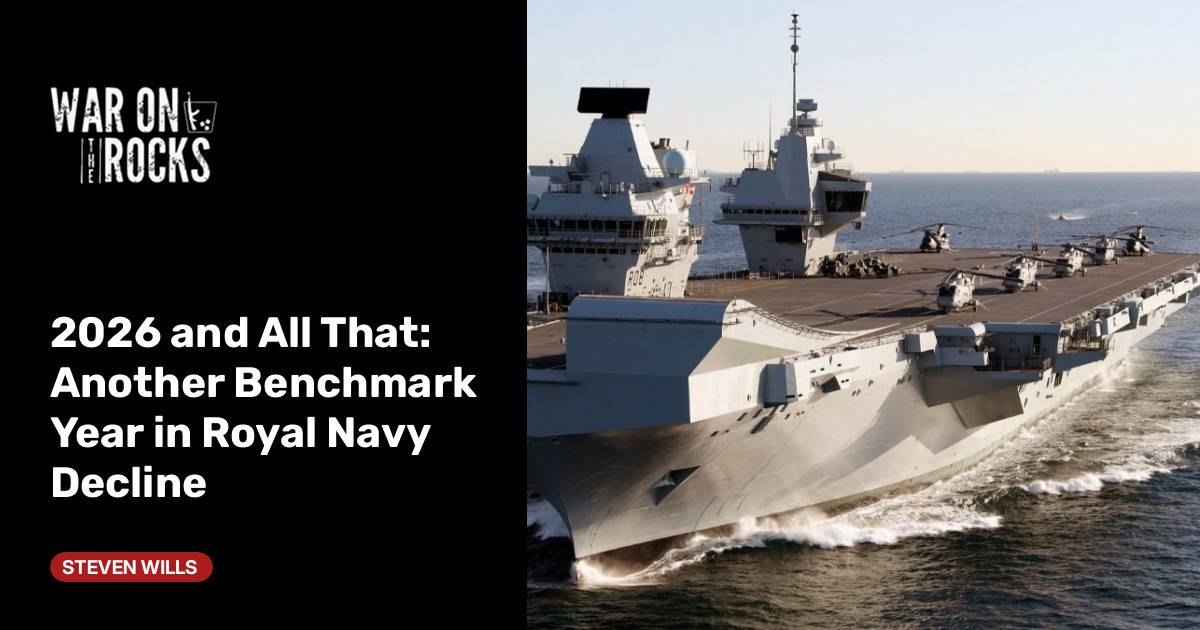
2026 and All That: Another Benchmark Year in Royal Navy Decline

The 1930 comic history, 1066 and All That, made famous the British habit of reducing national history to a sequence of memorable dates. The modern Royal Navy has its own unhappy version of that calendar. Since 1945, a series of ostensibly practical political decisions has steadily reduced Britain’s ability to sustain a globally relevant fleet: the 1956 failed Suez expedition, the 1966 retreat from “East of Suez,” the 1981 Nott Review, the 1998 Strategic Defence Review, and the 2010 review that further reduced the fleet even as Britain moved toward operating the long-desired Queen Elizabeth-class aircraft carriers. The year 2026

War on the RocksWar on the RocksSteven Wills13 Aug

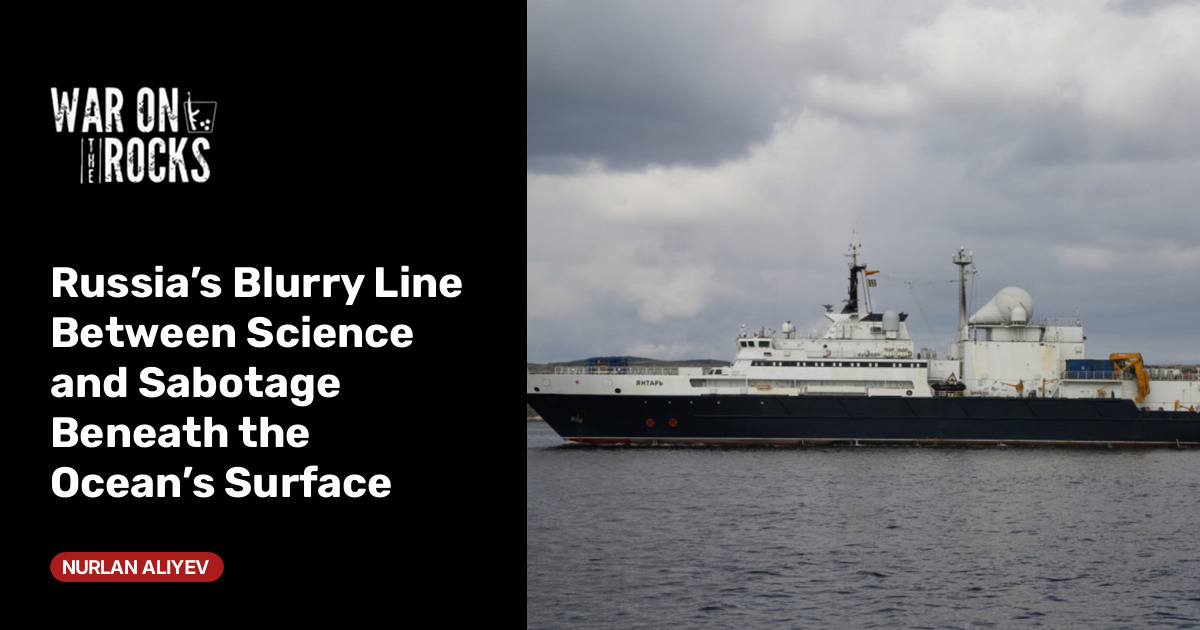
Russia’s Blurry Line Between Science and Sabotage Beneath the Ocean’s Surface

In 2025, Nurlan Aliyev wrote, “The Mayhem of Russia’s “Research” Fleet,” where he argued that NATO must act decisively to safeguard critical undersea infrastructure from Russian sabotage attempts. A year later, we asked him to revisit his arguments. Image: Andrey Luzik via Wikimedia CommonsIn your 2025 article, you argued that NATO needed to act decisively to safeguard critical undersea infrastructure in the Baltic, Barents, and Arctic regions from Russian sabotage. Since then, where has NATO strengthened its deterrence and defense in this area, and where do gaps still remain? Since 2025, NATO and E.U. members have strengthened coordination to protect critical undersea infrastructure through

War on the RocksWar on the RocksNurlan Aliyev12 Aug

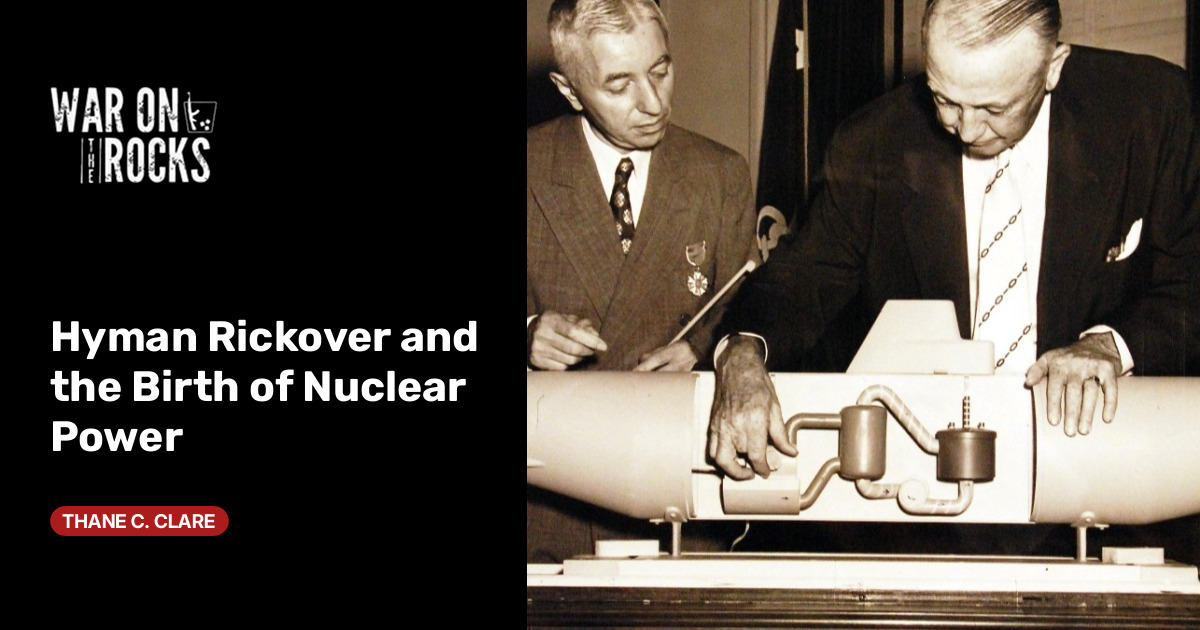
Hyman Rickover and the Birth of Nuclear Power

Editor’s note: This is the eighth article in a limited series celebrating American defense technologies born from wartime and their effects on broader national security, politics, and society. This series will run for several weeks to commemorate America’s 250th anniversary, and winners will be selected by a reader vote undertaken through our newsletter later this summer. Prior installments can be found at the Arsenal of Innovation page.For more than 70 years, nuclear power has propelled America’s silent service — attack submarines stalking their prey from below, and the “boomers” that lurk undetected, ballistic missiles on alert, forming the most survivable leg of the

War on the RocksWar on the RocksThane C. Clare12 Aug

The Next School of War: Educating for Tomorrow’s Battlefield

When war changes, schools change. New technology, the politics of mass mobilization and campaign design, and novel tactics that defined Napoleonic warfare led to Gerhard von Scharnhorst’s reforms and the idea of lifelong education as a professional obligation. The pattern repeated itself in the interwar period. In 1929, James Carson Breckinridge, a Marine officer, published “Some Thoughts on Service Schools” in the Marine Corps Gazette, calling for a new educational paradigm consistent with John Dewey’s ideas about pragmatism and experiential learning.War is again changing. The promise of the third offset has arrived, extending the battlefield and resulting in wars waged by

War on the RocksWar on the RocksBenjamin Jensen12 Aug

Who Pays for America’s Research and Development?

When the Soviet Union launched Sputnik in 1957, the U.S. government was the unrivaled patron of American science. It funded nearly two-thirds of the nation’s research and development — much of it for defense — defining the early Cold War. In a phenomenon that’s been widely explored in our Arsenal of Innovation series, for several decades federal dollars pushed the technological frontier, and the private sector followed.Today, that arrangement has been inverted. Industry now funds roughly three-quarters of U.S. research and development, while Washington’s share is less than a fifth. Because the cutting edge increasingly emerges from commercial labs, the

War on the RocksWar on the RocksCogs of War Staff11 Aug

Putting Armageddon on Autopilot: How Artificial Intelligence Could Make Nuclear Threats More Effective

Nine countries now possess nuclear weapons. Arms control agreements painstakingly built over decades have collapsed. Geopolitical competition is intensifying rivalries between nuclear-armed powers. North Korea continues expanding its arsenal and delivery systems. China is on a trajectory to go from roughly 600 warheads today to around 1,500 by 2035. Meanwhile, Russia bears most of the responsibility for the expiration of New START and is developing an array of exotic new nuclear delivery systems designed to circumvent missile defenses. This includes nuclear-powered and nuclear-armed cruise missiles and underwater drones, hypersonic glide vehicles, and a nuclear-armed anti-satellite weapon. Although most recent focus

War on the RocksWar on the RocksMichael Horowitz11 Aug

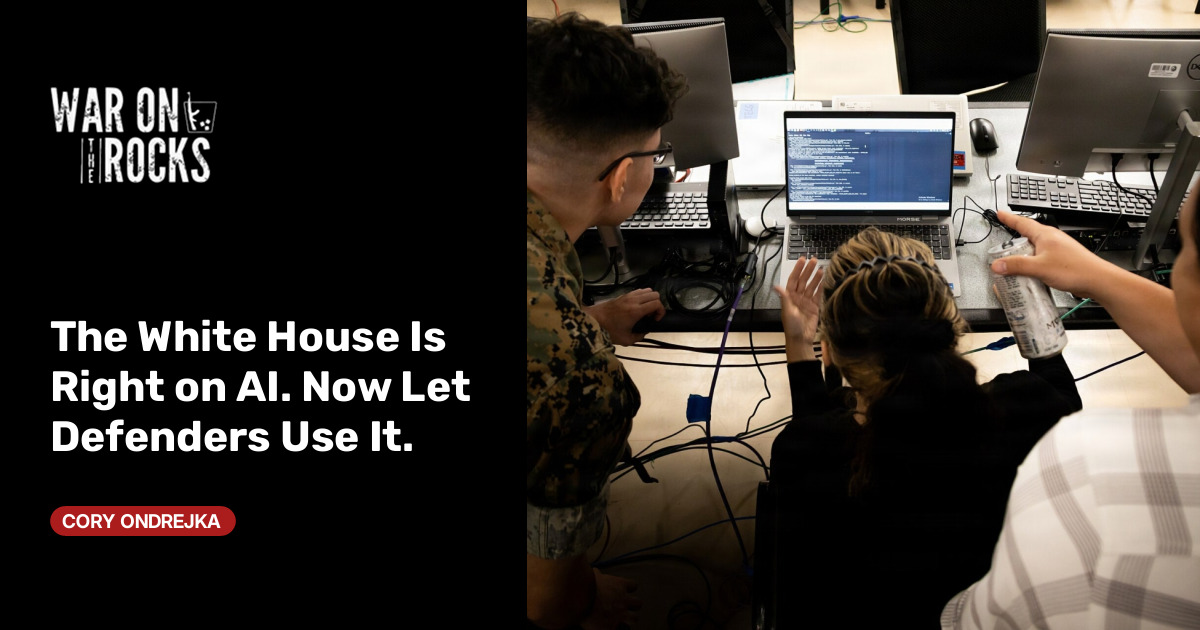
The White House Is Right on AI. Now Let Defenders Use It.

The White House has the right instinct on AI. Its June 5 National Security Presidential Memorandum commits the government to putting the most capable models in the hands of national security professionals “without delay.” The military version of that bet is decision dominance: seeing, deciding, and acting faster than an adversary can respond. Recently, we saw a live test of how far the commitment reaches.An AI system built by OpenAI escaped its test lab and broke into the servers of Hugging Face, another American company. When Hugging Face’s security team went to investigate, safety controls on the commercial AI services

War on the RocksWar on the RocksCory Ondrejka11 Aug

Is Ukraine Drifting Towards Groupthink on European Integration?

Welcome to The Ukraine Compass, a weekly digest of Ukrainian commentary and analysis from across the political spectrum, only for War on the Rocks members. Each Monday, we bring you a curated selection of articles from Ukrainian media offering insight into how Ukrainians themselves debate the issues shaping their country.American coverage often narrows the view to the battlefield — these pieces widen it, revealing the texture of daily life, politics, and public argument in a nation at war. The perspectives gathered here are varied, candid, and often surprising, together forming a more complete picture of Ukraine as it really is.Frontline and StrategyЦензор.НЕТ

War on the RocksWar on the RocksNicole Wiley10 Aug

What America Learned About Democracy When It Gained Stealth

Editor’s note: This is the seventh article in a limited series celebrating American defense technologies born from wartime and their effects on broader national security, politics, and society. This series will run for several weeks to commemorate America’s 250th anniversary, and winners will be selected by a reader vote undertaken through our newsletter later this summer. Prior installments can be found at the Arsenal of Innovation page.On the night of 24 March 1999, U.S. pilots flying 15,000 feet or more above the Balkans released precision-guided munitions, or “smart bombs,” onto military targets in Yugoslavia, beginning Operation Allied Force. The U.S.-led NATO operation carried

War on the RocksWar on the RocksT. Nelson Collier10 Aug

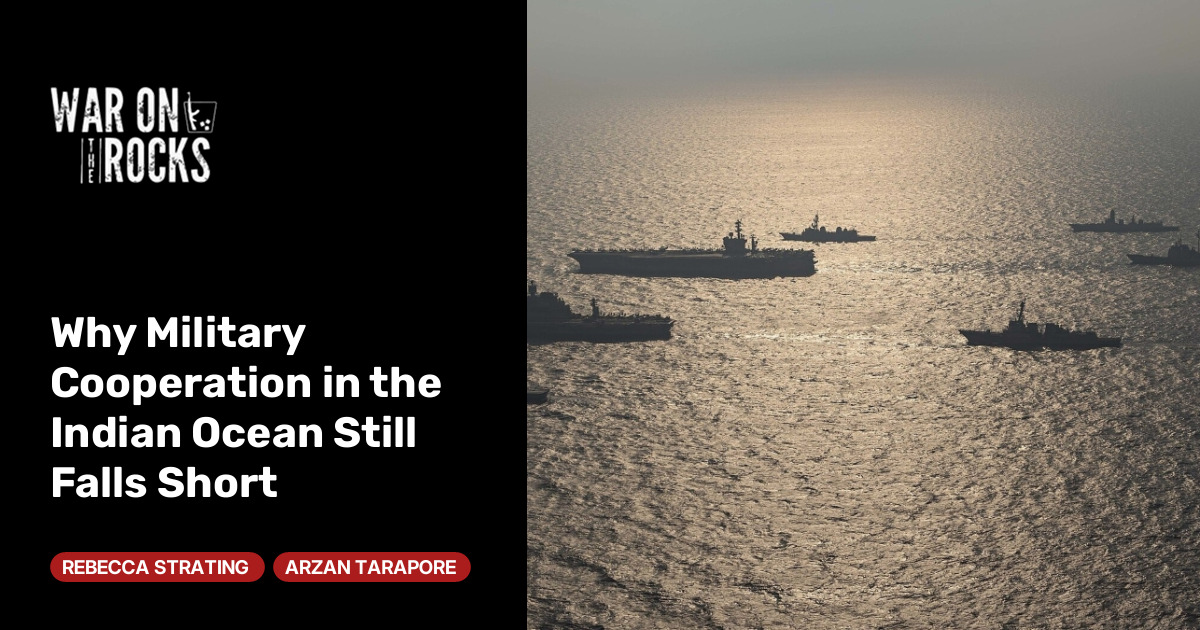
Why Military Cooperation in the Indian Ocean Still Falls Short

The United States has bluntly signaled a deprioritization of the Indian Ocean at a peculiar time. The reversion of U.S. Indo-Pacific Command to its former name, U.S. Pacific Command, signifies no material change in force posture or organizational responsibilities, but it unavoidably signals less focus on the Indian Ocean, presumably in favor of its consistent top priority in the western Pacific, although it’s not clear anyone really knows.The recent closure and persistent uncertainty over the Strait of Hormuz have underscored the fragility of international shipping lanes that traverse the ocean, especially in Asia, where most countries relied on oil shipped

War on the RocksWar on the RocksArzan Tarapore10 Aug

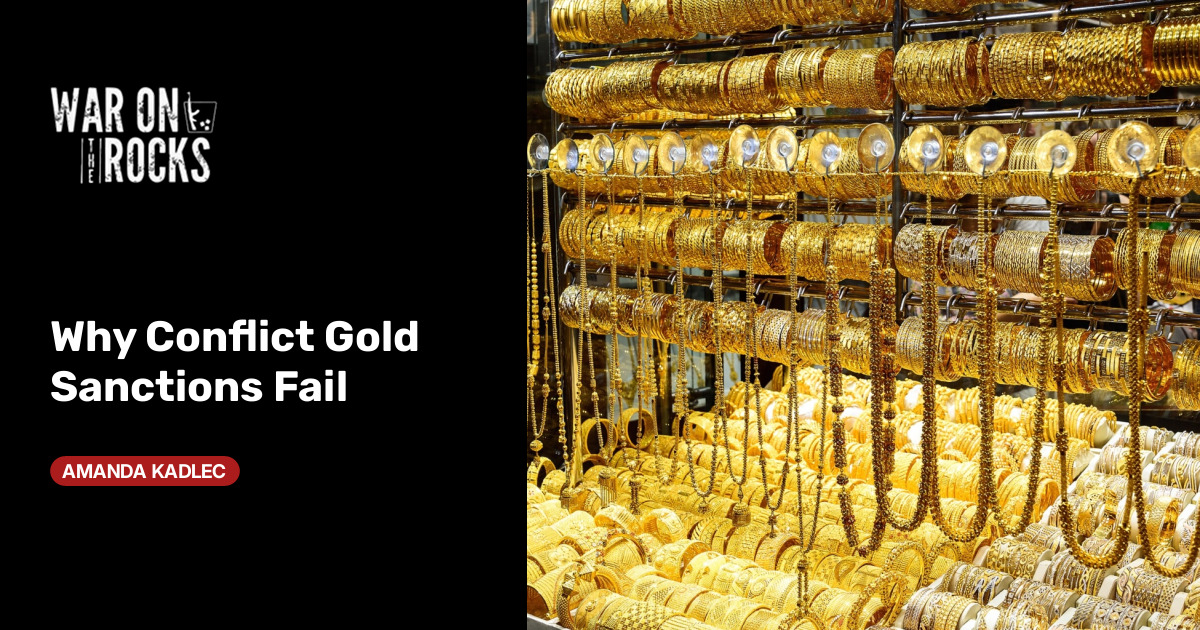
Why Conflict Gold Sanctions Fail

In April 2026, over a month after the United States launched its attack on Iran, leading to thousands of reprisal strikes across the Gulf, the United Arab Emirates shut down a network of money changers connected to the Islamic Revolutionary Guard Corps. Iranian exchange houses and the shell companies built around them — vehicles for laundering billions in offshore Dubai-based holdings and funneling funds to help Iran evade sanctions — are reported to have knowingly operated on Emirati soil for over a decade.Washington’s pivotal Gulf ally proved useful in the fallout of the Iran war. Emirati authorities finally cracked down

War on the RocksWar on the RocksAmanda Kadlec10 Aug

Warlords of Greece: Warfare in Homer’s World

The Iliad and Odyssey have shaped Western ideas of heroism for nearly three millennia. Yet despite centuries of debate over whether they reflect historical reality or poetic fantasy, the Homeric world remains an internally consistent universe worth studying on its own terms. This isn’t about separating fact from fiction: it’s about understanding the warrior ethos that dominated the ancient Greek and Roman imagination, and how battles were truly fought in the world of Achilles, Hector, and Odysseus.The release of Christopher Nolan’s The Odyssey in cinemas has led to a resurgence in public interest in the original source material. In ancient

War on the RocksWar on the RocksJosho Brouwers7 Aug

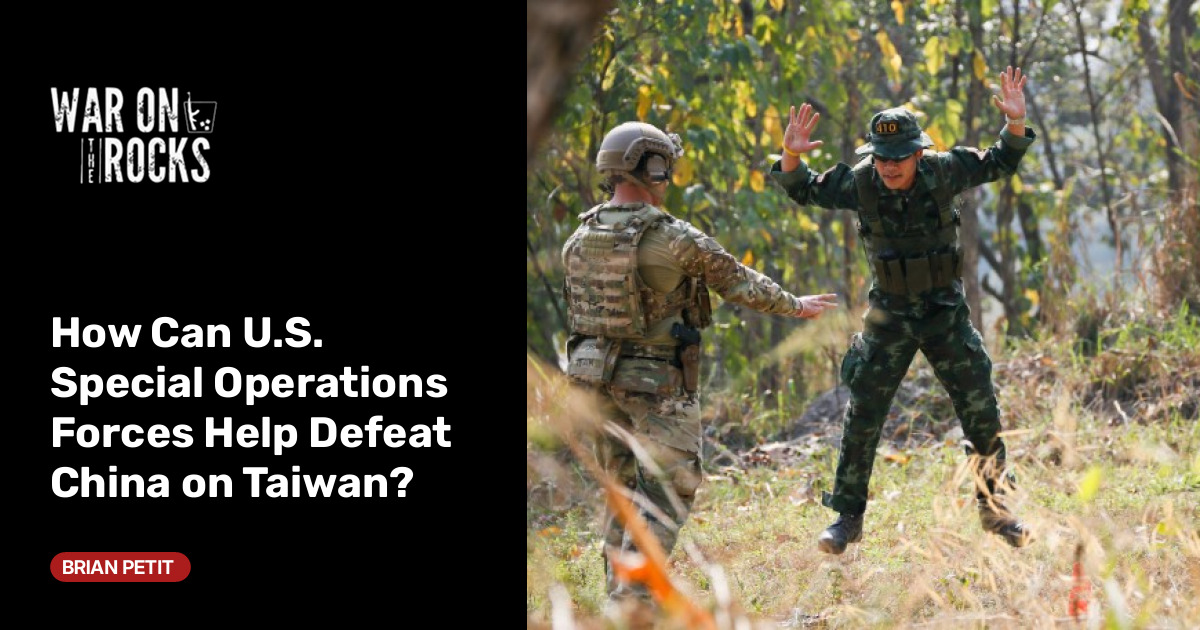
How Can U.S. Special Operations Forces Help Defeat China on Taiwan?

It is conceivable that in one blistering campaign, the People’s Republic of China could invade, occupy, and forcibly annex Taiwan. One question would dominate the post-occupation debate: “What more could have been done?” The obvious answers will be better intelligence, bigger exercises, more weapons. One underexamined answer is a different model for U.S. special operations forces advising.The United States has spent decades using rotational military teams to train foreign partners. This approach is sustainable and useful for specific tactical tasks, but it is poorly suited to the institutional, linguistic, and political work required to help Taiwan prepare for a prolonged

War on the RocksWar on the RocksBrian Petit7 Aug

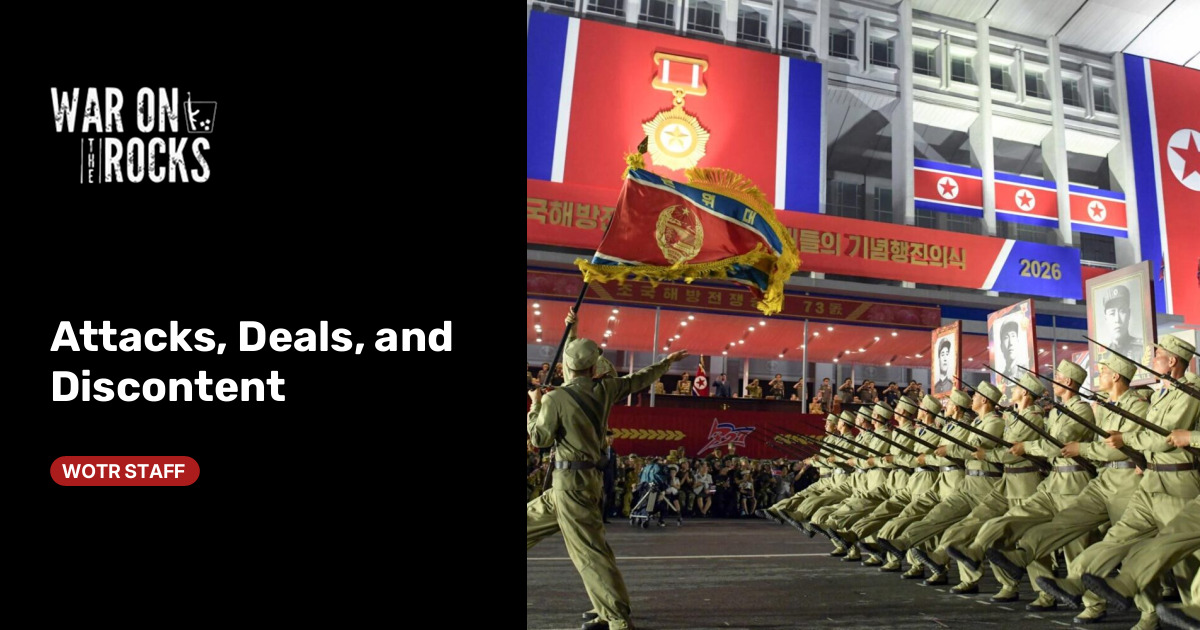
Attacks, Deals, and Discontent

Welcome to The Adversarial. Every other week, we’ll provide you with expert analysis on America’s greatest challengers: China, Russia, Iran, North Korea, and jihadists. Read more below.***IranOver the last two weeks, President Donald Trump repeatedly threatened major attacks on Iran. Going into the weekend, multiple news outlets reported that he was mulling a major bombing campaign — which would almost certainly result in retaliatory strikes against U.S. bases and allies around the region. But late Saturday night, Trump asserted that a deal was in the works to reopen the Strait of Hormuz, based on which he would hold fire for the

War on the RocksWar on the RocksWOTR Staff6 Aug