Hungary

Place · 86 articles
Share
7 sourcesAl JazeeraBBCMBThe Guardian
2h ago

The next swimming superstar? Meet 13-year-old Yu Zidi

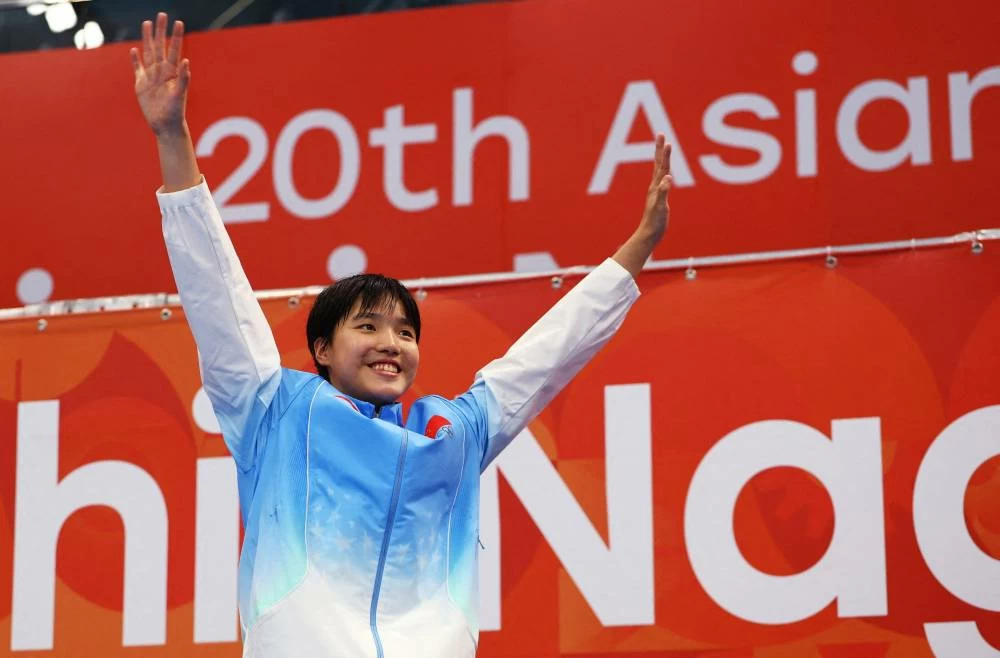
NAGOYA, Japan: Here's a quick look at 13-year-old Chinese swimmer Yu Zidi, who is tipped to become the sport's next big star after winning three gold medals in individual events at the Asian Games. She swept the 200-meter butterfly, the 200 individual medley and the 400 IM. She could already be the swimmer to watch at the Los Angeles Olympics in two years when she is likely to face off against Canadian Summer McIntosh who swims the same events as Yu. Ditto for the world championships next year in Budapest, Hungary. McIntosh won three gold medals two years ago at the Paris Olympic and holds the world records in all three of Yu's main events: 200 fly (2 minutes 1.65 seconds), 200 IM (2:05.70) and the 400 IM (4:23.65). Zidi Yu celebrates after winning the Women's 200m Individual Medley Final (Reuters) Yu is closing in on those times. She swan the 200 IM on Monday at the Asian Games in 2:06.10, which is the event where she's closest to McIntosh. McIntosh just turned 20. By comparison, Yu at 12 was swimming roughly 15 seconds faster in the 400 IM than McIntosh did at 12, and about 12 seconds faster in the 200 IM. In a 50-meter pool, 12 to 15 seconds would be a half-lap of the pool, depending on the event. If the progression continues Yu seems set to shatter all three records. And maybe more if she tackles another event and distance. McIntosh and others will have something to say about that. As a 12-year-old - that's a sixth or seventh-grade student - at the world championships last year in Singapore, Yu finished fourth in her three races, just barely short of winning a medal. She did get a bronze medal in a relay, though she did not swim in the final. China's Zidi Yu in action during the Women's 200m Individual Medley Final (Reuters) "I think it’s a great story. I don’t know where it will lead,” Greg Meehan, the national team director for the Americans in Singapore, said at the time. Yu is from the city of Baoding in Hebei province, which is located about 150 kilometers (90 miles) southwest of the capital Beijing. Most of China's top swimmer come from areas further south in China. She began swimming at 6 and was spotted by a local coach. That forced her to quit piano and dance lessons, Chinese media has reported. He mother, Liu Hui, and her father, Yu Tao, have both been in Tokyo watching her swim at the Olympic pool being used for the Asian Games. Yu was asked last year by Chinese television if she was a genius. She replied: "I'm not a genius, I'm just a hard-working person.”

Share

All coverage

page 1 of 5

The next swimming superstar? Meet 13-year-old Yu Zidi

NAGOYA, Japan: Here's a quick look at 13-year-old Chinese swimmer Yu Zidi, who is tipped to become the sport's next big star after winning three gold medals in individual events at the Asian Games. She swept the 200-meter butterfly, the 200 individual medley and the 400 IM. She could already be the swimmer to watch at the Los Angeles Olympics in two years when she is likely to face off against Canadian Summer McIntosh who swims the same events as Yu. Ditto for the world championships next year in Budapest, Hungary. McIntosh won three gold medals two years ago at the Paris Olympic and holds the world records in all three of Yu's main events: 200 fly (2 minutes 1.65 seconds), 200 IM (2:05.70) and the 400 IM (4:23.65). Zidi Yu celebrates after winning the Women's 200m Individual Medley Final (Reuters) Yu is closing in on those times. She swan the 200 IM on Monday at the Asian Games in 2:06.10, which is the event where she's closest to McIntosh. McIntosh just turned 20. By comparison, Yu at 12 was swimming roughly 15 seconds faster in the 400 IM than McIntosh did at 12, and about 12 seconds faster in the 200 IM. In a 50-meter pool, 12 to 15 seconds would be a half-lap of the pool, depending on the event. If the progression continues Yu seems set to shatter all three records. And maybe more if she tackles another event and distance. McIntosh and others will have something to say about that. As a 12-year-old - that's a sixth or seventh-grade student - at the world championships last year in Singapore, Yu finished fourth in her three races, just barely short of winning a medal. She did get a bronze medal in a relay, though she did not swim in the final. China's Zidi Yu in action during the Women's 200m Individual Medley Final (Reuters) "I think it’s a great story. I don’t know where it will lead,” Greg Meehan, the national team director for the Americans in Singapore, said at the time. Yu is from the city of Baoding in Hebei province, which is located about 150 kilometers (90 miles) southwest of the capital Beijing. Most of China's top swimmer come from areas further south in China. She began swimming at 6 and was spotted by a local coach. That forced her to quit piano and dance lessons, Chinese media has reported. He mother, Liu Hui, and her father, Yu Tao, have both been in Tokyo watching her swim at the Olympic pool being used for the Asian Games. Yu was asked last year by Chinese television if she was a genius. She replied: "I'm not a genius, I'm just a hard-working person.”

MBMobile BusinessAssociated Press2h ago
  • favorable toward Yu Zidi · 99%

Hungary Asks U.S. to Waive Tariffs Over Russian Oil Purchases

Hungary is asking U.S. officials not to levy tariffs on the central European country which still buys Russian oil, in what could be a test for the new Hungarian leader who won a landslide election victory over President Trump’s ally Viktor Orban earlier this year. U.S. lawmakers last week passed the so-called “Lindsey O. Graham Sanctioning Russia and Iran Act of 2026,” which authorizes and expands statutory sanctions, tariffs, and prohibitions on Russia and extends existing sanctions on Iran. The bill was signed into law by U.S.…

OilPrice.comOilPrice.comCharles Kennedy21 Sept

Balletic hits and bicycle kicks: Teqball comes of age at the Asian Games

Invented a little over a decade ago in Hungary, teqball is a combination of football and ping pong In Bangkok’s Sports Science Centre, Jutatip Kuntatong is airborne, executing a gravity-defying bicycle kick that slams the ball on to the curved table with a force that echoes throughout the gym. She is preparing to represent Thailand at the Asian Games, which start on Saturday, but six years ago she had never even heard of teqball, the sport of which she is now the world champion. Continue reading...

The GuardianThe GuardianNatasha May in Bangkok17 Sept

Reforms to Hungary's Anti-LGBT Laws Welcome, but More to Do

Click to expand Image People attend the Budapest Pride March in Budapest, Hungary, June 27, 2026. © 2026 Marton Monus/Reuters Hungary’s new government has taken an important step toward dismantling a key discriminatory legacy of the Orbán era—the legal targeting of LGBT people. The job is not finished, however. The government submitted legislation to Parliament on September 14 to remove several provisions of the 2021 so-called “child protection” law that restrict the “portrayal” or “promotion” of sexual and gender diversity in content accessible to children. The proposed changes remove the restrictions from laws relating to child protection, media, advertising, and education. The reforms follow an April judgment by the Court of Justice of the European Union finding that Hungary’s legal restrictions stigmatized and marginalized LGBT people and violated EU law. The court found that Hungary could not invoke the best interests of the child to justify restrictions that discriminated against LGBT people and violated fundamental rights. The government deserves credit for moving to comply with that judgment and abandoning the false and deeply damaging equation of LGBT people with threats to children that underpinned the 2021 law. The proposed legislation instead focuses child-protection restrictions on substantively harmful material, including pornography, sexual exploitation, grooming, and age-inappropriate sexual content. However the government’s plans leave other discriminatory provisions in Hungarian law intact. The bill removes restrictions on the “portrayal” or “promotion” of homosexuality and gender diversity from several laws, but leaves unchanged section 5/A of the Family Protection Act, which contains similar restrictions on content accessible to children. Nor does bill address discriminatory language in the Fundamental Law (Hungary’s constitution) or restrictions in the Freedom of Assembly Act that have been used to prohibit Pride and other LGBT-related assemblies. The Hungarian Helsinki Committee, Hungarian Civil Liberties Union (HCLU), Háttér Society, and Amnesty International Hungary jointly welcomed the proposed changes and called for further amendments to fully dismantle the discriminatory legal framework. This goal goes beyond cleaning up Hungary’s statute book but includes reform of Article XVI of the Fundamental Law that provides a constitutional basis for anti-LGBT restrictions and the legislation used to restrict Pride marches. The Tisza government has a parliamentary supermajority and while dismantling much of the Orbán-era anti-LGBT legal machinery is worth applauding, the government needs to finish what it started. It should amend the remaining discriminatory provisions, including the Fundamental Law, and remove any legal basis for restrictions targeting LGBT people and their rights.

Human Rights WatchHuman Rights WatchHuman Rights Watch16 Sept

Reforms to Hungary's Anti-LBGT Laws Welcome, but More to Do

Click to expand Image People attend the Budapest Pride March in Budapest, Hungary, June 27, 2026. © 2026 Marton Monus/Reuters Hungary’s new government has taken an important step toward dismantling a key discriminatory legacy of the Orbán era—the legal targeting of LGBT people. The job is not finished, however. The government submitted legislation to Parliament on September 14 to remove several provisions of the 2021 so-called “child protection” law that restrict the “portrayal” or “promotion” of sexual and gender diversity in content accessible to children. The proposed changes remove the restrictions from laws relating to child protection, media, advertising, and education. The reforms follow an April judgment by the Court of Justice of the European Union finding that Hungary’s legal restrictions stigmatized and marginalized LGBT people and violated EU law. The court found that Hungary could not invoke the best interests of the child to justify restrictions that discriminated against LGBT people and violated fundamental rights. The government deserves credit for moving to comply with that judgment and abandoning the false and deeply damaging equation of LGBT people with threats to children that underpinned the 2021 law. The proposed legislation instead focuses child-protection restrictions on substantively harmful material, including pornography, sexual exploitation, grooming, and age-inappropriate sexual content. However the government’s plans leave other discriminatory provisions in Hungarian law intact. The bill removes restrictions on the “portrayal” or “promotion” of homosexuality and gender diversity from several laws, but leaves unchanged section 5/A of the Family Protection Act, which contains similar restrictions on content accessible to children. Nor does bill address discriminatory language in the Fundamental Law (Hungary’s constitution) or restrictions in the Freedom of Assembly Act that have been used to prohibit Pride and other LGBT-related assemblies. The Hungarian Helsinki Committee, Hungarian Civil Liberties Union (HCLU), Háttér Society, and Amnesty International Hungary jointly welcomed the proposed changes and called for further amendments to fully dismantle the discriminatory legal framework. This goal goes beyond cleaning up Hungary’s statute book but includes reform of Article XVI of the Fundamental Law that provides a constitutional basis for anti-LGBT restrictions and the legislation used to restrict Pride marches. The Tisza government has a parliamentary supermajority and while dismantling much of the Orbán-era anti-LGBT legal machinery is worth applauding, the government needs to finish what it started. It should amend the remaining discriminatory provisions, including the Fundamental Law, and remove any legal basis for restrictions targeting LGBT people and their rights.

Human Rights WatchHuman Rights WatchHuman Rights Watch16 Sept

UNHCR Hungary Fact Sheet, February 2026

Countries: Hungary, Afghanistan, Russian Federation, Syrian Arab Republic, Ukraine, World Source: UN High Commissioner for Refugees Please refer to the attached file. n consultation with the Government of Hungary, UNHCR coordinates the Ukraine Situation Refugee Response Coordination Forum (RCF), bringing together a wide network of partners supporting refugees. UNHCR works to ensure that all individuals in need of international protection have access to territory and fair asylum procedures, in line with international law, through advocacy and capacity-building. UNHCR promotes educational inclusion through evidence-based advocacy and community initiatives such as the “Back to School” campaign. Explore the latest participatory assessment report here.

ReliefWebReliefWebUN High Commissioner for Refugees15 Sept