Duquesne Family Office dumps Micron and Intel, loads up on Bitcoin miners and AI plays
Druckenmiller's shift to Bitcoin miners and AI highlights a strategic pivot towards energy-intensive tech, signaling evolving investment priorities.

Druckenmiller's shift to Bitcoin miners and AI highlights a strategic pivot towards energy-intensive tech, signaling evolving investment priorities.

The ETF's heavy reliance on Micron highlights concentration risk, potentially amplifying volatility and influencing broader market dynamics.

The dismissal underscores the legal protection of political speech in tech disputes, impacting how companies navigate national security claims.

Micron's strategic investments in AI and deep tech could reshape the semiconductor landscape, driving innovation and energy-efficient solutions.
Micron (MU) stock is holding near $911 after a 189% price rise in 2026. Yet, Wall Street still sees roughly 70% more upside. And there is good reason behind this optimism. The world is short of the memory that powers AI, and Micron seems very well positioned to fix that problem. Still, the stock has

The AI industry's growth may be hindered by memory supply constraints, granting significant market power to key memory producers.

Micron's inclusion in Nvidia's supplier list enhances its market position, potentially boosting profitability and supply chain resilience.

Micron's undervaluation reflects market fears of future price drops, but strategic contracts and delayed capacity expansion may mitigate risks.

The rebound highlights investor confidence in AI-driven demand, but tokenized equities like MUon add complexity to market dynamics.

Micron's growth in AI memory demand is bolstered by China's AI needs, despite domestic competition, enhancing its market potential.

The AI boom's impact on semiconductor stocks highlights the sector's pivotal role in future tech infrastructure and economic growth.

Micron's potential gains highlight the strategic importance of securing supply chain resilience amid prolonged memory chip shortages.
Traders push Hyperliquid past a $4 billion milestone, ditching classic crypto for 24/7 tokenized shares of SK Hynix and Micron.

The collaboration enhances AI infrastructure efficiency, offering a competitive edge in data center performance and security for future tech demands.

The prolonged memory supply shortage could drive up prices, reshape industry dynamics, and intensify competition for AI-related products.

Micron's volatile trading highlights the growing impact of Chinese competition on the global semiconductor market, affecting industry dynamics.
Micron's 39% plunge and SK Hynix and Samsung's $1.3 trillion spending plan are raising fresh worries for US chipmakers.

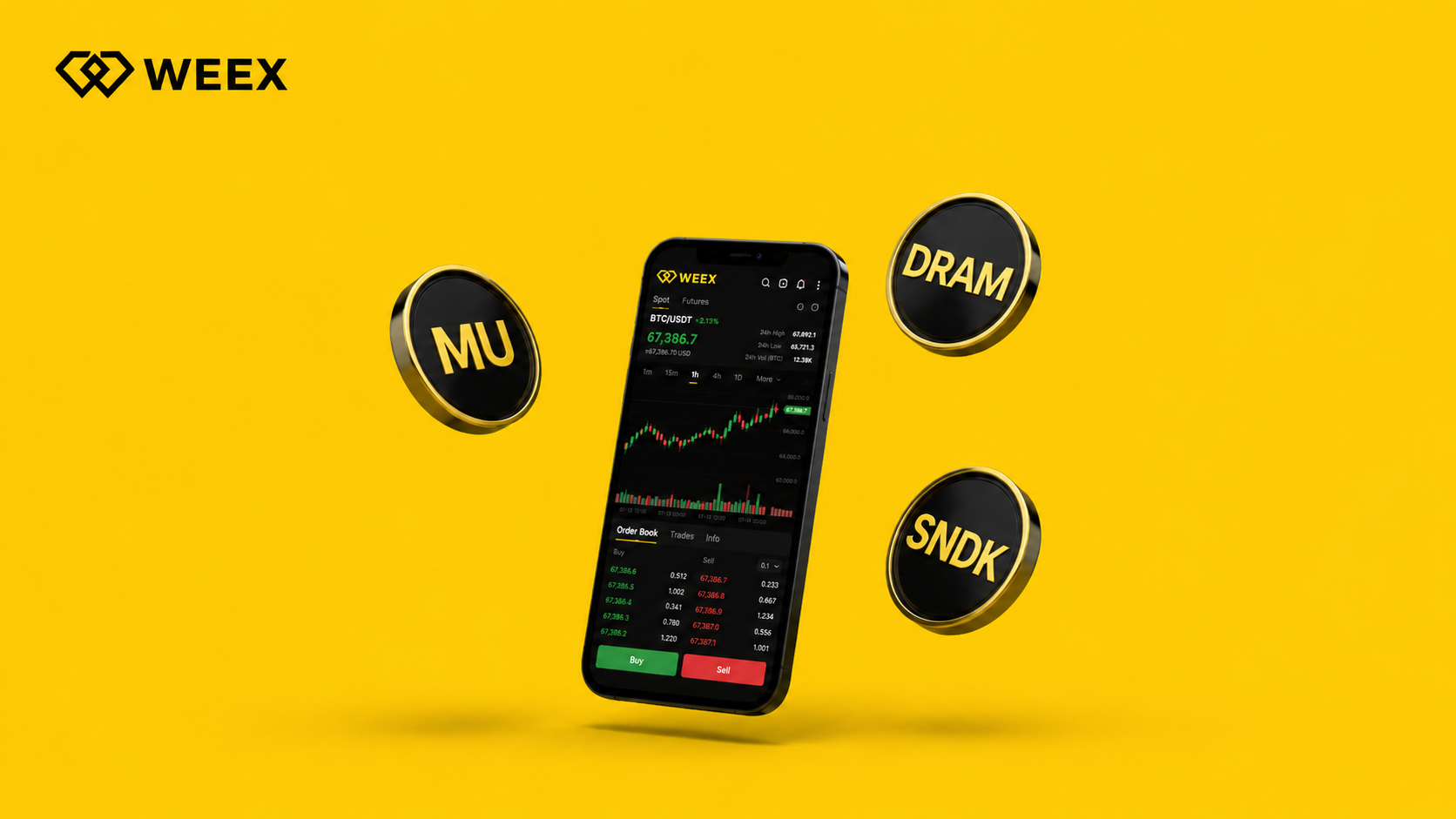
Every AI data center on the planet runs into the same wall: not compute, but memory. The chips that store and feed data to GPUs are sold out, and the companies that make them have become some of 2026’s most explosive trades. WEEX brings that entire theme into a single

Apple's diversification of memory suppliers could reshape global supply chains, impacting pricing dynamics and geopolitical trade relations.

The surge in market cap for these tech giants underscores the pivotal role of AI and cloud growth in shaping future market dynamics.