Qualcommpage 2

Organization · 53 articles
Share

Coverage, page 2

page 2 of 3

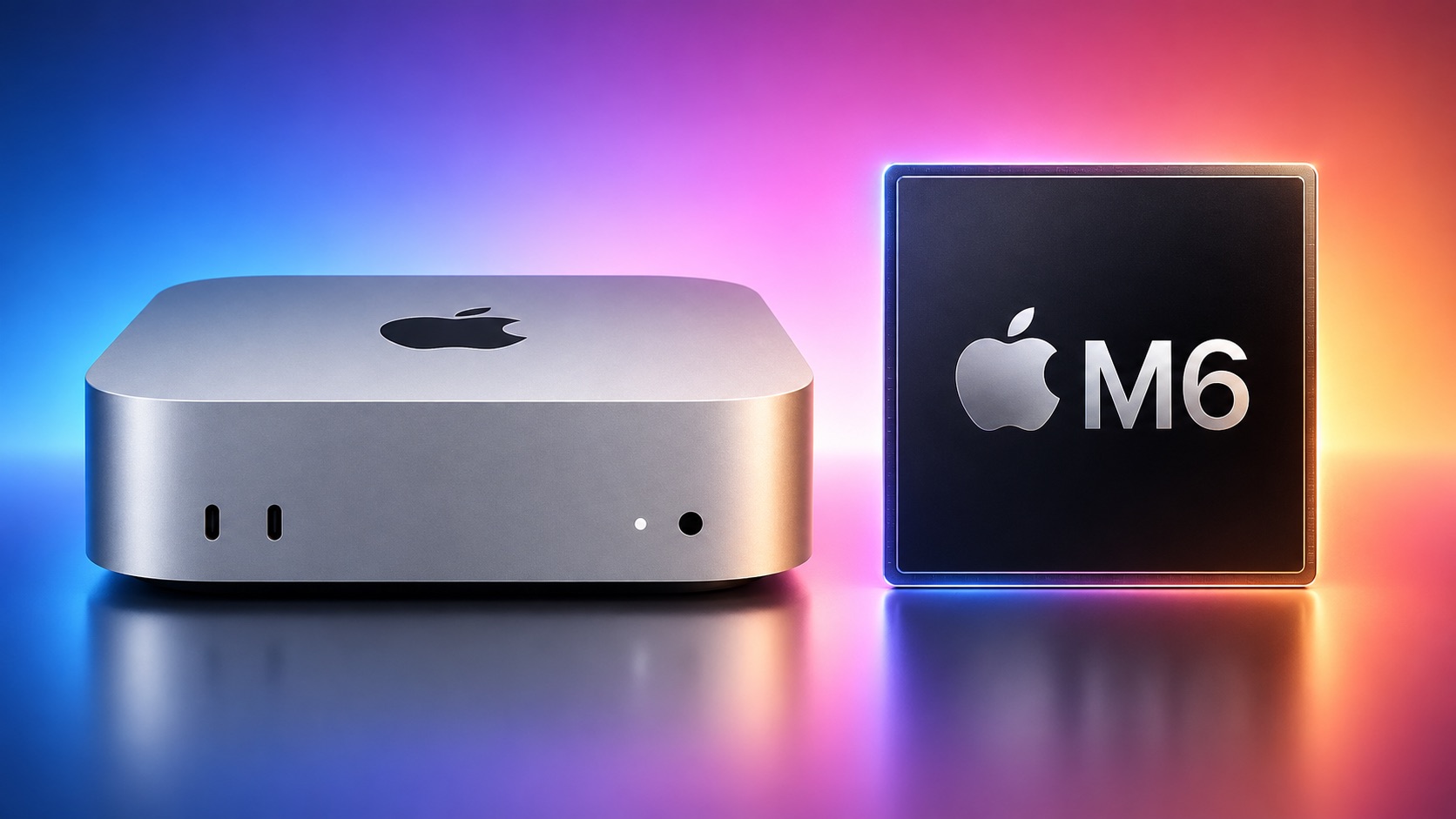
M6 Chip Benchmark Surfaces Ahead of New Mac Mini Launch Next Week

The first unverified benchmark result for Apple's new M6 chip surfaced in the Geekbench 7 database today, offering a look at the chip's performance gains. The new Mac mini will be Apple's first device to be equipped with the M6 chip, which is 2nm. Here is how the M6 chip scored: Single-core CPU score: 4,071 Multi-core CPU score: 22,783 Here are the average M5 chip scores for comparison: Single-core CPU score: 3,641 Multi-core CPU score: 17,948 If this single Geekbench 7 result is accurate, the M6 chip has up to around 12% faster single-core CPU performance and up to around 27% faster multi-core CPU performance compared to the M5 chip. Note that the M6 chip is in the new Mac mini, while the M5 chip scores are based on the 14-inch MacBook Pro, but performance should be similar. Apple said the M6 chip has the world's fastest single-threaded CPU performance, and its 4,071 single-core score indeed tops all other Macs and PCs in the Geekbench 7 database, including the M5 Max chip (3,731) and Qualcomm's Snapdragon X2 Elite Extreme (3,396). Up to 27% faster multi-core CPU performance is in line with Apple's claim of up to 1.2× faster multi-threaded performance, so all of Apple's advertised claims hold up. Here is where the M6 chip slots in for maximum multi-core CPU performance: M5 Ultra: TBD M3 Ultra: 39,059 M5 Max: 35,119 M5 Pro: 33,593 M4 Max: 29,047 M4 Pro: 24,894 M6 chip: 22,783 M5 chip: 17,948 M4 chip: 15,477 M3 chip: 11,650 M2 chip: 9,809 M1 chip: 8,582 Based on these scores, the M6 chip is more than 2.5× faster than Apple's original M1 chip. The new Mac mini with M6 and M5 Pro chips and the new Mac Studio with M5 Max and M5 Ultra chips launch on Tuesday, September 22. We are still waiting for GPU results for the M6 chip to appear in the Geekbench 7 database, and for M5 Ultra chip benchmarks. Related Roundup: Mac mini Tags: Benchmarks , Geekbench Buyer's Guide: Mac Mini (Buy Now) Related Forum: Mac mini This article, " M6 Chip Benchmark Surfaces Ahead of New Mac Mini Launch Next Week " first appeared on MacRumors.com Discuss this article in our forums

MacRumorsMacRumorsJoe Rossignol15 Sept

'It's Definitely at the Top of Our List' – SteamOS Is Getting Closer to Nvidia Driver Support

One of the biggest goal's of Valve's latest wave of hardware wasn't necessarily to move as many units as possible, but to expand the reach of SteamOS , and it does seem like it's succeeded. There are now two things that are really standing in Valve's way in its quest to dethrone Windows 11 as the de facto gaming OS: anti-cheat and Nvidia graphics drivers. And it looks like the latter is going to be solved soon. Ahead of Steam Frame's launch, I got a chance to sit down with Valve software developers Pierre-Loup Griffais and Jeff Leinbaugh , and I asked how Nvidia support was coming along. "Yeah, we're working on it hard," Griffais told me. "It's definitely at the top of our list. It's one of those things just like FEX and working on the Qualcomm driver, it just takes years." That doesn't sound like the driver support is right around the corner, but it does seem like the team has at least got Nvidia GPUs working on the Linux OS, albeit with limited performance. "We've done a few things like we've enabled the driver now in the main tree of SteamOS," Griffais told me, "so you can get things to light up on certain generations, but in terms of the performance difference between that driver and where the state of the art is, there's definitely still a little bit of a rift that we're trying to work on, but it's getting better day-to-day." There are certainly versions of Linux that already work with Nvidia drivers, but Team Green's GPUs are always a bit of a hassle on the open-source operating system. Instead, for most people, gaming on Linux works best with AMD graphics cards , as that company has supported drivers on the operating system for years. But for Valve's goal of getting as many people on SteamOS as possible, getting Nvidia's cards working at full performance is incredibly important. According to the latest Steam Hardware Survey , Nvidia GPUs still make up for 72.88% of Steam's player base. Getting Nvidia graphics cards up and running reliably on SteamOS would be a huge win for Valve. Hopefully Valve is able to get these graphics cards working as intended on SteamOS soon, and then, maybe, we can finally get anti-cheat support on the operating system. Because, after all, unlocking the operating system for another 72% of the playerbase could cause a huge spike in players migrating from Windows, and that'd be hard to ignore for the Call of Dutys of the world.

IGNIGNJacqueline Thomas14 Sept

Why There's No New Game for the Steam Frame

When Valve announced the Steam Frame, Machine, and Controller back in November, there was this undercurrent of hope that the company would release some secret new game to complement its new hardware. And, now that the Steam Frame is here, completing this round of Valve hardware, it's clear that there is no new game coming to support it. Instead, Valve is supporting its new VR headset with Half-Life: Alyx, the game that launched with the Valve Index back in 2019. And with how expensive all of this hardware is , thanks in large part to the ongoing RAM crisis , not having a flagship system-seller makes it hard to imagine that a lot of people are going to rush out to buy it. When I recently sat down with Valve to talk about the Steam Frame , I asked why the headset is launching without a big game to sell it, and was told that the company was focused more on wide compatibility. That's largely because the Steam Frame is running on a chip that's most often found in smartphones, the Qualcomm Snapdragon 8 Gen 3. Valve software developer Jeff Leinbaugh told me they "really prioritized getting software compatibility in a good state so that there would be a huge number of games, I mean as big as possible, available to play on the device or stream to the device on day one." So, instead of one big launch title, Valve wanted the ARM-based headset to give you "a lot of options of what games to play, whether they're VR games or not VR games." It's definitely nice that a lot of Steam Games run on ARM, thanks to the dual translation layers of Proton and FEX, but there is a lot of room to grow. There are plenty of 2D games that run well on Valve's headset, but getting system performance ready for standalone VR games is still a work in progress. To Valve's credit, despite telling us back in November that Half-Life: Alyx would be a lot of work to get running natively on the headset, it did eventually get a 'Steam Frame Verified' certification. Other VR games are more hit or miss, though, and Valve's aware of that. When I asked Leinbaugh about optimization on the Steam Frame, he told me the work on Alyx is key. "Going through the process of making Alyx run standalone is also helping us figure out the new problem of, 'How do we make sure that VR games running standalone are a good experience?'" Because while getting 2D games like Hades II running natively was a relatively simple optimization process, VR is a bigger struggle. "For VR, it's kind of a different story because comfort is a bigger factor," Leinbaugh told me. "So as we've gone through the process of making Alyx run better, we're learning about what's important when we look at other VR games to make sure that we can guarantee this is a good experience without setting a bar that's just unreasonably high." It's clear that Valve is actively working on getting PCVR games that are designed for Windows running on ARM. Just in the two weeks I spent testing the Steam Frame, one of the most popular VR games on the planet, Beat Saber, went from having a big 'unsupported' logo in the UI to having a green checkmark. And now the game runs extremely well, and feels great to play because of how light and balanced the Steam Frame generally is. So, when Valve says that it was focused on getting compatibility down for the Steam Frame’s launch, it seems like it’s still a work in progress. I’m not sure whether or not having a launch title would have complicated standalone VR optimization further, but it at least sounds like the company is focused on getting that performance down. The Steam Deck certainly had its growing pains when it first came out, and I expect that the Steam Frame will as well. Luckily, thanks to the 6GHz dongle included in the box, streaming PCVR games from a desktop PC to the Steam Frame is incredible, so that should help paper over the standalone mode’s rough edges for now. And, if all you cared about was standalone VR in the first place, maybe this is your sign to grab a Meta Quest 3 instead.

IGNIGNJacqueline Thomas14 Sept

The Steam Frame is $1,059, and Much More Expensive Than It Was Supposed to Be

After nearly a year of waiting, the Steam Frame is finally here. But if you were hoping, despite all the hardware price increases, that the Frame would still sneak under the Valve Index's price, I've got bad news. The Steam Frame will start at $1,059, which will net you a 256GB headset, powered by a Qualcomm Snapdragon 8 Gen 3 processor and 16GB of RAM. If you want more storage, you can get the 1TB model, which will cost $1,299. Either model of the Steam Frame comes with two controllers, an eye spacer for glasses, and a dedicated Wi-Fi 6GHz dongle for PCVR streaming. Still, that price is likely going to be a dealbreaker for anyone that wanted a Meta Quest 3 killer, but the Frame does have some technology that Meta's headset just doesn't have. The Frame has eye tracking, a dedicated wireless PC dongle, and twice the RAM. The headset is also designed first and foremost for streaming PCVR games, and in my time with the headset, it excels at that. But if you want an affordable VR headset that primarily plays standalone VR games, Meta's headset is probably still the way to go. Still, among dedicated PCVR headsets, the Steam Frame's price isn't really that outside of the norm. Headsets like the $1,799 Samsung Galaxy XR or the $899 Pimax Crystal Light have a lot of the same capabilities as the Frame, though the latter is wired-only. Just like with the Steam Machine, it's clear that the Steam Frame is more expensive than Valve was originally planning. When I got a chance to sit down with Valve and talk about the headset , I was told the same thing as when we spoke about the Machine: that the Steam Frame had a similar sort of price increase as Valve's mini PC and handheld . That shouldn't be too surprising, though. With the ongoing RAMpocalypse , prices have only been going up over the last year or so, and even the PS5 and Xbox Series X have been affected. How to Buy Steam Frame If you do still want to get your hands on the Steam Frame, it's available for reservation today. Just like with the Steam Machine and Steam Controller , Valve has open reservations, and you can sign up for whichever model you want between now and September 17 at 10am PST . Then, when those initial signups close, Valve will shuffle the entries and split people into a reservation list and a waitlist. If you sign up after the 17th, you'll be added to the back of the waitlist. The Steam Frame should start shipping out on September 18, and as people on the reservation list get their units, Valve will email folks from the waitlist and move them to the reservation list. If it's anything like the Steam Machine and Steam Controller, though, you can expect the reservation list to be stretched through the end of the year, and probably into the first few months of next year.

IGNIGNJacqueline Thomas14 Sept

The Steam Frame Was Probably Supposed to Cost About $750

Now that the Steam Frame is here, and we know it starts at $1,059 , it's clear that Valve had to raise the price a bit due to the ongoing RAM crisis. Just like with the Steam Machine, I got a chance to sit down with Valve to talk about the Frame , and I was told by Valve Engineer Pierre-Loup Griffais that I could look at the price increases for the Steam Deck and Steam Machine to get a good idea of what the company was initially targeting for the VR headset. For reference, the Steam Deck got a massive price increase back in May, jumping to $789, up from $549. That's a pretty sizable 43% jump, or $240. If the Steam Frame also saw its prices jump by around 43%, it's likely that the headset would have cost around $750, just like the Steam Machine. That would mean the Steam Frame now, due to higher hardware costs for memory and the Qualcomm chip that powers it, is around $310 more expensive than it would have been in the before-times. Now, this is just napkin math, and I could very well be off the target here, but at that original price, the Steam Frame would have been a much more compelling headset, especially since the Meta Quest 3 hasn't yet had a major price increase. Meta's headset, after all, still starts at around $499. Still, even at its current price, the Steam Frame is far from the most expensive PCVR headset on the market right now, especially when you compare it to other wireless headsets. Something like the Samsung Galaxy XR headset will cost you $1,899, and while it has much nicer OLED optics, it has a pretty similar SoC and RAM configuration. Valve isn't alone it its higher-than-normal prices, either. Both the PS5 and Xbox Series X have had major price hikes this year, and pretty much every part of your gaming PC is going up in price, especially graphics cards , SSDs and RAM. It's unlikely that these high prices are going to go away anytime soon, either, as it looks like the memory manufacturing capacity for next year has already been sold through, largely to AI hyperscalers.

IGNIGNJacqueline Thomas14 Sept

Apple Says iPhone 18 Pro Max Sold in U.S. Differs in One Way

As noted by Nicolas Lellouche , who writes for the French tech website Numerama , Apple has updated its tech specs pages for the iPhone 18 Pro and iPhone 18 Pro Max to clarify which models are equipped with its new C2 cellular modem and where. Apple now says the iPhone 18 Pro has a C2 modem worldwide, while the iPhone 18 Pro Max uses the chip in every country except for the U.S. According to a tipster known as @itspdfu , who has been digging through Apple's software updates in recent weeks, iOS 27 code reveals that the iPhone 18 Pro Max is equipped with a Qualcomm modem instead of the C2 chip in the U.S. Apple has yet to provide an explanation for this modem difference, so we can only speculate for now. In 2023, Qualcomm announced that it would supply Apple with smartphone modems through 2026, so perhaps Apple is equipping the U.S. version of the iPhone 18 Pro Max with a Qualcomm modem in order to honor this agreement in a minimum way. Apple's C2 modem supports ultra-fast mmWave 5G in the U.S., unlike its previous-generation C1 and C1X modems. Qualcomm modems in the iPhone 12 and newer already supported mmWave 5G in the U.S., so Apple is playing catch up here. Apple said the C2 delivers "meaningfully faster uploads" compared to the C1X while consuming 15% less energy. Apple's first-generation C1 modem debuted in the iPhone 16e in February 2025, and the second-generation C1X debuted in the iPhone Air in September 2025. Now, the third-generation C2 modem has arrived in the iPhone 18 Pro models, except for the iPhone 18 Pro Max in the U.S. as mentioned, as Apple's transition away from Qualcomm continues. It is unclear which Qualcomm modem is in U.S. units of the iPhone 18 Pro Max, but the Snapdragon X85 is most likely. Over the coming weeks, real-world performance tests should show how the C2 and Snapdragon X85 stack up. Apple's foldable iPhone Duo uses the C2 modem worldwide. Related Roundup: iPhone 18 Pro Tag: Qualcomm Buyer's Guide: iPhone 18 Pro (Buy Now) Related Forum: iPhone This article, " Apple Says iPhone 18 Pro Max Sold in U.S. Differs in One Way " first appeared on MacRumors.com Discuss this article in our forums

MacRumorsMacRumorsJoe Rossignol12 Sept

Microsoft Surface Laptop 8 review: a quality PC whose trackpad taps you back

Snappy performance, long battery life, great keyboard and excellent new haptic touchpad make the best of Windows 11 Microsoft’s Surface laptop for consumers is back, faster and with longer battery life and a hefty price increase because of the high cost of memory and chips. The Surface Laptop 8 is a straight replacement for the seventh edition from 2024, which was the first of Microsoft’s new generation of ARM-based, Qualcomm-powered PCs designed to better rival Apple’s MacBook Air and other thin and light machines. Continue reading...

The GuardianThe GuardianSamuel Gibbs Consumer technology editor14 Jul